

Tutti i monumenti, città per città
I luoghi e i capolavori attorno a cui vale la pena costruire una giornata.
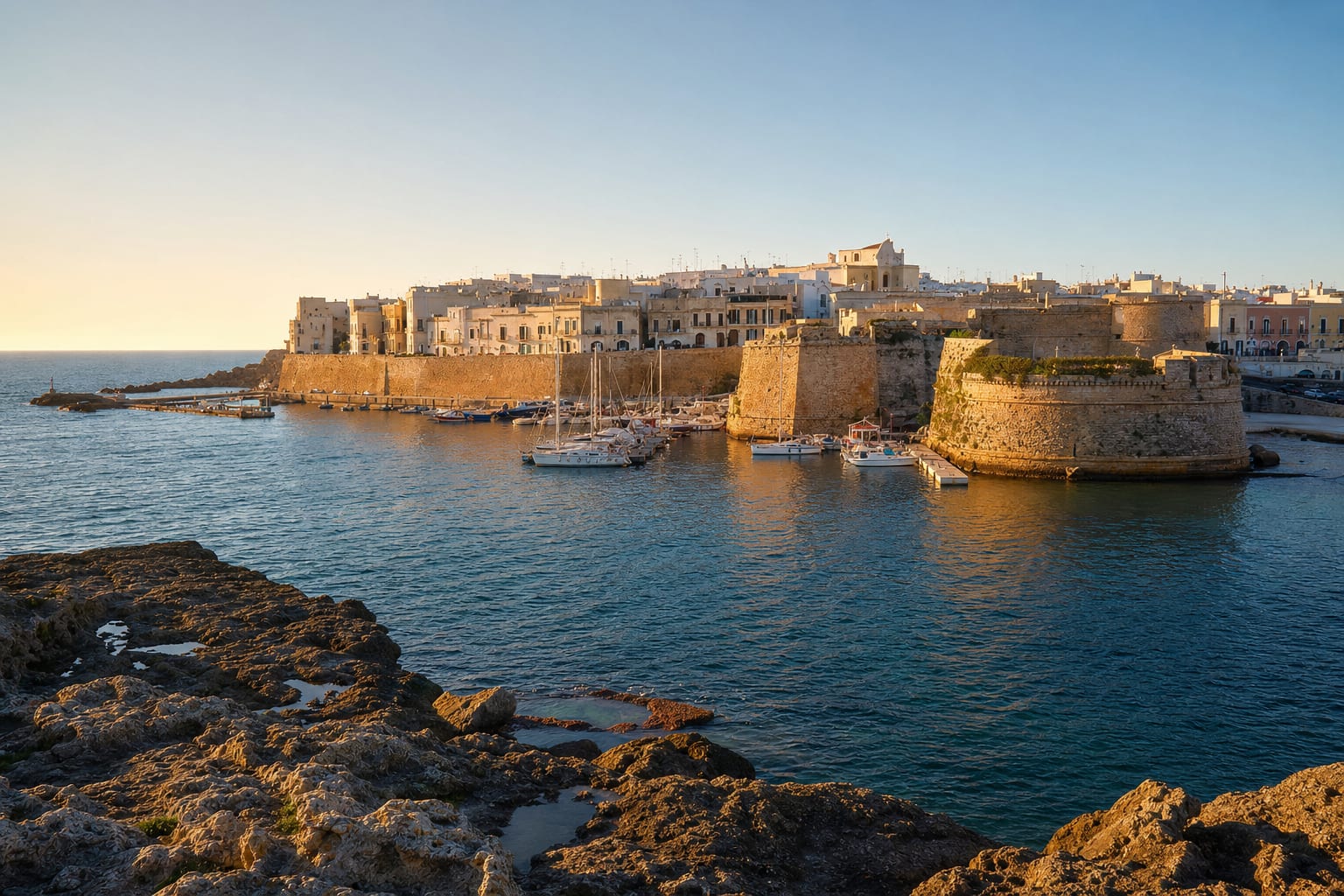 GallipoliCentro Storico di GallipoliIsland old town, Sant’Agata cathedral, underground oil mills, fish marketOld Gallipoli sits on its own small island off the Salento coast, joined to the new town by a single bridge and ringed by ramparts and sea walls. The Baroque cathedral of Sant’Agata, built in golden local stone between 1629 and 1696, stands at the heart of the lanes. Beneath the town, underground olive presses called frantoi ipogei once produced lamp oil that Gallipoli shipped across Europe, until petroleum and electricity ended the trade. Several are open to visit, and they explain why a town this small was once so wealthy. Above ground, the fish market on the waterfront still holds its early-morning auction beside the bridge.Pianifica la visita
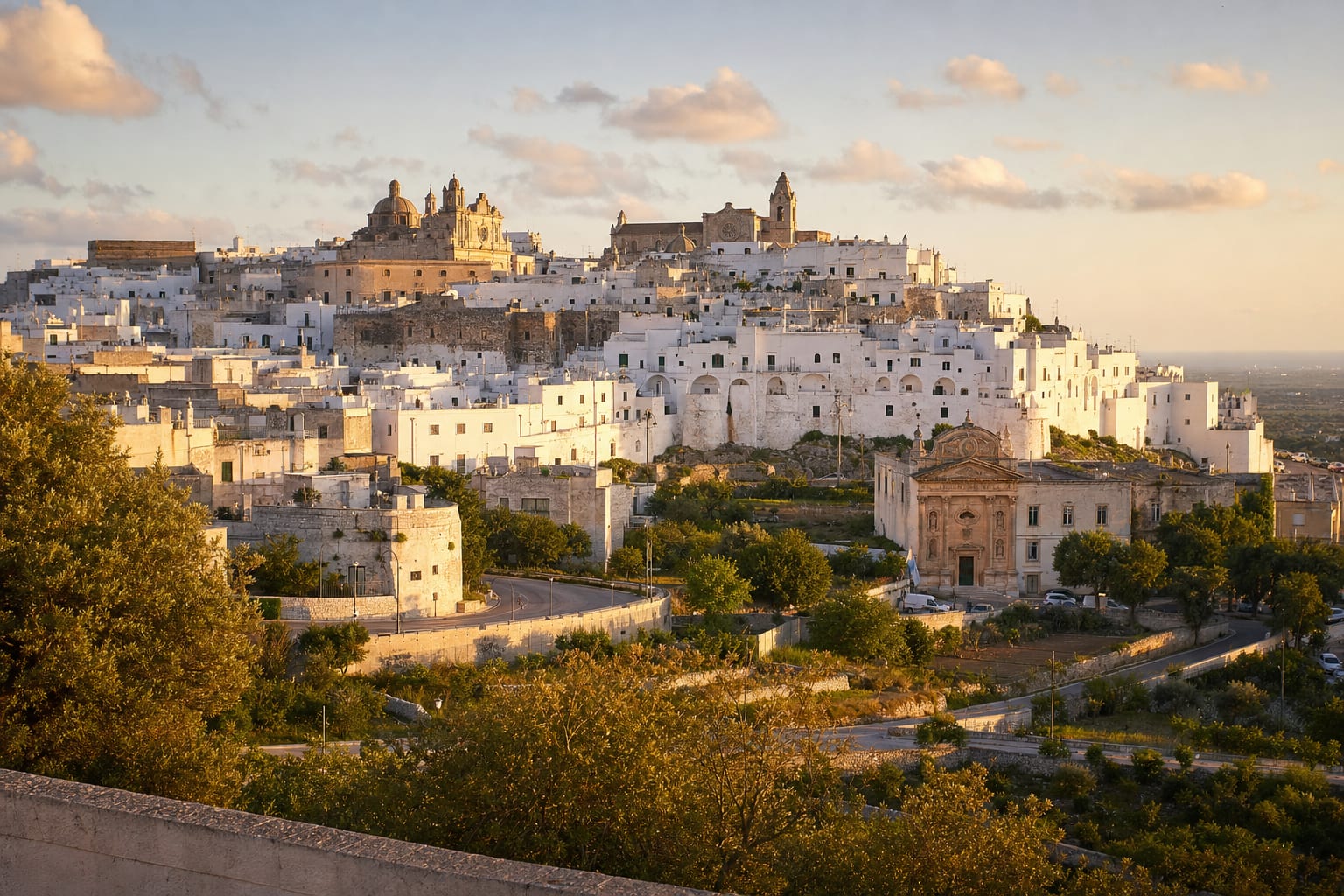 OstuniOstuniThe whitewashed hill town, the Concattedrale's rose window, olive plain views, the 25,000-year-old Delia burialOstuni whitewashes its entire historic center every year, a practice with roots in plague-era public health ordinances that used lime wash as a cheap disinfectant, and the habit stuck long after the medical reasoning behind it faded. The result is a hill town that reads from a distance as a single sculptural mass of white cubic houses rising from the Salento olive plain toward the Adriatic, a silhouette so striking it earned the nickname La Città Bianca. Its lanes spiral upward through a genuinely confusing medieval street plan, designed at least in part to disorient raiders, toward the Concattedrale, a Gothic cathedral finished in the late 15th century whose facade centers on an elaborate rose window unusual for the region. Beneath the town, archaeological finds including a 25,000-year-old Paleolithic burial, nicknamed Delia, place human presence here far earlier than any of the visible medieval architecture suggests.
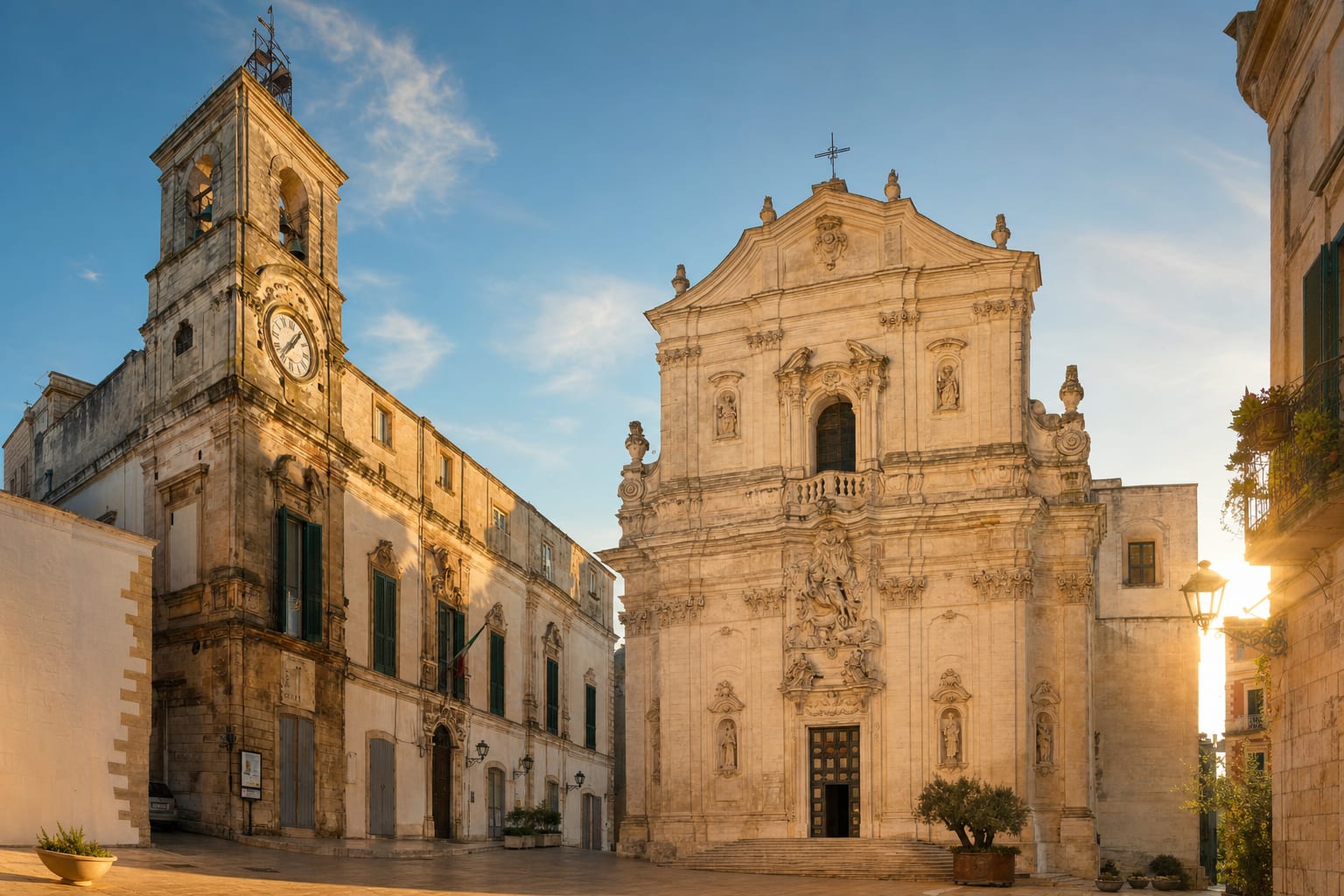 Martina FrancaMartina FrancaWhite Baroque old town, Ducal Palace, Festival della Valle d’Itria, wrought-iron balconiesMartina Franca is the largest town in the Valle d’Itria, the region better known for scattered conical trulli, but its historic center trades that rustic look for an unbroken run of white Baroque and Rococo architecture, built on the wealth of trade in the seventeenth and eighteenth centuries. Wrought-iron balconies and scrolled stone portals line lanes that curve deliberately, following the old walls rather than a grid. The seventeenth-century Ducal Palace of the Caracciolo family anchors the main piazza and hosts the Festival della Valle d’Itria, founded in 1975 and known for reviving rare operas. The Franca in the name refers to tax exemptions granted centuries ago to attract settlers.
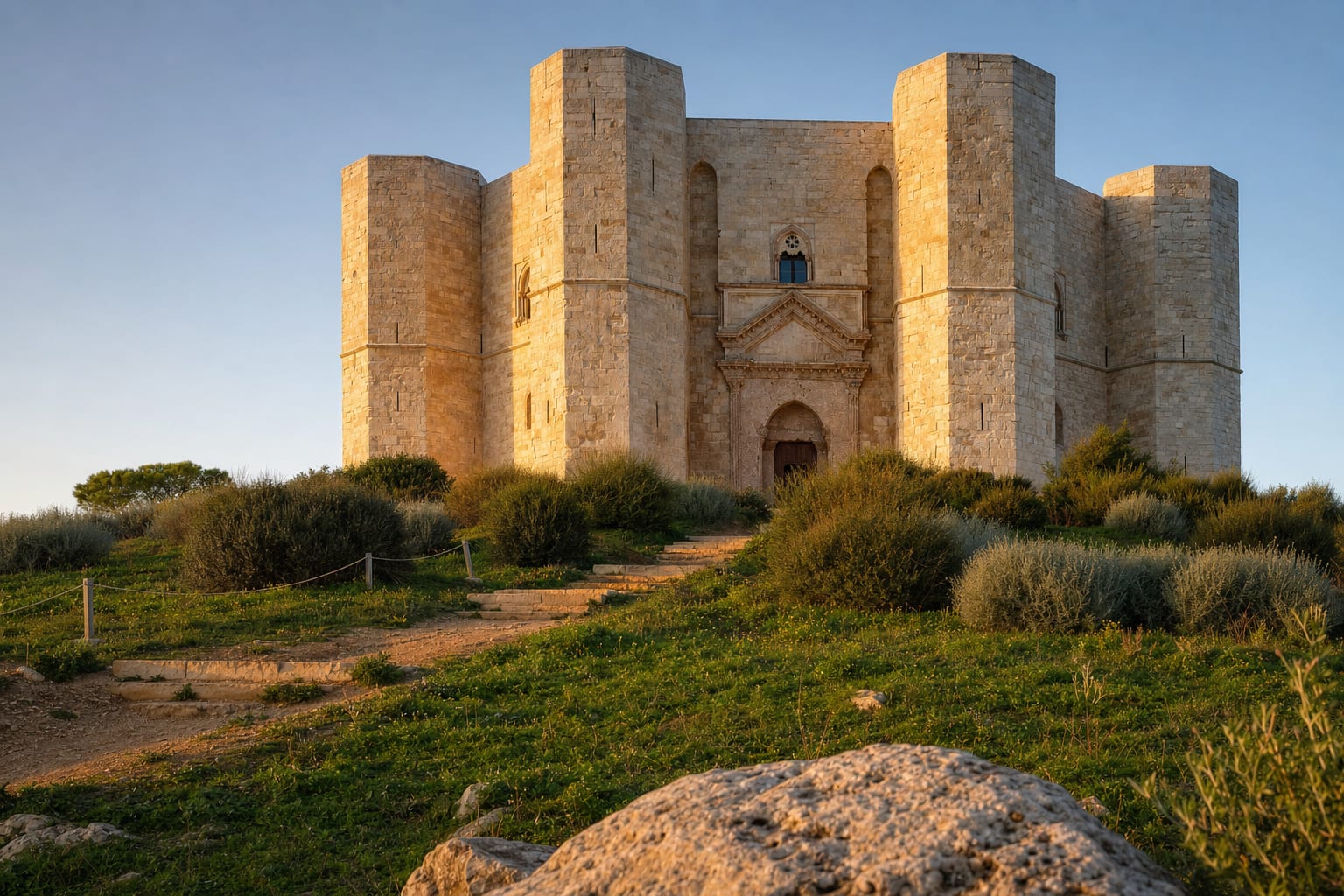 AndriaUNESCOCastel del MonteFrederick II's octagonal design, eight towers of eight sides, its mystery purpose, the Italian one-cent coinCastel del Monte stands alone on a Murgia hilltop in Puglia, an octagon with eight octagonal towers built for Holy Roman Emperor Frederick II sometime around 1240, and no surviving document explains why he built it or what he actually used it for. It was clearly not a conventional fortress: there is no moat, no drawbridge, and no space for a garrison or provisions to withstand a siege, which has fueled centuries of theories ranging from hunting lodge to astronomical observatory to a deliberately encoded expression of the medieval science and mathematics Frederick was famous for pursuing. The number eight repeats obsessively throughout, in the towers, the courtyard and the room layout, echoing both Islamic and Byzantine octagonal traditions that this notably cosmopolitan, multilingual emperor would have known well from his court in Sicily. Stripped of its original marble and decoration centuries ago, the castle now appears on the Italian one cent coin, an odd modern afterlife for a building that still keeps its founder's actual purpose a secret.
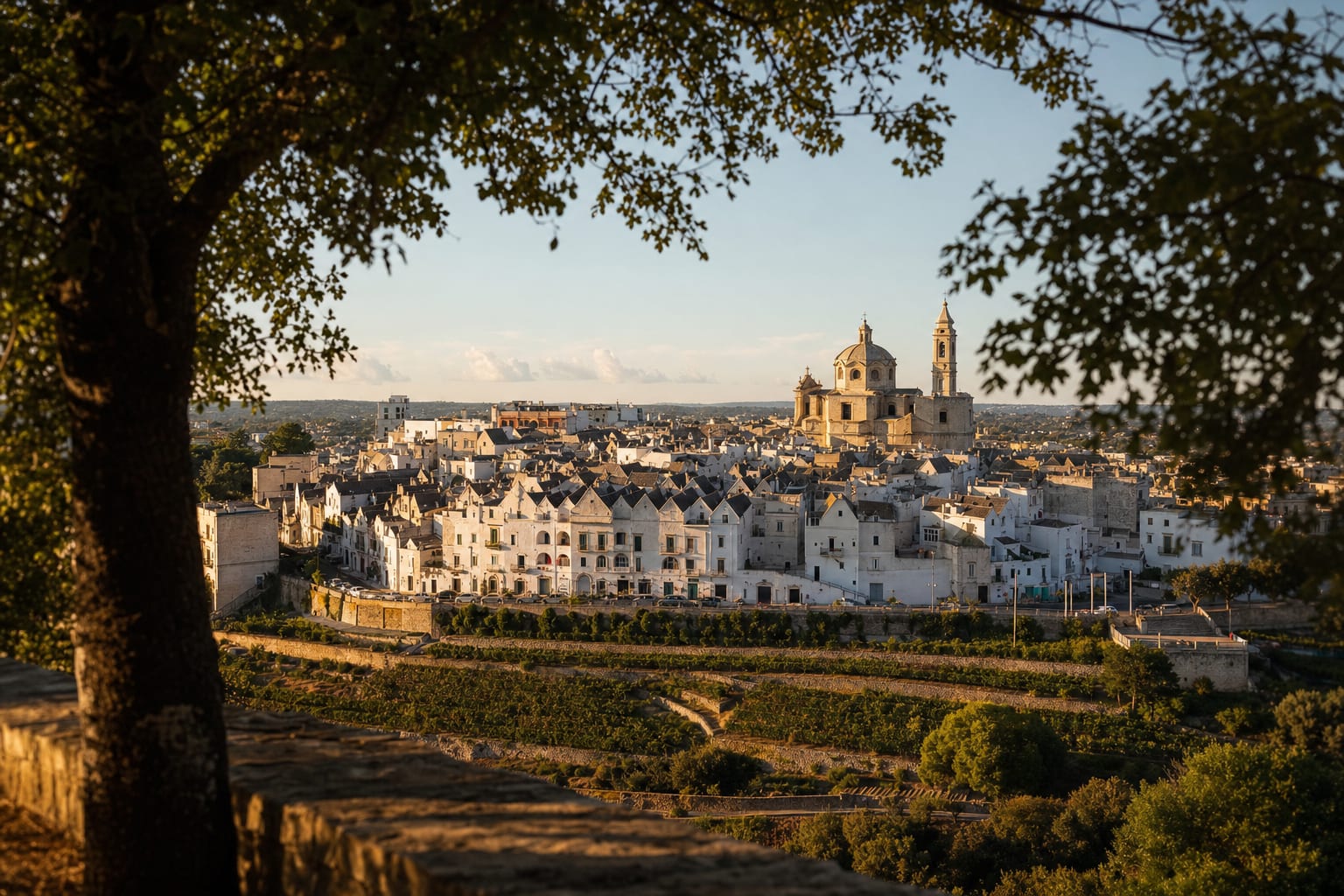 LocorotondoLocorotondoCircular plan, cummerse gabled roofs, white flower-lined lanes, Itria valley terraceLocorotondo earns its name from its plan: a near-perfect circle of whitewashed lanes laid out around 1000 CE under the Benedictine monastery of Monopoli, and still legible today from above. What sets it apart from other Itria Valley towns is its roofline: instead of the conical trulli found in the surrounding countryside, the old town is built of cummerse, tall gabled houses roofed in interlocking limestone slabs that shed rain in a single sharp pitch. Wrought-iron balconies dressed with geraniums line the alleys, and the eastern edge of town opens onto a long natural terrace over a valley scattered with trulli and vineyards. Those vineyards grow the grapes (Verdeca and Bianco d'Alessano) behind the crisp Locorotondo DOC white wine served in every wine bar on the main piazza.
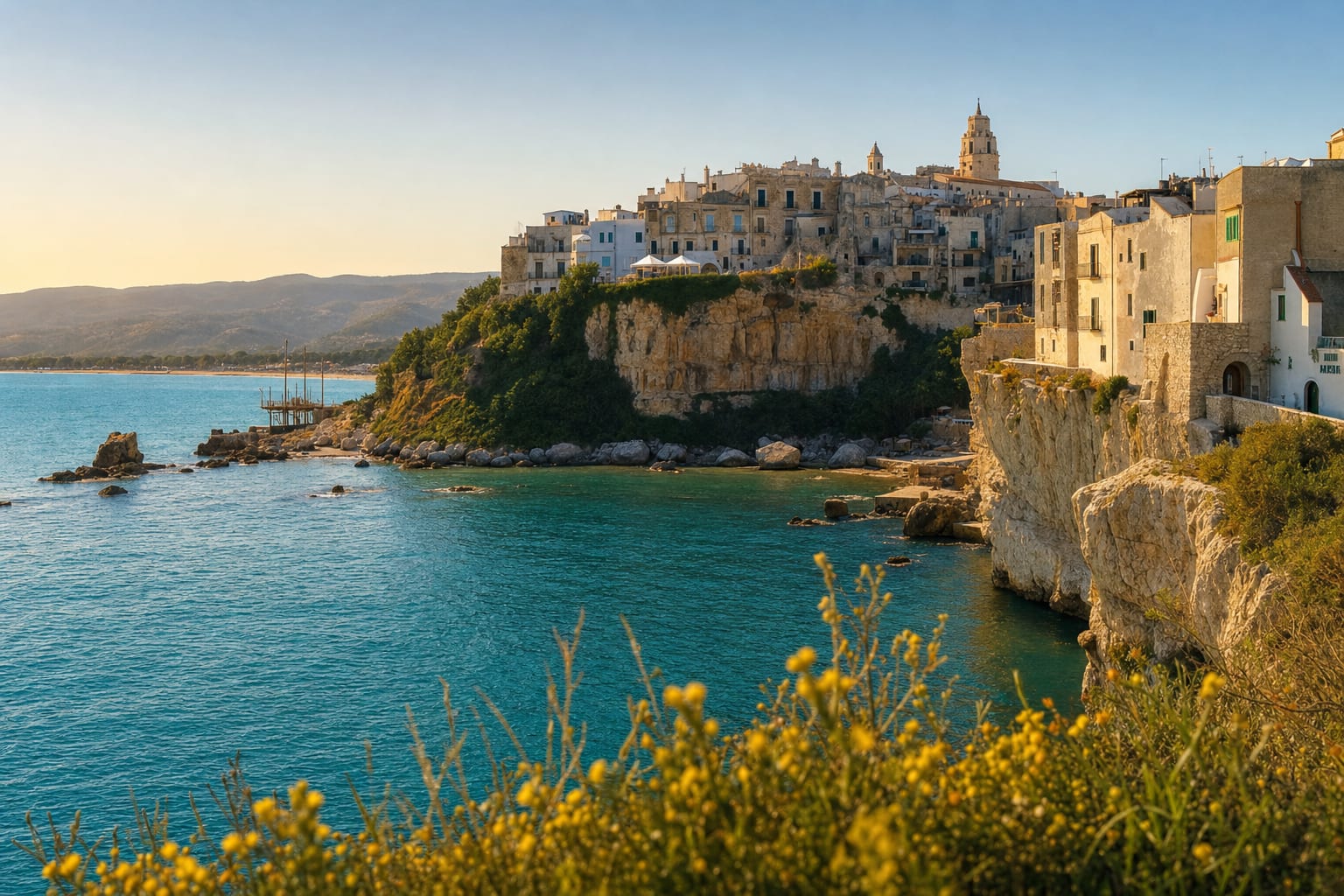 ViesteViesteGargano's headland old town, Pizzomunno sea stack, sea-cave boat tours, Romanesque cathedralVieste sits on the easternmost tip of the Gargano promontory, its whitewashed old town wrapped around a headland between two beaches. The Romanesque cathedral, rebuilt with a Baroque bell tower after the original collapsed, anchors a maze of alleys that survived a brutal 1554 raid by the Ottoman corsair Dragut, in which thousands of residents were killed or taken into slavery. Just offshore from Castle Beach stands Pizzomunno, a 26-meter limestone sea stack that local legend turns into a petrified fisherman, frozen mid-rescue after sirens dragged his love beneath the waves; visitors still circle it for luck. Boats leave the harbor daily for the Gargano coastline beyond town, where the same white limestone has been carved by the sea into grottoes and natural arches for as far as the eye can follow.
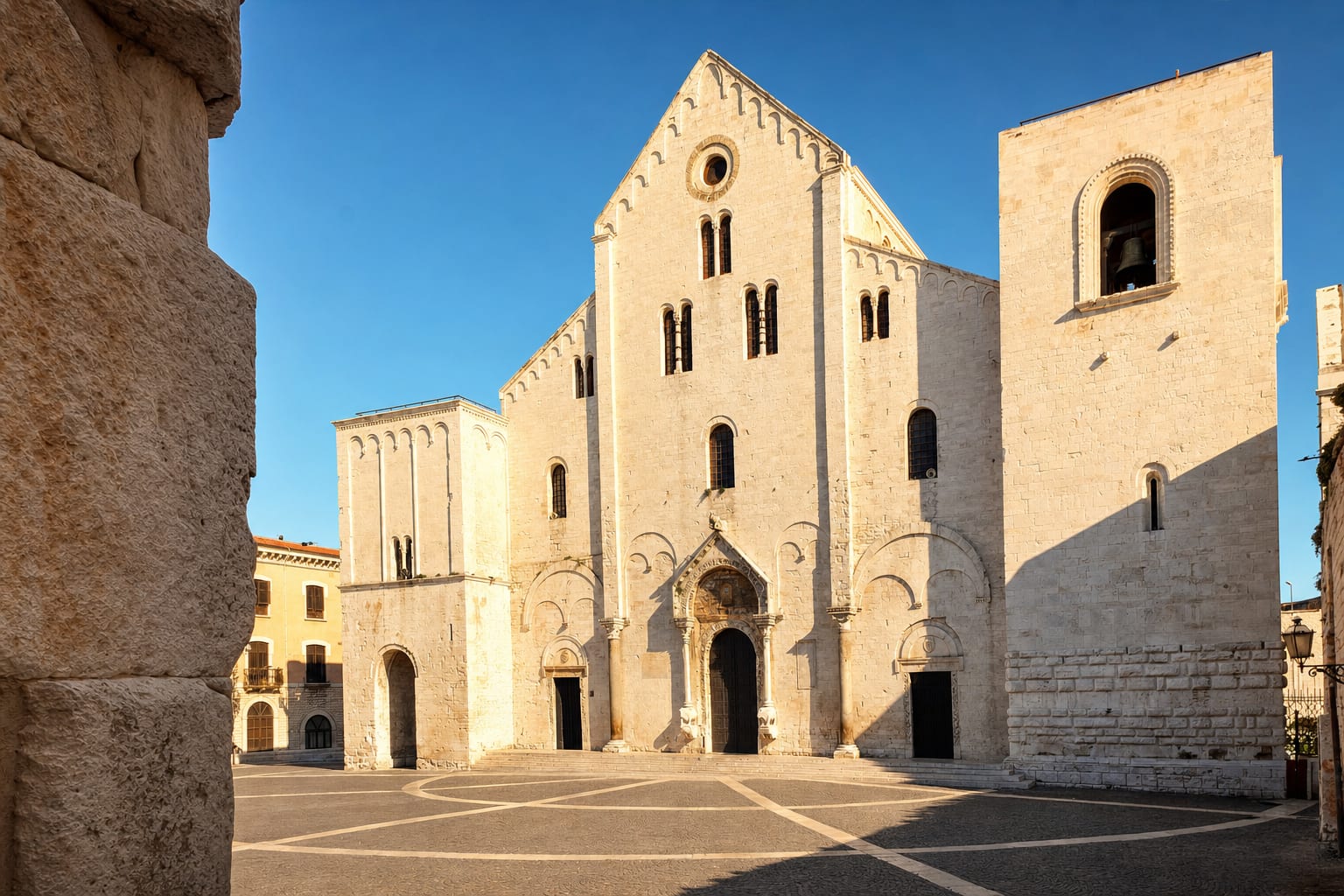 BariBasilica di San NicolaRelics of Saint Nicholas, Puglian Romanesque prototype, shared Catholic-Orthodox crypt, mannaIn 1087, a band of Bari sailors slipped into Myra, in modern Turkey, and stole the bones of Saint Nicholas, the fourth-century bishop who inspired Santa Claus, before Venetian rivals could get there first. The city built this basilica to hold him, and its plain, fortress-like facade and three-aisled interior became the template for Puglian Romanesque architecture that spread across the region. Below the high altar, the crypt holds the saint's relics in a marble shrine; a clear liquid, called manna, is still drawn from the tomb each May and prized by pilgrims for its healing reputation. The crypt remains one of the rare places in Italy where Catholic and Orthodox clergy celebrate together, a legacy of Nicholas's standing in both traditions.
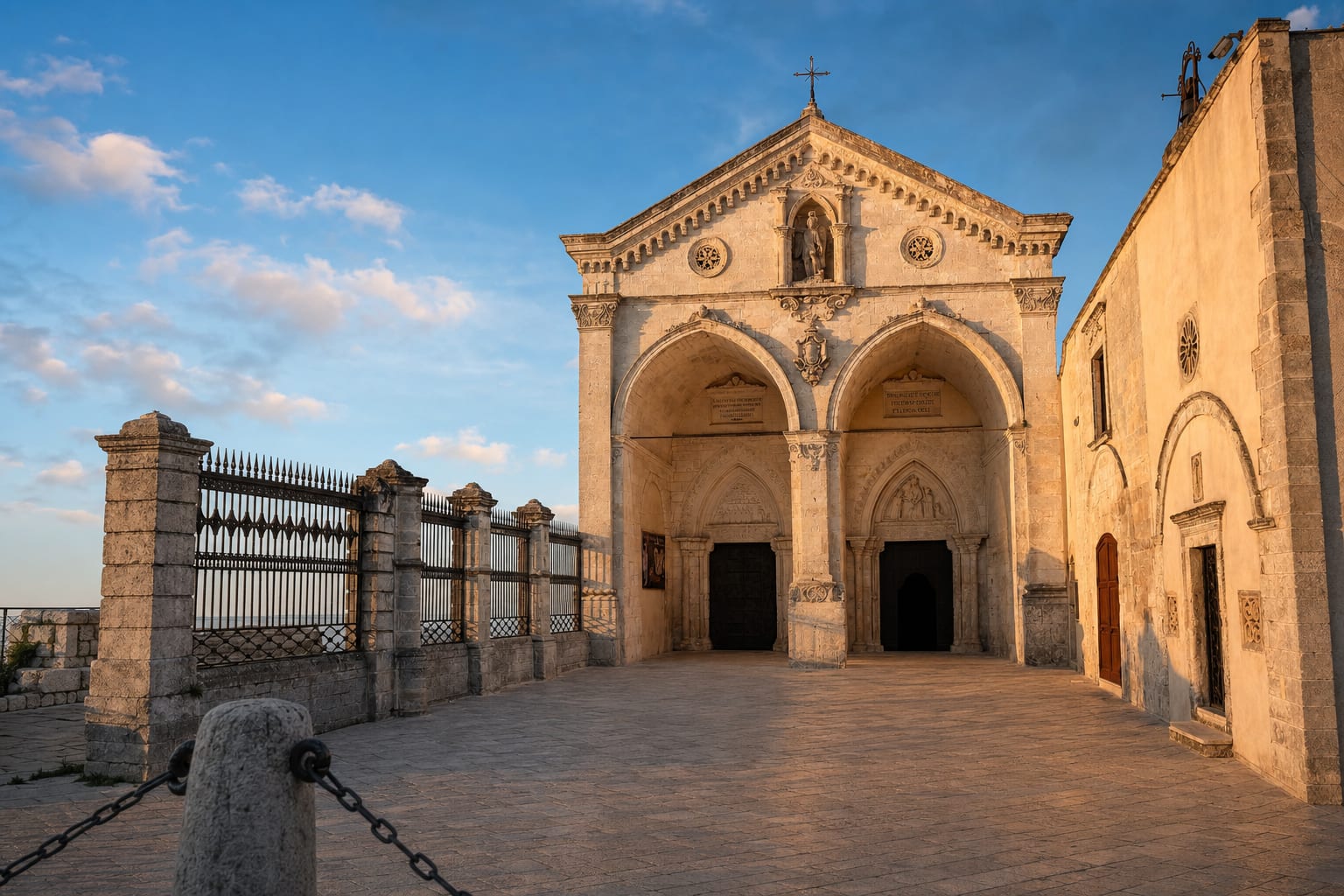 Monte Sant'AngeloSantuario di San Michele ArcangeloArchangel Michael's grotto, oldest Michael shrine in the West, pilgrim graffiti, UNESCO Longobard siteAround 490, tradition holds that the Archangel Michael appeared to the Bishop of Siponto in a cave on Monte Gargano and asked that it be consecrated to Christian worship, and a first sanctuary rose over the grotto by 493, making it the West's oldest shrine to the archangel. Lombard dukes adopted Michael as a warrior patron soon after, King Rothari was buried nearby in the Basilica di San Giovanni in Tumba, and the site grew into a major stop on the Via Francigena's Via Sacra Langobardorum, drawing popes, Bernard of Clairvaux, Thomas Aquinas and crowned heads down the centuries. Pilgrims descending the long stairway to the grotto still cut their names and crosses into the stone walls, a practice UNESCO recognized in 2011 when it listed the sanctuary among the Longobard places of power.
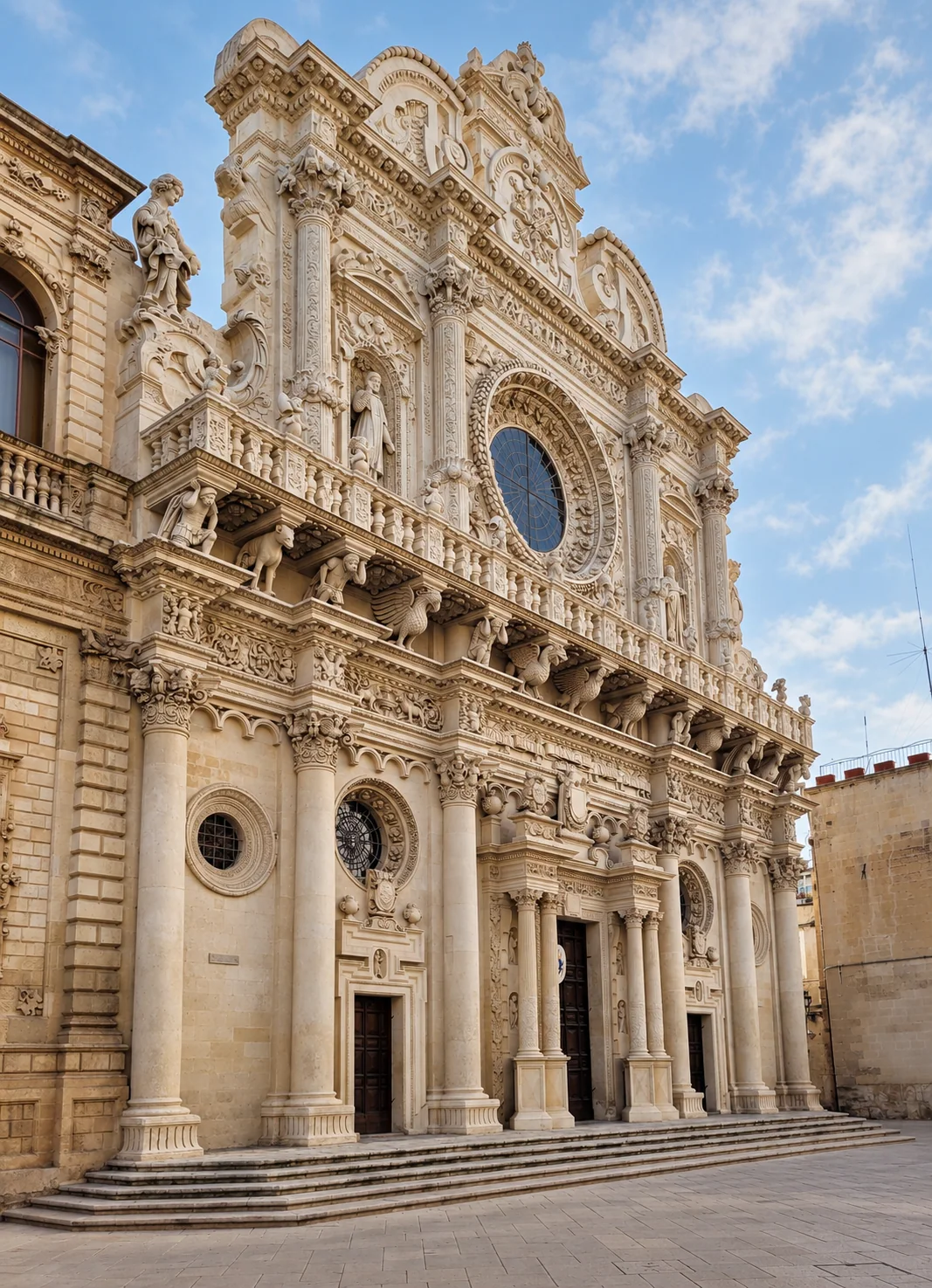 LecceBasilica di Santa Croce di LecceLecce Baroque architecture, especially a stone façade layered with human, animal and sacred figures around its central rose window.Santa Croce rewards a slow look, from its Renaissance lower order to the richly carved Baroque register above. Work on the present basilica began in 1549 and continued over about a century. A stone balustrade divides the façade; above it, the central rose window is framed by floral carving, fruit and cherubs. Human and animal figures mingle with angels and saints. Gabriele Riccardi, Cesare Penna and Francesco Antonio Zimbalo all contributed to the church’s construction and decoration.
Inside, the Latin-cross plan opens into three naves beneath a hemispherical dome and a wooden coffered ceiling. Francesco Antonio Zimbalo’s altar of San Francesco da Paola has twelve reliefs depicting episodes from the saint’s life; its central nineteenth-century painting replaced an earlier statue. Continue exploring Lecce with our <a href="/en/regions/puglia/lecce">Lecce city guide</a>.
LecceBasilica di Santa Croce di LecceLecce Baroque architecture, especially a stone façade layered with human, animal and sacred figures around its central rose window.Santa Croce rewards a slow look, from its Renaissance lower order to the richly carved Baroque register above. Work on the present basilica began in 1549 and continued over about a century. A stone balustrade divides the façade; above it, the central rose window is framed by floral carving, fruit and cherubs. Human and animal figures mingle with angels and saints. Gabriele Riccardi, Cesare Penna and Francesco Antonio Zimbalo all contributed to the church’s construction and decoration.
Inside, the Latin-cross plan opens into three naves beneath a hemispherical dome and a wooden coffered ceiling. Francesco Antonio Zimbalo’s altar of San Francesco da Paola has twelve reliefs depicting episodes from the saint’s life; its central nineteenth-century painting replaced an earlier statue. Continue exploring Lecce with our <a href="/en/regions/puglia/lecce">Lecce city guide</a>.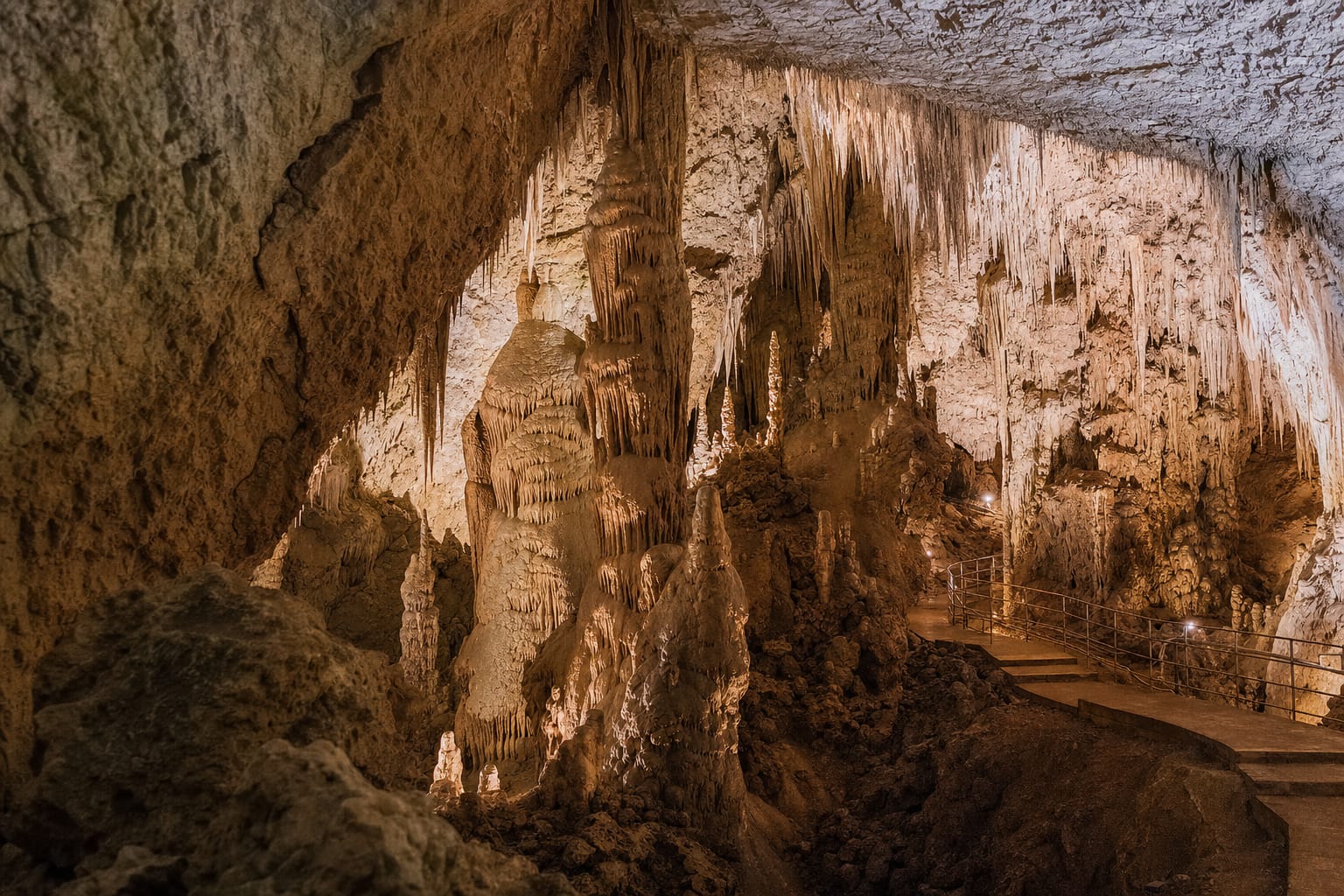 Castellana GrotteGrotte di CastellanaGrave sinkhole entrance, alabaster Grotta Bianca chamber, three kilometers of show cavesSpeleologist Franco Anelli rappelled into the Grave, a natural sinkhole outside town, in January 1938 and found Puglia’s largest cave system waiting below. The passage he first explored has since given way to two marked routes: a shorter walk of about one kilometer, and the full three-kilometer traverse that continues on to the Grotta Bianca, an alabaster-white chamber so pale and smooth it can look artificially lit even under a guide’s flashlight. Stalactites and stalagmites, some fused into columns over a hundred thousand years old, line the route between them. The caves stay a cool, constant temperature year-round, a relief in the Puglia summer heat, and the Grave sinkhole itself, now the visitor entrance, remains the most dramatic first glimpse of the underground world below.
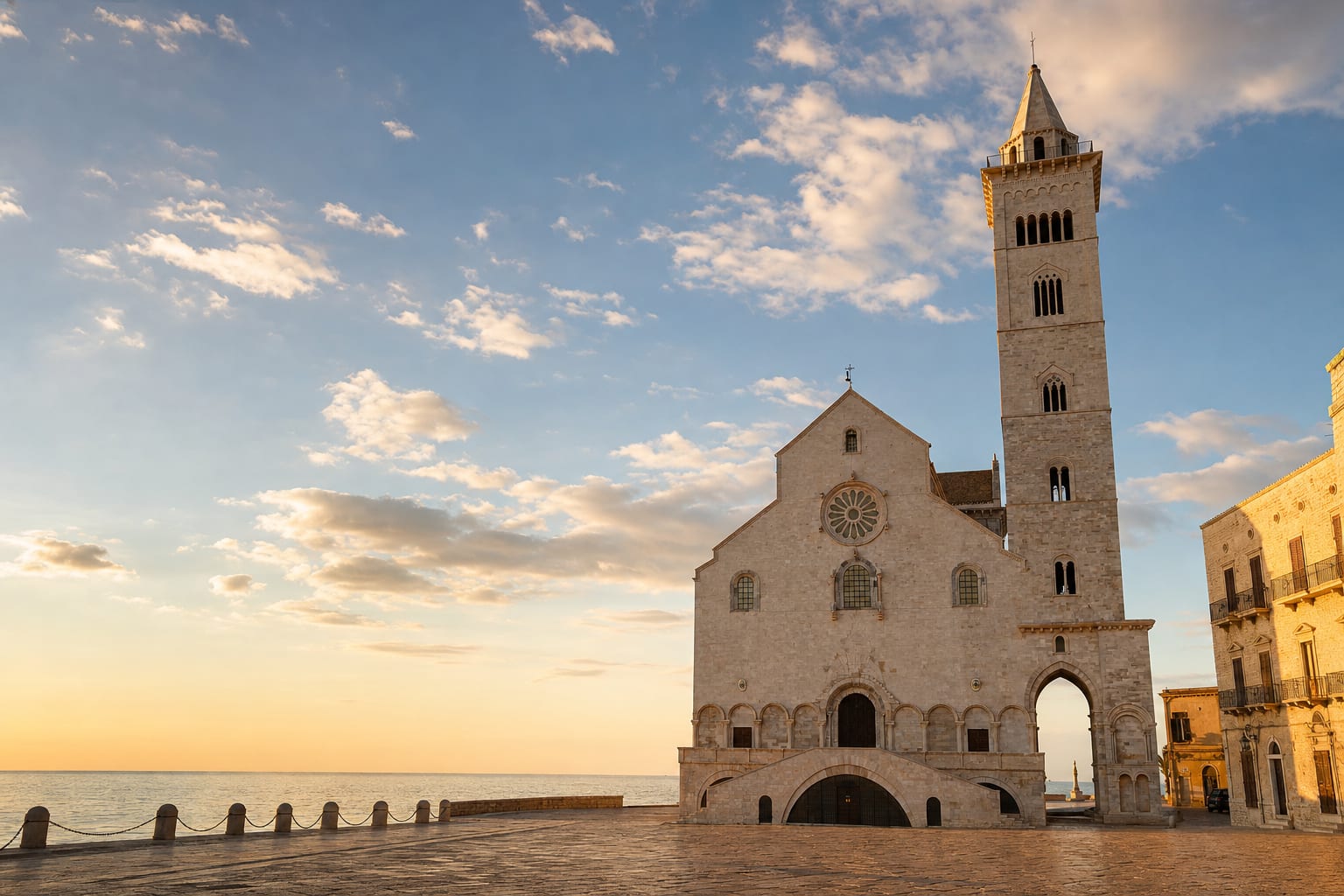 TraniCattedrale di TraniCathedral rising from the sea, Barisano's 1175 bronze doors, pink-white Trani stone, San Leucio cryptTrani built its cathedral, dedicated to San Nicola Pellegrino, on a spit of rock between the old harbor and the open Adriatic, so the pale Romanesque facade seems to rise straight out of the water at high tide. Construction began around 1099 over an earlier church and a Byzantine crypt, and took shape through the twelfth and thirteenth centuries in the local pink-white stone called pietra di Trani. Barisano da Trani cast the bronze doors in 1175, their panels worked with animals and biblical scenes that still catch the sea light at the top of the double outdoor staircase. Below the main church, the crypt of San Leucio holds an even older, half-buried basilica, with remains of a Roman building and the Byzantine cult of a young Greek shepherd that predates the cathedral by centuries. Fishing boats still moor within sight of the apse.
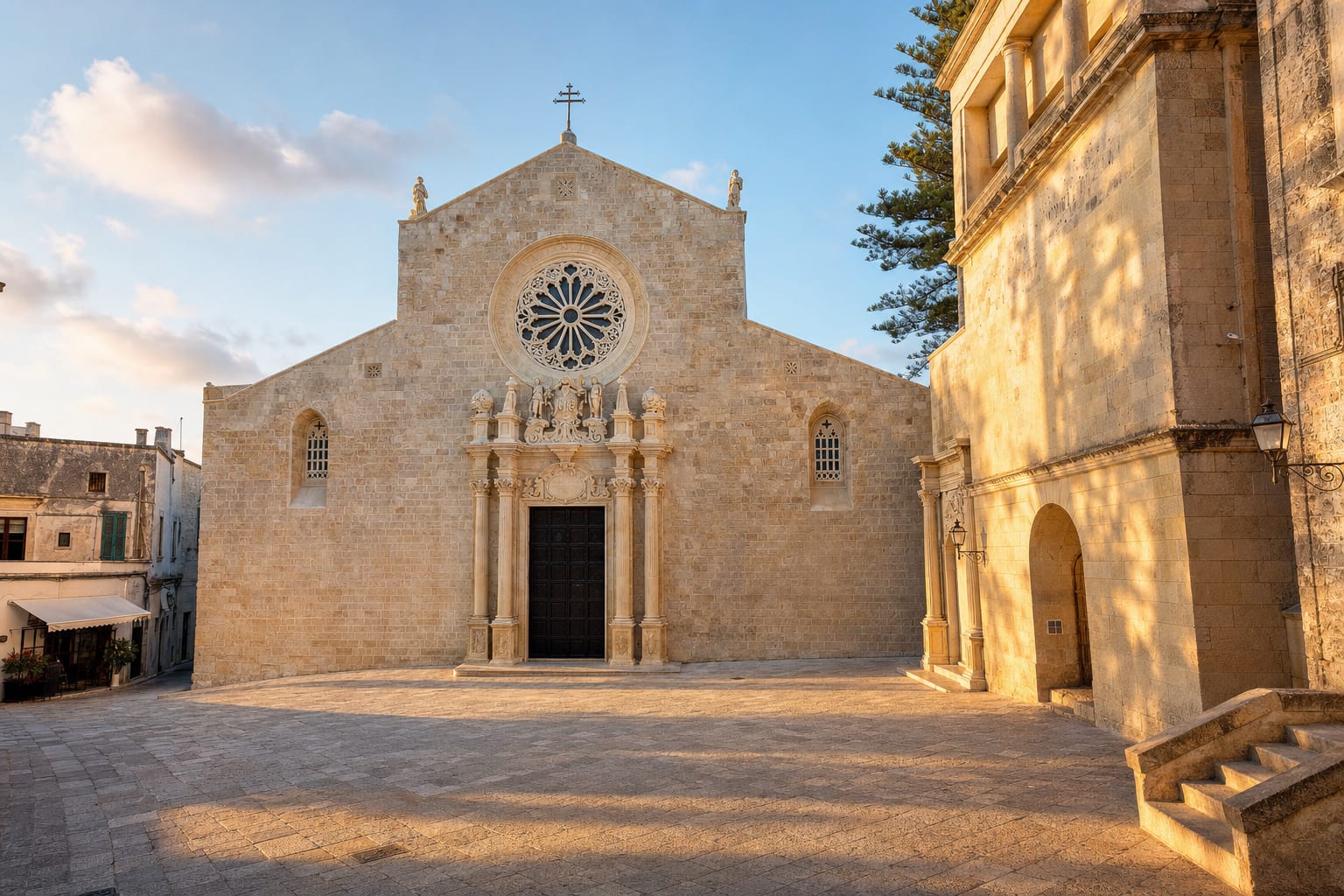 OtrantoCattedrale di OtrantoTree of Life floor mosaic, martyrs' relics, seventy-column crypt, 1698 painted wood ceilingIn 1163, a monk named Pantaleone began laying a mosaic across the entire floor of Otranto's cathedral with a team of fellow monks from the nearby abbey of San Nicola di Casole, finishing two years later: a Tree of Life rooted in two elephants, its branches carrying Adam and Eve, King Arthur, Alexander the Great and the months of the year, an entire medieval worldview worked in stone. The nave floats above a crypt forested with more than seventy columns pulled from earlier Roman and medieval buildings. In the right aisle, glass cases hold the skulls of the eight hundred townspeople the Ottomans beheaded on Otranto's hill in 1480 for refusing to renounce their faith; the church canonized them as martyrs in 2013. Look up at the wooden ceiling too, painted black, white and gold when an archbishop added it in 1698, still running the length of the nave.
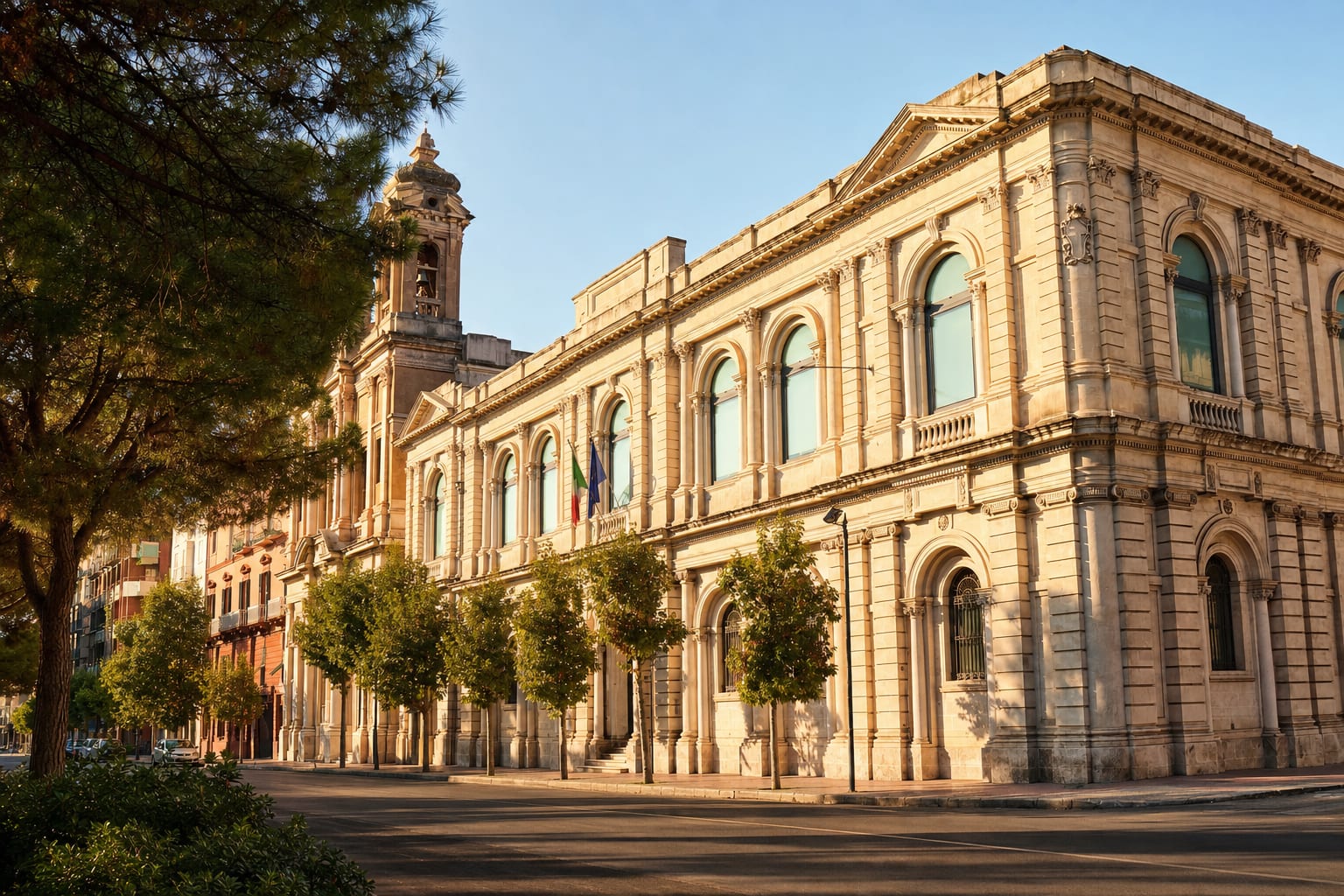 TarantoMuseo Archeologico Nazionale di TarantoGold of Taranto jewelry, athlete's tomb display, bronze Zeus of Ugento, Orpheus and the Sirens groupGreek colonists made Taras the richest city in Magna Graecia, and their goldsmiths' work fills this museum's cases with a virtuosity nothing since has matched: diadems, earrings and necklaces worked in gold wire so fine it looks woven rather than cast. The museum occupies a former convent, reopened in 2007 after seven years of renovation following its 1887 founding, and its galleries run from prehistoric finds through Roman-era mosaics and sculpture. An athlete buried around the fourth century BC lies displayed as archaeologists found him, his prize amphorae for winning games arranged beside his bones. The bronze Zeus of Ugento, cast around 530 BC, and the marble group of Orpheus and the Sirens, returned from the Getty Museum, are among the collection's other set pieces.
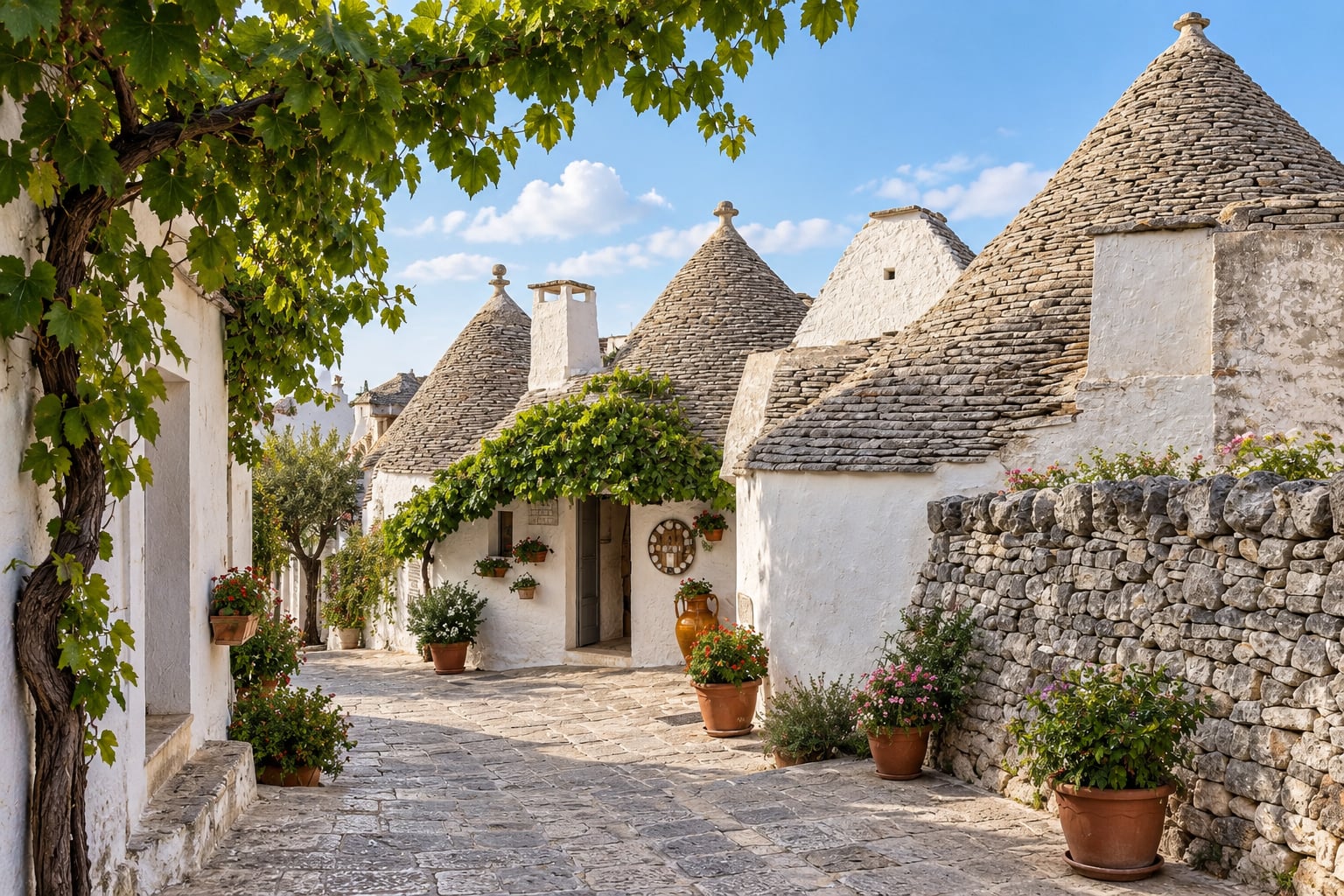
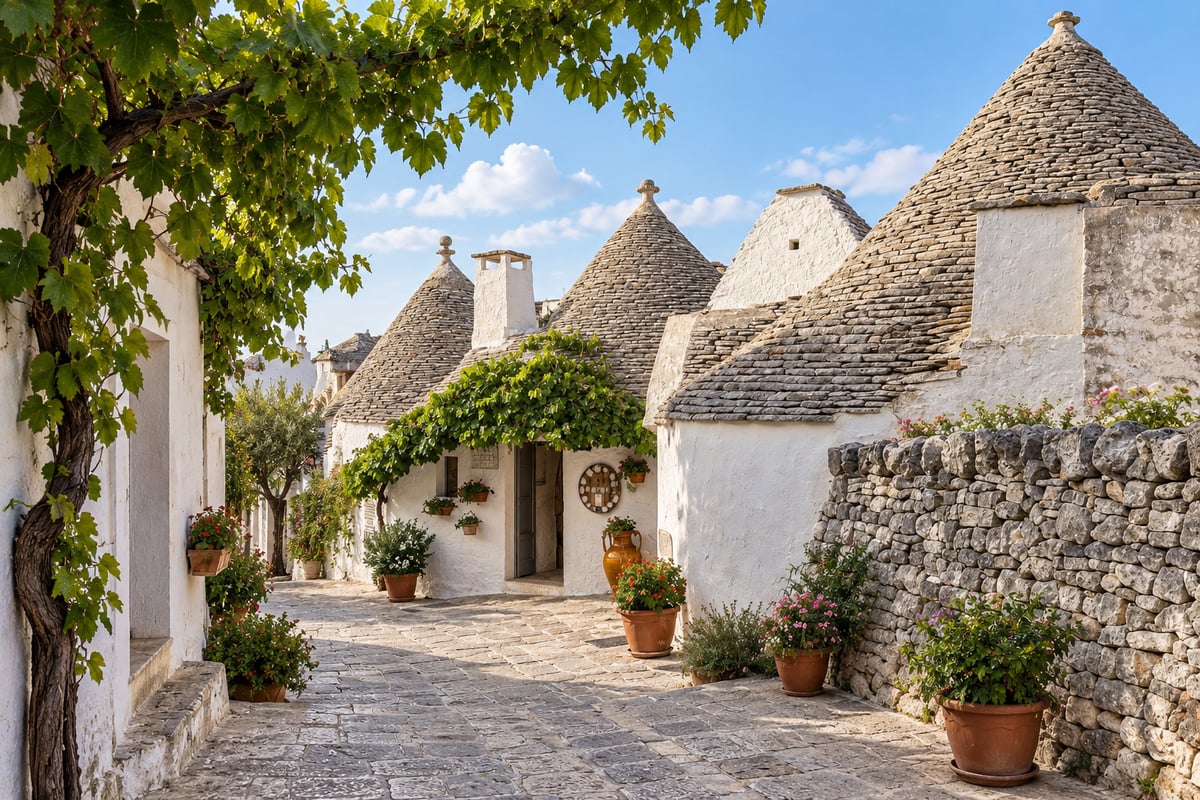 AlberobelloUNESCOTrulli di Alberobello1,500 cone-roofed trulli, Rione Monti and Aia Piccola districts, painted roof symbols, UNESCO listing since 1996Alberobello stacks roughly fifteen hundred whitewashed, conical-roofed trulli up its two hills, an entire vernacular building tradition born partly from feudal tax evasion: local landlords required tenants to build in easily-collapsible drystone rather than mortar, supposedly so the settlement could be dismantled fast whenever royal tax inspectors came to assess it. The Rione Monti district holds the highest concentration, its lanes now lined with shops rather than farmhouses, while quieter Rione Aia Piccola keeps more of the original residential feel. Painted symbols on many roof cones, some Christian, some older and closer to folk magic, hedge every bet a family might want covered, and the whole district earned UNESCO status in 1996.
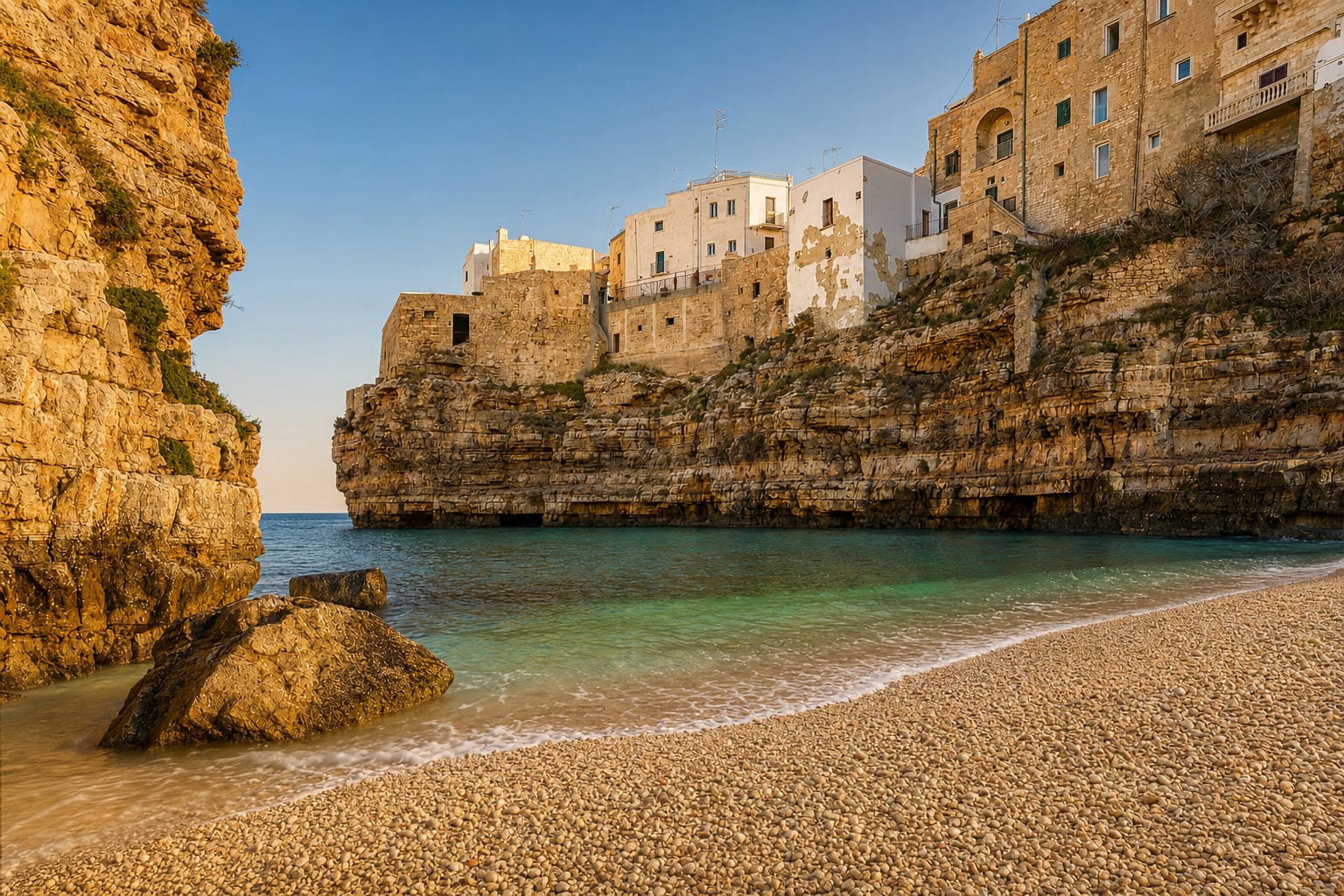 Polignano a MareLama MonachilePebble cove between white cliffs, Red Bull Cliff Diving stage, Roman Via Traiana bridge overlook, Blue Flag public beachPolignano's old ravine, a dry riverbed geologists call a lama, meets the sea in a pebble cove pinched between sheer white cliffs and crowned by the houses of the old town leaning out overhead. A stone staircase descends straight from beneath the Roman Via Traiana bridge onto the beach, framing the classic photograph that made this cove famous, and once a year the Red Bull Cliff Diving World Series turns the surrounding balconies into a stadium as divers launch from the bridge itself. There are no beach clubs or rented umbrellas here: it stays a fully public beach, its water clear enough to have earned both a Blue Flag and Legambiente's four-sail rating, and it is the hometown beach of singer Domenico Modugno.
Tour da prenotare in Puglia
Confrontati dai nostri editor, tra i vari operatori.
Prenotando da questi link Italia Magnifica può ricevere una commissione, senza costi per te.
- Viator
- 2 h
- 5,0★ · 10 recensioni
da 20 €Prenota questo tour- Viator
- 2 h
- 5,0★ · 20 recensioni
da 250 €Prenota questo tour- Viator
- 2 h
- 5,0★ · 5 recensioni
da 110 €Prenota questo tour- Viator
- 2 h 30 min
- 5,0★ · 12 recensioni
da 110 €Prenota questo tour- Viator
- 3 h
- 5,0★ · 21 recensioni
da 60 €Prenota questo tour- Viator
- 2 h
- 5,0★ · 4 recensioni
da 50 €Prenota questo tour




Città per città
Dove si concentrano i monumenti in Puglia.
- 1 monumentoAlberobello
- 1 monumentoAndria
- 1 monumentoBari
- 1 monumentoCastellana Grotte
- 1 monumentoGallipoli
- 1 monumentoLecce
- 1 monumentoLocorotondo
- 1 monumentoMartina Franca
- 1 monumentoMonte Sant'Angelo
- 1 monumentoOstuni
- 1 monumentoOtranto
- 1 monumentoPolignano a Mare
- 1 monumentoTaranto
- 1 monumentoTrani
- 1 monumentoVieste