

Tutti i monumenti di Milano
I luoghi e i capolavori attorno a cui vale la pena costruire una giornata.
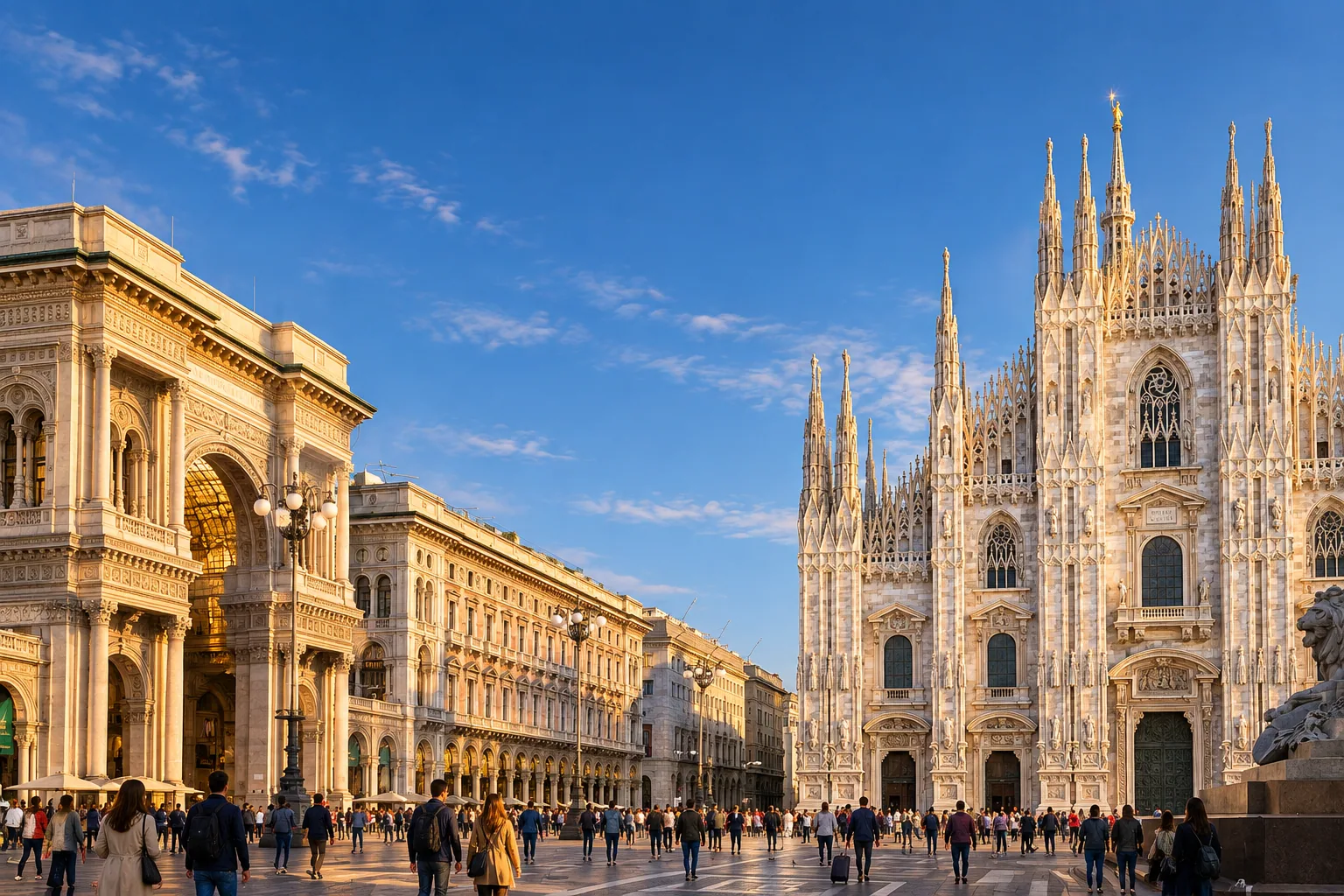 ChiesaDuomo di Milano135 marble spires, the golden Madonnina, rooftop terraces, six centuries of constructionMilan Cathedral is the largest church in Italy and the fourth largest in the world, an accumulation of construction that probably began in 1386 and, in the strictest sense, never really stopped; the Veneranda Fabbrica del Duomo, founded in 1387 to oversee the work, still maintains it today. Its Candoglia marble facade and 135 spires reflect centuries of shifting architects and styles, from French Gothic ambitions to a Napoleon-ordered facade completion in the early 19th century. On top, the golden Madonnina statue has watched over the city since 1774 and was, for generations, the tallest point Milanese building codes allowed anyone to build past. The real reason to visit is the roof: walkways across the marble terraces put visitors face to face with spires and statues never meant to be seen up close, with the Alps visible on a clear day beyond the modern skyline.Pianifica la visita
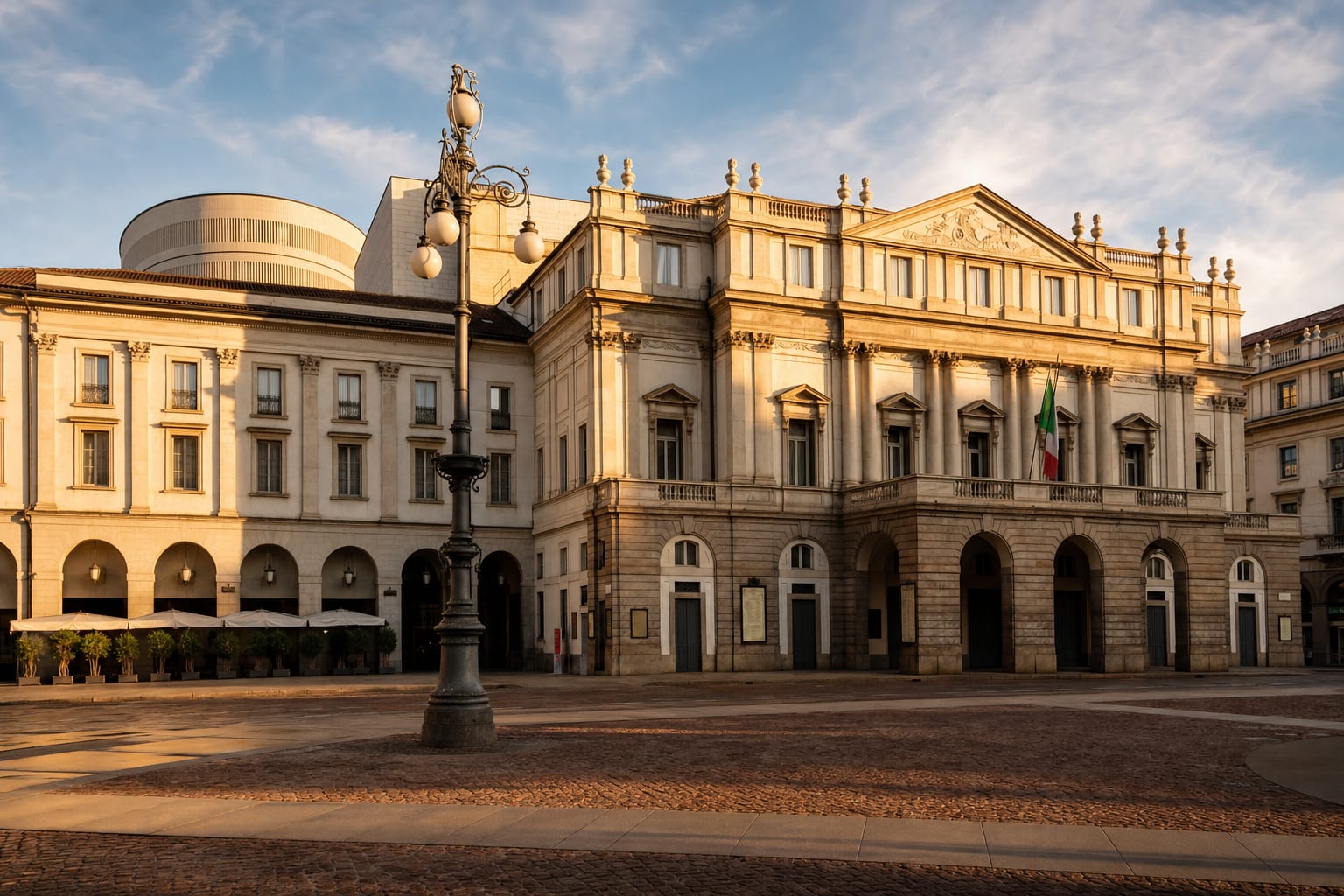 TeatroTeatro alla ScalaVerdi and Rossini premieres, Toscanini's 1946 reopening, the Museo Teatrale, its opera and ballet seasonLa Scala opened in 1778 to replace Milan's Royal Ducal Theatre, destroyed by fire the year before, and Giuseppe Piermarini gave it a restrained Neoclassical shell that hid one of the most demanding opera houses in the world behind a modest facade. Rossini and Verdi both built their reputations here, and Arturo Toscanini's celebrated 1946 reopening concert, staged after Allied bombing gutted the theatre in 1943, became one of postwar Italy's defining cultural moments. A careful 2002 to 2004 restoration modernized the stage machinery while preserving the horseshoe auditorium's gilded boxes and famously unforgiving acoustics, where singers know within a few notes whether the house is on their side. The adjoining Museo Teatrale, founded in 1911, holds instruments, costumes, portraits and Verdi memorabilia, and its ticket includes a discreet look into the theatre itself from a box on the third tier.
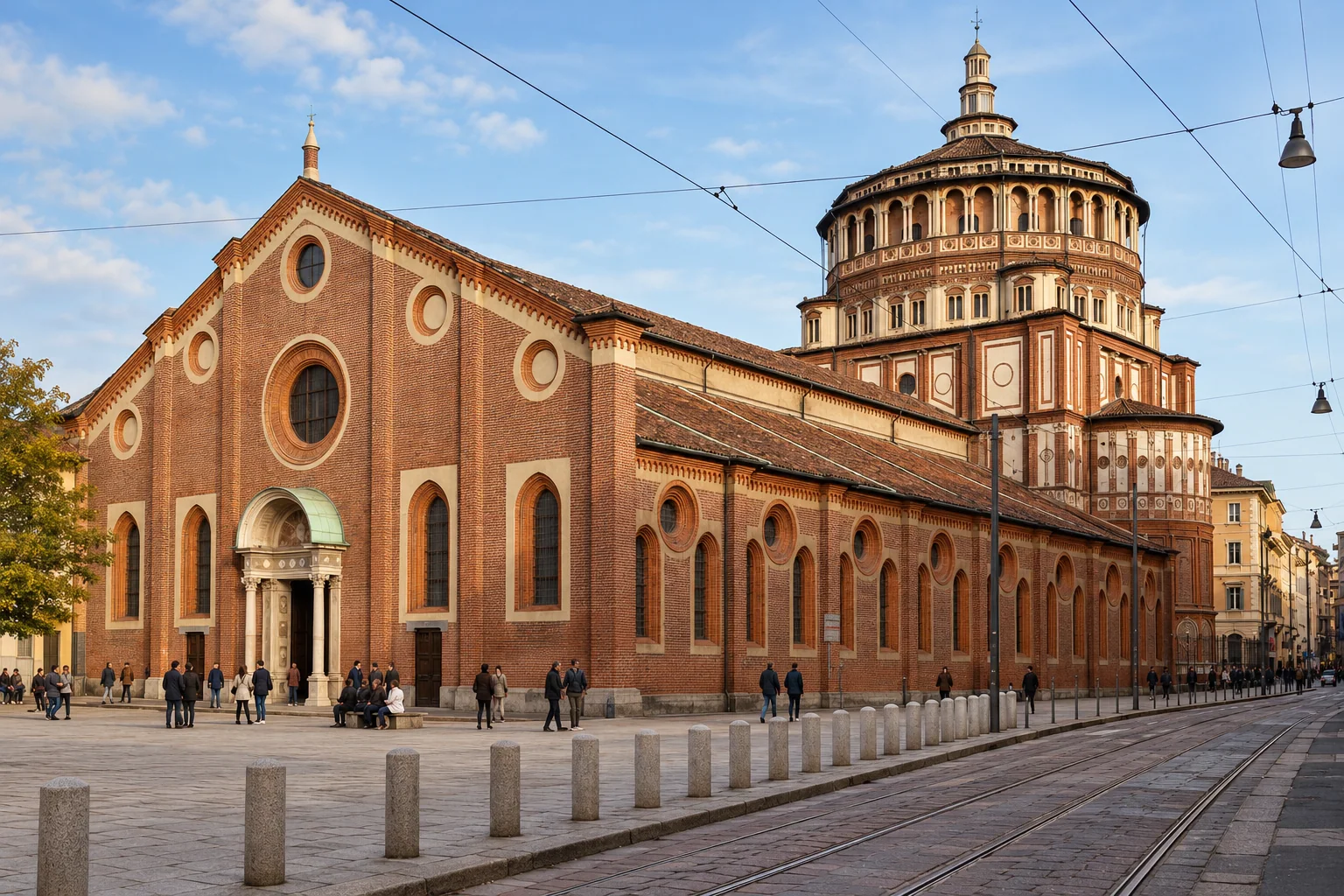 ChiesaUNESCOSanta Maria delle GrazieLeonardo's Last Supper in the former refectory; Bramante's Renaissance tribune; Solari's three-aisled church; Montorfano's Crucifixion on the opposite end wall.<p>Santa Maria delle Grazie is a Dominican church and convent whose story begins before Leonardo's mural. Construction began in 1463 under Guiniforte Solari; the church was completed in 1482. Its three aisles, pointed ribbed vaults, brick masonry and granite Corinthian capitals belong to the Lombard architecture of the early Renaissance. The side chapels served Milanese families for private prayer and burial, so this was a working religious house as well as a monument.</p><p>Under Ludovico Sforza, the complex became a dynastic project. He entrusted Donato Bramante with the church's eastern enlargement, where semicircular apses gather beneath the tribune's drum and dome. Leonardo painted the Last Supper on the north wall of the Dominican refectory, opposite Donato Montorfano's Crucifixion. Rather than use fresco, he worked in tempera on dry plaster, a slower method that gave him room to revise the image but left its paint layer vulnerable; the work began deteriorating soon after completion. Bombing in 1943 brought down the refectory roof, vaults and eastern wall, while the two end-wall paintings survived. The church, convent and refectory are one UNESCO World Heritage property, but they are separate visits: a church visit does not include the museum. Explore <a class="im-link" href="/en/attractions/sforza-castle">the Sforza court at Castello Sforzesco</a>, then see the museum's own <a class="im-link" href="https://cenacolovinciano.org/en/museum/the-works/the-last-supper-leonardo-da-vinci-1452-1519/">Last Supper account</a> for the painting's conservation story.</p><p>The church is free to enter; the Last Supper is a separately ticketed museum visit. Consult the <a href="https://legraziemilano.it/orari/">parish visitor guidance</a> for church access around services, and the <a href="https://cenacolovinciano.org/en/info/">museum’s official booking information</a> before planning to see Leonardo’s painting.</p>
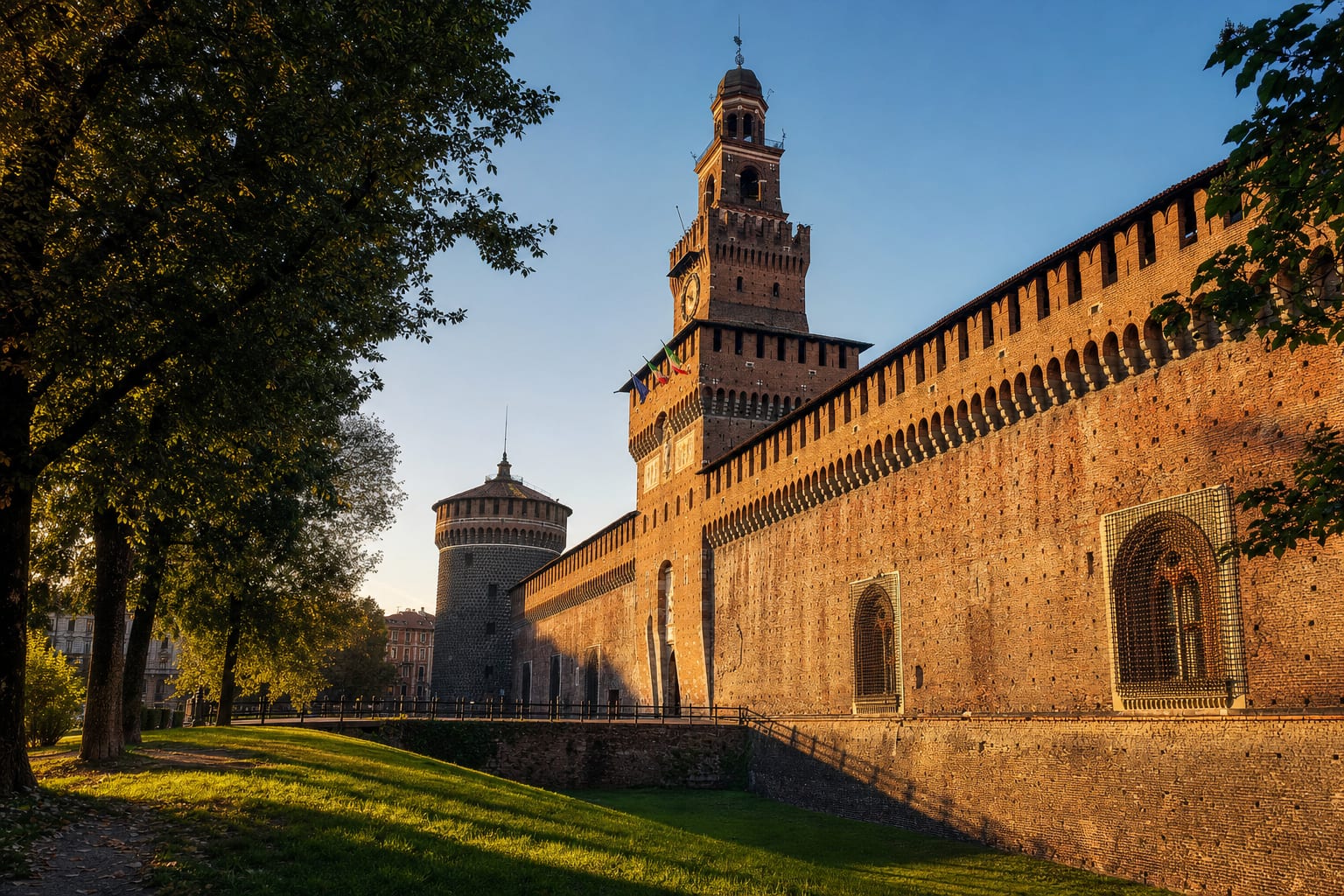 CastelloCastello SforzescoSforza ducal fortress, Michelangelo's last Pieta, Leonardo's Sala delle Asse, Sempione park axisGaleazzo II Visconti raised the first fortress on this site in the mid-fourteenth century, but it was Francesco Sforza, who seized power in Milan in 1450, who rebuilt it into the brick citadel visible today, one of the largest in Europe by the sixteenth century under his successors. Leonardo da Vinci, working for Duke Ludovico il Moro in the 1490s, painted the Sala delle Asse's trompe-l'oeil canopy of interlacing mulberry branches directly onto the ceiling, a rare surviving decorative (rather than easel) work by the artist. The castle later served military occupiers from the French to the Austrians before Milan reclaimed and restored it, with architect Luca Beltrami's major renovation between 1891 and 1905 giving the building much of its current silhouette, including a reconstructed central tower. Its museums now hold, among other collections, Michelangelo's Rondanini Pieta, a raw, unfinished marble the artist was still reworking in the final days of his life in 1564.
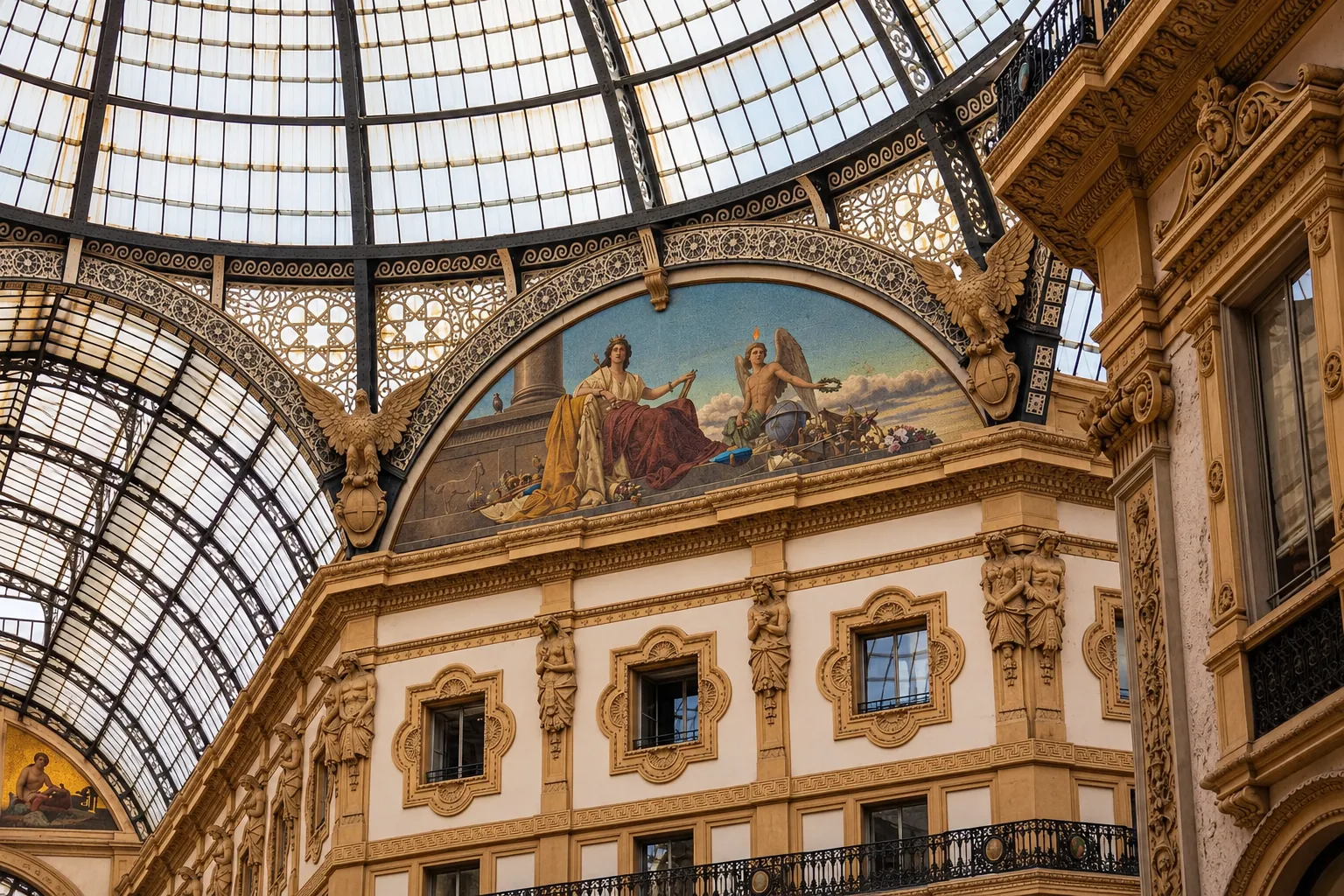 MonumentoGalleria Vittorio Emanuele IIGlass-domed arcade, Milan's drawing room, mosaic bull luck tradition, Duomo-to-La Scala passageMilan commissioned this arcade in 1861, the year of Italian unification, naming it for the new kingdom's first king, and architect Giuseppe Mengoni built it between 1865 and 1877 as a glass-and-iron cross connecting Piazza del Duomo to Piazza della Scala. Two intersecting barrel-vaulted arcades meet under a central glass dome, a structure larger in scale than the arcades that inspired it, London's Burlington Arcade and Brussels's Saint-Hubert Gallery, and one that went on to lend its own name, galleria, to shopping arcades built in its image afterward. Underfoot at the crossing, a mosaic zodiac wheel includes a bull representing Turin, and tradition holds that spinning three times on one heel over the bull's more sensitive anatomy brings good luck, a custom energetic enough that the mosaic there has needed periodic repair. Mengoni himself died in a fall from the arcade's scaffolding days before its official opening, a fact rarely mentioned on the plaques celebrating his achievement.
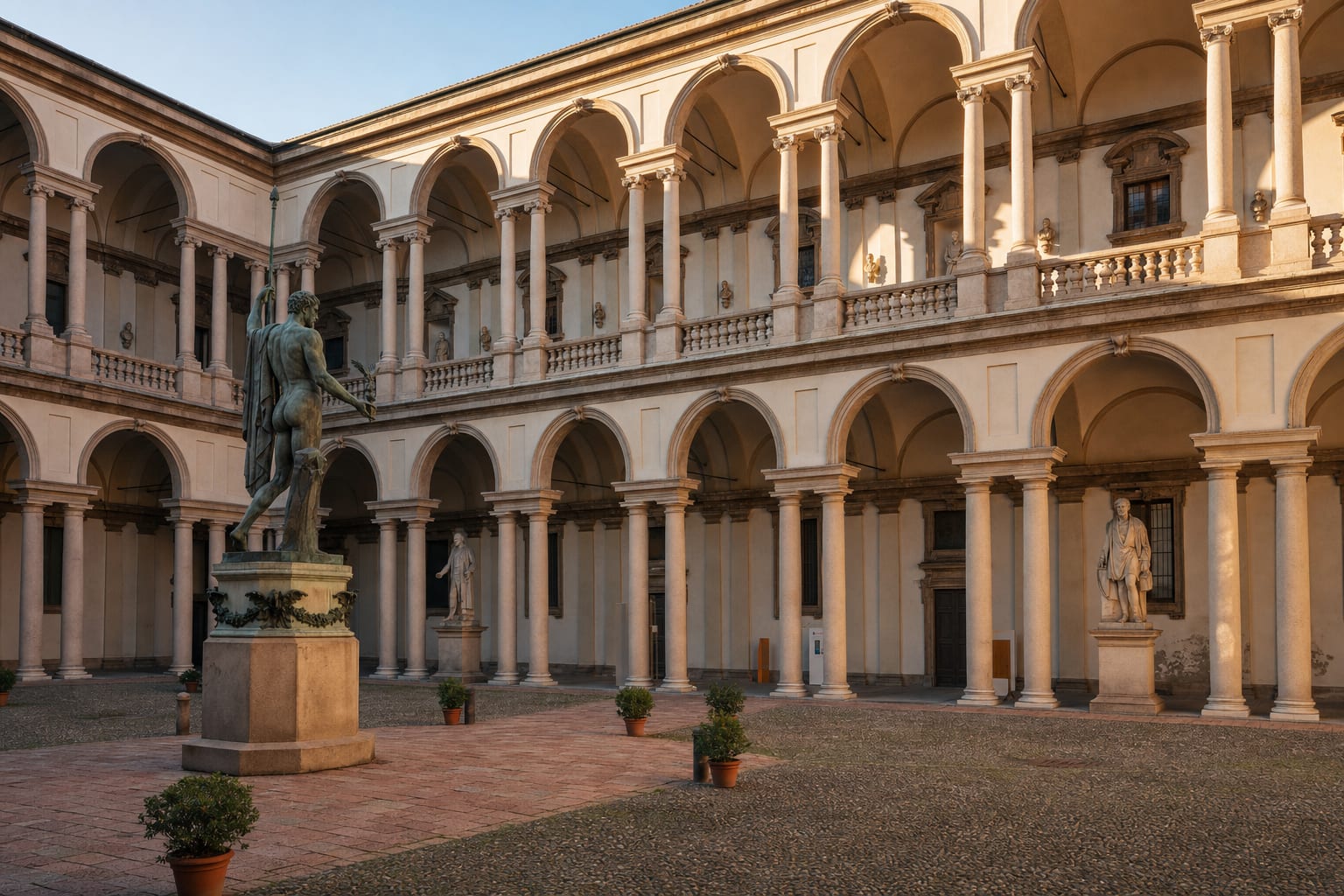 GalleriaPinacoteca di BreraMantegna's Dead Christ, Raphael's Marriage of the Virgin, Hayez's Kiss, Napoleonic collectionNapoleon built Brera's collection out of confiscated altarpieces, stripping suppressed churches and convents across Lombardy and the Veneto to fill a gallery worthy of his new kingdom; it opened, fittingly, on his birthday, August 15, 1809. The building started as a Jesuit college in 1572, was rebuilt by Francesco Maria Richini in the 1620s, and later held an astronomical observatory whose dome still rises over the courtyard. Inside, Mantegna's Dead Christ foreshortens the body so sharply that the wounded feet seem to reach into the room, while Raphael's Marriage of the Virgin, signed and dated 1504, shows the artist still absorbing his teacher Perugino. Hayez's Kiss, painted in 1859 as a coded call for Italian unification, closes out rooms running from Piero della Francesca to the nineteenth century.
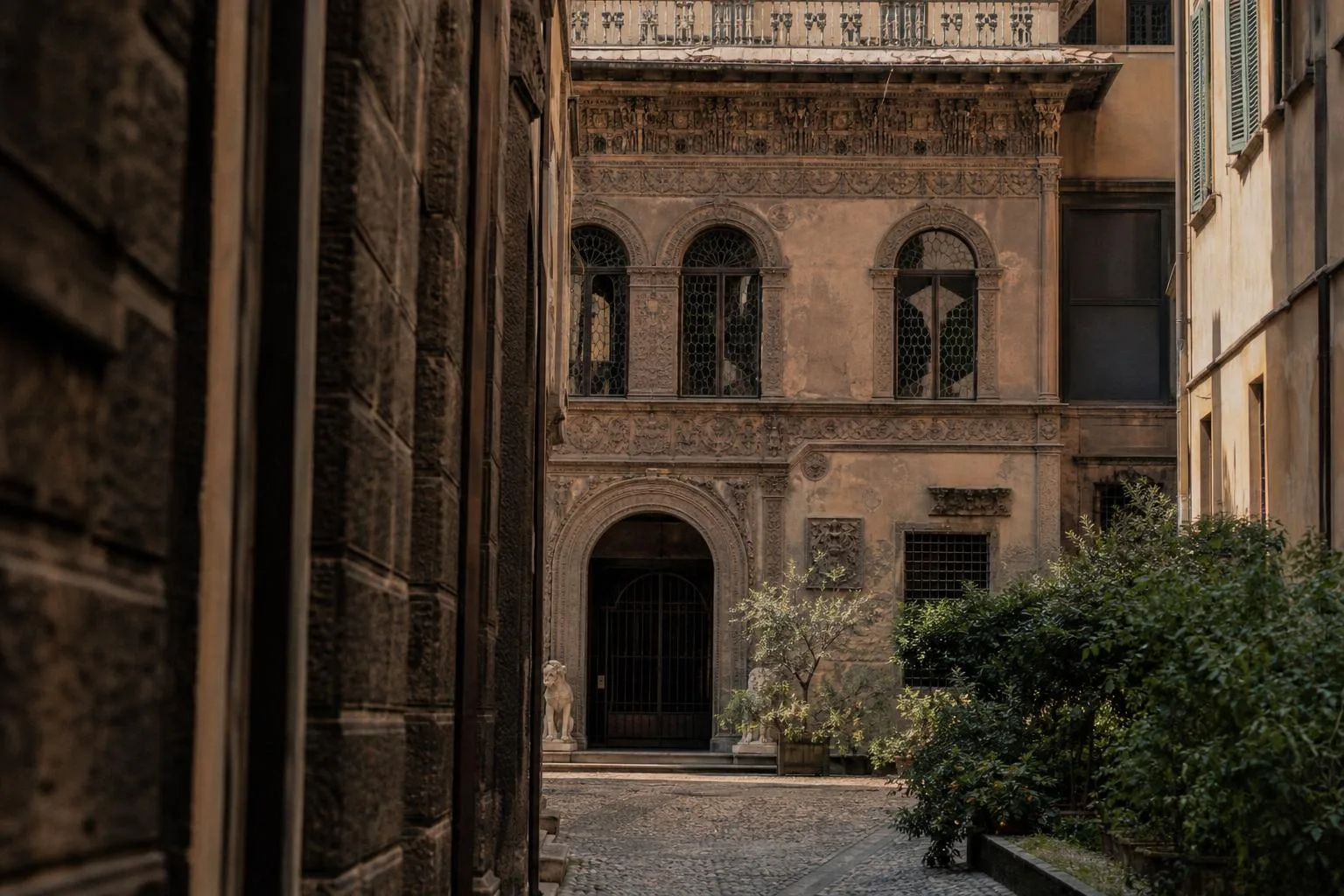 MuseoGemma nascostaMuseo Bagatti ValsecchiNeo-Renaissance palazzo, genuine Renaissance furnishings, a Bellini workshop MadonnaThe Bagatti Valsecchi brothers, Fausto and Giuseppe, built themselves a Renaissance palace in the 1880s, three centuries after the style they loved had gone out of fashion, and furnished it so convincingly with genuine 15th and 16th-century pieces that visitors still ask whether it is a real historic house. It opened as a museum in 1994, its rooms named for their function in noble Milanese life: the Sala dei Falconi, the Camera Rossa, an armory hung with weapons the brothers actually collected and wore to costume balls. A small Madonna attributed to the Bellini workshop hangs among cassoni, majolica and stained glass gathered from across Italy. The palazzo sits two streets from the designer boutiques of Montenapoleone, itself a kind of costume, private wealth staged as public spectacle a century before the neighborhood’s current one.
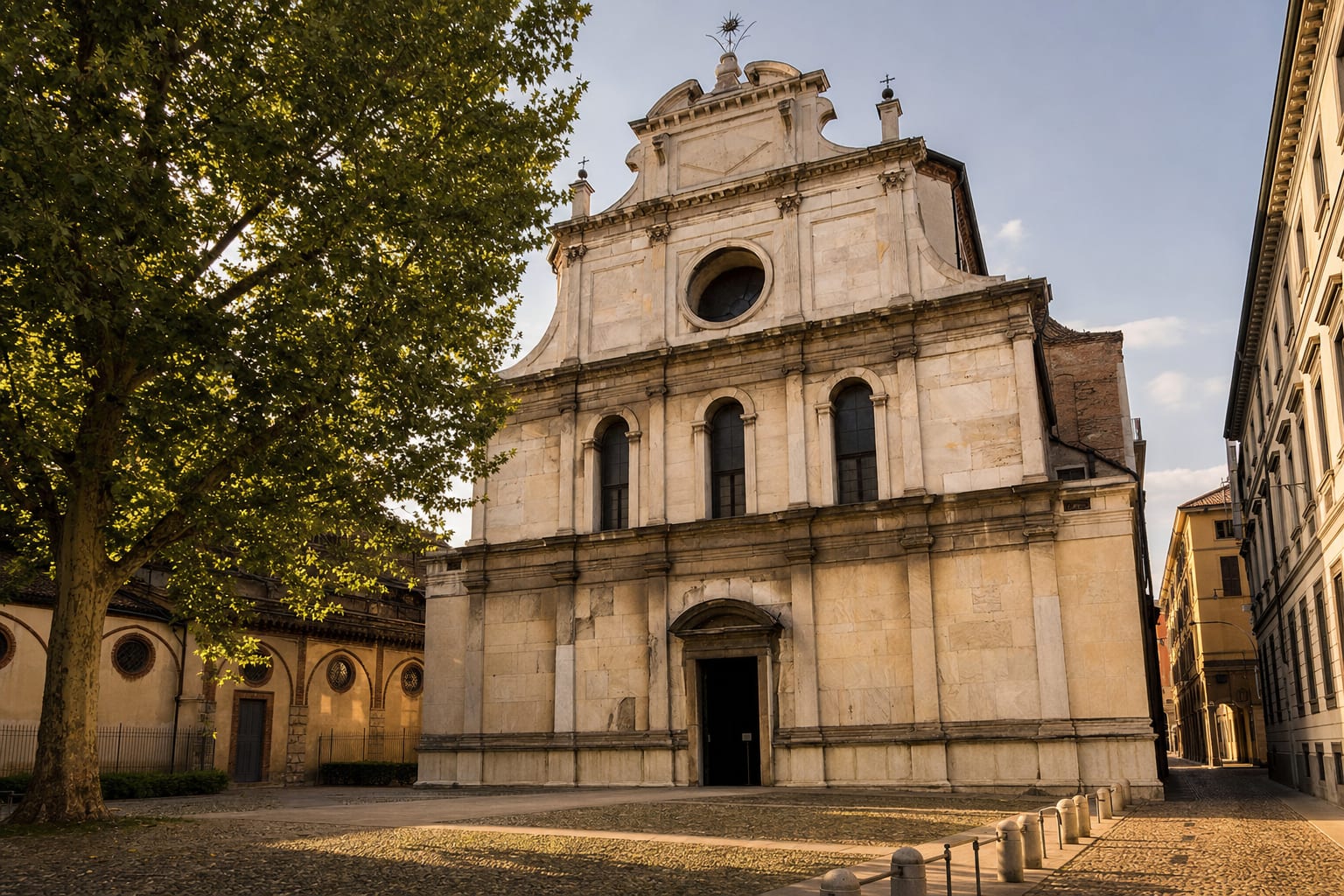 ChiesaSan Maurizio al Monastero MaggioreLuini fresco of Saint Maurice, Sistine Chapel of Milan nickname, nuns' dividing wall, Roman hippodrome towerThe Benedictine nuns who rebuilt this church starting in 1503, finishing it fifteen years later, wanted two rooms in one: a public hall for the neighborhood and, behind a solid dividing wall, a private choir where the cloistered sisters could hear Mass unseen. Both halls got the same treatment, floor to ceiling frescoes, most of them by Bernardino Luini, a favorite pupil of Leonardo da Vinci, who painted the life of Saint Maurice on the dividing wall itself; his son Aurelio and other family members later filled the side chapels. The result is so dense with color and narrative that Milanese call it their Sistine Chapel. Look too for the square tower rising beside the church, built centuries earlier as part of Roman Milan's lost hippodrome before it became the bell tower. The church shares its courtyard with the Museo Archeologico, built into the surviving convent buildings.
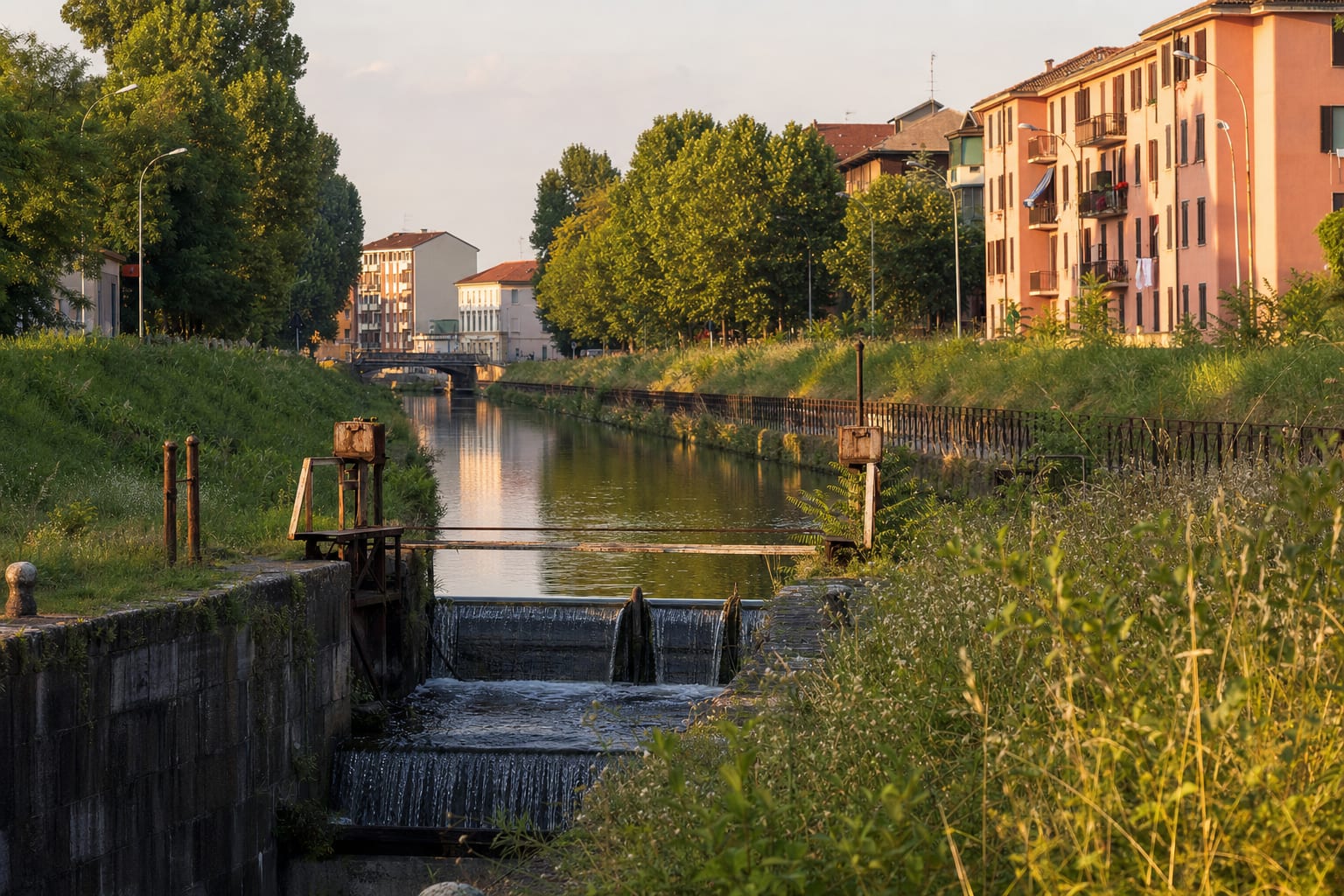 QuartiereNavigliCanal-side aperitivo, Darsena, Leonardo’s locks, Vicolo dei Lavandai washhouseMilan was once a city of canals, and the Navigli are what remain: the Naviglio Grande, a medieval waterway that carried marble for the Duomo and grain into the city, and the Naviglio Pavese, which links the Darsena to Pavia. Leonardo da Vinci studied and improved the lock system that let boats climb into the city center. The two canals meet at the Darsena, Milan’s old river port, now a favorite place for the evening aperitivo. Along the Naviglio Grande, old courtyard houses, artists’ studios and bars line the quays, and the Vicolo dei Lavandai, a covered washhouse where women once scrubbed laundry in the canal, still stands.
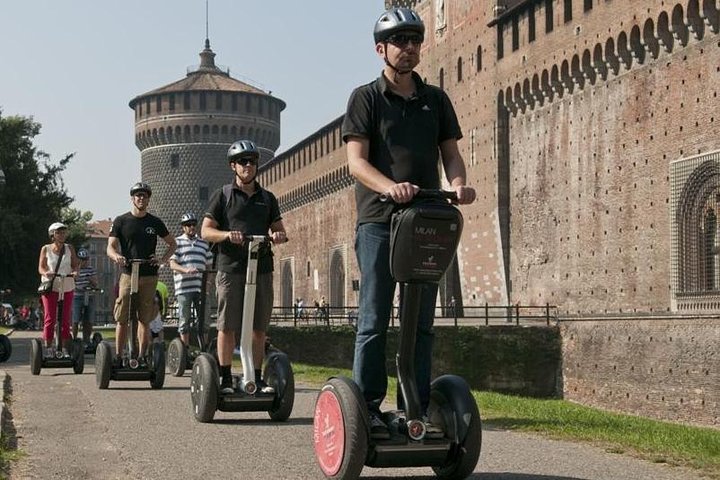
Tour da prenotare a Milano
Confrontati dai nostri editor, tra i vari operatori.
Prenotando da questi link Italia Magnifica può ricevere una commissione, senza costi per te.
- Viator
- 2 h
- 5,0★ · 2 recensioni
da 35 €Prenota questo tour- Viator
- 7 h
- 5,0★ · 13 recensioni
da 278 €Prenota questo tour- Viator
- 3 h
- 5,0★ · 35 recensioni
da 80 €Prenota questo tour- Viator
- 4 h
- 5,0★ · 1 recensioni
da 180 €Prenota questo tour- Viator
- 3 h 30 min
- 5,0★ · 3 recensioni
da 126 €Prenota questo tour- Viator
- 3 h 30 min
- 5,0★ · 17 recensioni
da 75 €Prenota questo tour


Nel raggio di una gita
Altri monumenti in Lombardia, a una gita di distanza.
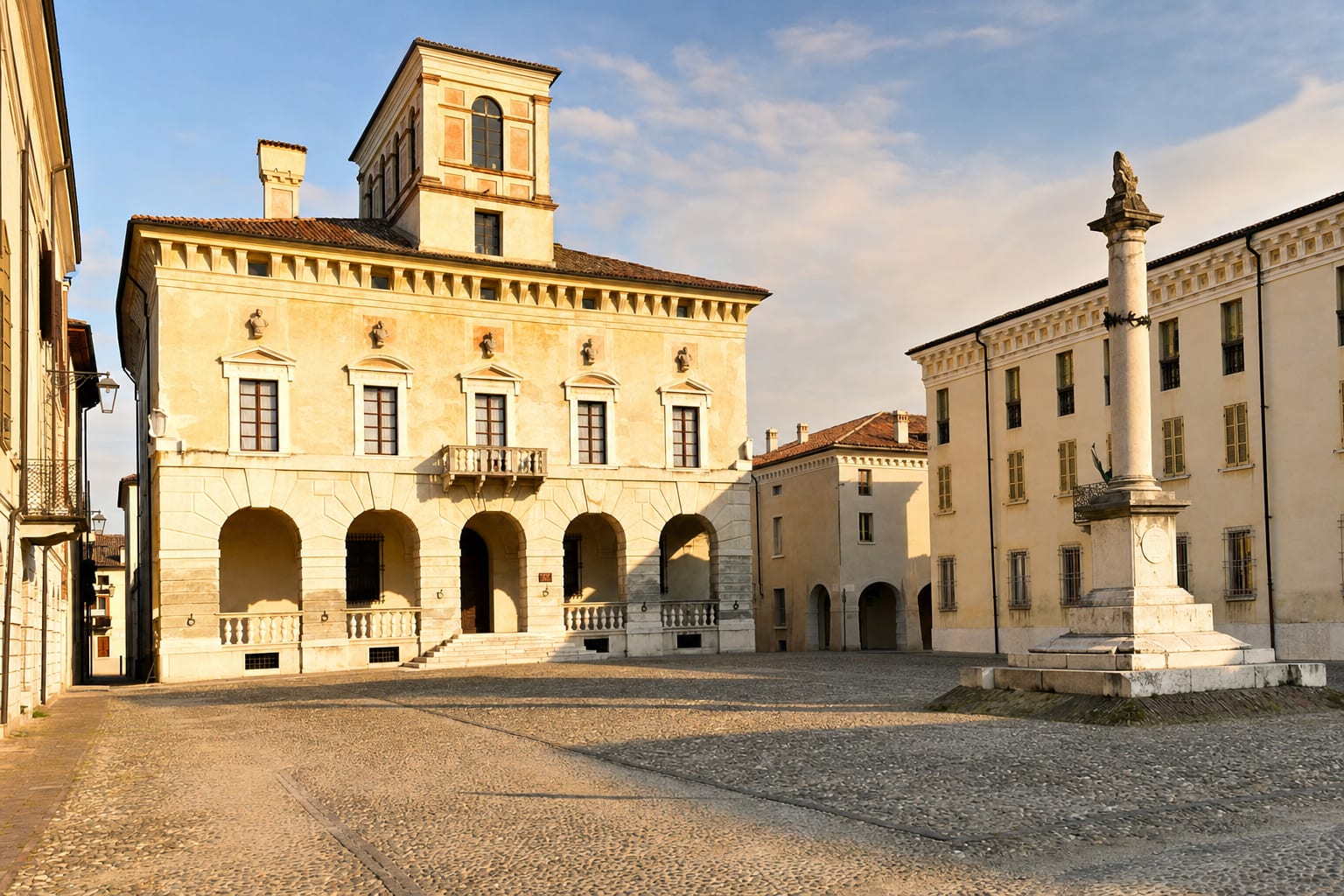 SabbionetaSabbionetaVespasiano Gonzaga's planned Renaissance grid, the Teatro all'Antica, star-shaped walls, the Galleria degli Antichi
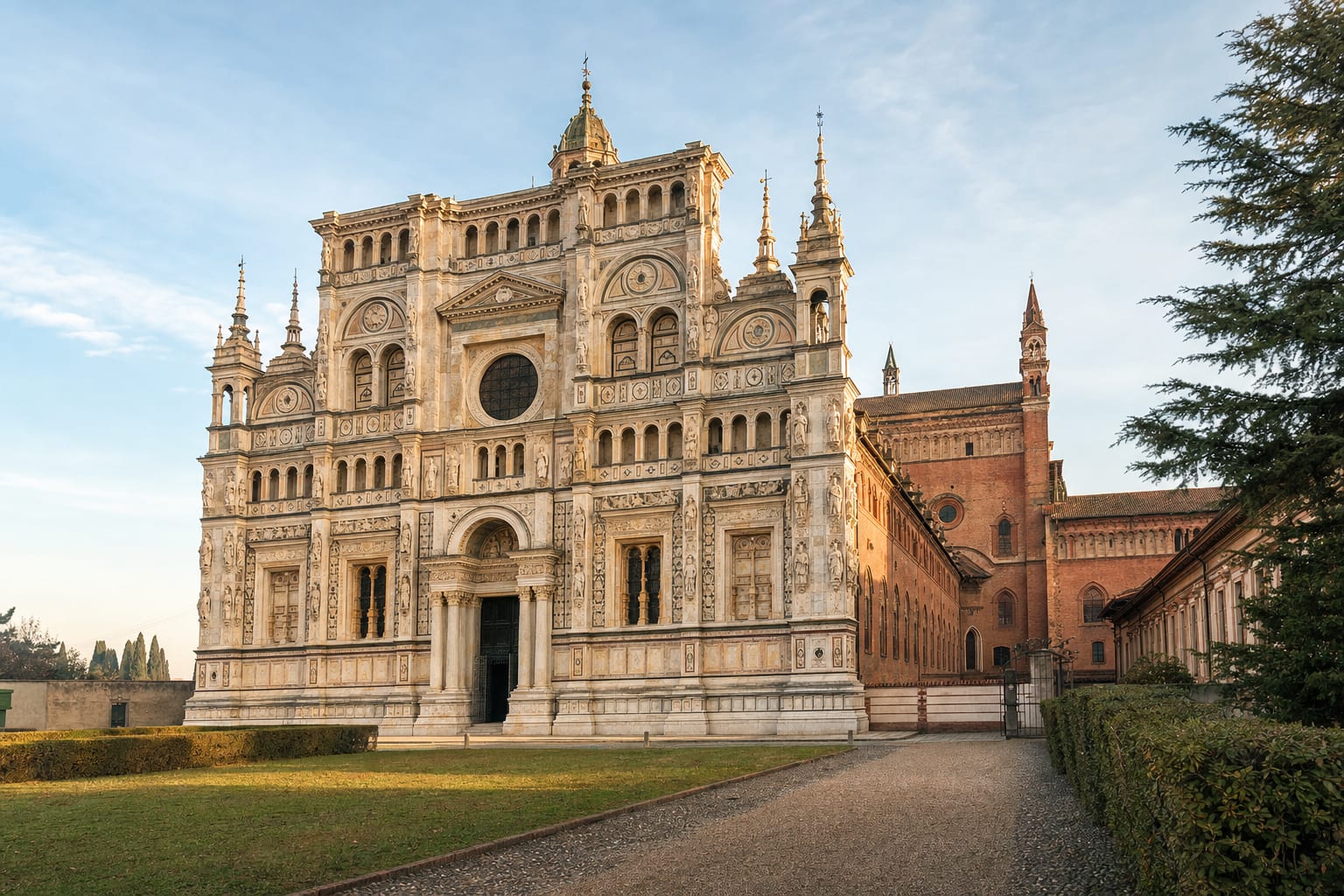 Certosa di PaviaCertosa di PaviaPolychrome marble facade, Visconti and Sforza tombs, Grand Cloister monks' cells, Bergognone art
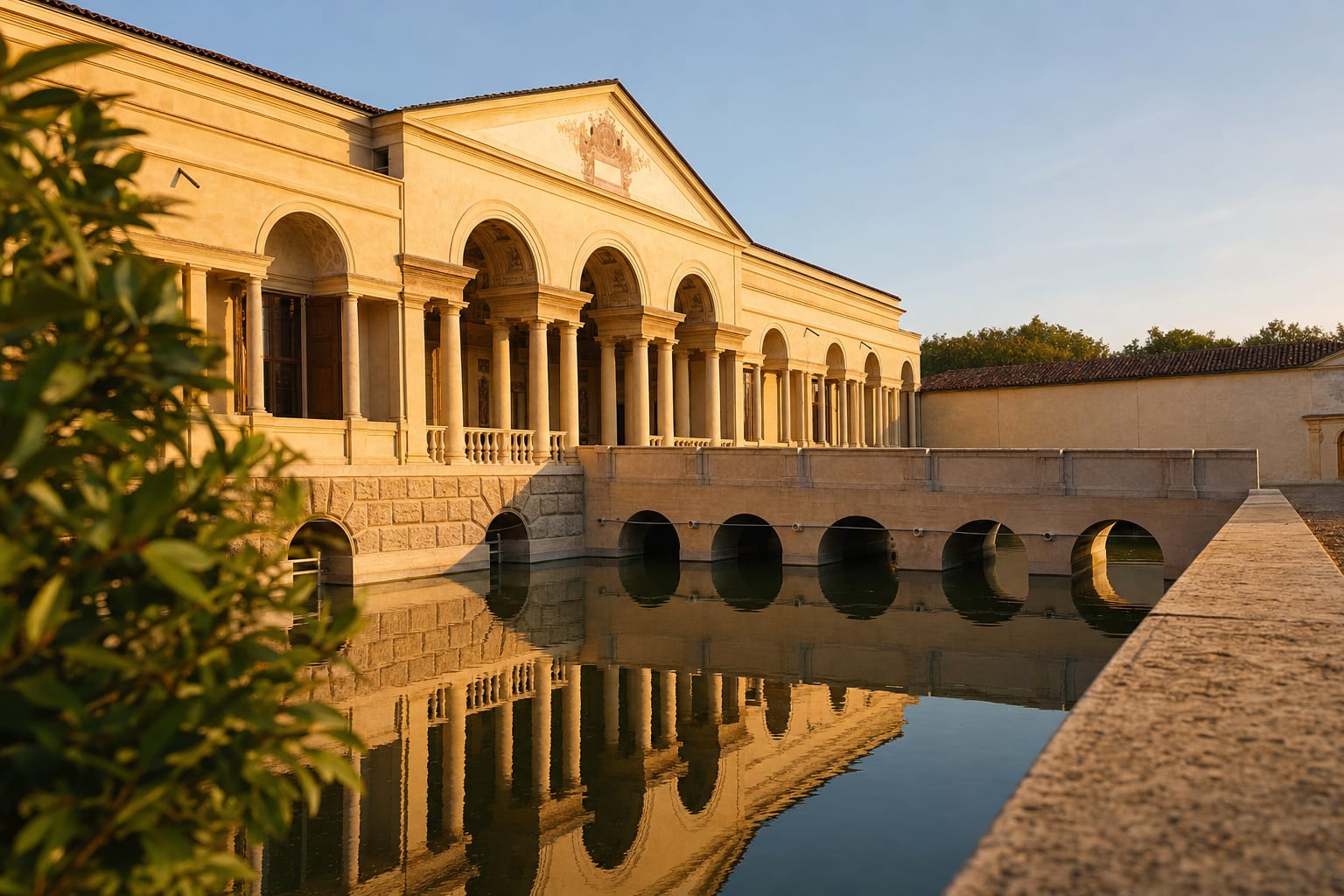 MantovaUNESCOPalazzo TeGiulio Romano's Mannerist villa, Sala dei Giganti, Sala dei Cavalli, Gonzaga leisure palace
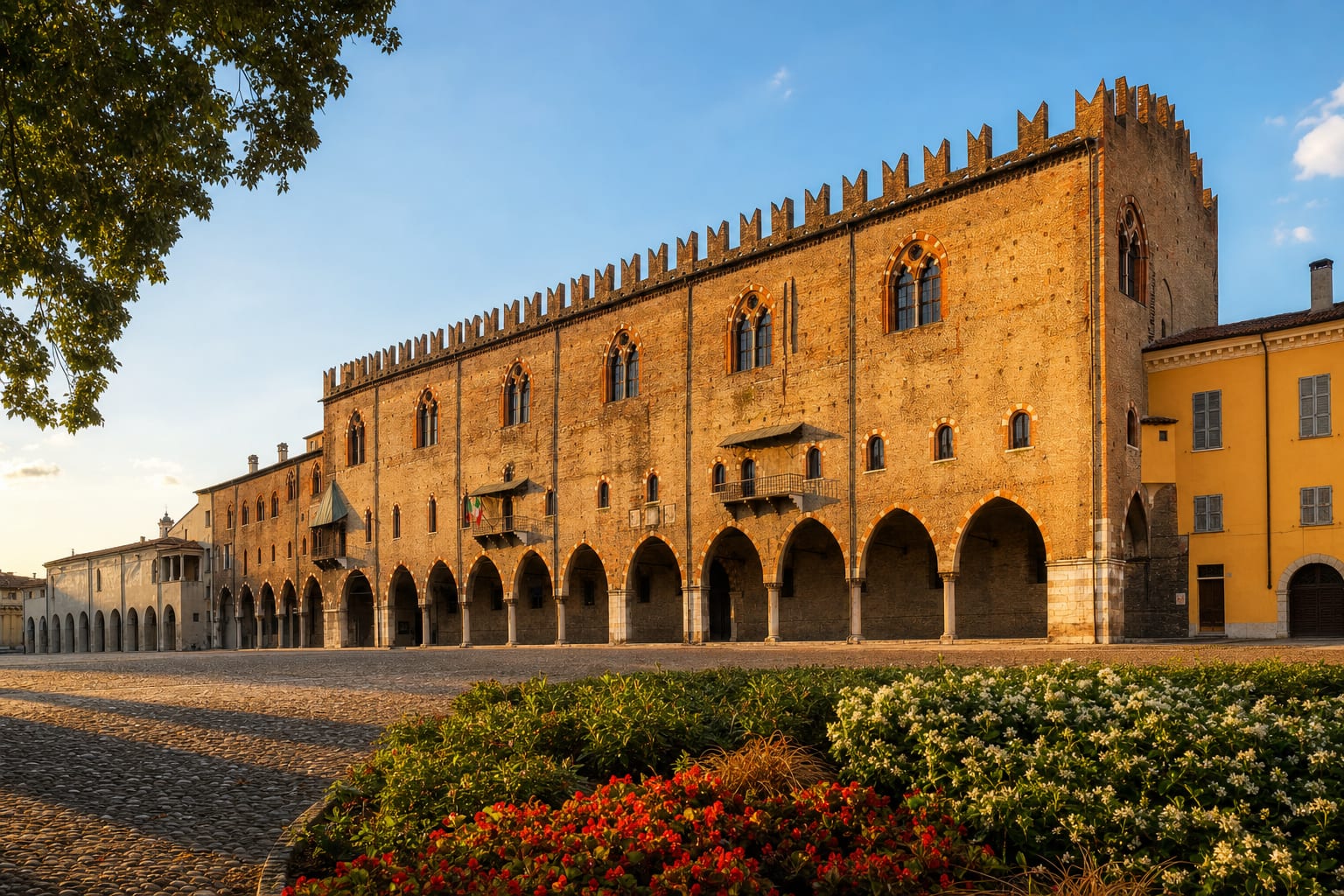 MantovaUNESCOPalazzo Ducale di MantovaGonzaga city-palace of 500 rooms, Mantegna's Camera degli Sposi, Castello di San Giorgio, Appartamento dei Nani
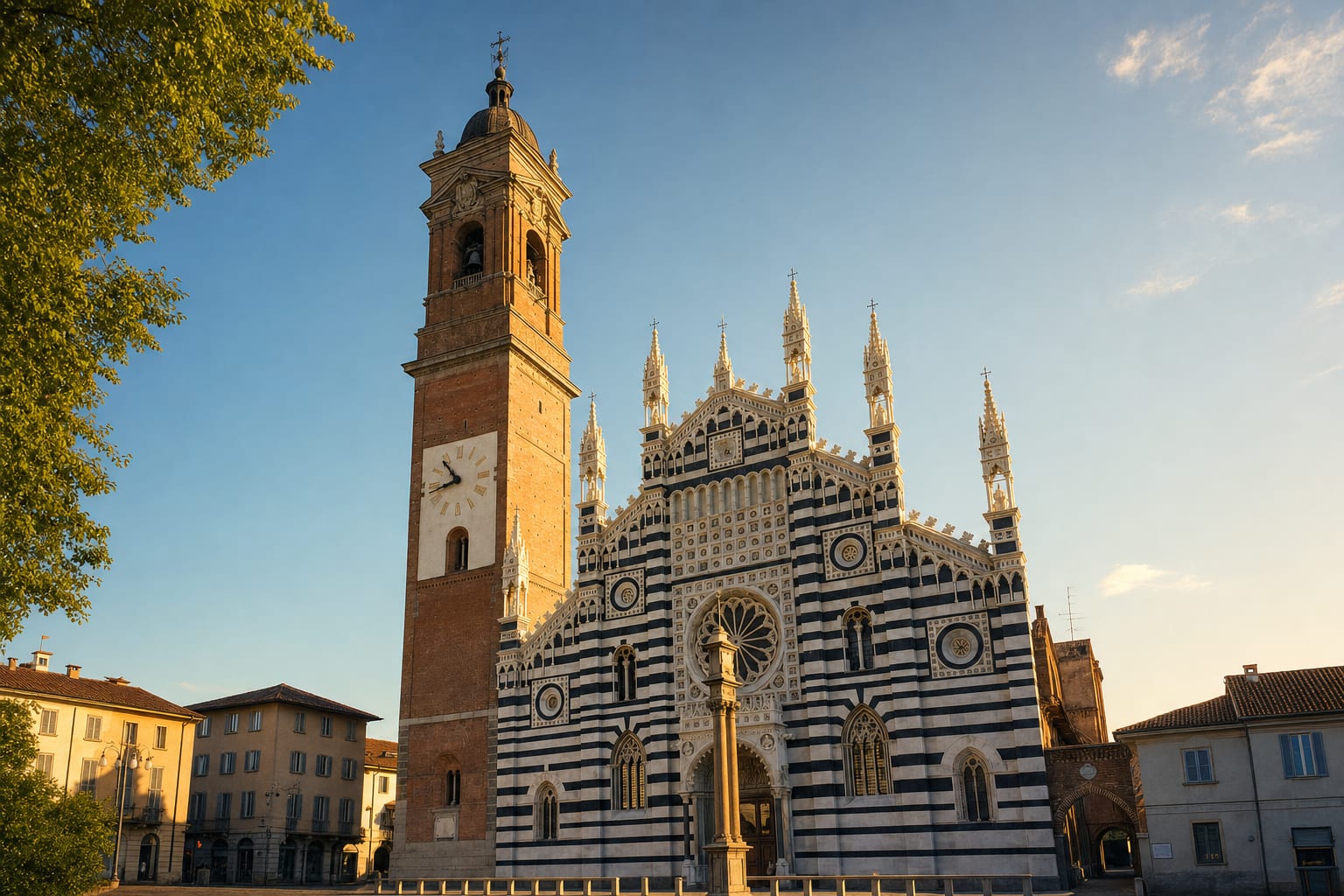 MonzaDuomo di MonzaIron Crown of Lombardy, Zavattari fresco cycle, striped Gothic facade, royal coronations since Charlemagne
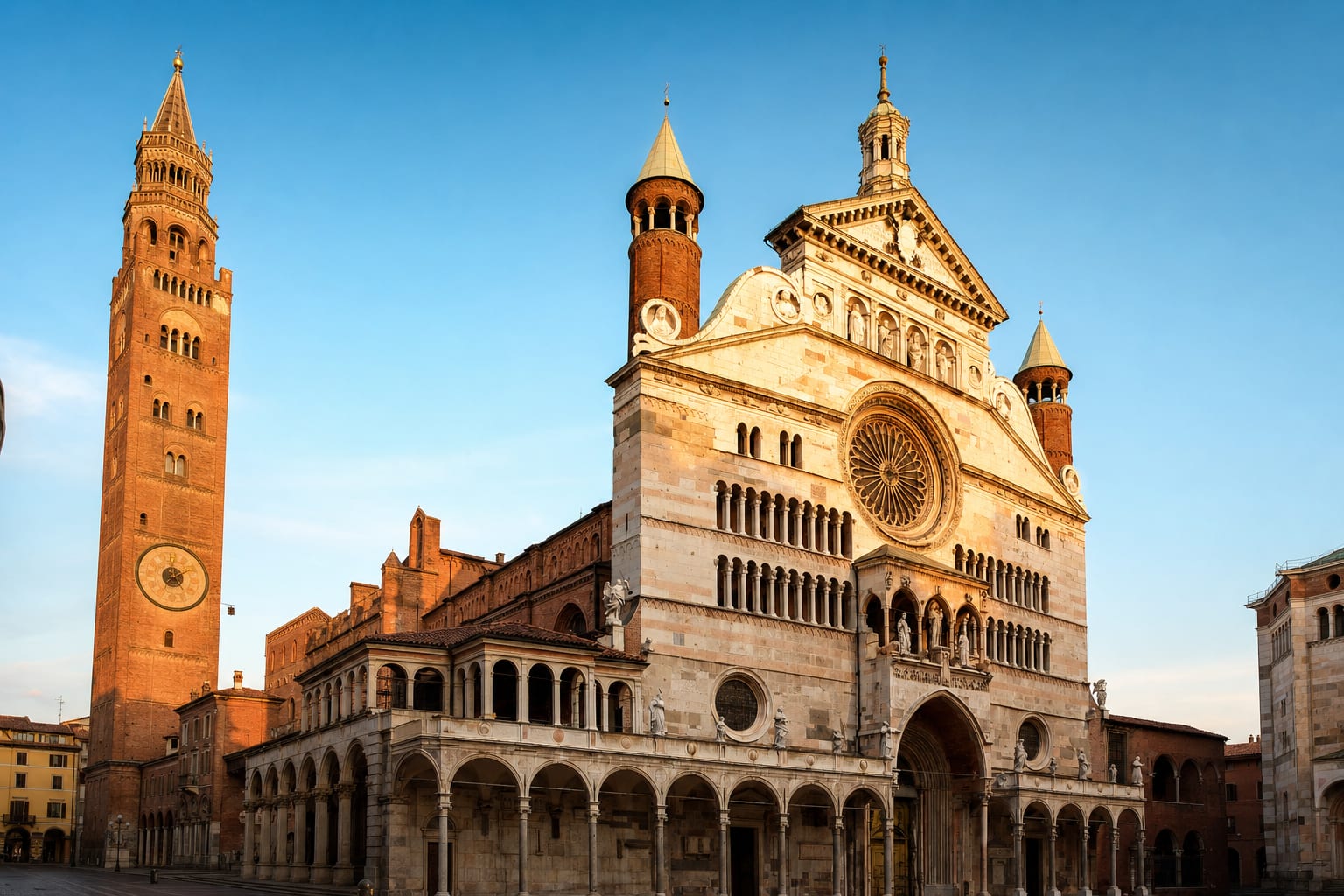 CremonaDuomo di Cremona e TorrazzoTorrazzo (112.5 m), astronomical clock, Romanesque facade, nave fresco cycles, baptistery
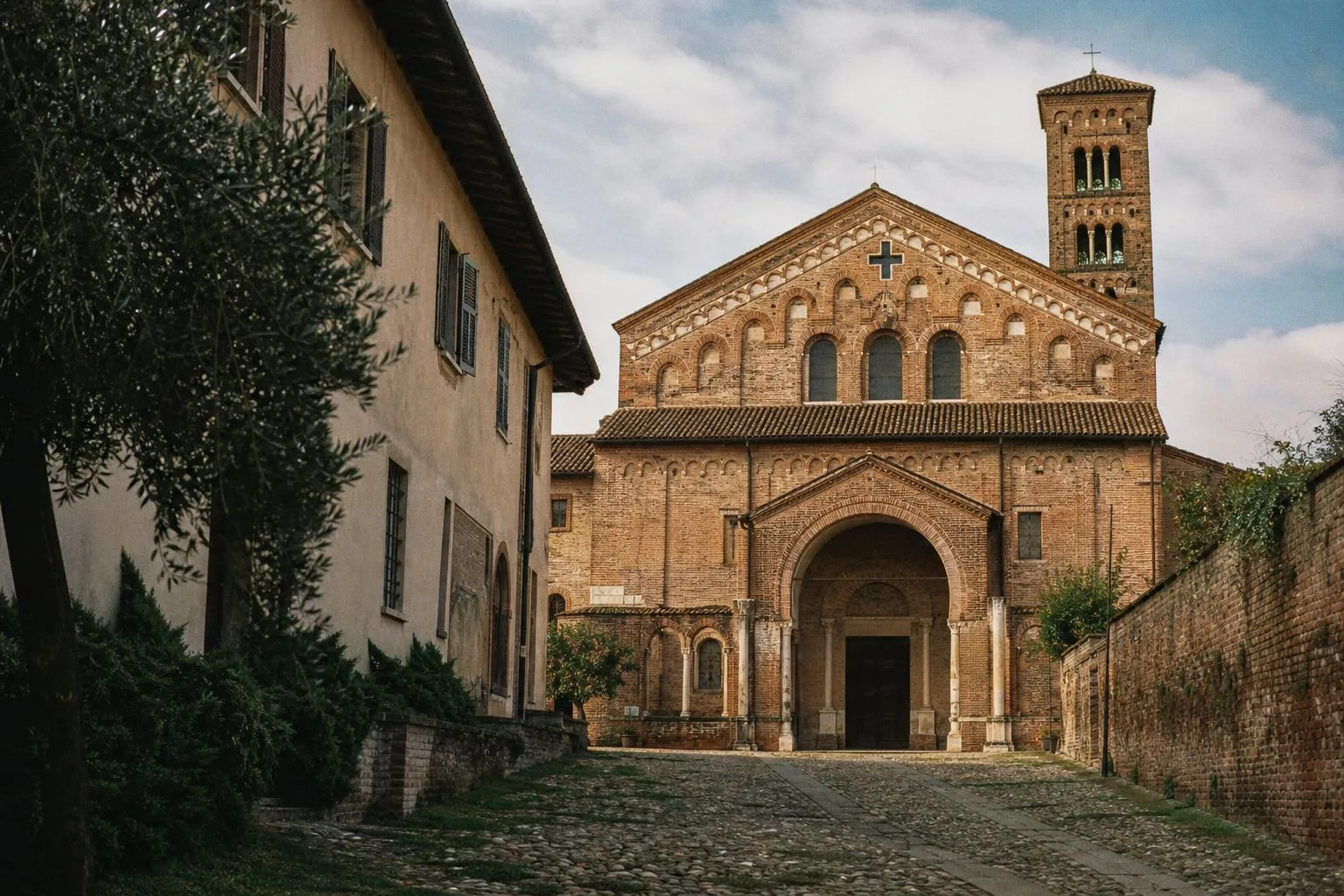 PaviaGemma nascostaBasilica di San Pietro in Ciel d'OroTomb of Saint Augustine, 14th-century marble Arca, crypt of Boethius, Romanesque brickwork
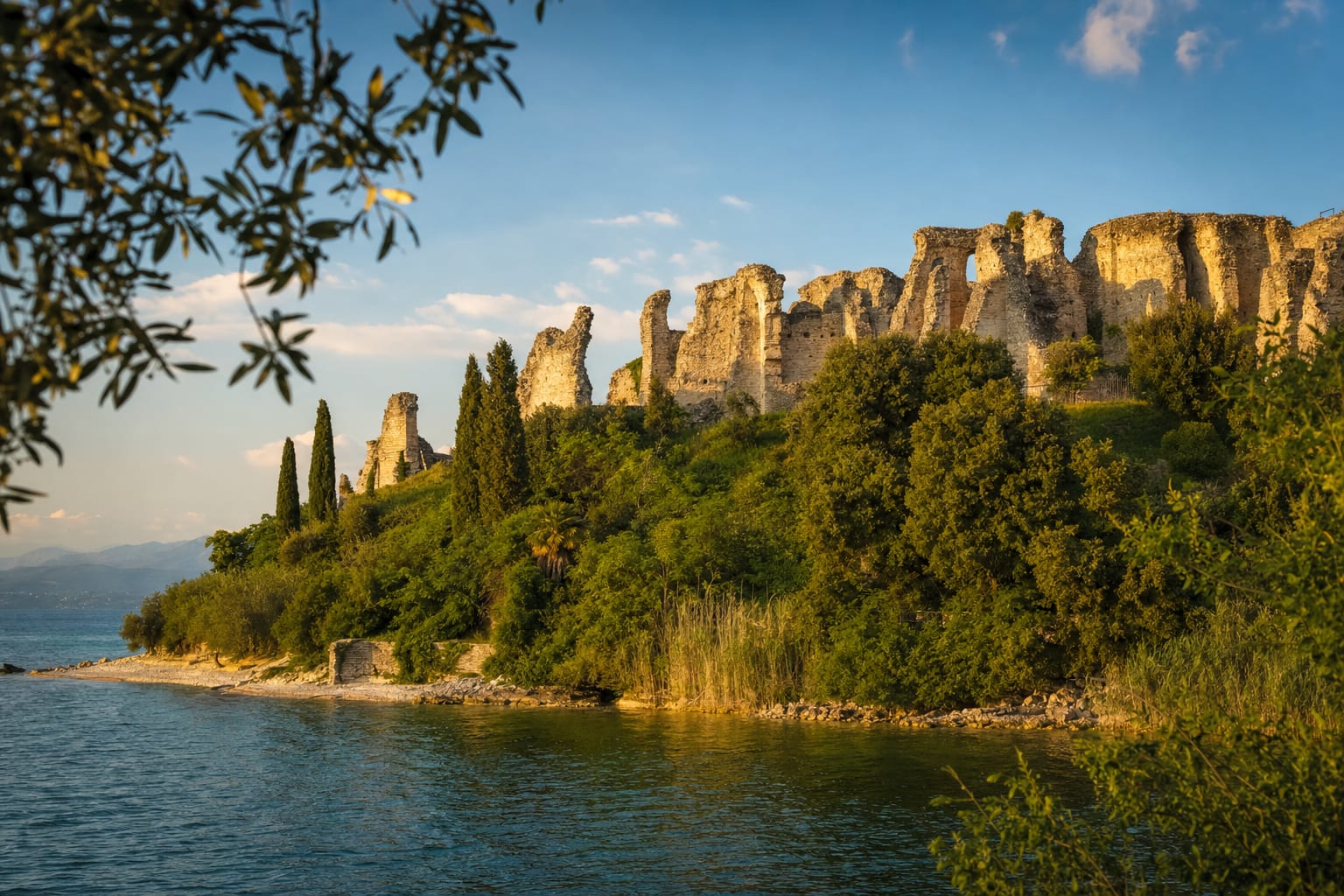 SirmioneGrotte di CatulloLargest Roman villa in Italy, Catullus tradition, olive grove ruins, lake-tip panorama