

Tutti i monumenti di Aosta
I luoghi e i capolavori attorno a cui vale la pena costruire una giornata.
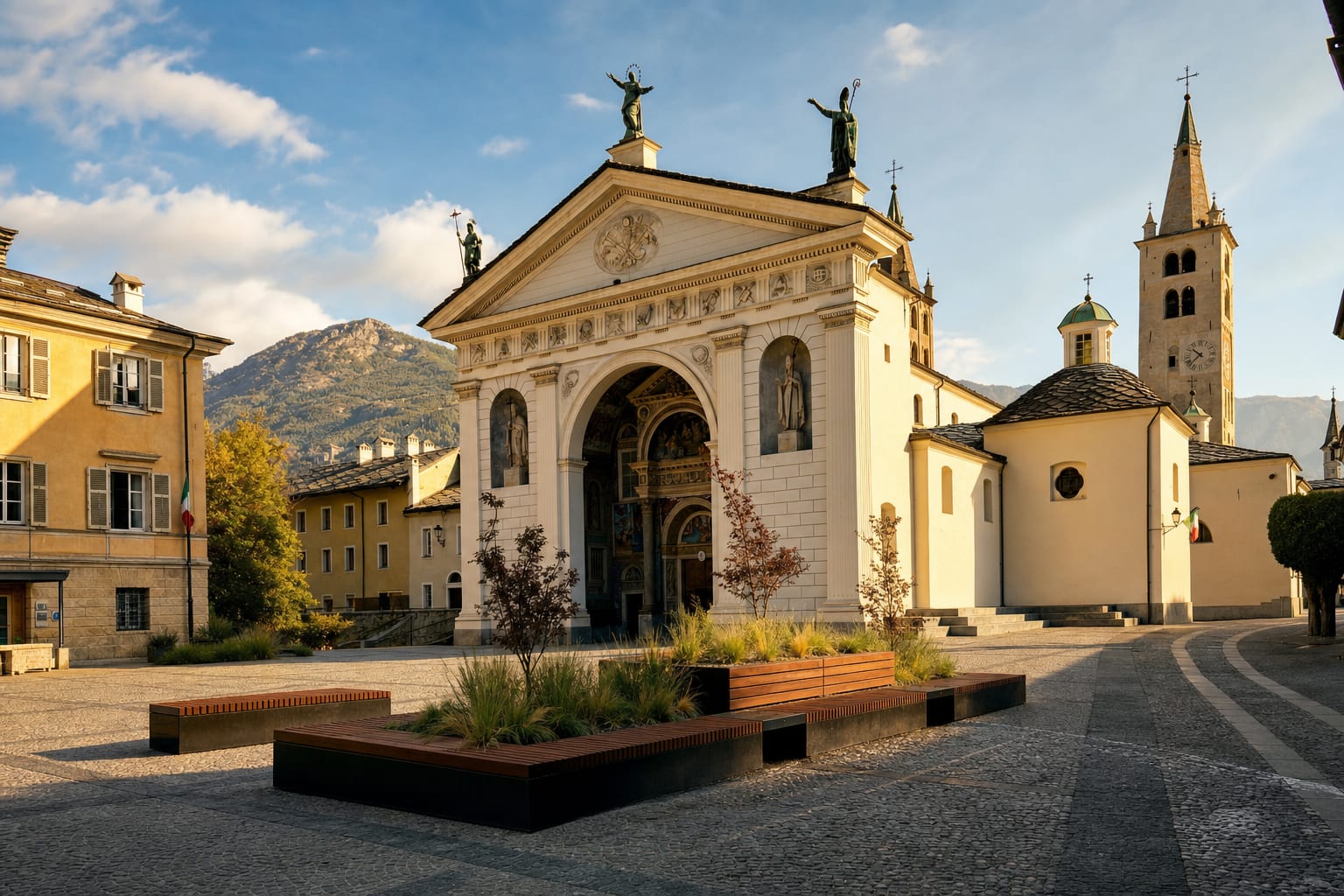 ChiesaCattedrale di AostaEleventh-century frescoes rediscovered in 1979, layered choir mosaics, Saint Grat's reliquary, neoclassical facadeBehind a neoclassical front finished in 1848, Aosta's cathedral hides one of the Alps' most layered interiors. An atelier working around the mid-eleventh century frescoed the nave for the diocese; the paintings vanished under later renovations and were rediscovered only in 1979, opened to visitors in 2000, and are viewed today by climbing into the roof space above the current ceiling. The choir floor carries two mosaics from different centuries: a Cycle of the Months from the late twelfth century, showing Christ as Lord of time surrounded by the year's twelve labors, and an early thirteenth century mosaic of real and imaginary animals. A separate treasury museum, open weekend afternoons, keeps a reliquary of Saint Grat, illuminated manuscripts and the monumental tombs sculptor Stefano Mossettaz carved for the church. The building has been a national monument since 1940.Pianifica la visita
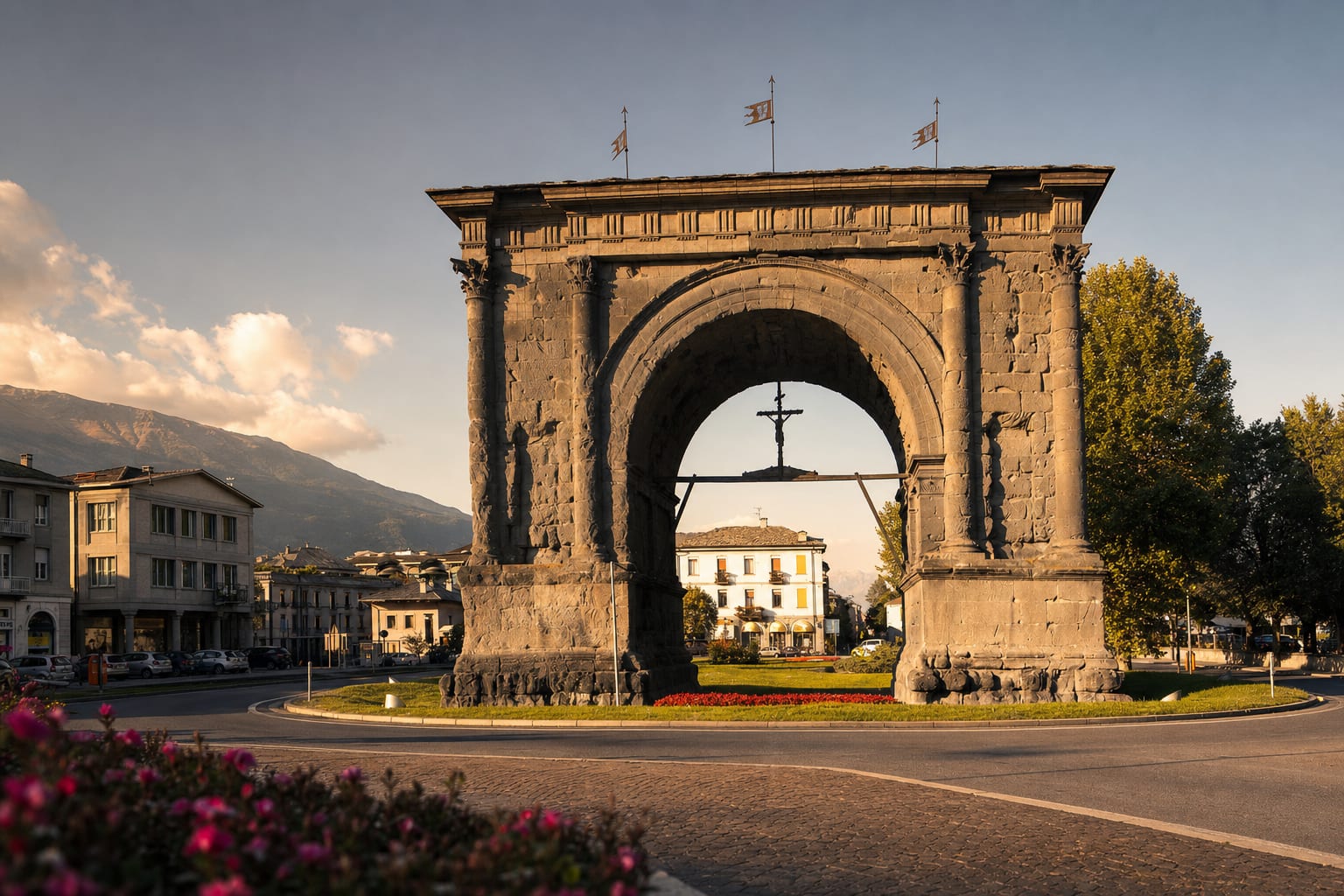 MonumentoArco di AugustoArch of 25 BC, entrance to Augusta Praetoria, Saint-Voult crucifixThe Arch of Augustus stands at the eastern entrance of Aosta, built in 25 BC after Rome defeated the Salassi and founded the colony of Augusta Praetoria. For two thousand years it has watched over the road into town, in line with the Porta Praetoria and the Roman bridge across the Buthier. Locals called it Saint-Voult, after a crucifix hung beneath the keystone; the one you see now dates from 1980 and replaced a fifteenth-century cross that is kept in the cathedral treasury museum. A restoration in 1913 and 1914 gave the arch its present look. It is a monument to see from the street, on foot, at any time, and it costs nothing.
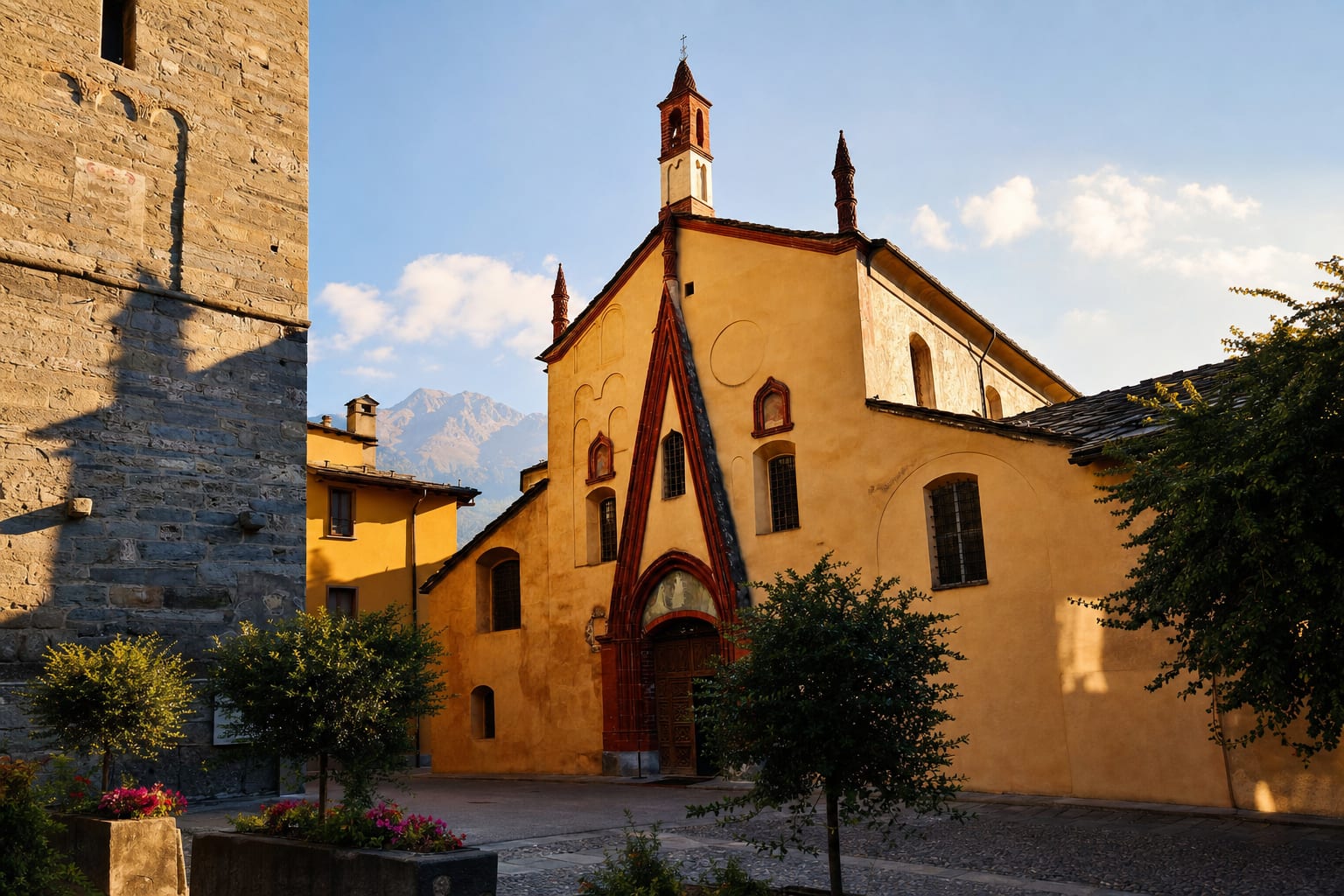 ChiesaCollegiata di Sant'OrsoRomanesque cloister capitals, hidden Ottonian frescoes, 1589 great bell, medieval priory complexA thousand years of Valdostan art gather around the Romanesque cloister of the priory of Sant'Orso in Aosta, where thirty-seven of an original fifty-two marble capitals survive, carved with biblical scenes and grotesque beasts and coated long ago in a translucent, ash-flecked sealant that darkened them into their present bronze color. Bishop Anselmo I rebuilt the church on an early Christian foundation between 994 and 1026, and later centuries added Gothic vaulting and a 44-meter bell tower whose largest bell, cast in France in 1589 and weighing nearly 2,800 kilograms, remains the biggest in the Aosta Valley. Rare Ottonian frescoes, painted before the Romanesque rebuilding, survive hidden in the attic space above the nave vaults, reachable only on specific guided visits.
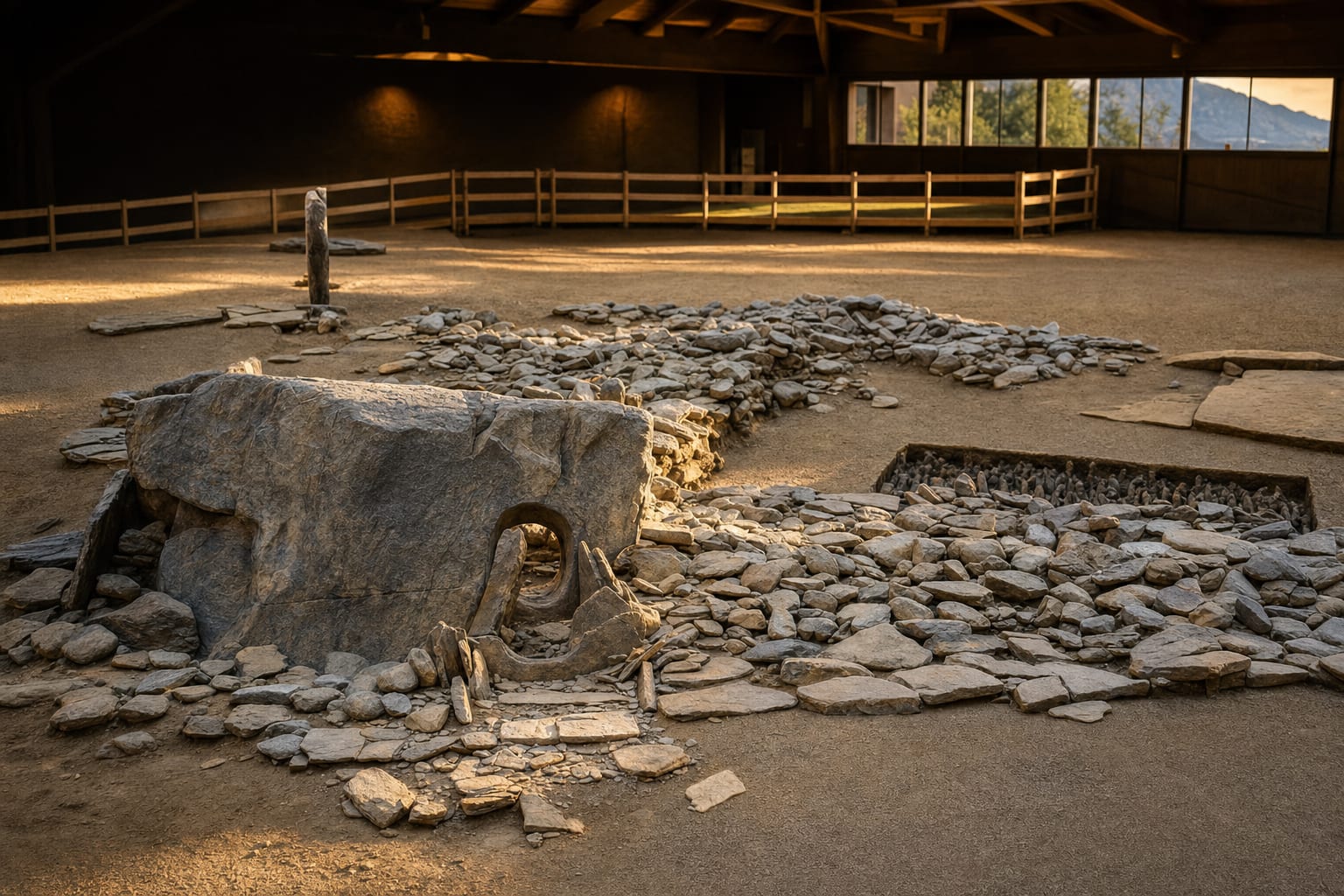 MuseoGemma nascostaArea Megalitica di Saint-Martin-de-CorleansNeolithic anthropomorphic stelae, six-millennia continuous use, glass-floor museum, 1969 discoveryConstruction workers found this ritual landscape six meters below street level in 1969, and archaeologists have since traced continuous use from the fifth millennium BC through the medieval period, one of the longest sequences of sacred use anywhere in the Alps. Carved anthropomorphic stelae, plowing furrows left by Neolithic rituals, dolmenic and cist burials, and rows of wooden ceremonial posts document six thousand years of changing beliefs on the same ten-thousand-square-meter plot. A museum designed by architect Vittorio Valletti, with a 46.5-meter central nave requiring no interior columns, opened over the site in 2016 and is now called the MegaMuseo. The building lets visitors walk directly above the excavation, looking down through glass floors at stelae still standing where they were planted.
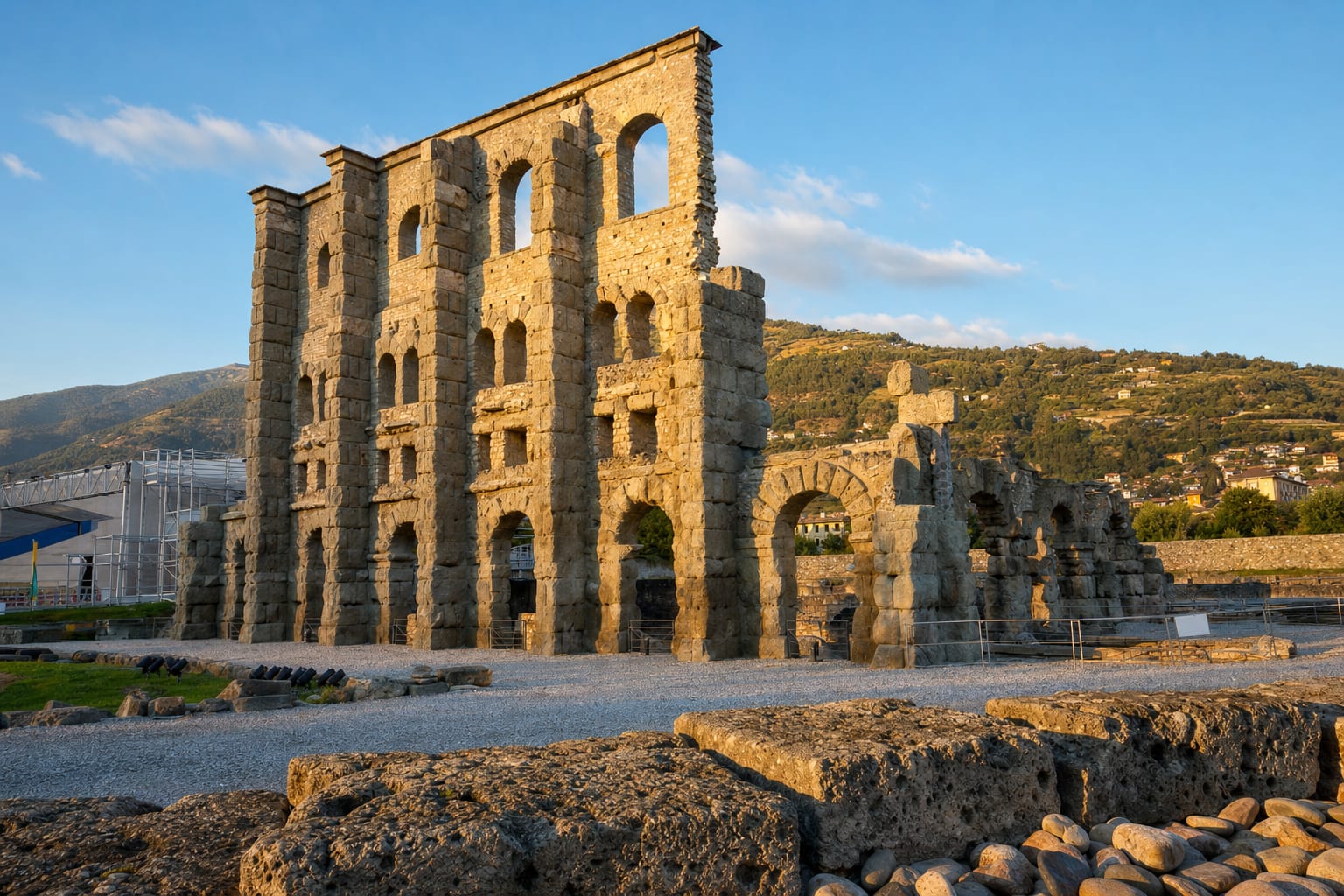 Sito archeologicoTeatro Romano di Aosta22-meter Augustan stage wall, open-air summer performances, combined Aosta ticketAugustus founded Aosta as a military colony in 25 BCE, and a generation later the town built this theatre, its 22-meter stage wall still standing almost to full height, one of the tallest surviving Roman theatre facades anywhere. The cavea once seated up to four thousand people against a backdrop of actual Alps rather than painted scenery. It still hosts open-air performances in summer, the same use it was built for two thousand years ago, and a combined ticket links it to the town's other Roman sites.
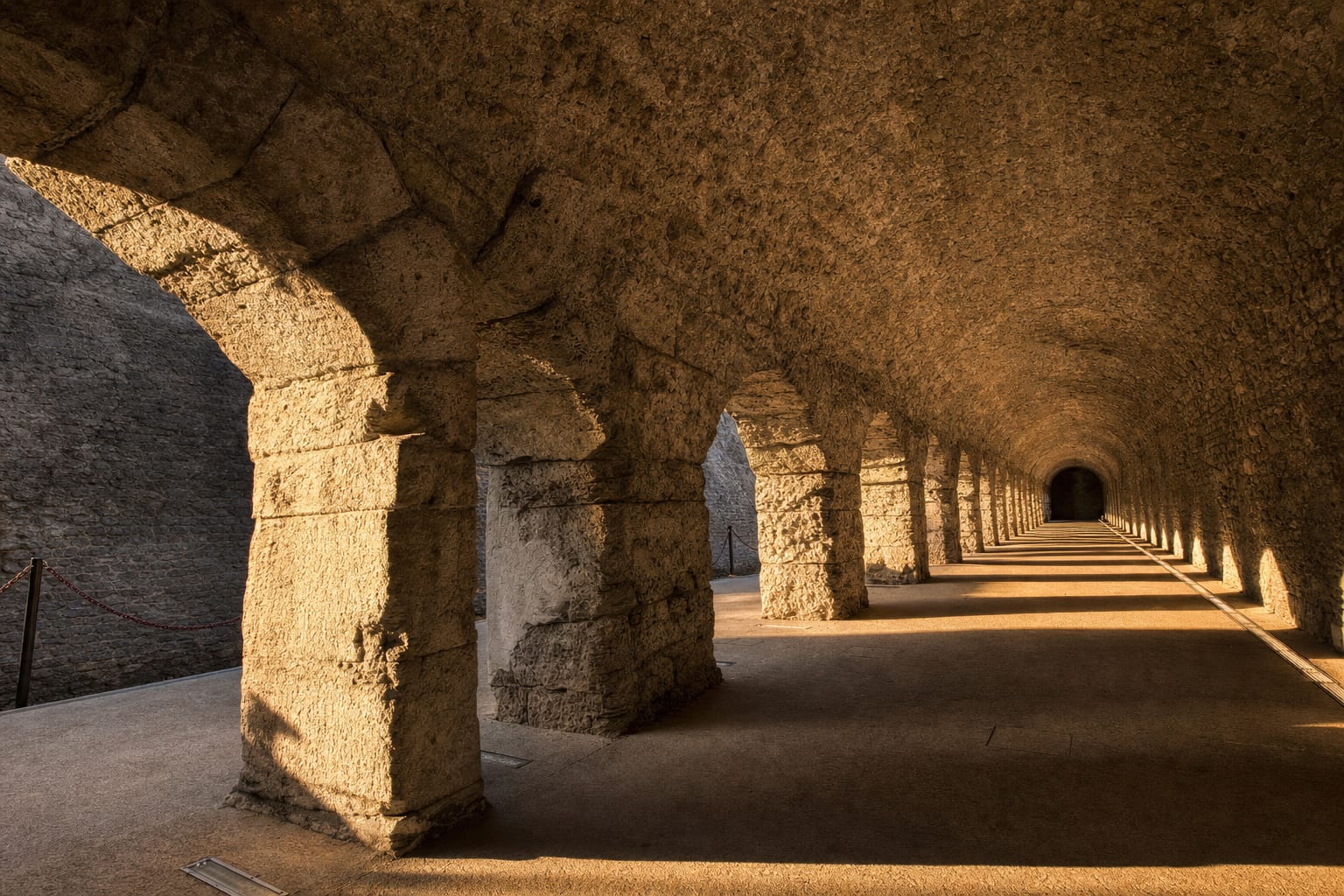 Sito archeologicoCriptoportico ForenseUnderground horseshoe gallery, forum-leveling engineering, double colonnade atmosphere, over 100 meters intactBeneath what was once the forum of Augusta Praetoria, a horseshoe of vaulted, double-arcaded galleries runs for more than a hundred meters, built not as a hiding place but as an engineering fix: the sacred terrace above needed leveling, and the Romans solved it by building a basement rather than trucking in fill. The double row of arches, still remarkably intact, creates a cool, echoing corridor that is now the closest thing to walking directly through the foundations of the Roman colony's civic heart, more atmospheric than most above-ground ruins precisely because it was never meant to be seen.
Nel raggio di una gita
Altri monumenti in Valle d'Aosta, a una gita di distanza.
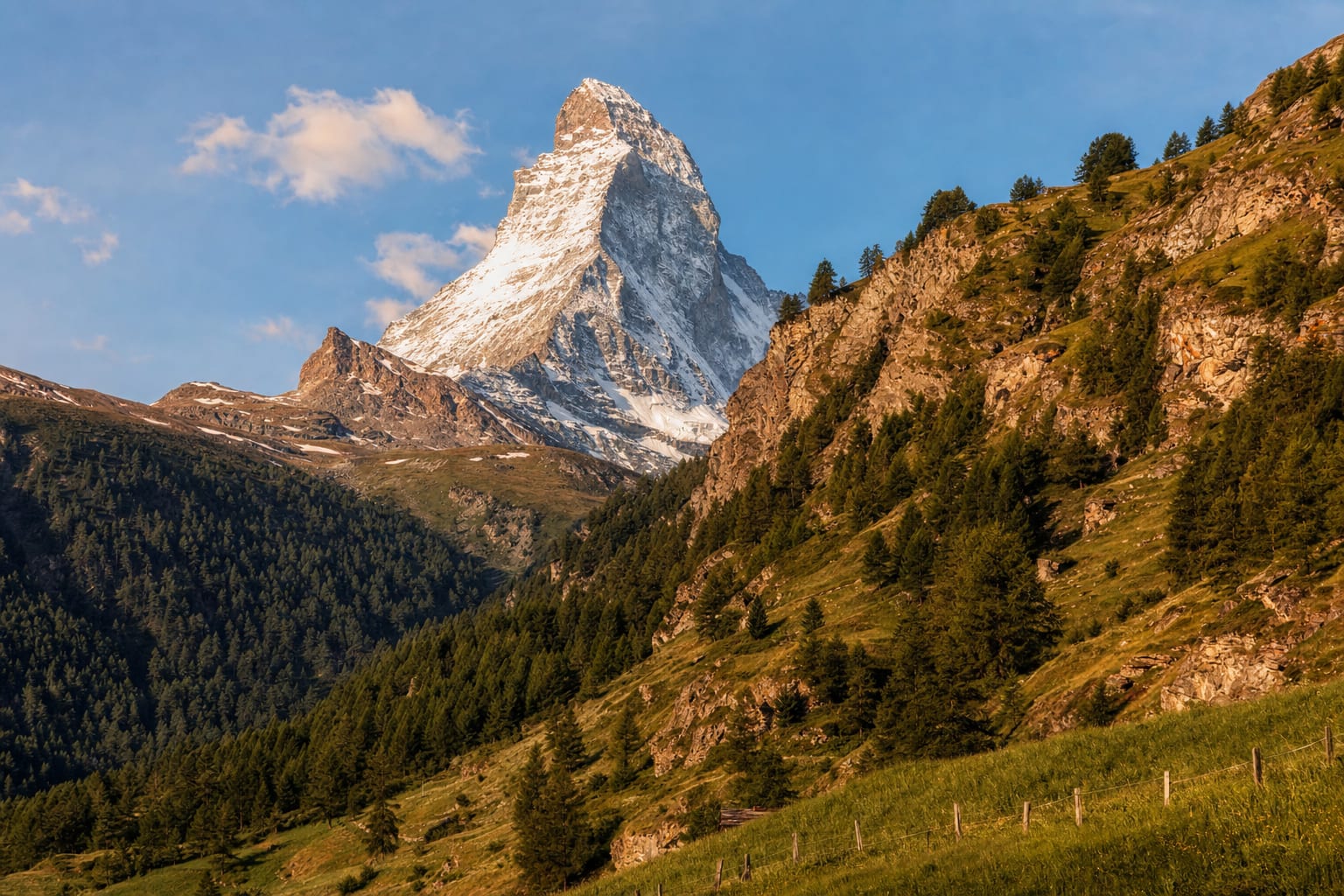 Breuil-CerviniaMonte CervinoThe pyramid peak, glacier skiing at Plateau Rosa, the Italy-Switzerland cable car link
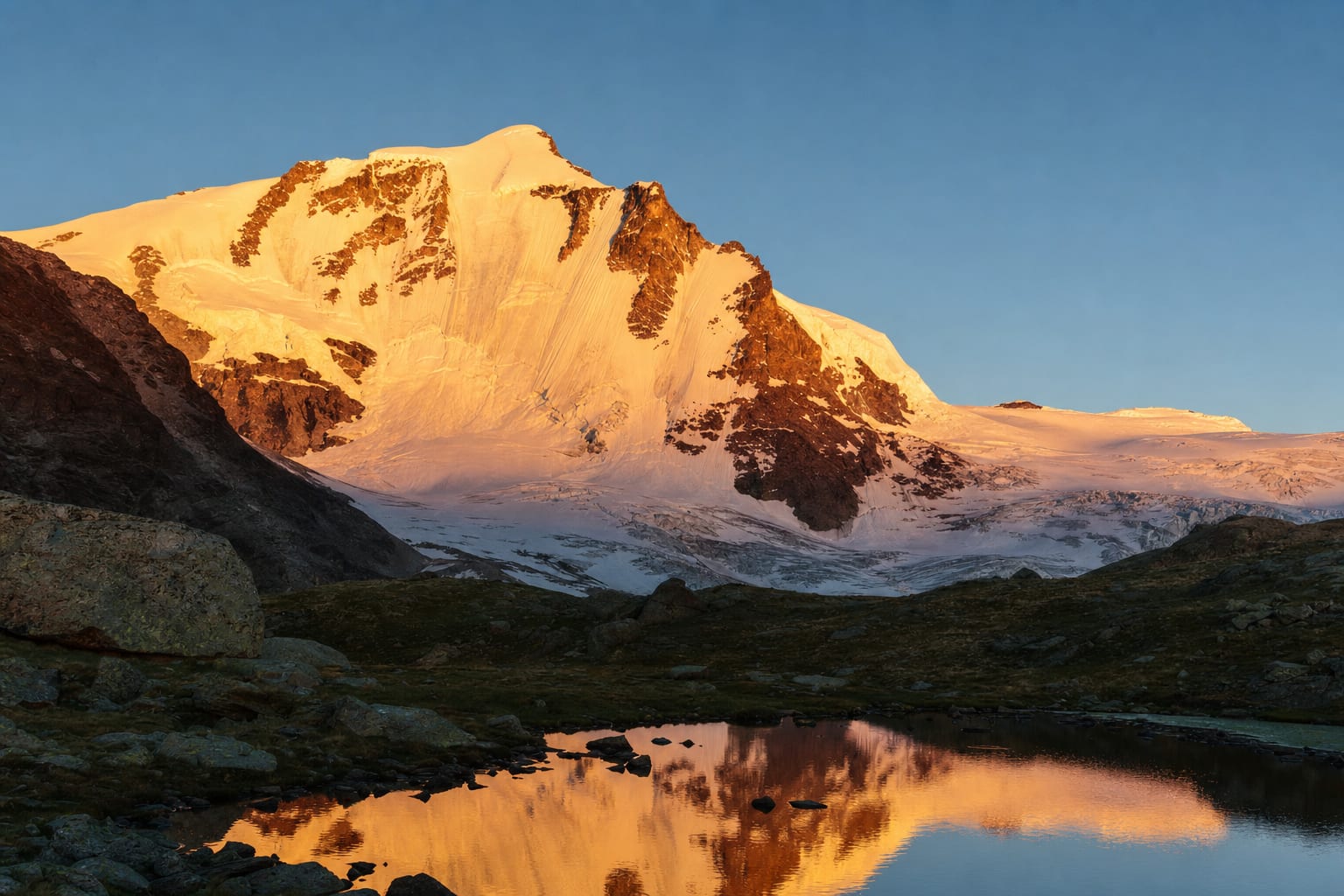 CogneParco Nazionale del Gran ParadisoItaly's first national park, Alpine ibex herds, Cogne valleys, the only 4,000-meter summit entirely on Italian soil
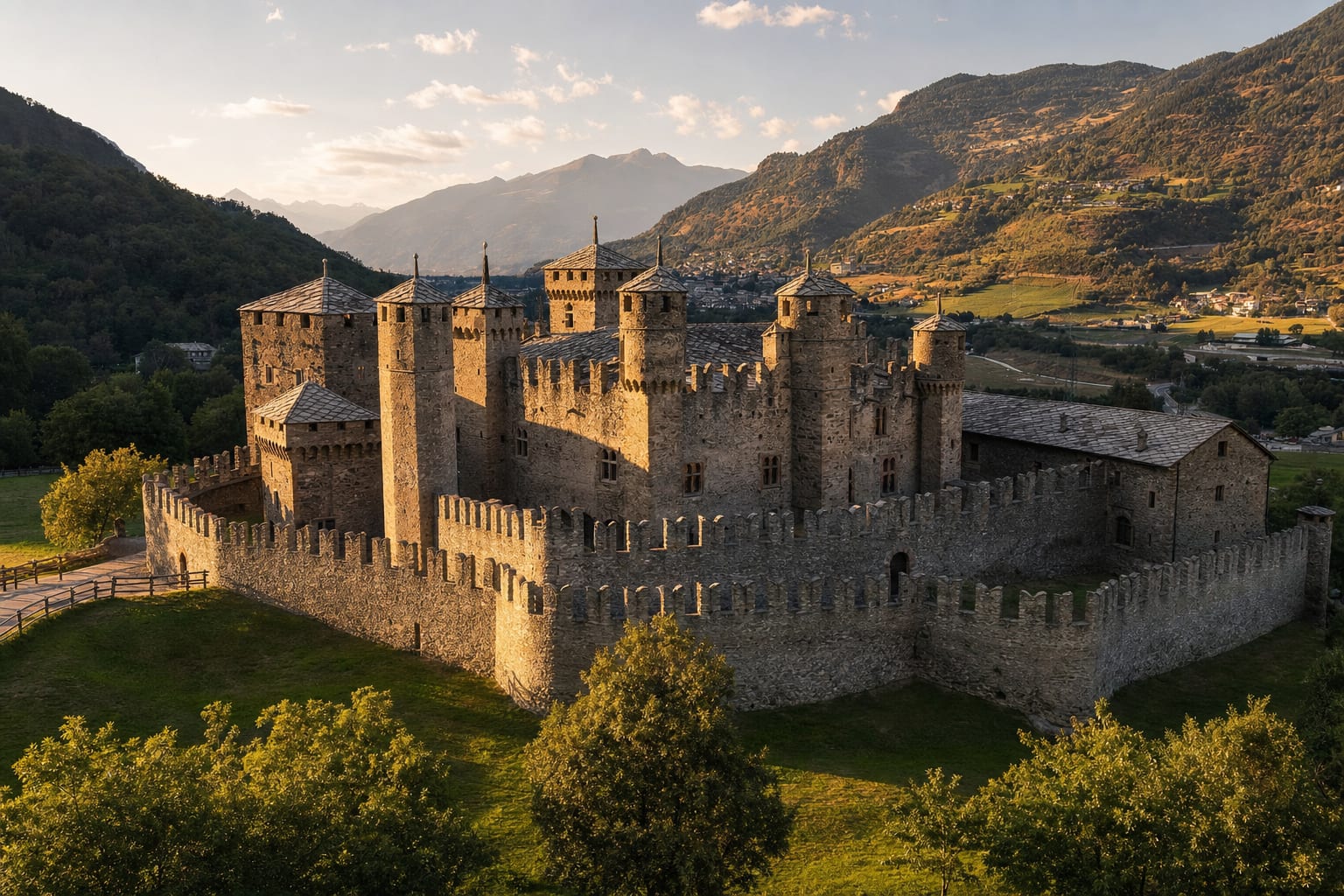 FénisCastello di FénisDouble crenellated walls, semicircular staircase, Jaquerio frescoes, Challant family
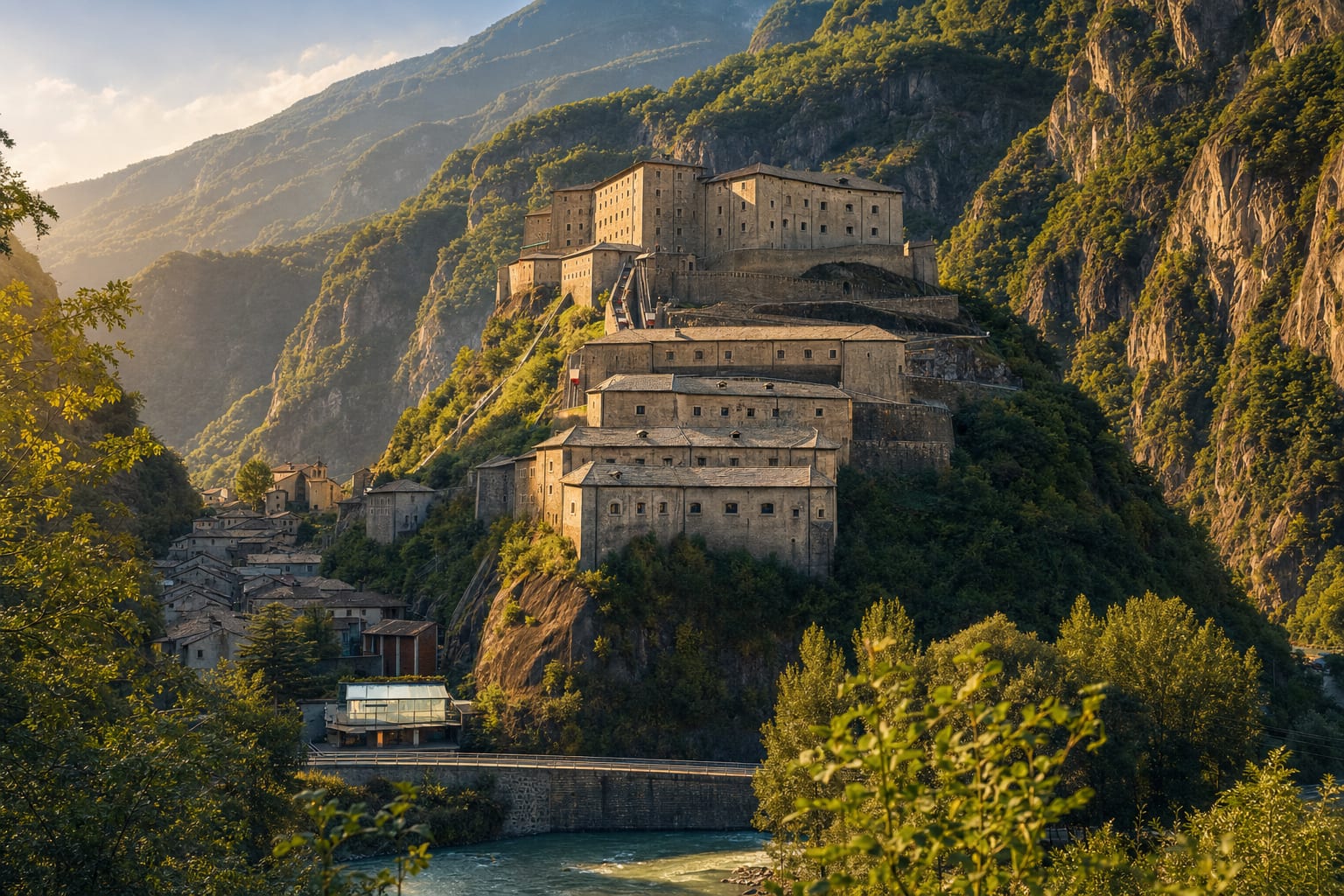 BardForte di BardFortress that delayed Napoleon, Museo delle Alpi, glass lifts, Savoy military engineering
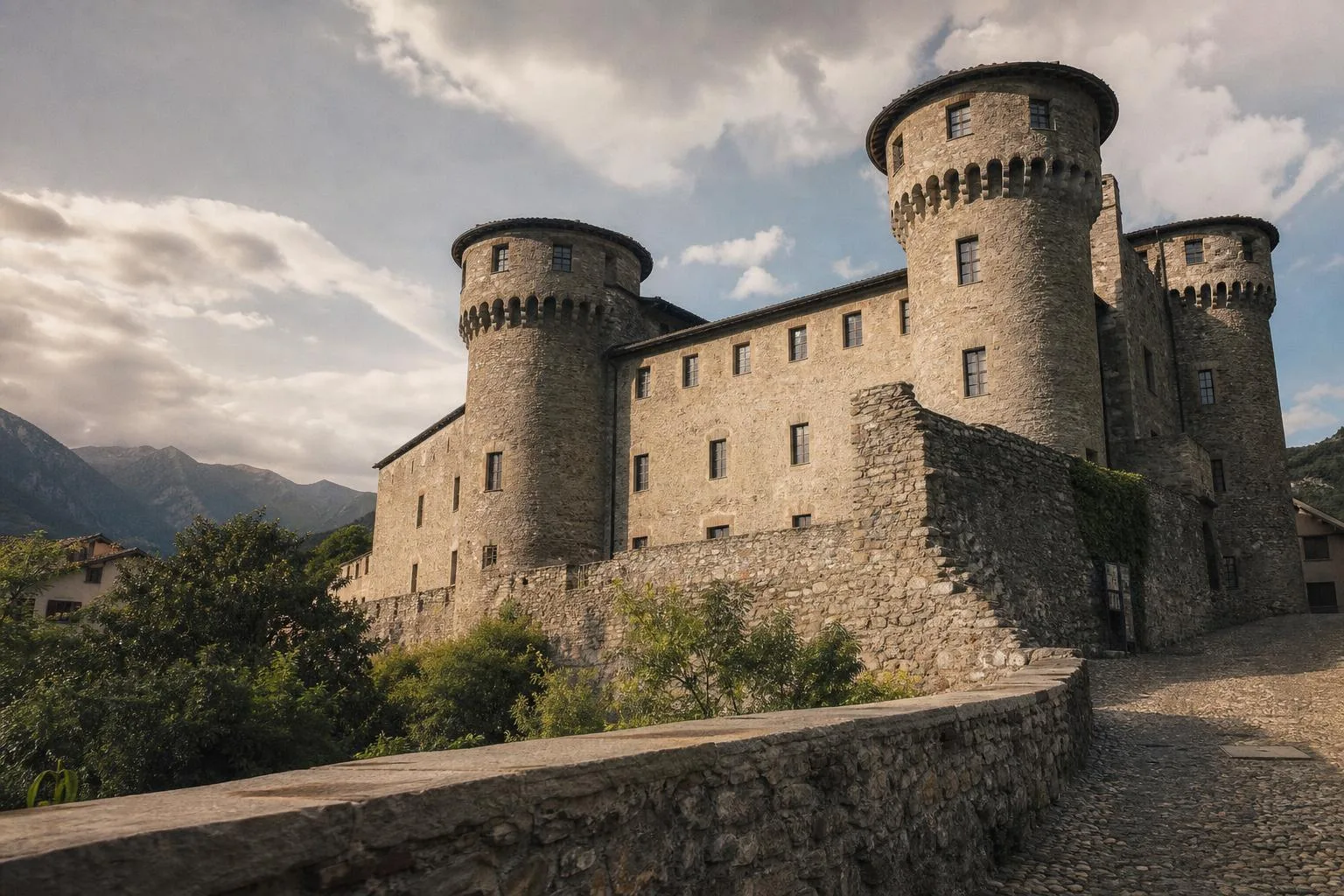 AymavillesGemma nascostaCastello di AymavillesFour round corner towers, 18th-century residence, attic timber roof, Cogne valley gateway
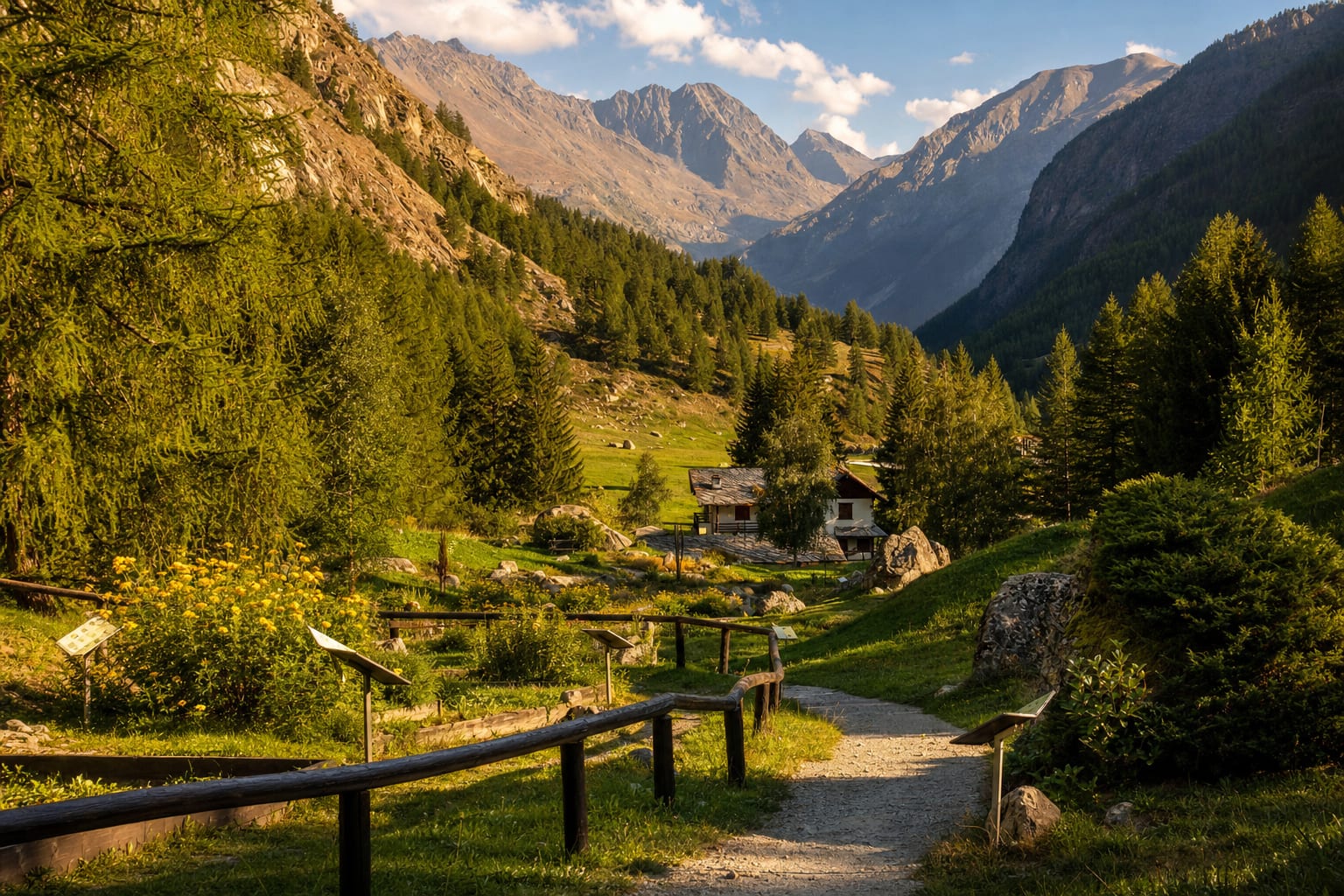 CogneGemma nascostaGiardino Botanico Alpino Paradisia1,000+ alpine species, mountain habitats, Gran Paradiso views, mid-summer flowering
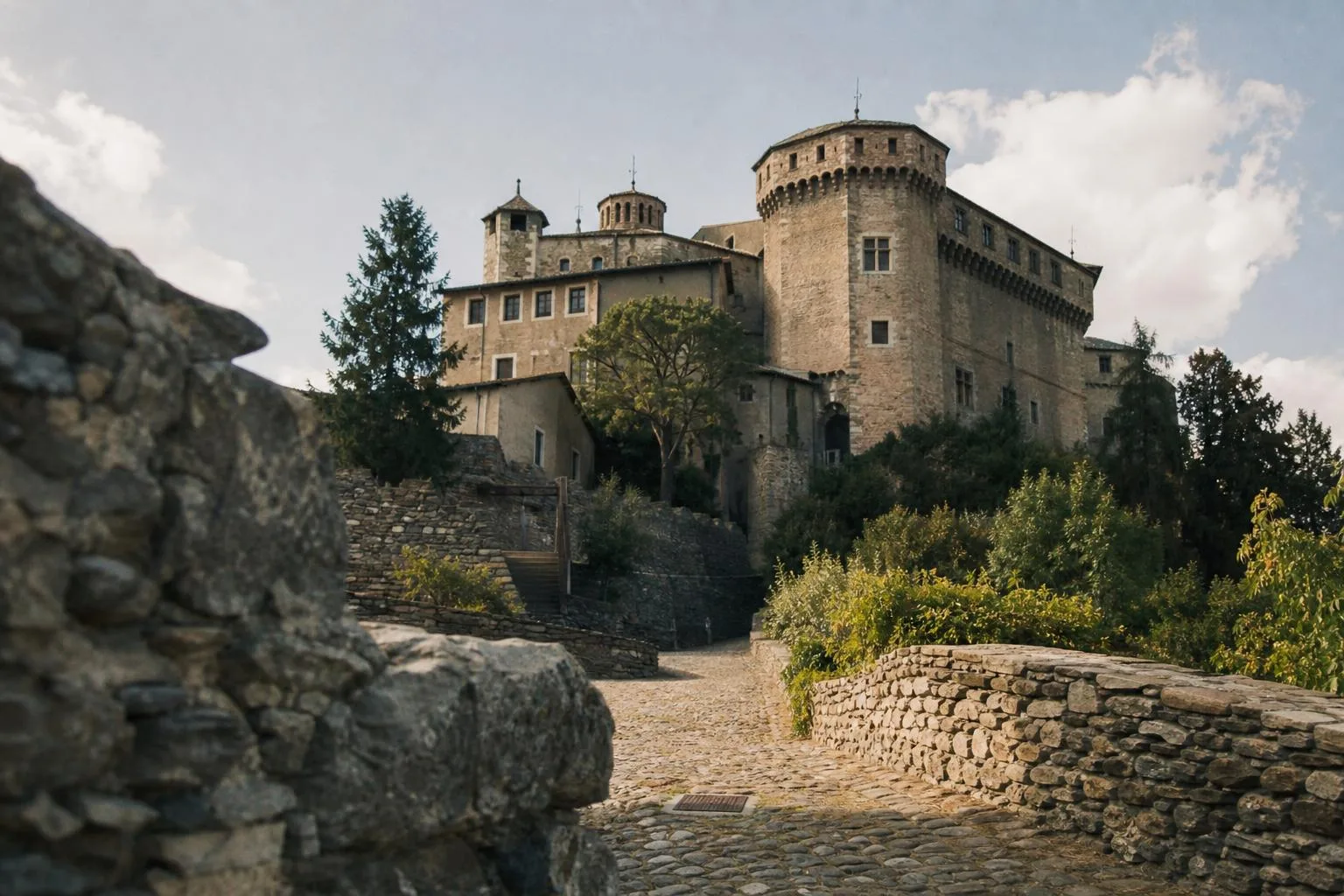 SarreGemma nascostaCastello di SarreSavoy royal hunting lodge, hall of horns, ibex trophies, period furnishings
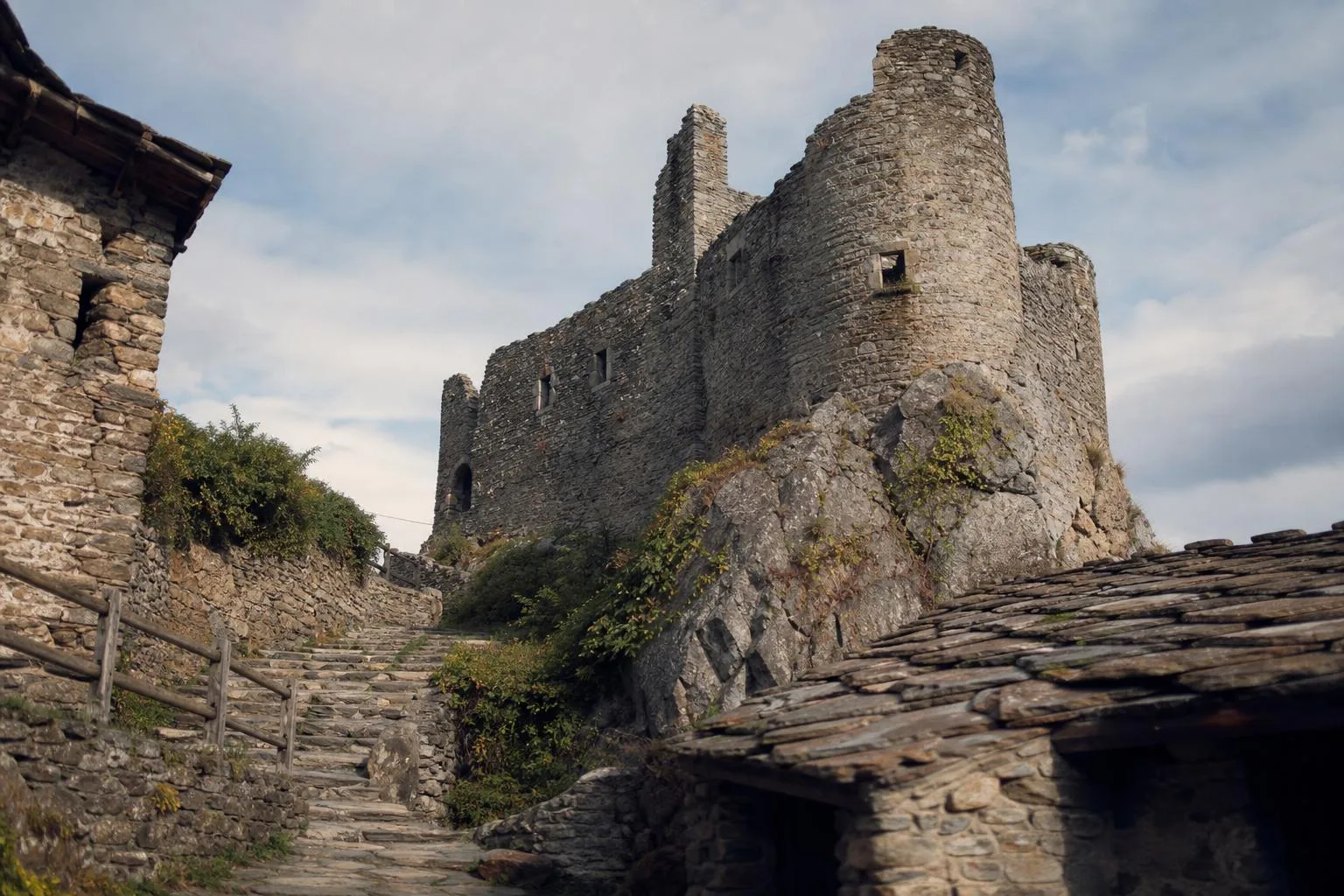 VilleneuveGemma nascostaChâtel-Argent1275 cylindrical keep, Jacques de Saint-Georges design, Romanesque chapel, rock-cut access stair