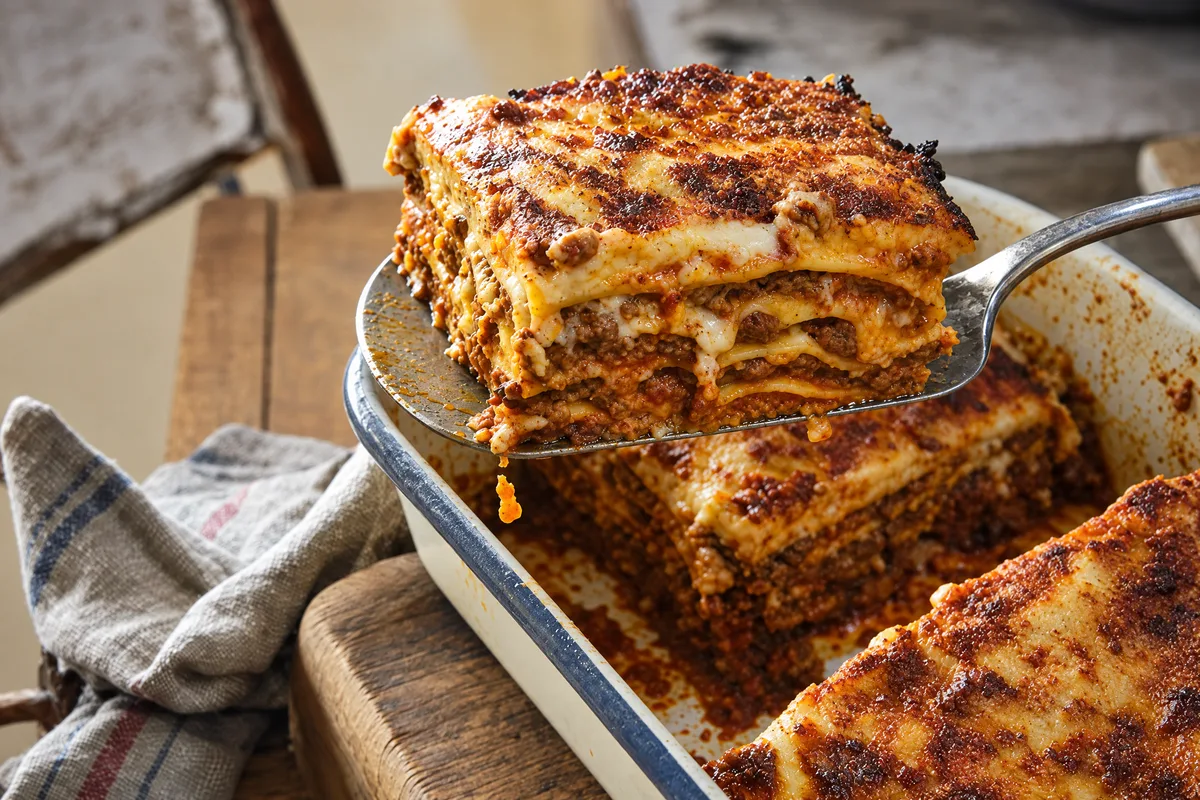
Two things make this vincisgrassi and not a lasagne: chicken livers stirred into the ragù for only its last 20 minutes, which gives depth without bitterness, and an overnight rest before baking so the layers set. The sheets are rolled thin and only blanched, so you get five or six fine layers rather than three thick ones.
Make ahead The dish is meant to be assembled the day before and baked the next, so the overnight rest in the fridge is part of the recipe, not a shortcut.
Vincisgrassi
Prep 1 hr 30 min · Cook 3 hr · Rest 12 hr · Serves 8 · Difficulty Hard
Method
Make the ragù: render pancetta in the oil, soften the soffritto, then brown the beef and pork hard. Add the concentrate and wine; let it vanish.
30 min
Add broth to cover and simmer, lid ajar, 2 hours, topping up as needed. Stir in the chopped livers for the final 20 minutes. Season; the sauce should be dark, dense, and barely red.
2 hr 20 min
Besciamella: melt 80 g butter, whisk in flour for 2 minutes, then the milk gradually. Simmer to a coating cream; season with salt and nutmeg.
15 min
Blanch the pasta sheets 30 seconds in salted water, dunk in cold water, and dry flat on cloths.
20 min
In a buttered deep dish: besciamella veil, pasta, ragù, besciamella, Parmigiano; repeat for 5 to 6 layers, ending with besciamella and a confident snow of cheese.
20 min
Rest the assembled dish, covered, overnight in the refrigerator (or at minimum 2 hours).
2 hr
Bake at 180 C until burnished and bubbling at the corners, 40 to 45 minutes; rest 15 minutes before cutting.
1 hr
Cut generous squares and serve with nothing else on the plate; vincisgrassi shares with no one.
Kitchen notes
Livers are the signature. Chop them fine and add them late; long cooking turns liver bitter, short cooking leaves the ragù without its Marche accent.
Overnight is an ingredient. The rest lets pasta, ragù, and besciamella negotiate their borders. Bake it fresh and it slides; bake it rested and it stands.
A white version with porcini mushrooms folded into the besciamella instead of ragù is a documented Marche variant, often made in autumn when porcini are in season; the pasta and method stay identical.