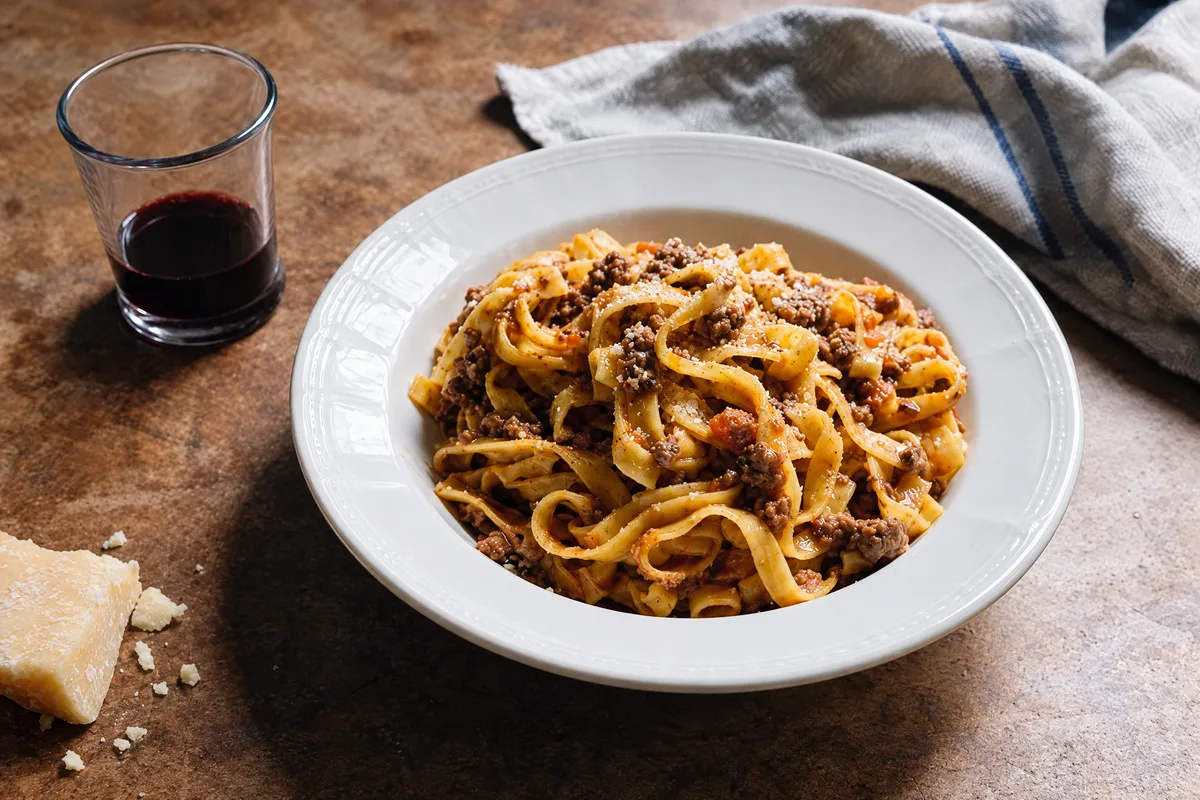
The recipe follows Bologna’s logic: pancetta and a butter soffritto, beef browned until it sticks, only a blush of tomato, and warm milk added late to round off the acidity. The step that matters most is the browning in step 2; let the meat’s water cook off and the beef fry before any liquid goes in. Then give it the full two and a half hours at a bare simmer.
Make ahead The ragù keeps for a few days in the fridge and tastes more settled the next day, so cook it ahead and boil the tagliatelle fresh.
Tagliatelle al Ragù Bolognese
Prep 30 min · Cook 3 hr 20 min · Serves 6 · Difficulty Medium
Method
Render the pancetta in the butter in a heavy pot over low heat, then add onion, carrot, and celery and cook until soft and sweet, 12 to 15 minutes.
15 min
Raise the heat, add the beef, and cook, breaking it up, until its water evaporates and it begins to sizzle and stick, about 12 minutes. Season lightly.
12 min
Stir in the concentrate, then the wine; scrape the bottom and let it evaporate fully.
6 min
Add the passata and enough hot broth to barely cover. Set the lid ajar and simmer at the gentlest blip, stirring occasionally and topping up with broth, for 2 and a half hours.
2 hr 30 min
Add the warm milk in two additions over the final 30 minutes, letting each absorb. The finished ragù is thick, glossy, and falls from the spoon in a slow sheet. Adjust salt and pepper.
30 min
Cook the tagliatelle in well-salted water until just al dente (fresh pasta: 2 to 3 minutes).
3 min
Toss pasta and ragù in a wide pan with a splash of cooking water and a knob of butter until every ribbon is coated. Serve with Parmigiano.
2 min
Kitchen notes
Milk in this version. Add the milk warm in two stages near the end and let the sauce reduce between additions.
Brown deeply, then be patient. The flavor floor of a ragù is set in the first half hour of real browning; the ceiling is set by the last lazy hour of simmering. Skip neither.
Serve this ragù with fresh egg tagliatelle and grated Parmigiano at the table.