

Tutti i monumenti, città per città
I luoghi e i capolavori attorno a cui vale la pena costruire una giornata.
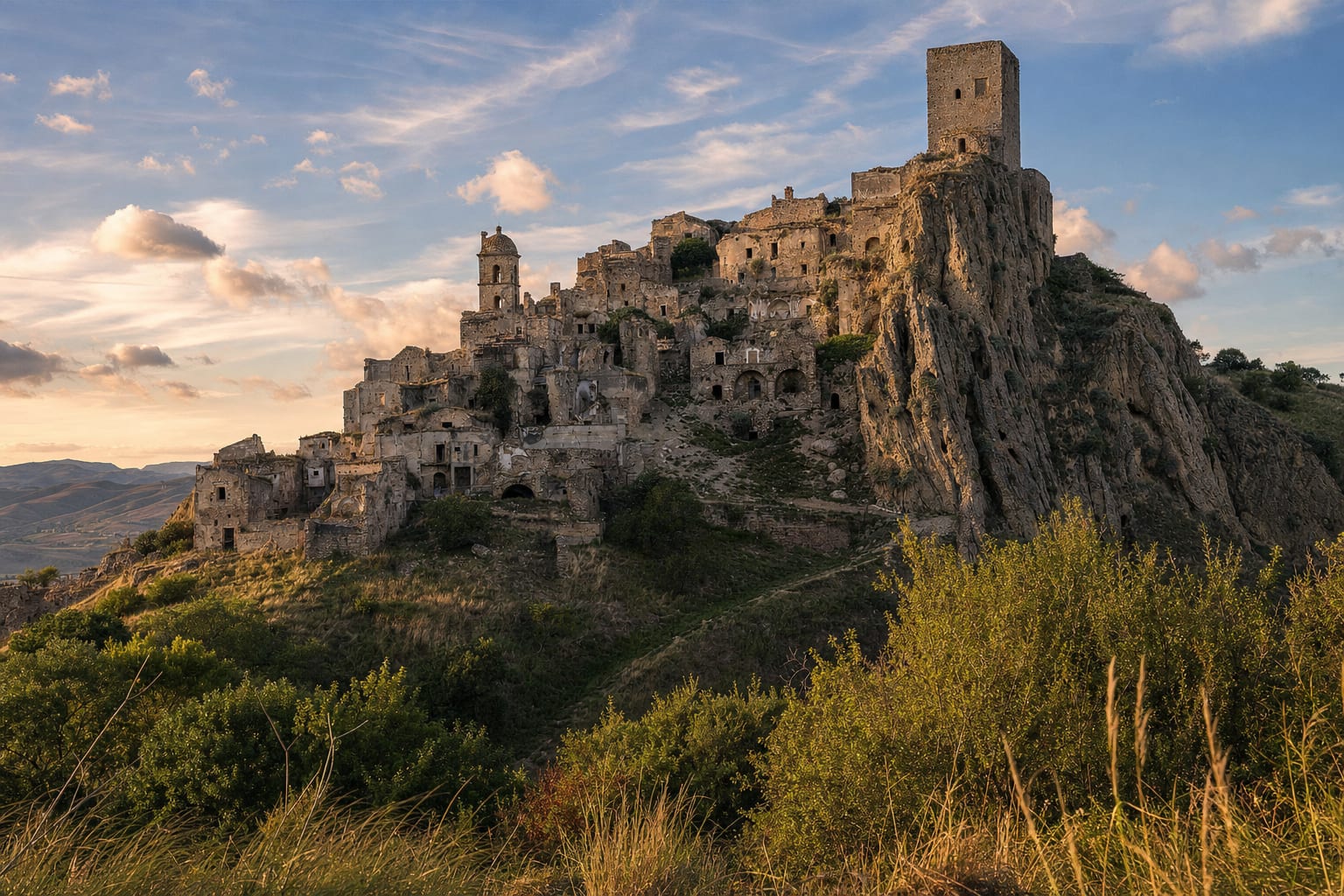 CracoCraco VecchiaThe 1963 landslide evacuation, its film-set ruins, calanchi badlands, the surviving medieval towerCraco Vecchia is the abandoned historic core of a Basilicata town first documented as Cracum in 1060, its stone houses and a lone medieval tower still standing on a ridge above deeply eroded clay badlands called calanchi. Landslides had threatened the site for generations, but a major slide in 1963 finally forced a full evacuation, and the remaining residents were resettled in a new, safer village nearby, leaving the old town frozen exactly as it was left, doors and all. Ministry of Culture records tie a 2015 public-interest declaration to ongoing landscape value and continuing soil instability, and many of the buildings inside remain privately owned by descendants of the families who fled, which is part of why free wandering is not permitted. Its eerie, half-collapsed silhouette has made Craco a popular film location for productions needing a ruined biblical or medieval backdrop, an irony not lost on visitors who arrive expecting a movie set and find an actual, still-legally-owned town instead.Pianifica la visita
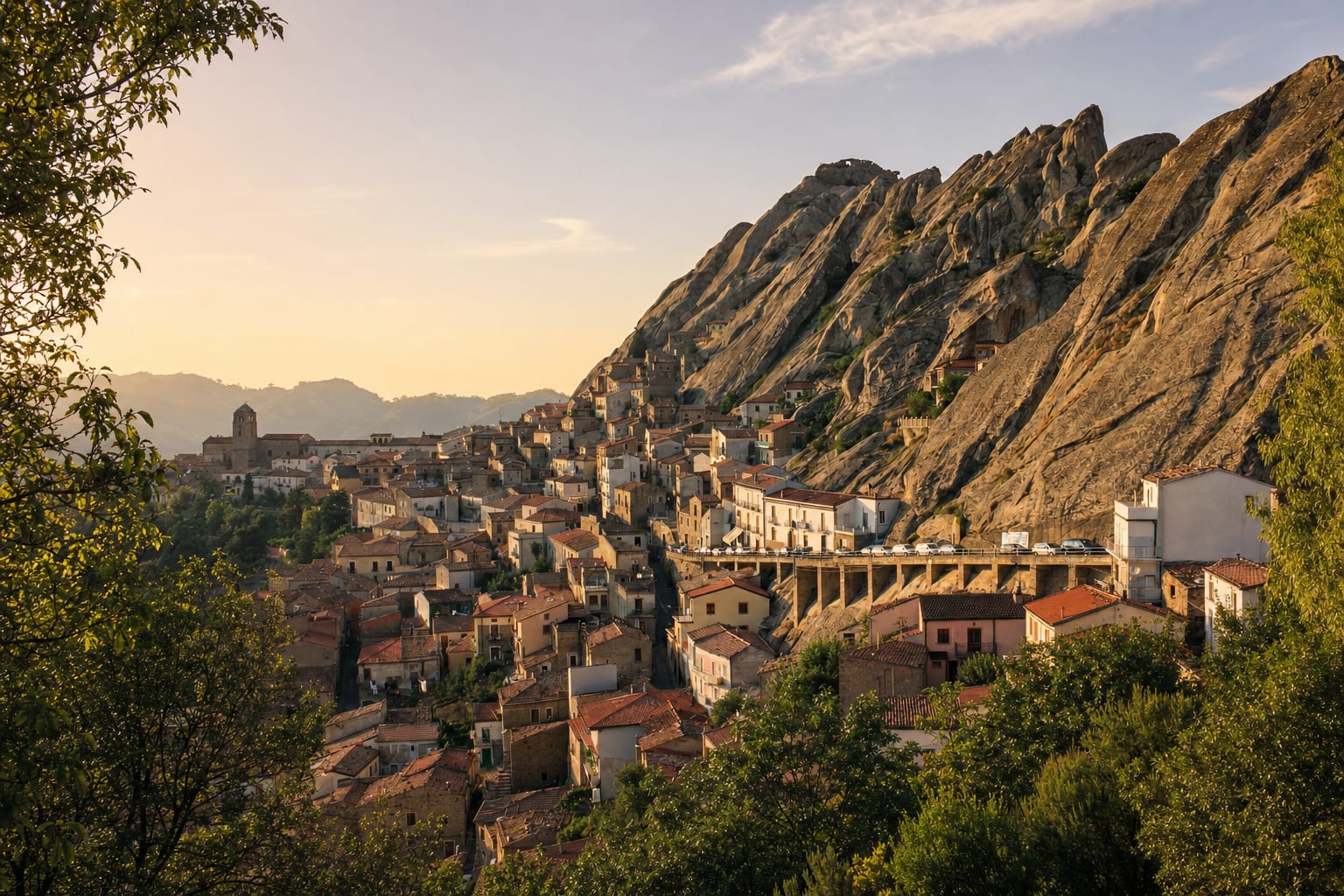 PietrapertosaPietrapertosaBasilicata's highest village, Saracen quarter carved in rock, Volo dell'Angelo zipline, eagle's-perch lanesPietrapertosa clings to the highest perch of any village in Basilicata, its stone houses fused into a ridge of sandstone spires in the Lucanian Dolomites, with a ruined Saracen-era fortress, the Arabata quarter, built directly into the rock above the rooftops. CNN named it among the country's most beautiful villages in 2019, and it shares a spectacular claim to fame with its neighbor across the gorge, Castelmezzano: the Volo dell'Angelo, a steel cable zipline that sends riders flying between the two villages' peaks at highway speed, suspended hundreds of meters above the valley floor. Away from the zipline, the village itself rewards slower exploration: narrow stepped lanes climb past the Chiesa Madre and the ruins of the Normans' original hilltop keep, with views that fall away sharply toward the Basento valley on every side.
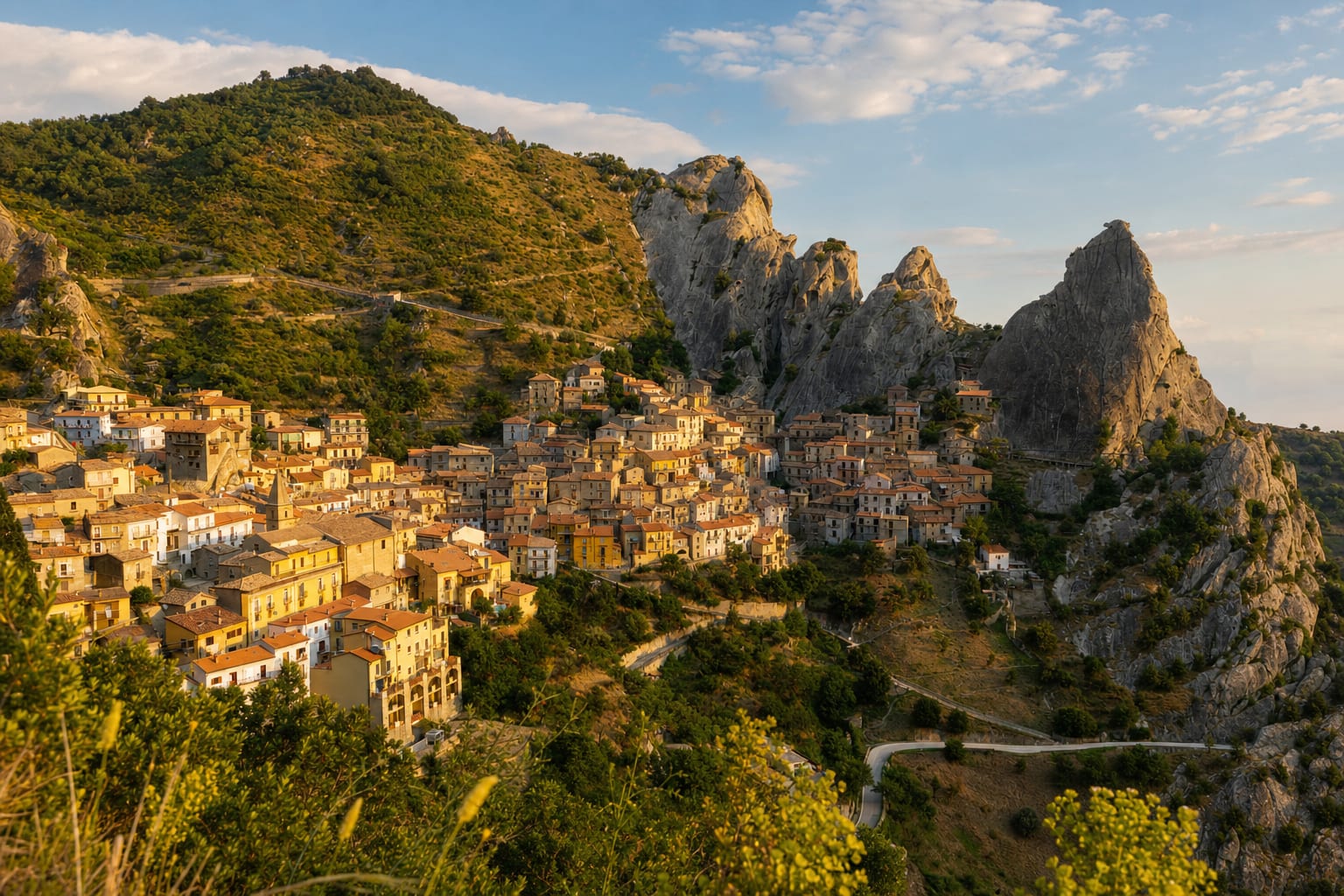 CastelmezzanoCastelmezzanoDolomiti Lucane amphitheater, rock-carved stairways, Norman castle ruins, Volo dell'Angelo ziplineGreek settlers from Magna Graecia are said to have founded a town called Maudoro in this valley of the Basento river as early as the sixth century BCE, but the Castelmezzano visible today took shape after Saracen raids pushed the population up onto a cliff amid the sandstone spires known as the Dolomiti Lucane, according to local tradition following a shepherd named Paolino who found the defensible perch. Normans later built a castle on the rock between the eleventh and thirteenth centuries, whose scant ruins still cling to the peaks above the houses. Named among Budget Travel's "best places you've never heard of" and one of The Telegraph's most beautiful Italian villages, the town shares the Volo dell'Angelo zipline with neighboring Pietrapertosa, sending riders across the gorge between the two villages' summits, but its own stone stairways, cut directly into the rock face, are worth the climb even without it.
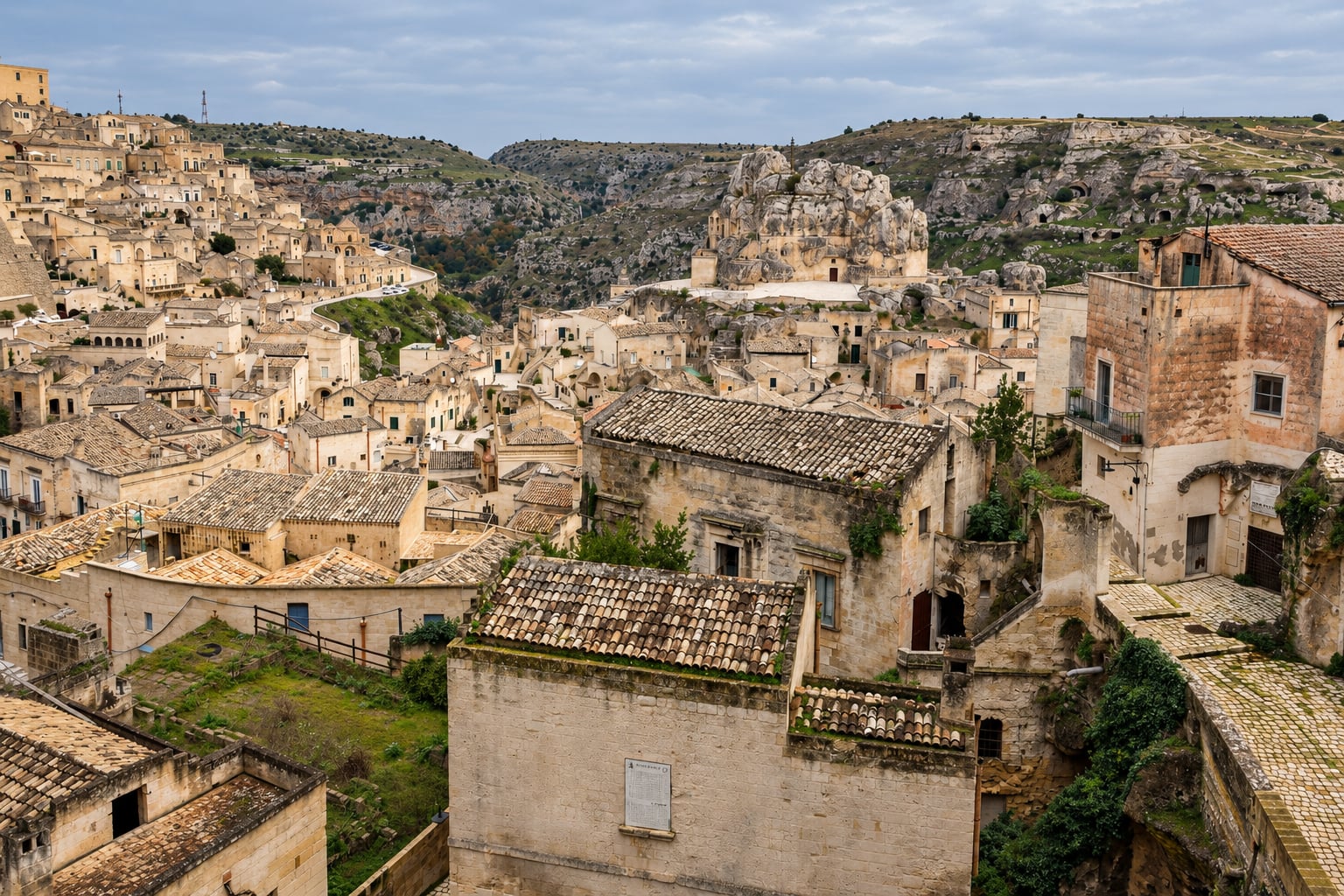
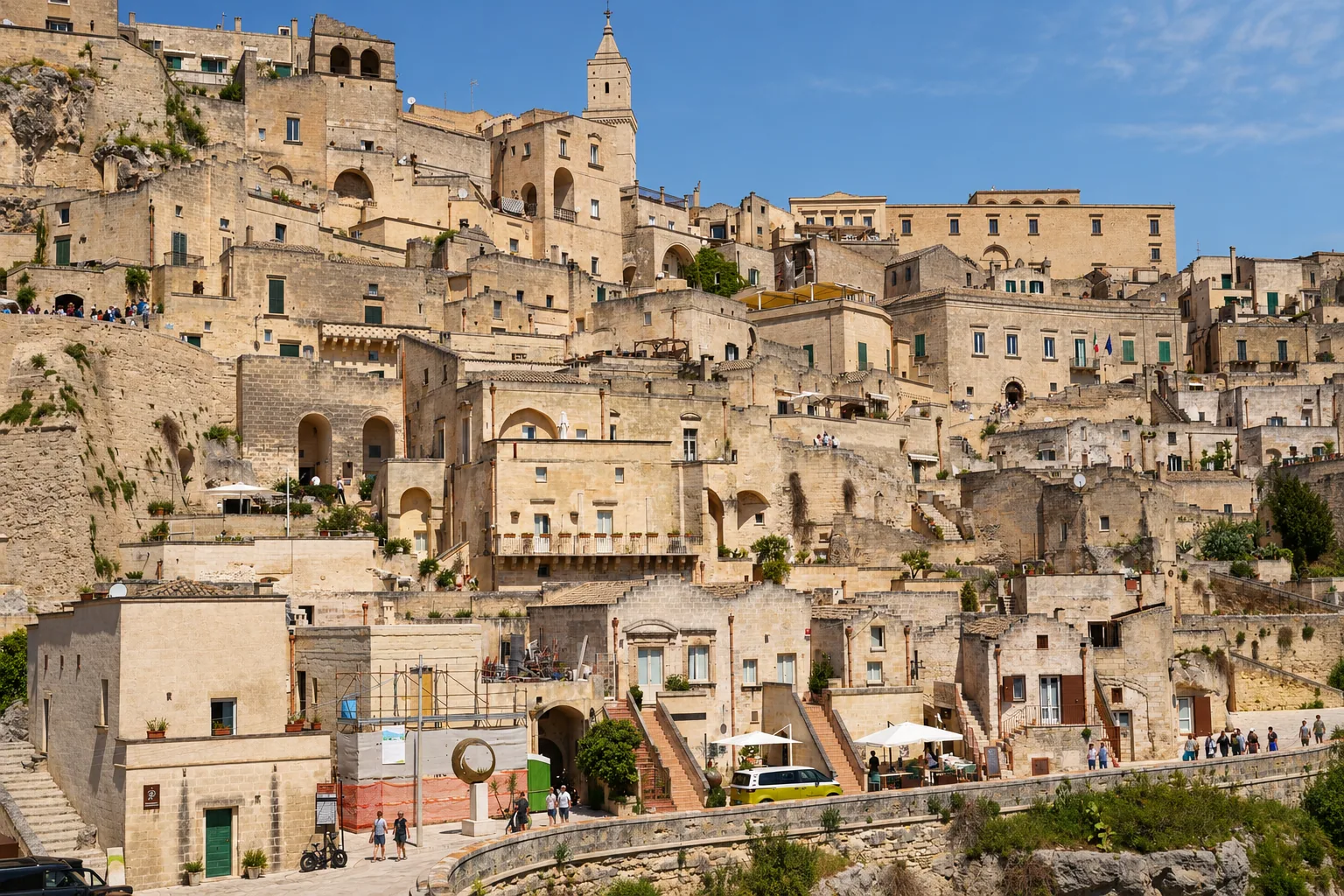 MateraSassi di MateraCave dwellings since the Paleolithic, rock churches, 1950s forced relocation, UNESCO listingPeople have lived continuously in these limestone ravine caves since the Paleolithic era, and by the mid-20th century as many as 15,000 people were still crowded into the Sassi without running water or electricity, conditions grim enough that Italy's government forcibly relocated most residents in the 1950s under a national law that branded the district a disgrace. Prime Minister Alcide De Gasperi visited in 1950 and reportedly called the poverty there a shame for Italy. The two quarters, Sasso Caveoso and Sasso Barisano, tumble down opposite sides of a ravine facing the Murgia plateau, honeycombed with rock-cut churches, and since a slow repopulation that began in the 1980s, many caves have been converted into hotels, restaurants, and homes. UNESCO inscribed the Sassi as a World Heritage Site in 1993.
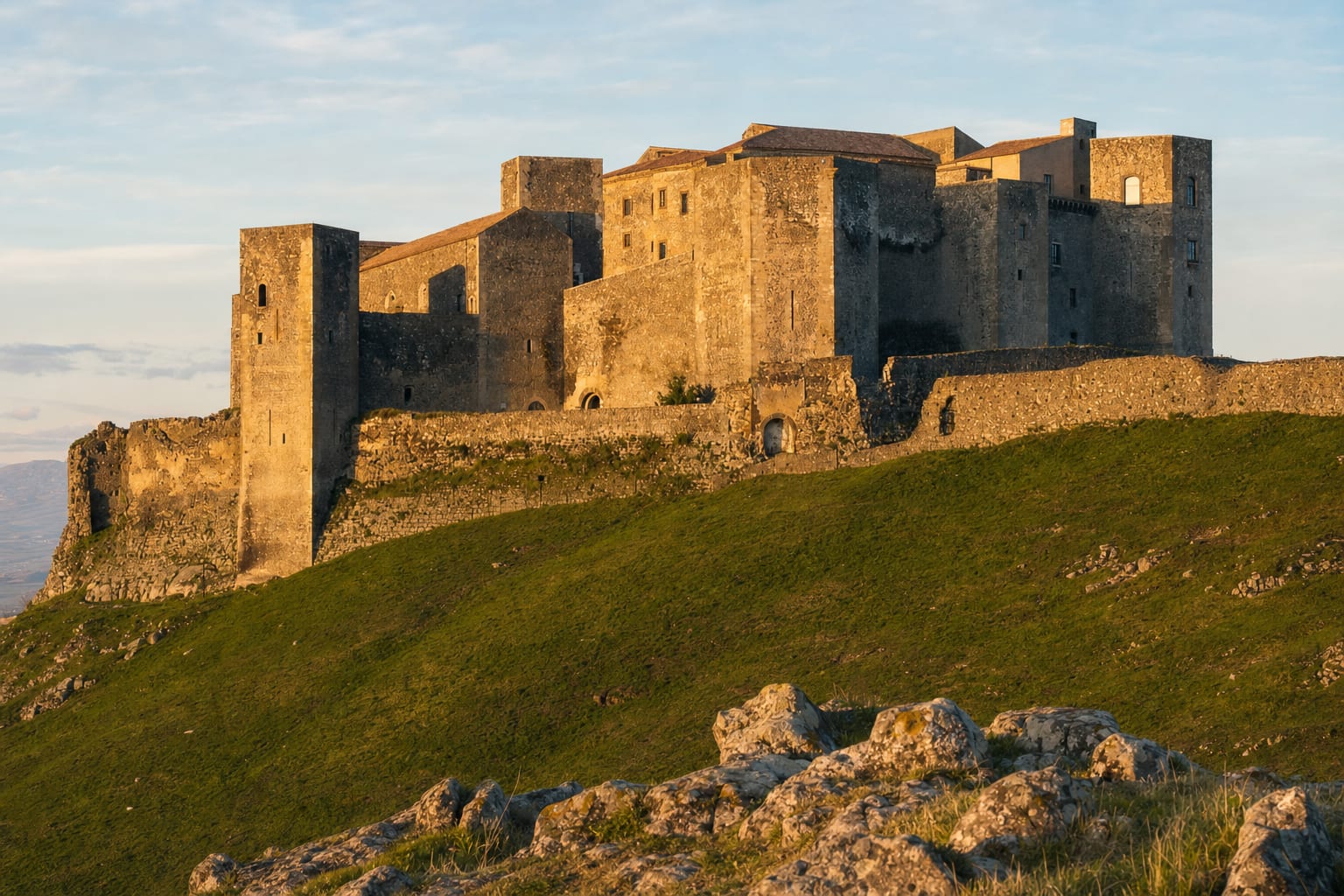 MelfiGemma nascostaCastello di MelfiNorman-Swabian fortress, Constitutions of Melfi (1231), ten towers, Rapolla sarcophagus, archaeological museumMelfi Castle, in the Vulture area of Basilicata, was begun around 1042 by the Norman leader William Iron Arm and became a seat of Norman power: in 1059 Pope Nicholas II stayed here for the councils and the Concordat of Melfi that recognized the Normans. Under Frederick II, the stupor mundi, it was where he promulgated the Constitutions of Melfi in 1231, a law code for his kingdom often called the most important of the Middle Ages. The fortress has ten towers, six courtyards and four entrances, and later passed to the Doria family, who held it until 1952. Today it houses the National Archaeological Museum Massimo Pallottino, whose highlight is the Roman marble sarcophagus from Rapolla.
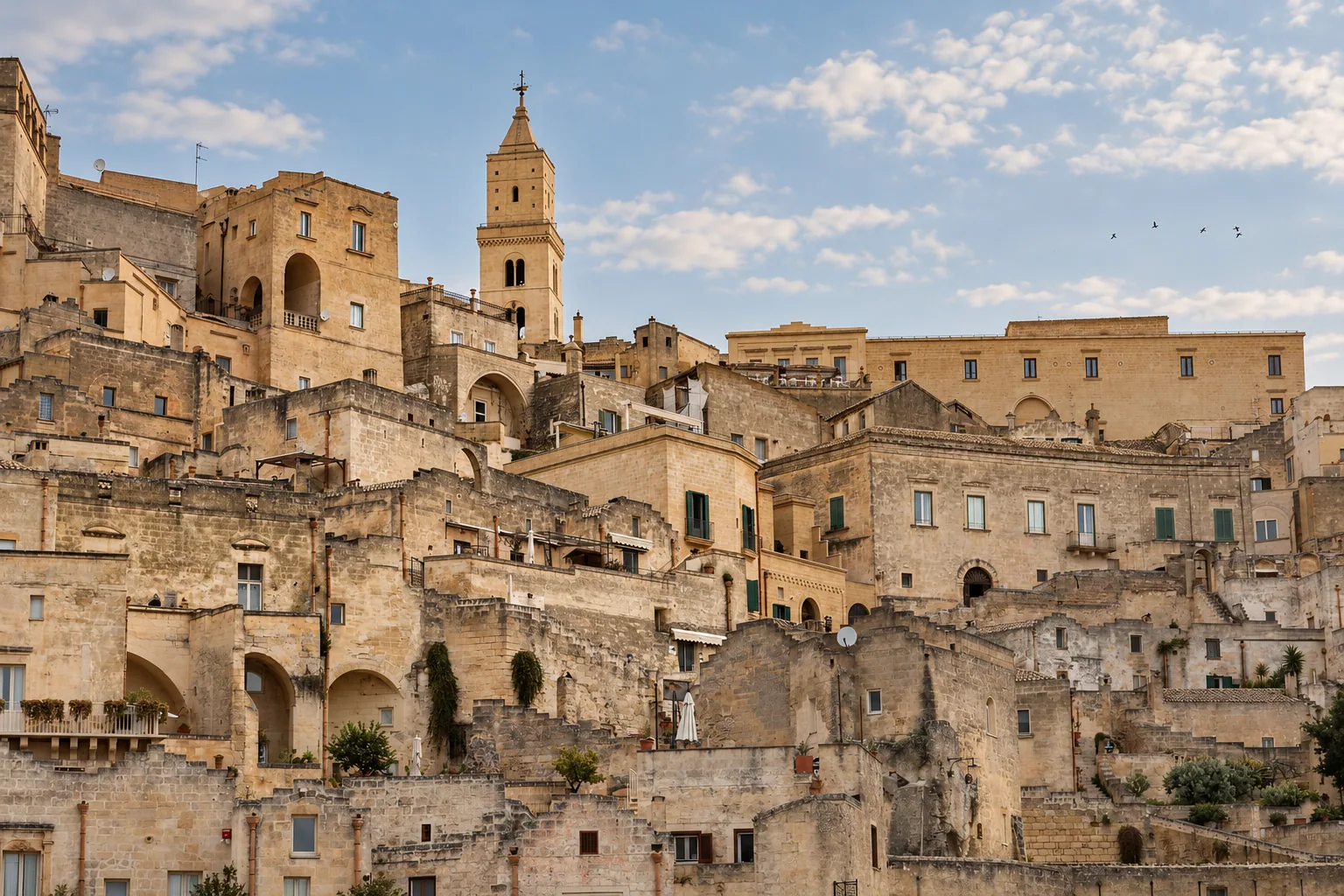 MateraCattedrale di MateraApulian Romanesque facade, 1530s stone nativity scene, Madonna della Bruna fresco, gilded seventeenth-century interiorMatera raised its cathedral between 1230 and 1270 on the spur of the Civita, the rock that splits the city's two Sassi ravines. The facade keeps its Apulian Romanesque bones: a rose window, carved capitals, a slim bell tower visible for miles across the ravines. Inside, a seventeenth century remodeling covered much of the nave in gilded stucco, though older layers survive alongside it: a wooden choir carved in 1453 with sixty stalls, and a stone nativity scene that sculptors Altobello Persio and Sannazzaro di Alessano carved between 1530 and 1534. Look too for the thirteenth century fresco of the Madonna della Bruna, Matera's patron saint, whose image gave the cathedral its second dedication and still lends her name to the city's July feast. The cathedral sits inside the Sassi's UNESCO-listed old town but is counted as a separate site in its own right.
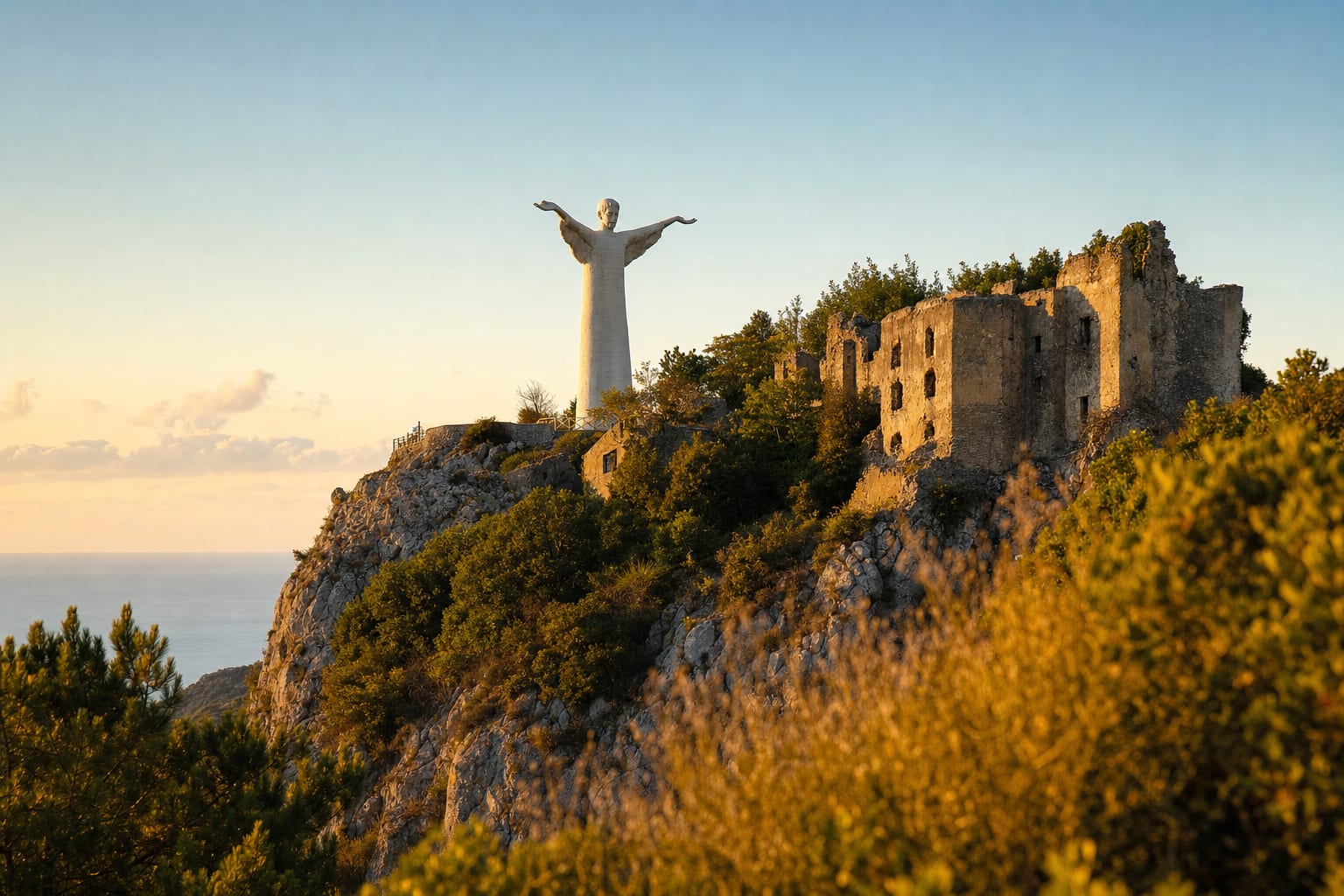 MarateaCristo di Maratea / Statua del Redentore21.13-meter Christ statue, Monte San Biagio summit, Gulf of Policastro panorama, inland-facing gazeOn Monte San Biagio, high above Maratea, Bruno Innocenti's Christ the Redeemer has stood with arms spread toward the Gulf of Policastro since 1965. The Florentine sculptor cast the statue in concrete studded with chips of Seravezza marble over a steel frame, a structure weighing some 400 tons that stands directly on the rock with no pedestal. Its most unusual detail is the gaze: the figure looks inland toward the town rather than out to sea, watching over Maratea instead of greeting ships in the gulf. At 21.13 meters from base to crown, with an arm span close to 19 meters, it stands beside the Basilica di San Biagio but is a separate monument built decades after the sanctuary. A shuttle bus, a signed hiking path, or the newer via ferrata all lead to the summit, rewarding the climb with a full sweep of the Tyrrhenian coastline.
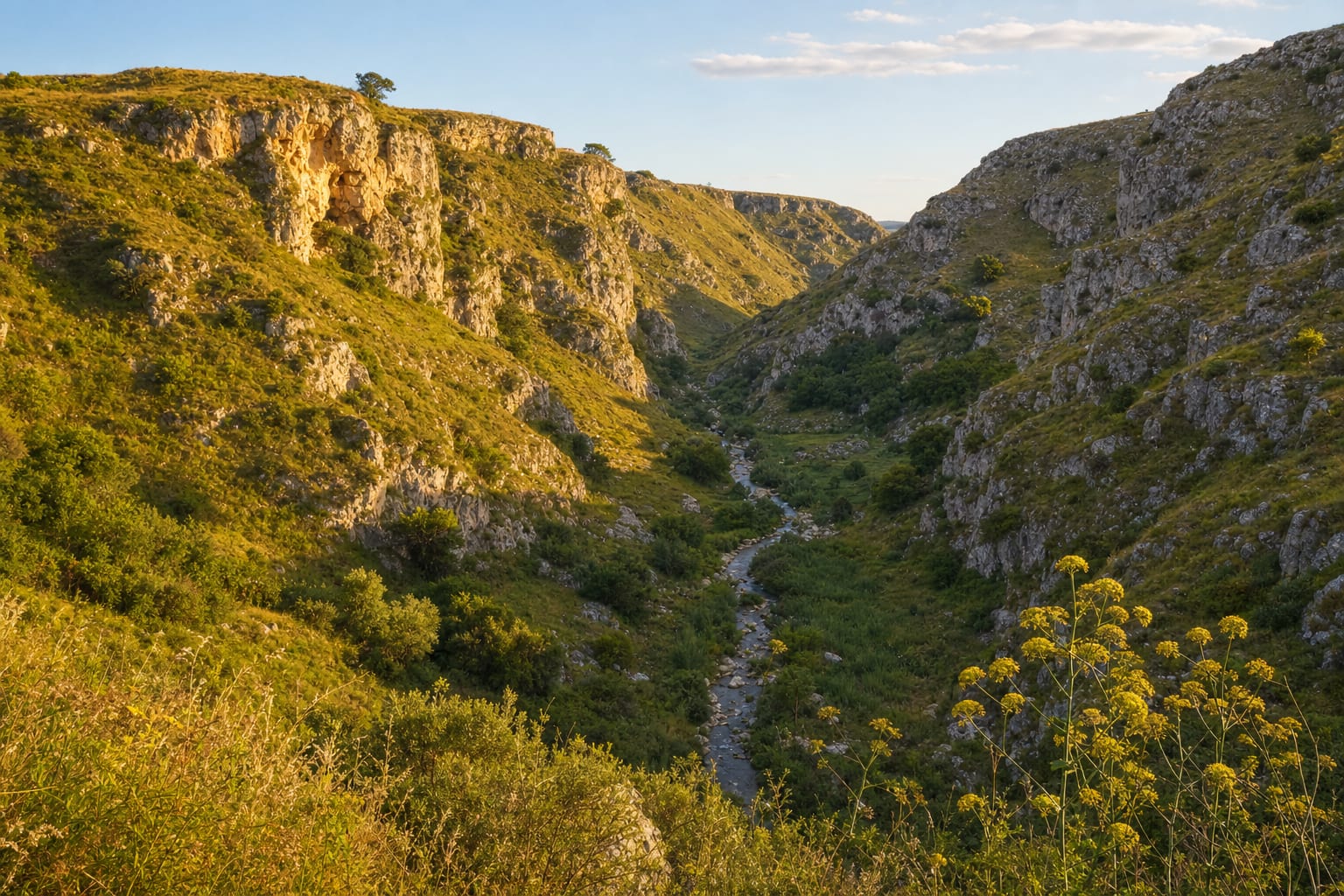 MateraParco Archeologico Storico Naturale delle Chiese Rupestri del MateranoRock churches, Sassi viewpoint, Murgia Timone Neolithic village, Gravina canyonAcross the Gravina ravine from Matera’s Sassi, the Murgia Materana park protects the wild plateau where the city’s story began. Established in 1990, it shelters more than 150 rock churches carved into the limestone, along with pastoral caves, farmhouses and the Neolithic village of Murgia Timone. Monks and shepherds used these caves from the early Middle Ages, and some of the churches still hold frescoes. The reason to come is the view from the belvedere, where the Sassi appear across the canyon exactly as the city’s old postcards show them. The path from the Jazzo Gattini visitor center to the church of San Falcione is easy and flat, and a shuttle runs to the viewpoint.
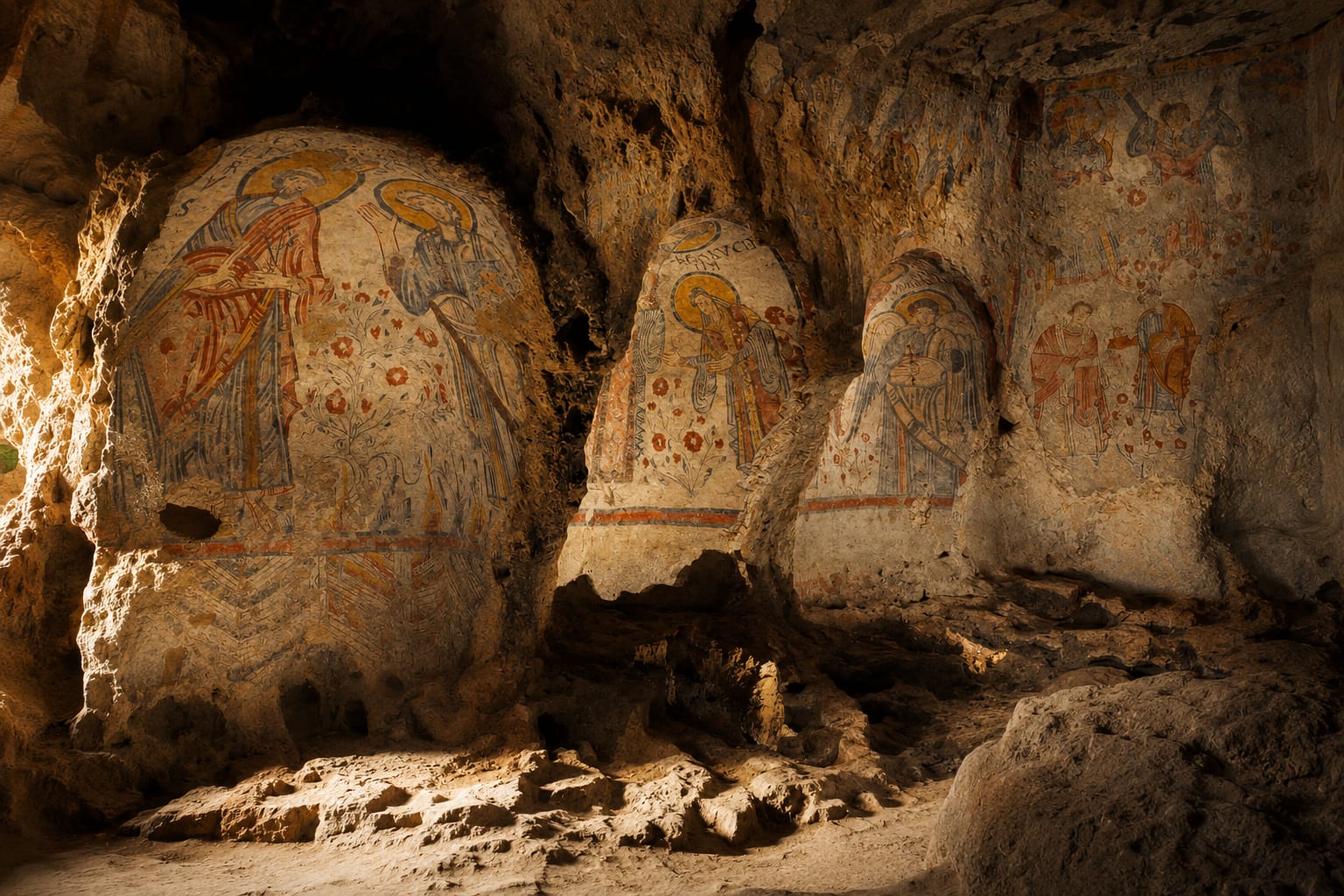 MateraCripta del Peccato Originale"Sistine Chapel" of cave churches, 9th-century frescoes, the anonymous Flower Painter, gravina ravine settingTucked into a ravine outside Matera rather than within the Sassi themselves, this cave church holds what specialists have called the Sistine Chapel of rock-cut churches: a fresco cycle likely painted in the 9th century, its Old Testament scenes, including the temptation of Adam and Eve that gives the crypt its name, attributed to an anonymous artist known only as the Flower Painter for his decorative floral borders. Careful modern conservation has stabilized colors that stayed hidden and protected for over a thousand years precisely because the site was so remote, and visits are strictly controlled to keep it that way.
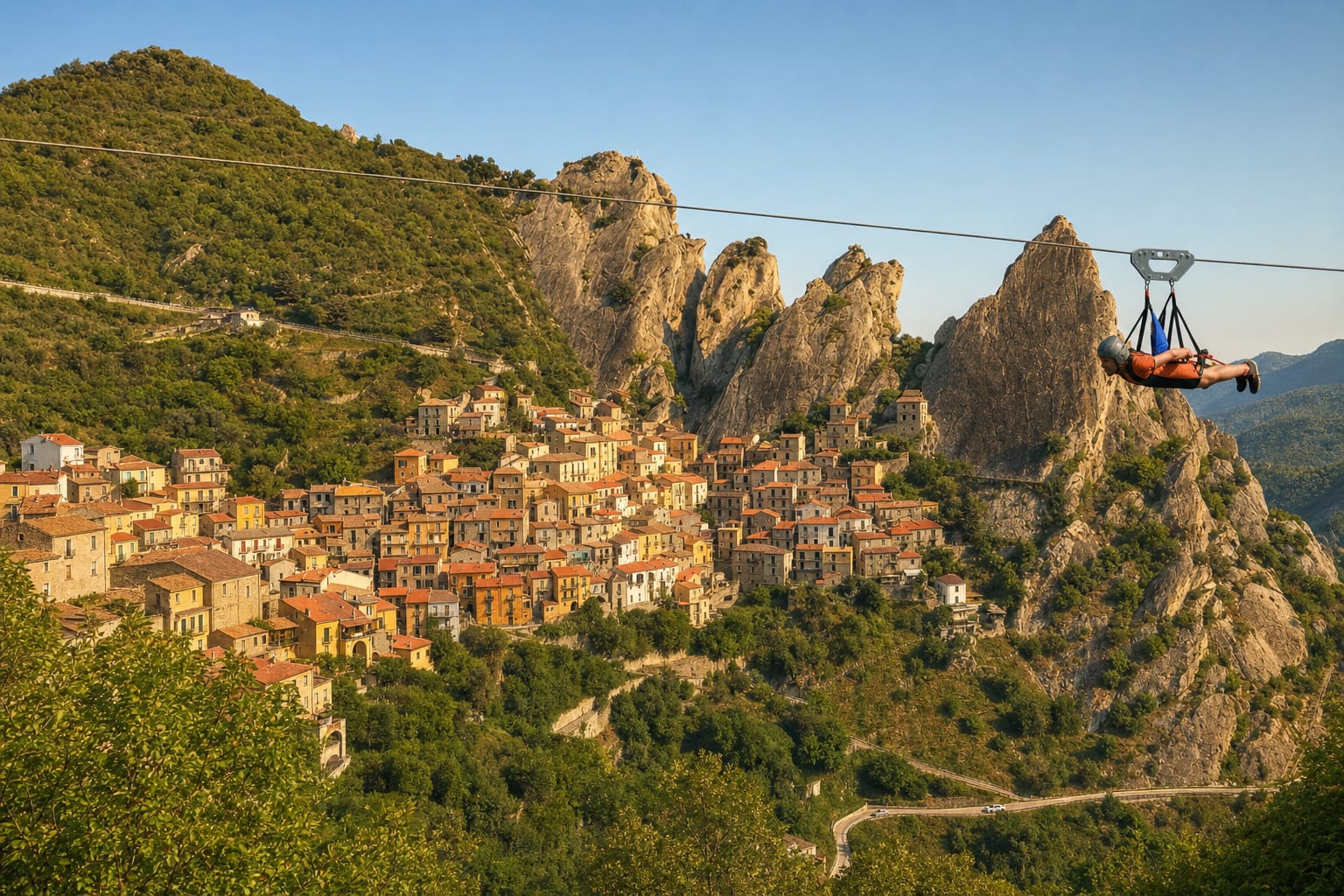 PietrapertosaVolo dell'AngeloZipline between two hilltop villages, speeds up to 120 km/h, Castelmezzano-Pietrapertosa pair, prone harnessA steel cable strung across the gorge between Pietrapertosa and Castelmezzano, two of Italy's most striking hilltop villages perched in the sandstone spires of the Lucanian Dolomites, lets riders cross it prone, harnessed and alone, at speeds that can reach 120 kilometers an hour. The round trip includes a flight in each direction plus a shuttle back to the starting point, turning what could be a single stunt into roughly an hour of adrenaline bookended by two villages worth exploring on foot regardless. Booking is online only, with no phone reservations, and the calendar runs on specific open days rather than continuous daily operation, tightening considerably outside the summer months.
Tour da prenotare in Basilicata
Confrontati dai nostri editor, tra i vari operatori.
Prenotando da questi link Italia Magnifica può ricevere una commissione, senza costi per te.
- Viator
- 3 h
- 5,0★ · 64 recensioni
da 200 €Prenota questo tour- Viator
- 2 h
- 5,0★ · 3 recensioni
da 55 €Prenota questo tour- Viator
- 3 h 15 min
- 5,0★ · 165 recensioni
da 45 €Prenota questo tour- Viator
- 2 h 15 min
- 5,0★ · 9 recensioni
da 100 €Prenota questo tour- Viator
- 3 h
- 5,0★ · 10 recensioni
da 1749 €Prenota questo tour- Viator
- 45 min
- 5,0★ · 31 recensioni
da 66 €Prenota questo tour


