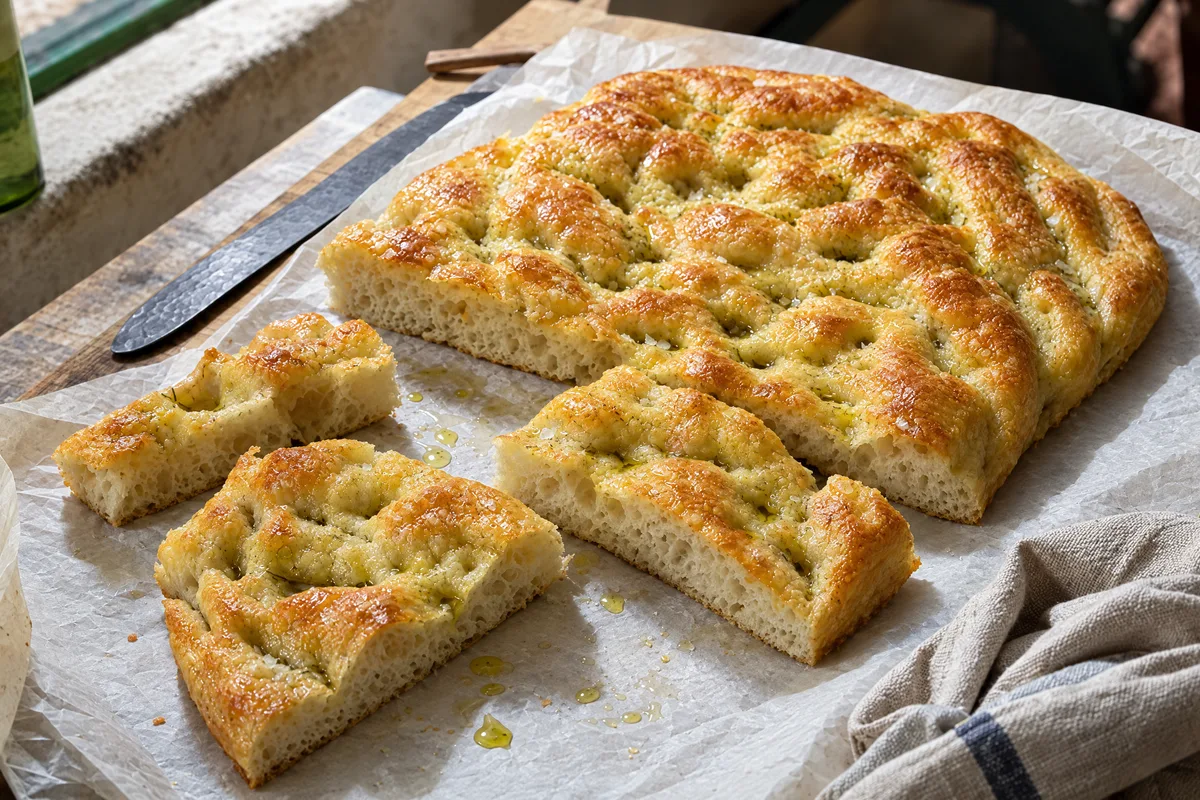
Everything that makes this focaccia Genoese happens in step 4: dimples pressed right down to the tray, then the salamoia of water, oil and salt poured over. The brine pools in the hollows and keeps them soft and pale while the ridges bake golden, which is how you get a shining top and a plush crumb. Tear it while it is warm, as the recipe says.
Focaccia Genovese
Prep 30 min · Cook 18 min · Rest 2 hr 15 min · Serves 8 · Difficulty Medium
Method
Dissolve the yeast and sugar in 280 ml lukewarm water. Mix into the flour with 40 ml oil, then the salt, and knead 10 minutes to a smooth, supple dough.
15 min
Oil the dough, cover, and rise until doubled, about 1 hour somewhere warm.
1 hr
Generously oil a 30 by 40 cm rimmed tray. Stretch the dough to fill it, flip once so both faces are oiled, cover, and rest 30 minutes.
35 min
Dimple with conviction: fingers straight, pressing to the metal, in close rows. Whisk 50 ml water with 30 ml oil and 4 g salt and pour this salamoia over the whole surface.
6 min
Final rise, uncovered, 45 minutes; the brine should still sit in the dimples.
45 min
Bake at 230 C until deep gold with pale valleys, 15 to 18 minutes. The bottom should sound dry when tapped.
18 min
Brush with a last thread of oil, slide onto a rack so the base stays crisp, and tear into slerfe while warm.
Kitchen notes
The brine is not optional. Pouring water on bread dough feels wrong once. After the first bite of what it does to the crumb, it feels like a secret you were finally told.
Dimple to the metal. Shy dents vanish in the oven. Press until you feel the tray; the holes are structural, not decorative.
For breakfast, try a piece with cappuccino: the salty bread makes a pleasant contrast to the milk.