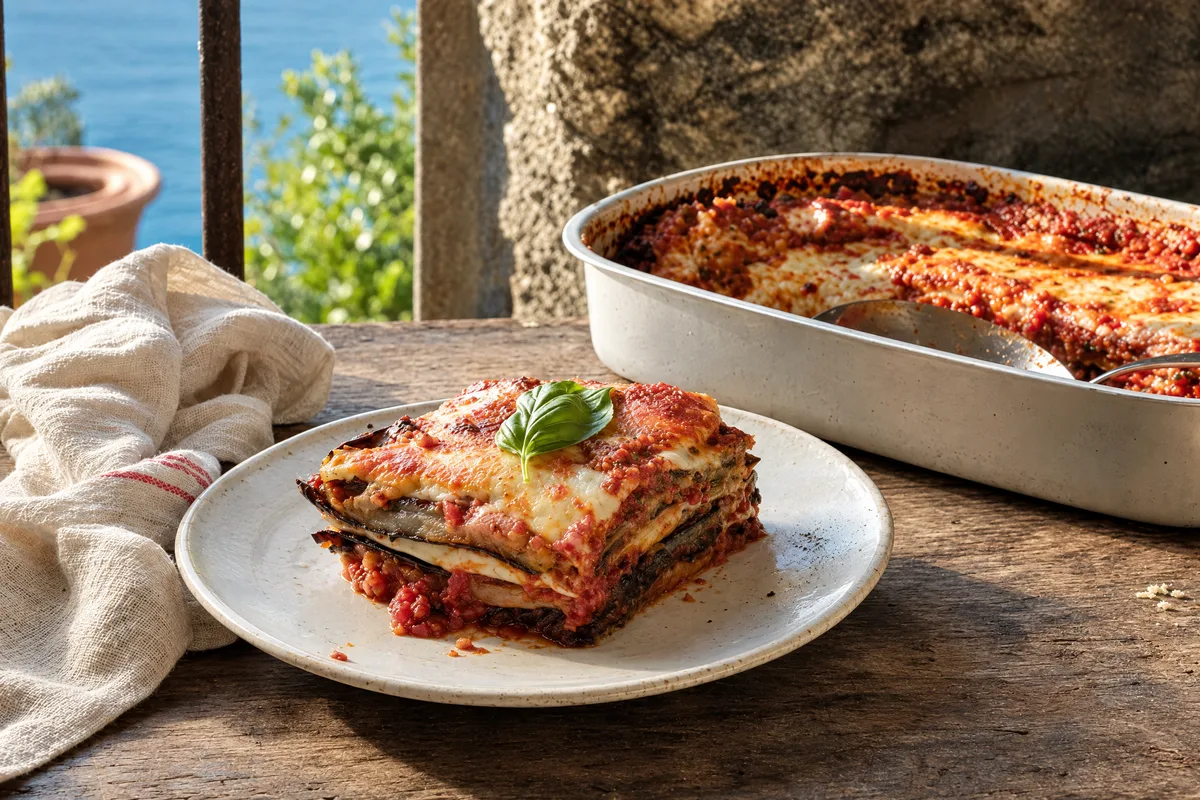
The eggplant is salted, fried (never grilled) and dried on racks, and the fior di latte is drained well ahead: this version is built around keeping water out, which is what separates a parmigiana that slices cleanly from one that slumps. The top layer is sauce and Parmigiano only, so nothing burns before the middle sets.
Make ahead It slices even more cleanly the next day; serve it warm or at room temperature, as Neapolitans often do.
Parmigiana di Melanzane
Prep 1 hr · Cook 1 hr 20 min · Rest 1 hr · Serves 6 · Difficulty Medium
Method
Salt the eggplant slices in a colander, weighted, for 45 minutes to draw their bitter water. Rinse briefly and dry completely.
50 min
Meanwhile make the sauce: soften the onion in olive oil, add the tomatoes crushed by hand, salt, and simmer 25 minutes; finish with half the basil.
30 min
Fry the eggplant in batches in 170 C oil until deep gold on both sides; drain on racks, not paper, so they stay crisp.
25 min
In an oiled deep dish: a veil of sauce, a shutter of eggplant, sauce, fior di latte, Parmigiano, torn basil. Repeat for 3 to 4 layers.
15 min
Finish with sauce and a confident snow of Parmigiano only (no mozzarella on top; it burns before the inside sets).
3 min
Bake at 180 C until bubbling at the edges with a bronzed roof, 35 to 40 minutes.
40 min
Rest at least 1 hour. Slice in squares that stand up straight and serve warm, not hot.
Kitchen notes
Dry cheese, dry eggplant. Water is the only thing that ruins parmigiana. Drain the fior di latte hours ahead and dry the fried slices on racks; sogginess is a choice.
Fry, do not grill. Grilled eggplant makes a lighter dish that is also a lesser one. The fry is where the silk comes from; rest and patience handle the oil.
Sicily folds in a little pecorino and sometimes egg; Parma raises an eyebrow at everyone. The Neapolitan canon above is the one most of Italy means by the word.