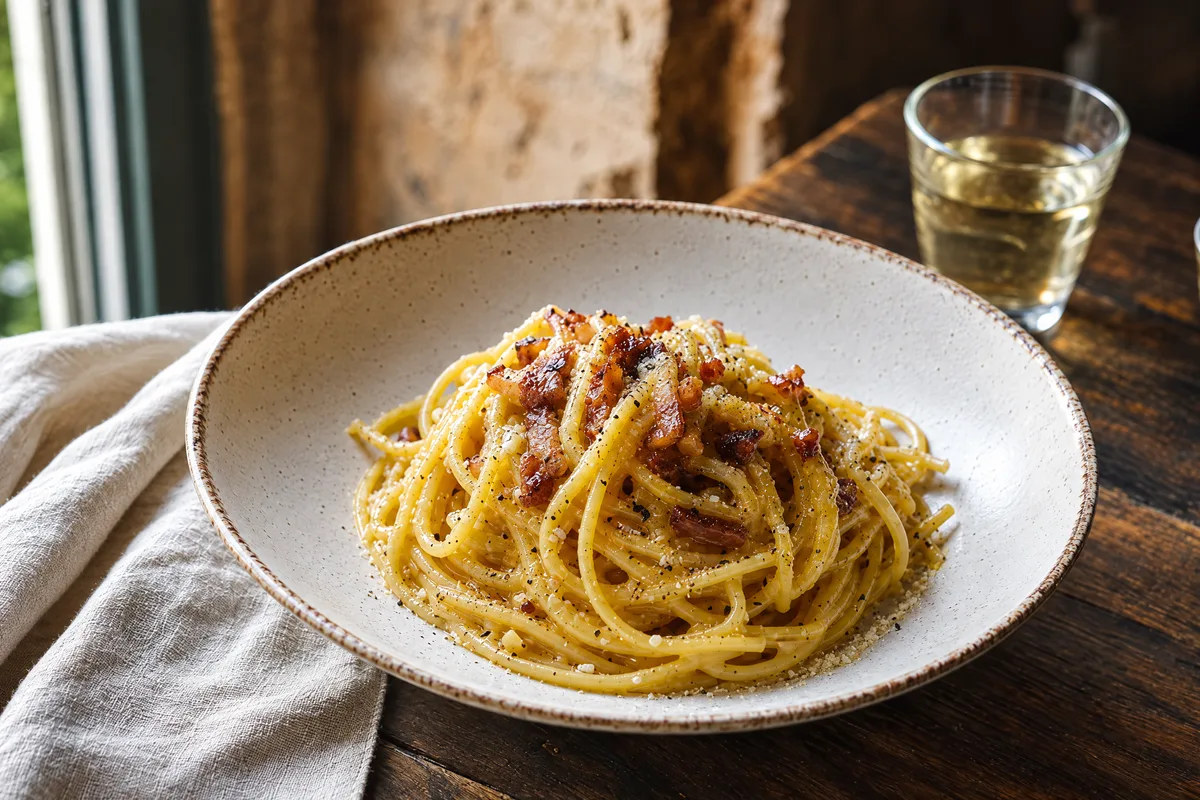
This version builds the sauce as a thick paste of yolks, one whole egg and Pecorino before the pasta arrives, then loosens it with pasta water only as you toss; that is how you get silk instead of scrambled egg. The decision that matters is doing that final toss off the heat, in a pan that is warm but no longer hot. Toasting the pepper first is a small step you will taste in every forkful.
Spaghetti alla Carbonara
Prep 15 min · Cook 15 min · Serves 4 · Difficulty Medium
Method
Toast the cracked pepper in a dry, wide pan until fragrant; tip half into a large bowl.
2 min
Cut the guanciale into batons and render it in the same pan over medium-low heat until amber and crisp, 8 to 10 minutes. Kill the heat; keep fat and meat in the pan.
10 min
Whisk the yolks, egg, and Pecorino into the peppered bowl until you have a thick gritty paste.
3 min
Boil the spaghetti in lightly salted water to one minute shy of al dente. Reserve two cups of the cooking water.
9 min
Drag the spaghetti into the warm (not hot) guanciale pan and toss 30 seconds so the fat coats every strand.
1 min
Loosen the egg paste with half a ladle of pasta water. Off the heat, pour it over the pasta and toss relentlessly, adding splashes of water, until a glossy sauce clings and flows. It thickens as you toss; stop while it still pours.
2 min
Plate in nests, crown with the crispest guanciale, the remaining pepper, and a last snow of Pecorino. Serve faster than you plated it.
Kitchen notes
Heat is the only enemy. Every scrambled carbonara died in a pan that was still on the flame. Off the heat, the eggs have no choice but silk.
Guanciale or it is something else. Pancetta makes a perfectly nice pasta that is not carbonara. The jowl’s sweet, peppery fat is not negotiable; bacon’s smoke least of all.
Same pantry, three Roman classics: drop the egg for gricia, add tomato for amatriciana. Master the carbonara emulsion and you own the trilogy.