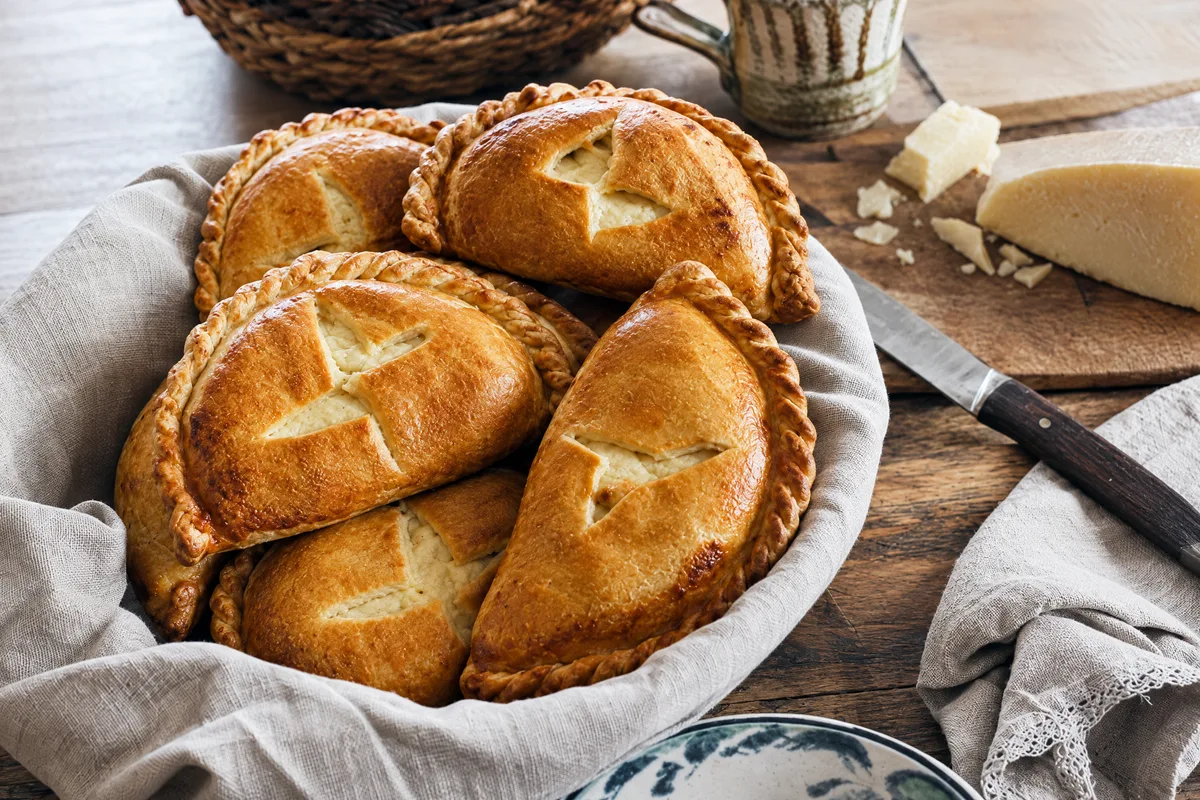
What this recipe gets right is the pastry: kneaded with olive oil and white wine as well as eggs, so it bakes crisp and flaky rather than bready. The filling balances a sharp cheese (pecorino) with a melting one (caciocavallo) and a little ricotta to keep it soft. Don't skip the small cut on top of each one: it lets the steam out so the seams hold.
Make ahead Bake them the day before and keep them covered somewhere cool: fiadoni are meant to be eaten at room temperature.
Fiadone
Prep 50 min · Cook 30 min · Rest 30 min · Serves 8 · Difficulty Medium
Method
Knead the flour with oil, wine, 2 eggs, and salt into a smooth, supple dough. Rest 30 minutes wrapped.
40 min
Beat the remaining 3 eggs (minus a yolk for glazing) and fold in pecorino, caciocavallo, ricotta, and pepper into a thick, spoonable filling.
10 min
Roll the dough 2 mm thin and cut 10 cm rounds, re-rolling scraps once.
15 min
Place a generous spoonful of filling on each round, fold to a half-moon, and seal the edge with a fork. Snip a small vent on top of each; tradition cuts a little cross.
20 min
Brush with the reserved yolk and set on lined trays with room to puff.
5 min
Bake at 180 C until bronzed and the filling peeks proudly from the vents, 25 to 30 minutes. Cool on a rack at least 15 minutes.
30 min
Kitchen notes
The vent is structural. Unvented fiadoni split at the seam and weep cheese. The little cross lets the filling rise and announce itself instead.
Balance the cheeses. All aged cheese turns the filling waxy; all fresh turns it wet. One sharp, one melting, a little ricotta is the village consensus.
Abruzzo bakes a near-identical fiadone and a sweet ricotta cousin; argue ownership over a basket of both on Pasquetta.