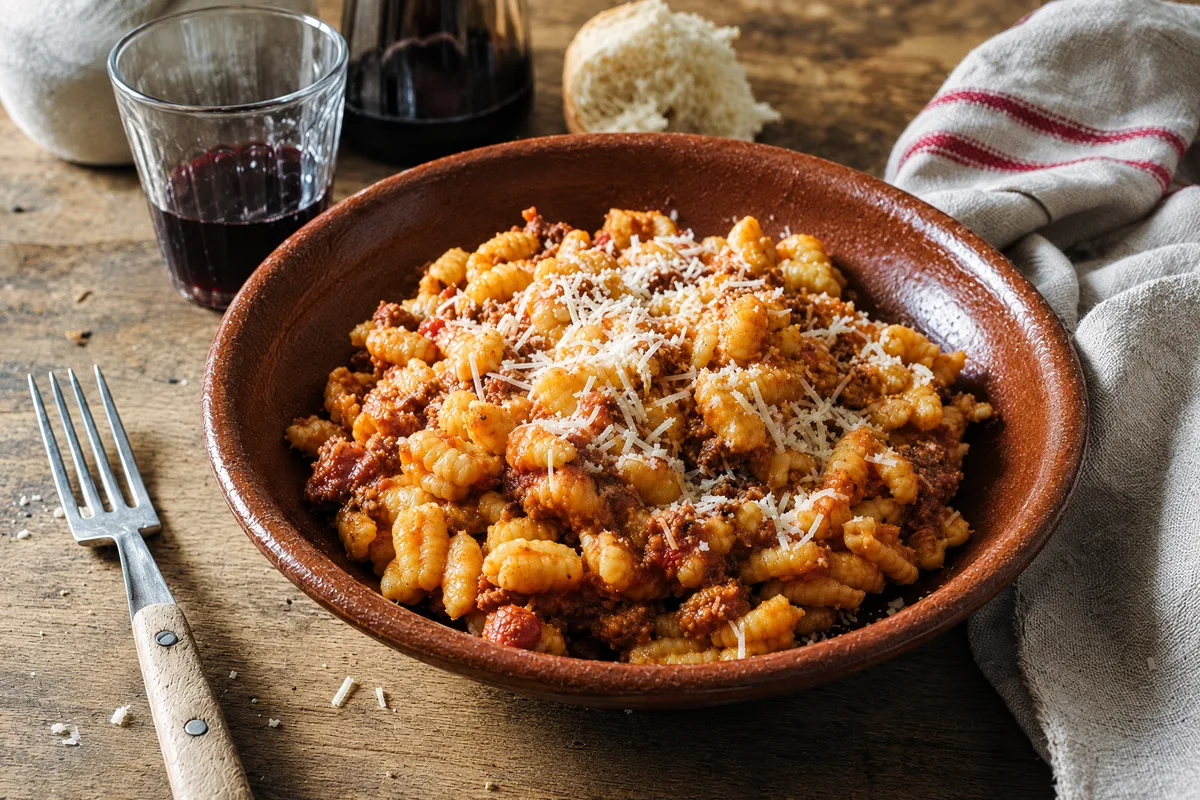
This version puts the saffron in the pasta dough, so every golden shell carries the perfume while the ragù stays about sausage, wine and tomato. The step to take seriously is the browning in step 3: well-colored sausage is what gives the sauce its depth. Finish with Pecorino Sardo, not Romano; it is milder and rounder, and it is the island's cheese.
Make ahead Shape the malloreddus in the morning and leave them to dry on semolina, and make the ragù a day ahead if you like; it keeps well in the fridge.
Malloreddus alla Campidanese
Prep 55 min · Cook 50 min · Rest 20 min · Serves 4 · Difficulty Medium
Method
Bloom the saffron in 200 ml warm water, then knead it into the semola with a pinch of salt to a firm golden dough. Rest 20 minutes.
30 min
Roll thin ropes, cut chickpea-sized pieces, and drag each over a gnocchi board or basket weave with your thumb into a ridged shell. Dry on semolina.
40 min
Soften the onion and garlic in the oil; add the crumbled sausage and brown it properly, breaking it small.
10 min
Pour in the wine and let it vanish; add tomatoes, fennel, salt, and pepper.
5 min
Simmer the ragù gently, uncovered, until thick and brick-toned, about 30 minutes.
30 min
Boil the malloreddus in well-salted water until they float plus a minute, 6 to 8 minutes; they should stay pleasantly chewy.
8 min
Toss pasta and ragù with a splash of pasta water and half the pecorino. Plate under the remaining cheese, drifts not flurries.
2 min
Kitchen notes
Saffron in the dough, the older way. This is the older way: saffron bloomed and kneaded straight into the pasta, while many cooks today stir it into the ragù instead. Both are authentic Campidano technique; bloom the threads fully or the gold streaks unevenly.
Brown the sausage like it owes you. The ragù’s depth is built in the browning minutes. Pale sausage makes pink sauce; bronzed sausage makes campidanese.
A bay leaf simmered in the ragù is a traditional touch some cooks use for a deeper aroma; leave it out if you prefer the sauce plainer. Either way the pecorino must be sardo, not romano: rounder, sweeter, island-correct.