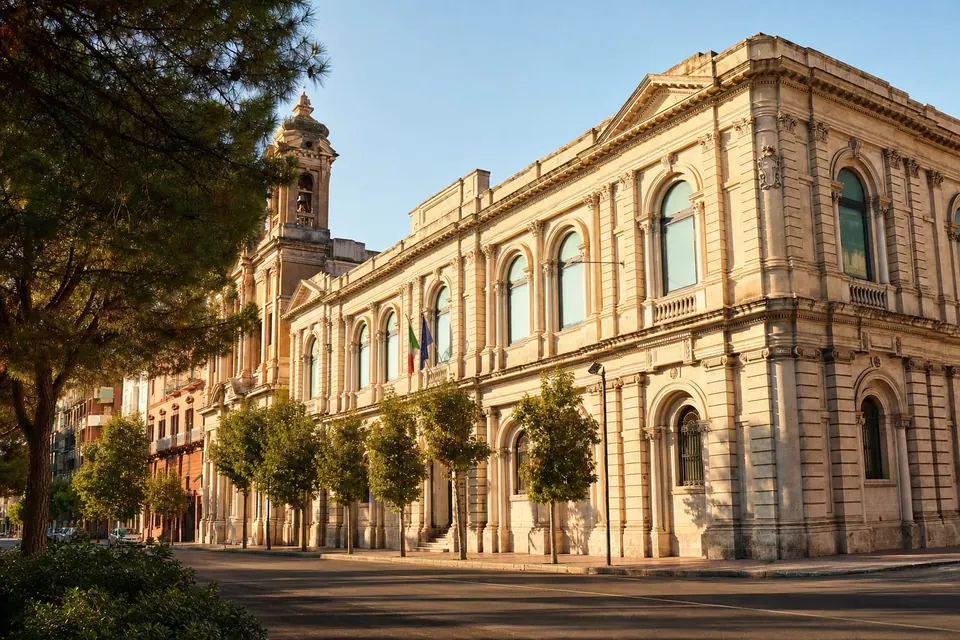
Greek colonists made Taras the richest city in Magna Graecia, and their goldsmiths' work fills this museum's cases with a virtuosity nothing since has matched: diadems, earrings and necklaces worked in gold wire so fine it looks woven rather than cast.
The museum occupies a former convent, reopened in 2007 after seven years of renovation following its 1887 founding, and its galleries run from prehistoric finds through Roman-era mosaics and sculpture. An athlete buried around the fourth century BC lies displayed as archaeologists found him, his prize amphorae for winning games arranged beside his bones. The bronze Zeus of Ugento, cast around 530 BC, and the marble group of Orpheus and the Sirens, returned from the Getty Museum, are among the collection's other set pieces.
Sources and citations (3)
- Museo Archeologico Nazionale di Taranto — MArTALa Storia del Museo Archeologico Nazionale di TarantoInstitutional headingRead source
- Ministero della CulturaMuseo archeologico nazionale di Taranto — MArTAPlace recordRead source
- Museo Archeologico Nazionale di Taranto — MArTAPercorsi e CollezioniCollection pathsRead source