Skip to content

Ostuni

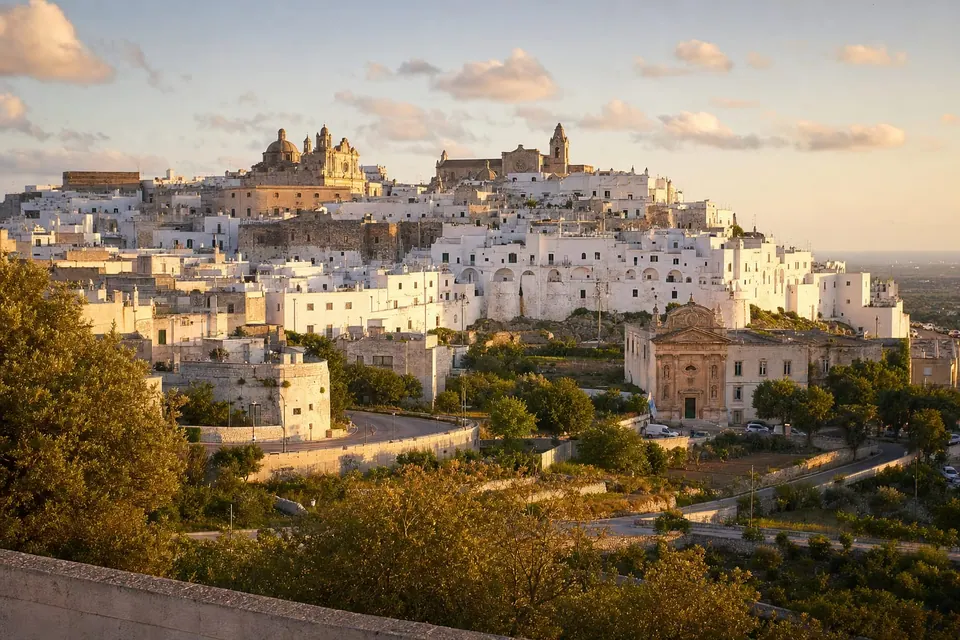
Puglia's White City, its lime-washed lanes spiraling up an olive-plain hill to a Gothic cathedral.

  • Ostuni
  • District
Where
Ostuni
Best for
The whitewashed hill town
Allow
2 hr 30 min
Tickets
Free

Ostuni whitewashes its entire historic center every year, a practice with roots in plague-era public health ordinances that used lime wash as a cheap disinfectant, and the habit stuck long after the medical reasoning behind it faded.

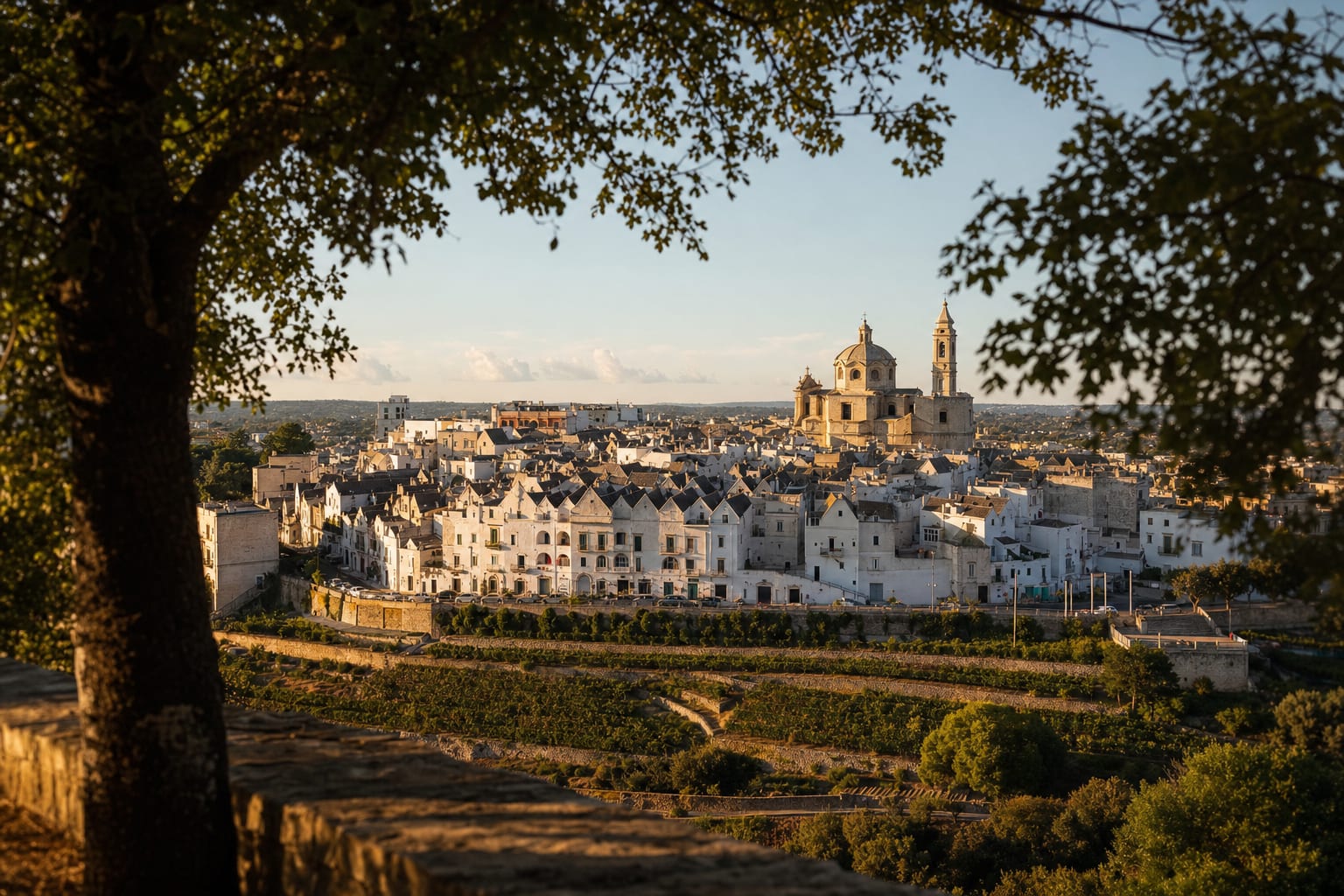
The result is a hill town that reads from a distance as a single sculptural mass of white cubic houses rising from the Salento olive plain toward the Adriatic, a silhouette so striking it earned the nickname La Città Bianca. Its lanes spiral upward through a genuinely confusing medieval street plan, designed at least in part to disorient raiders, toward the Concattedrale, a Gothic cathedral finished in the late 15th century whose facade centers on an elaborate rose window unusual for the region. Beneath the town, archaeological finds including a 25,000-year-old Paleolithic burial, nicknamed Delia, place human presence here far earlier than any of the visible medieval architecture suggests.
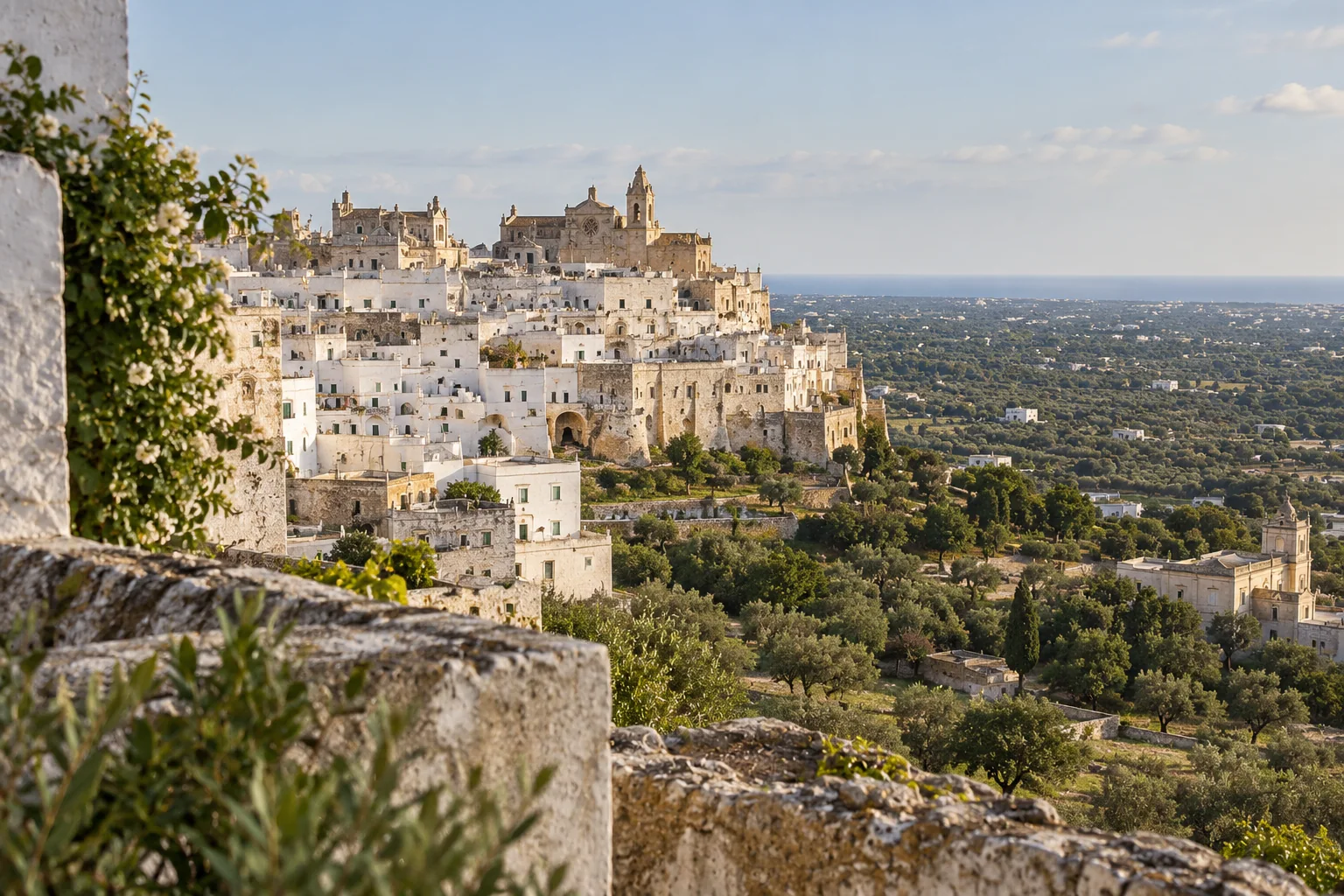
Ostuni's whitewashed old town rising above the olive plain
From above, Ostuni appears as a compact white crest above the olive groves.
Sources and citations (3)
  1. Comune di OstuniCentro Storico di OstuniDescriptionRead source
  2. Comune di OstuniObbligo di imbiancatura delle facciateOrdinance summaryRead source
  3. Regione PugliaPPTR landscape materials — Ostuni historic centre and terraced gardensOstuni terraced-garden descriptionRead source
Look closer

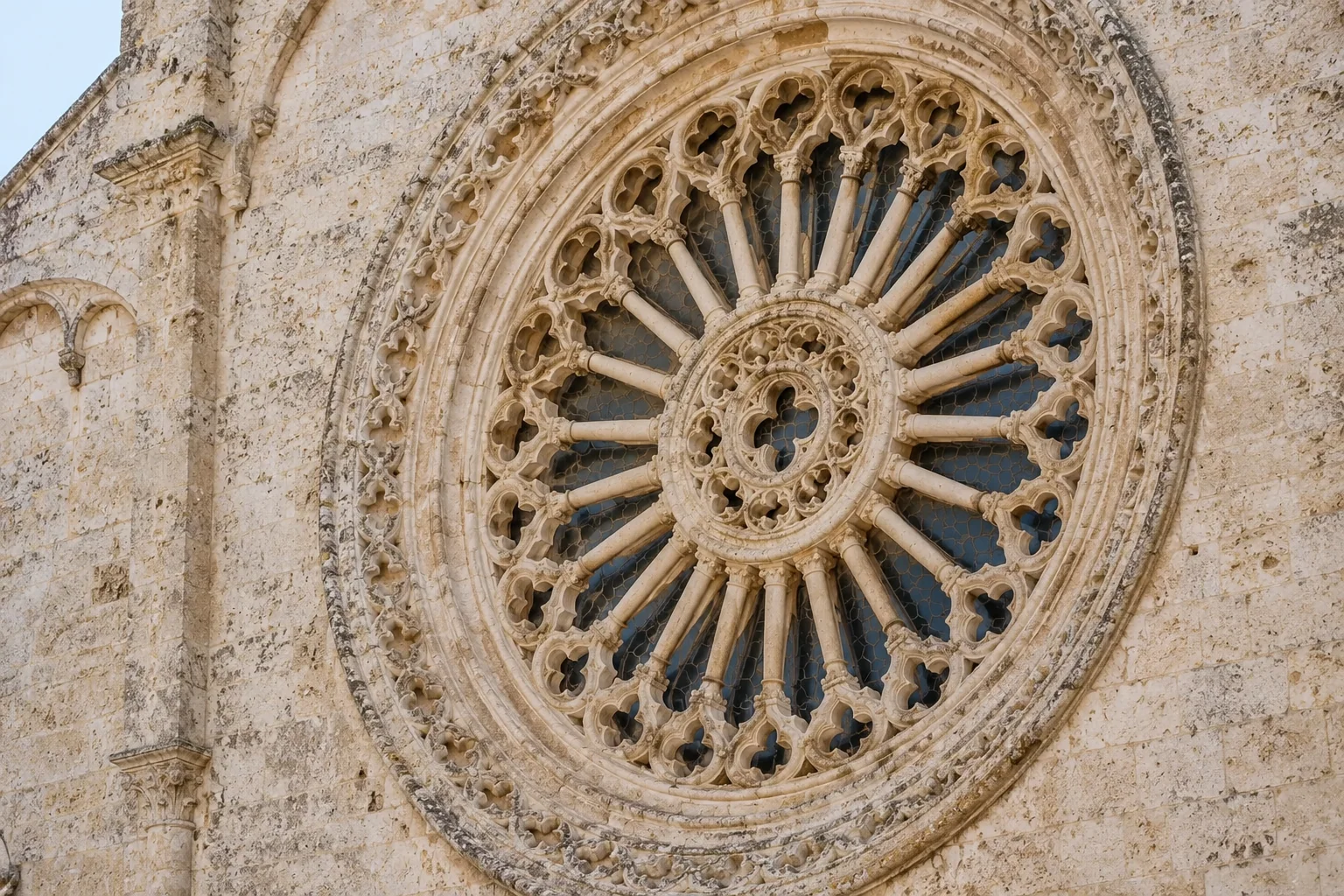
Radial stone spokes and carved limestone circles shape Ostuni cathedral’s rose window.
The rose windowRadial stone spokes and carved limestone circles shape Ostuni cathedral’s rose window.
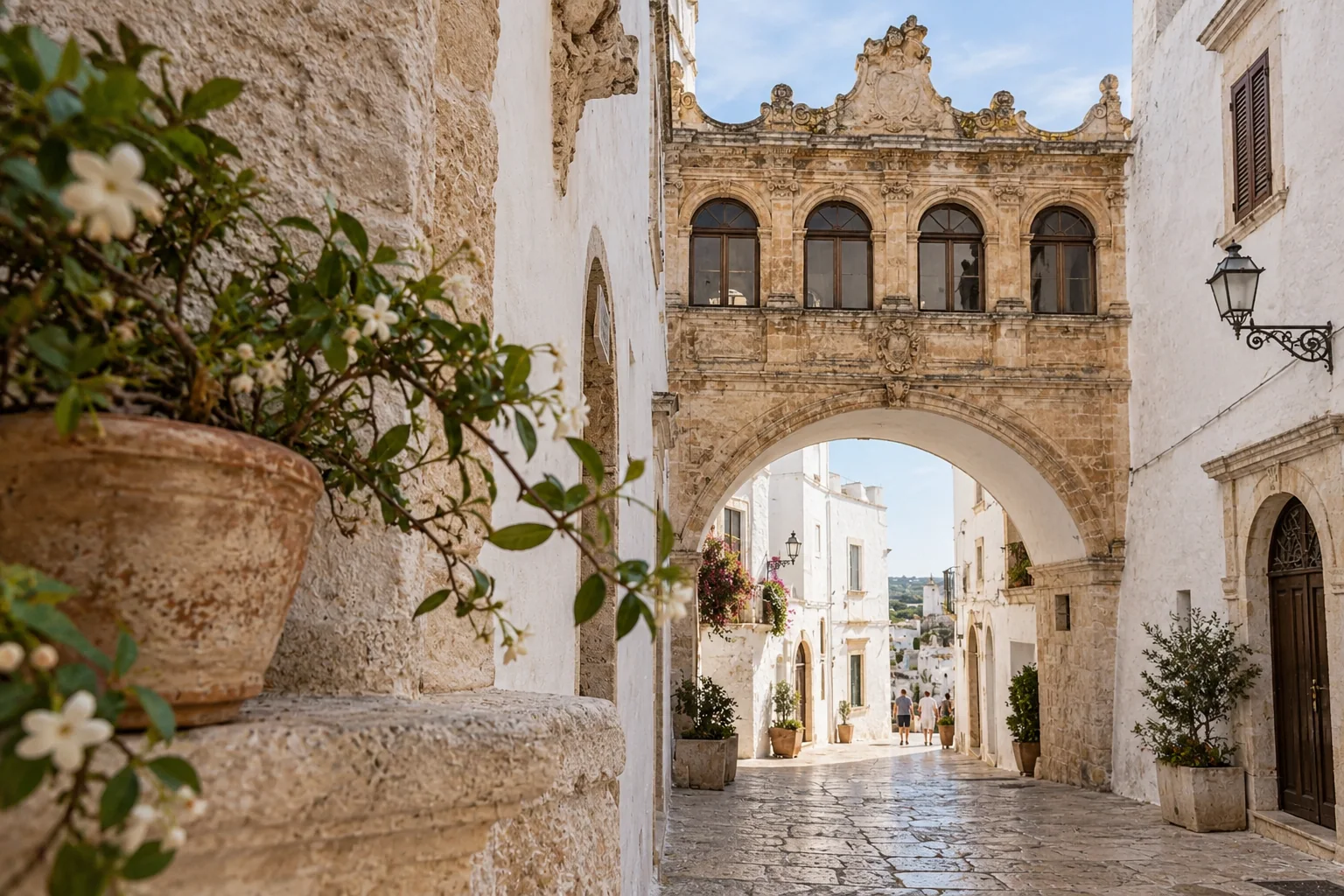
Arco Scoppa spanning a narrow whitewashed lane in Ostuni
An arch between palacesArco Scoppa bridges the lane with a delicate gallery of four stone windows.
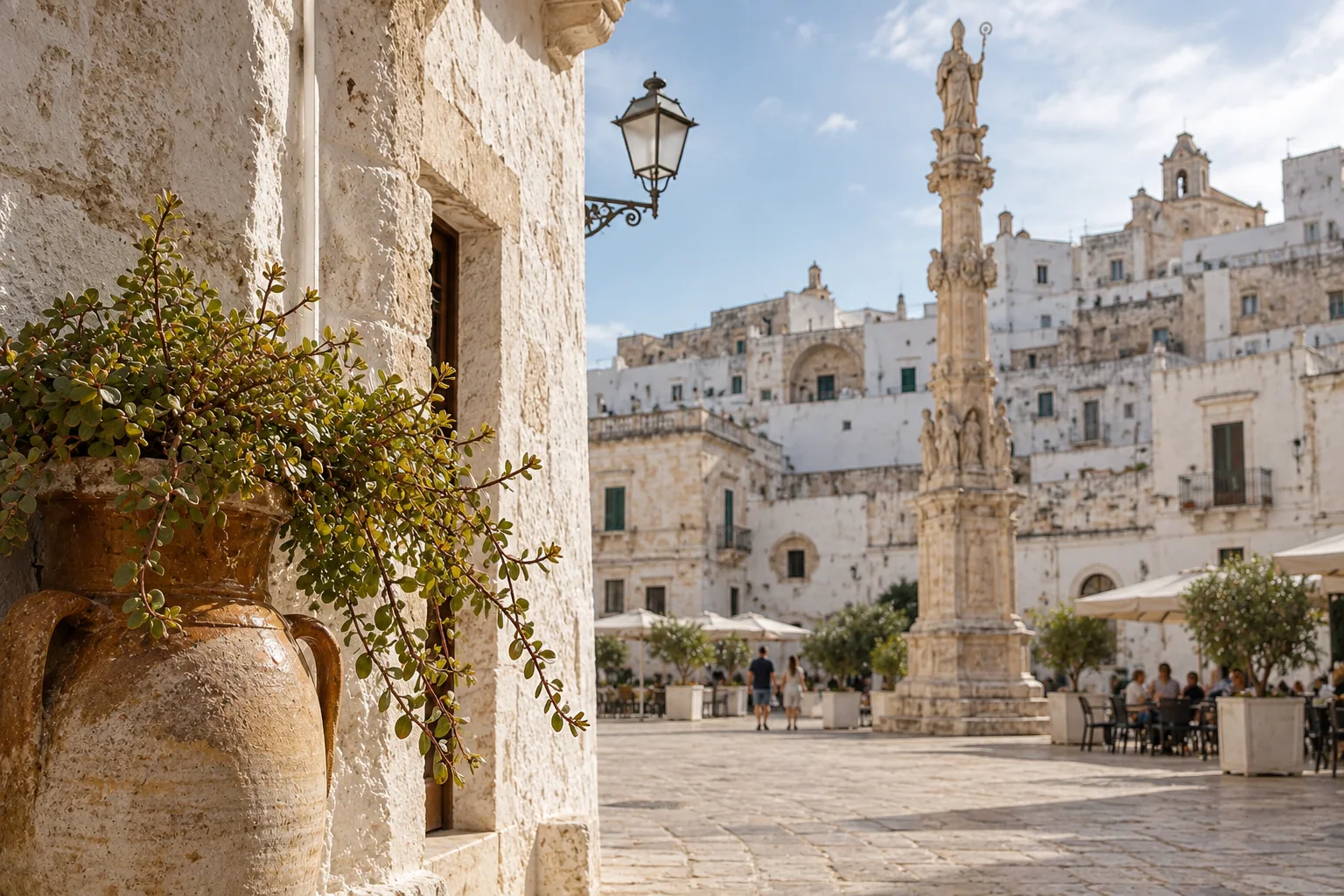
The column of Sant'Oronzo in Ostuni's Piazza della Libertà
The column in the squareThe column of Sant'Oronzo rises above the white facades of Piazza della Libertà.

Four things worth finding

If you see nothing else, see these.

  1. Concattedrale di Santa Maria Assunta

    A Gothic cathedral whose facade centers on a large rose window, the town’s signature piece of architecture.Via Cattedrale, at the top of the old town

  2. Arco Scoppa

    An arch that links two palaces across the street, a good frame for a photograph of the cathedral.Opposite the cathedral

  3. Delia, the woman of Ostuni

    The skeleton of a young pregnant woman buried with a cap, found in a cave near Ostuni in 1991.Museo di Civiltà Preclassiche della Murgia Meridionale, Via Cattedrale

  4. Piazza della Libertà

    The main square, with the column of Sant’Oronzo at its center.Lower old town

Plan your visit

Everything you need before you go.

Tickets
Free
Booking
No booking needed
Time needed
2 hr 30 min
Best time
Late afternoon into evening, when the white walls turn pink and gold as the heat breaks.
Getting there
Ostuni has a train station on the Bari-Lecce line, a short bus or taxi ride from the hilltop old town; Brindisi airport is reachable by car.
Accessibility
The old town's spiraling, sloped lanes and frequent steps make it genuinely challenging for wheelchairs; the newer lower town is flatter and more accessible.

Walking the town and entering the cathedral are free. The Museo delle Civiltà Preclassiche, which holds the Delia burial, charges a small entrance fee, typically a few euros.

Get intentionally lost in the spiral lanes below the cathedral rather than following a set route; the maze-like layout was designed to disorient outsiders, and letting it work is the whole point of a visit.

Get directionsGoogle MapsApple Maps

Good to know

How long should you spend in Ostuni?

Two and a half hours cover the cathedral, the museum with Delia and a slow walk through the white lanes. A longer stay lets you enjoy the evening light on the walls.

Do you need to book Ostuni?

No, the old town is free to wander, and only the museum charges entry. In summer, book restaurants ahead, since the most scenic tables fill at sunset.

Is Ostuni worth a detour from Lecce or Bari?

Yes, it is one of the most striking hill towns in Puglia, and works as a base for the coast and the Itria Valley. Plan it for late afternoon, when the white walls glow.

A letter from Italy, once a month.

The places, tables and makers we found worth your time. One email, no noise.

One letter a month. Unsubscribe at any time. We never share your address.

Help us get it right

What is it about?