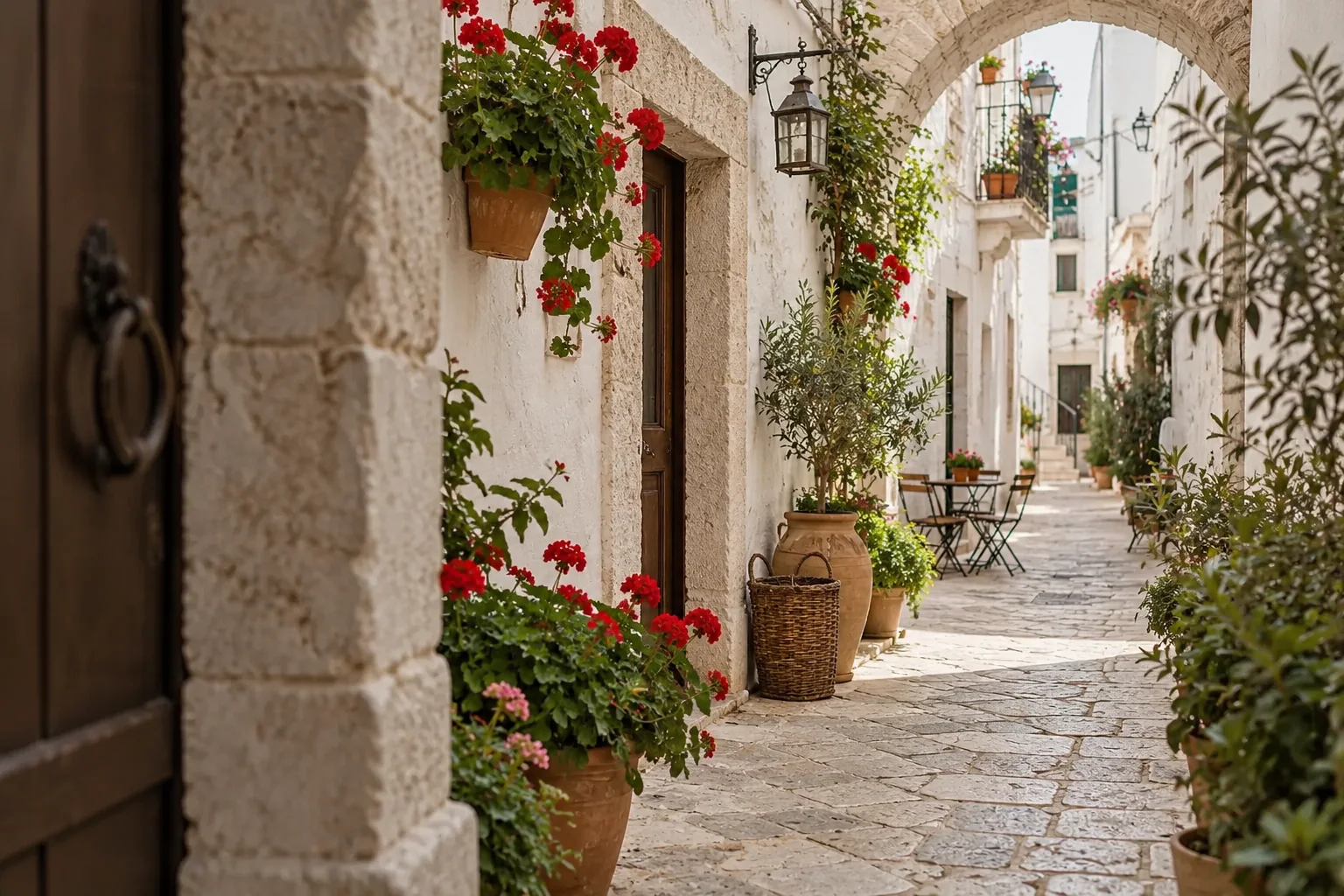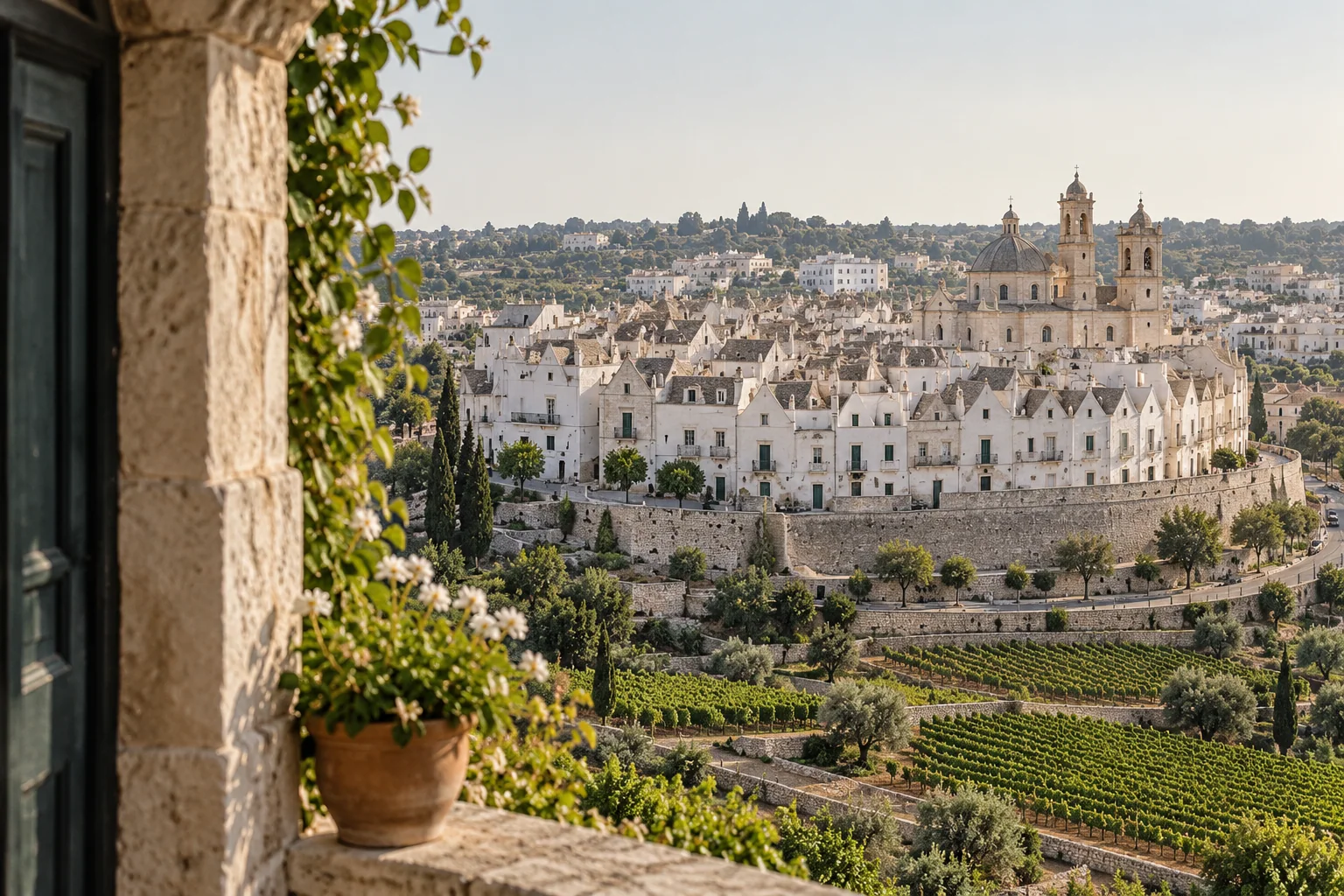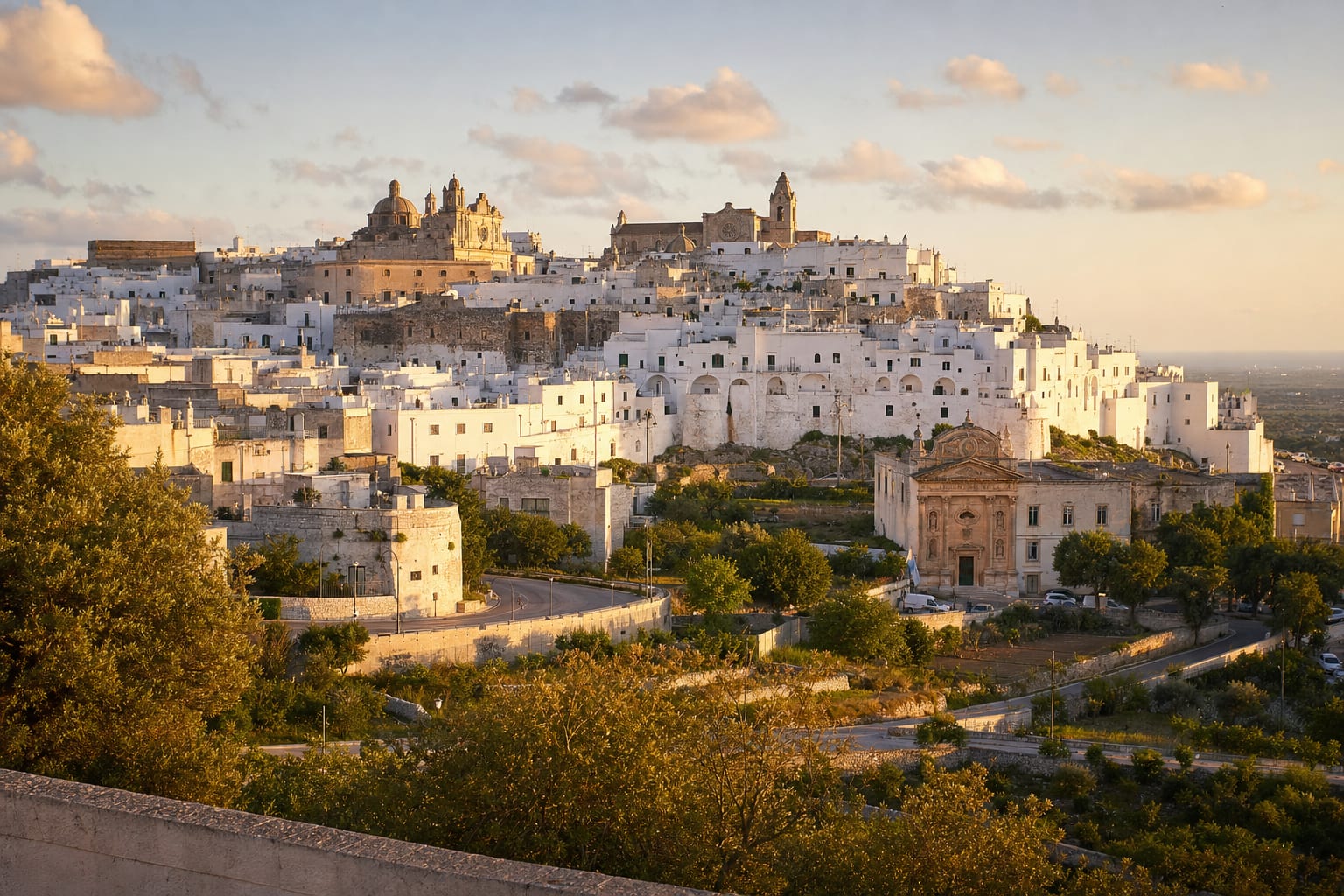
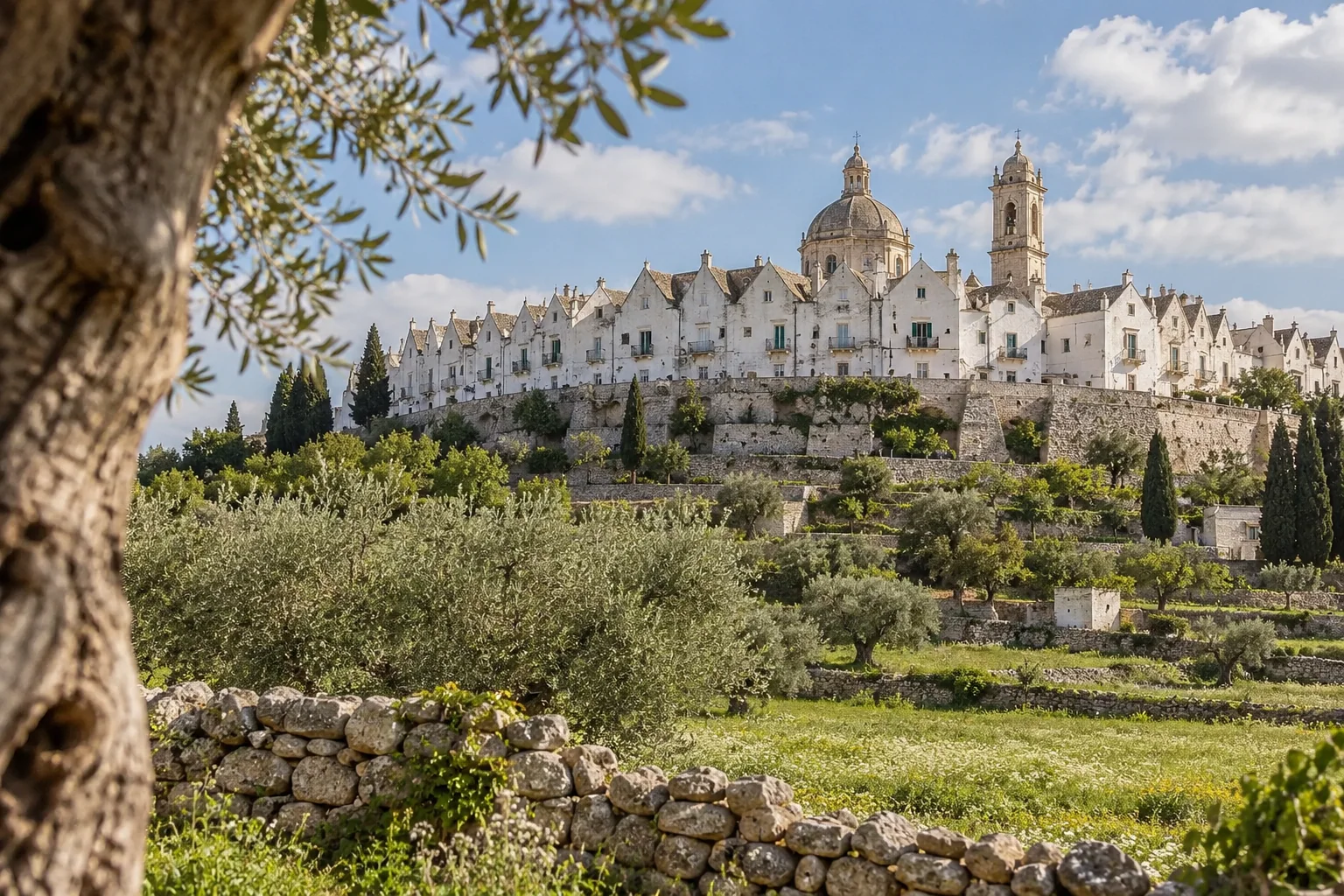
Locorotondo earns its name from its plan: a near-perfect circle of whitewashed lanes laid out around 1000 CE under the Benedictine monastery of Monopoli, and still legible today from above.
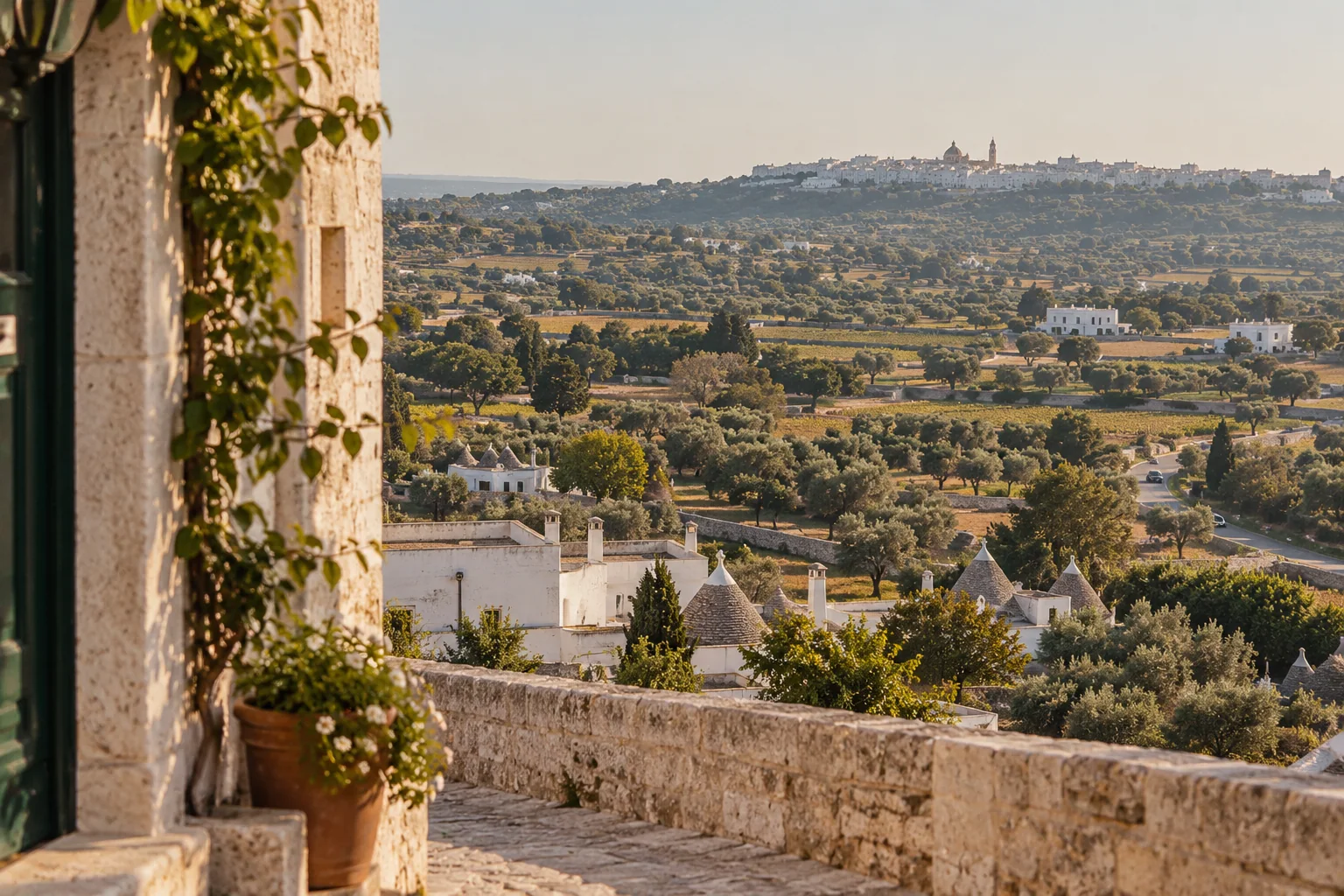
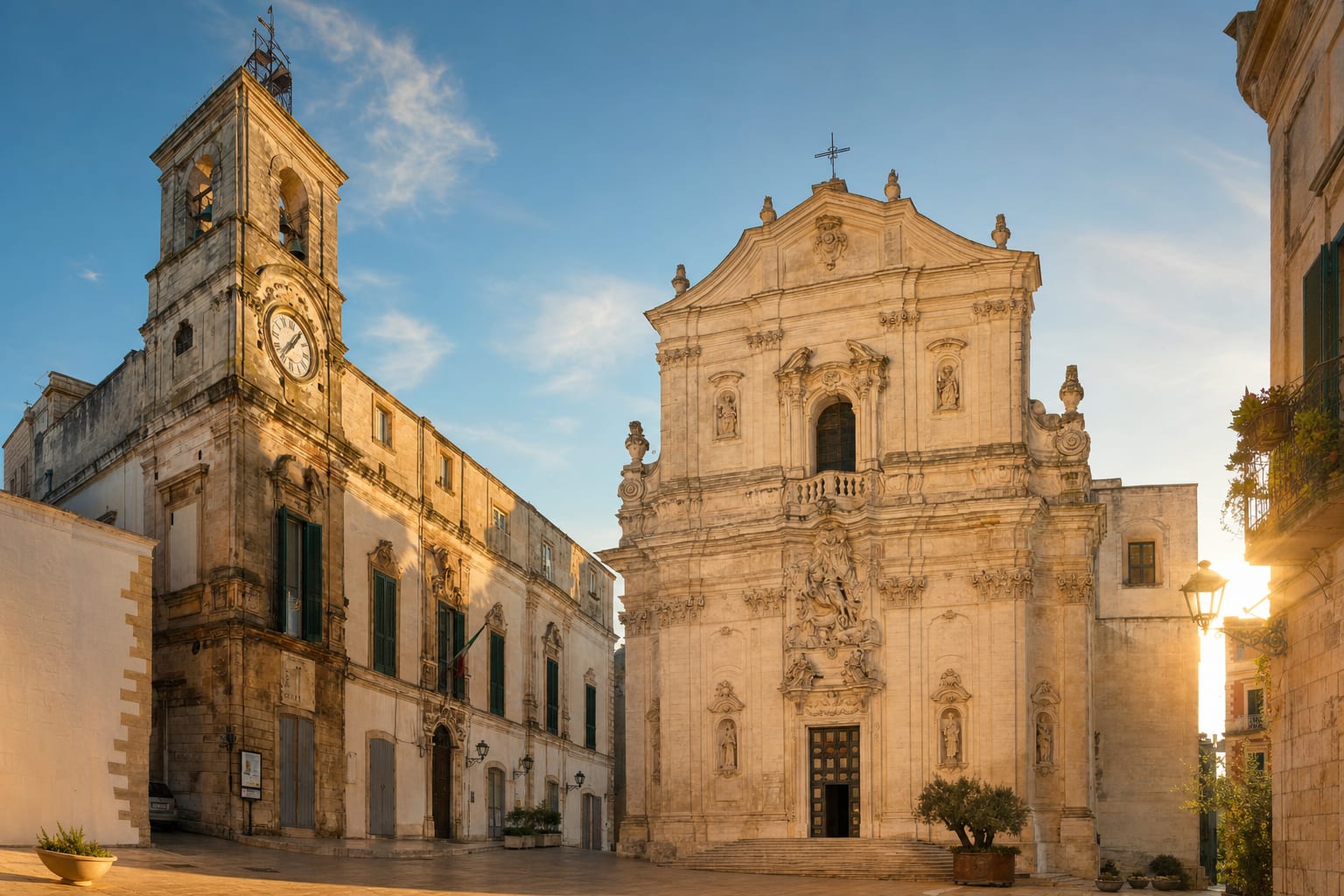
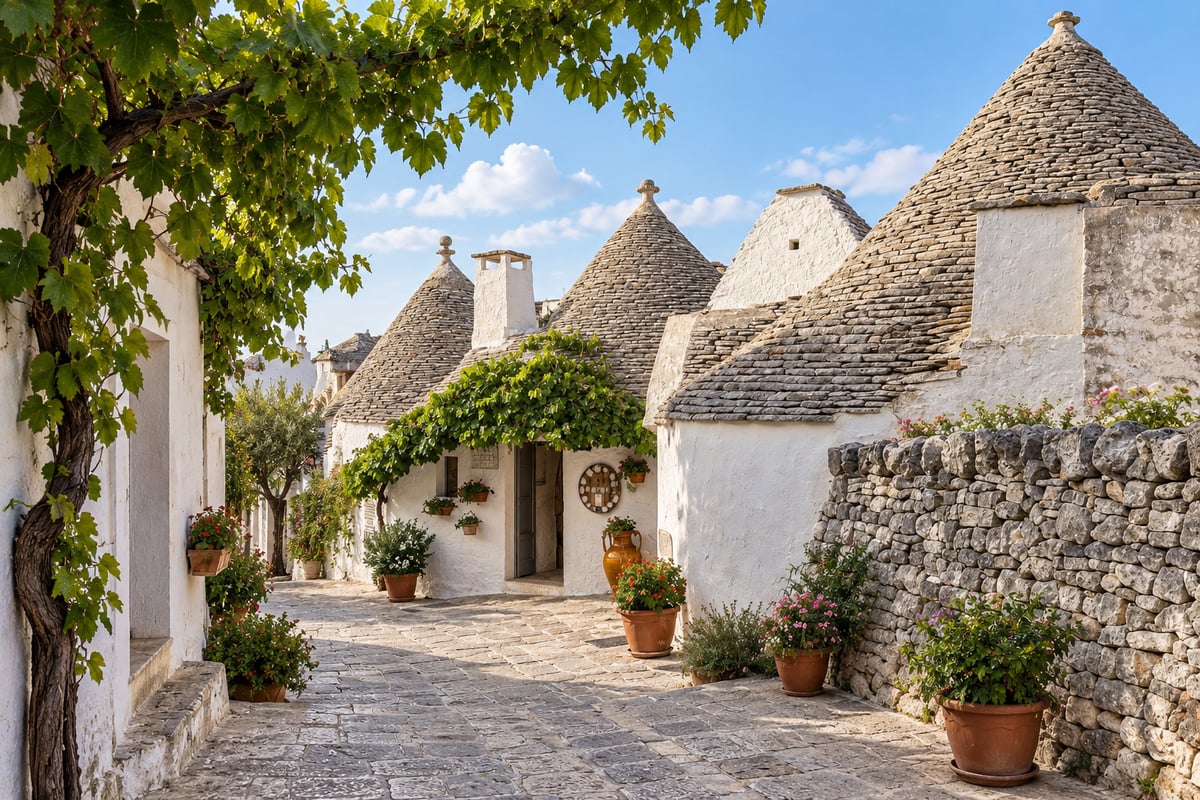
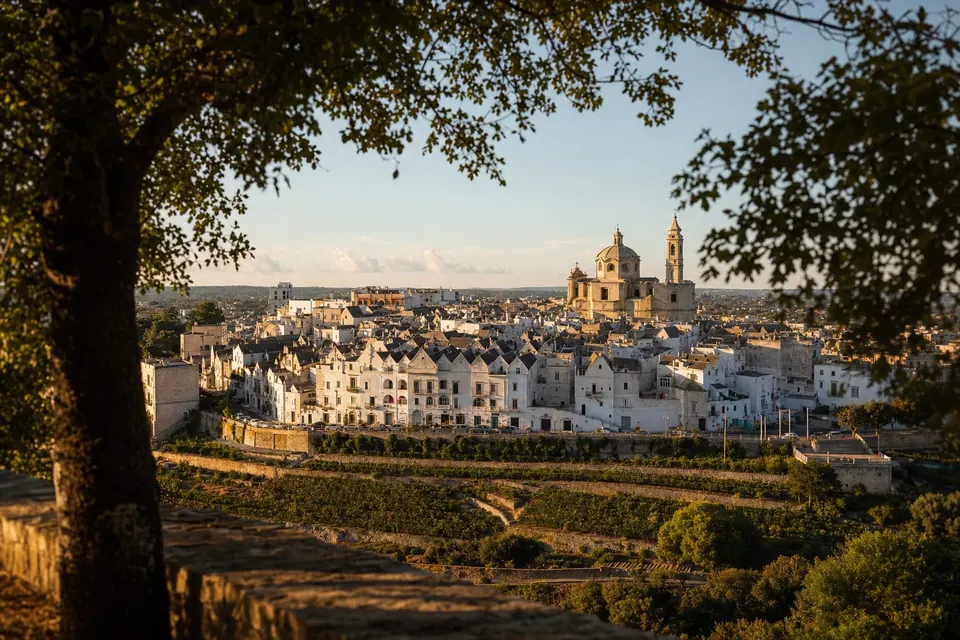
What sets it apart from other Itria Valley towns is its roofline: instead of the conical trulli found in the surrounding countryside, the old town is built of cummerse, tall gabled houses roofed in interlocking limestone slabs that shed rain in a single sharp pitch. Wrought-iron balconies dressed with geraniums line the alleys, and the eastern edge of town opens onto a long natural terrace over a valley scattered with trulli and vineyards. Those vineyards grow the grapes (Verdeca and Bianco d'Alessano) behind the crisp Locorotondo DOC white wine served in every wine bar on the main piazza.
Sources and citations (4)
- Comune di LocorotondoMunicipioDescriptionRead source
- Regione PugliaLocorotondo - Borghi storiciHistoric-village descriptionRead source
- Comune di LocorotondoRegolamento EdilizioArticles 62 and 71Read source
- Ministero della Cultura, DGABAPPalazzo MorelliIdentity, ownership and protection fieldsRead source