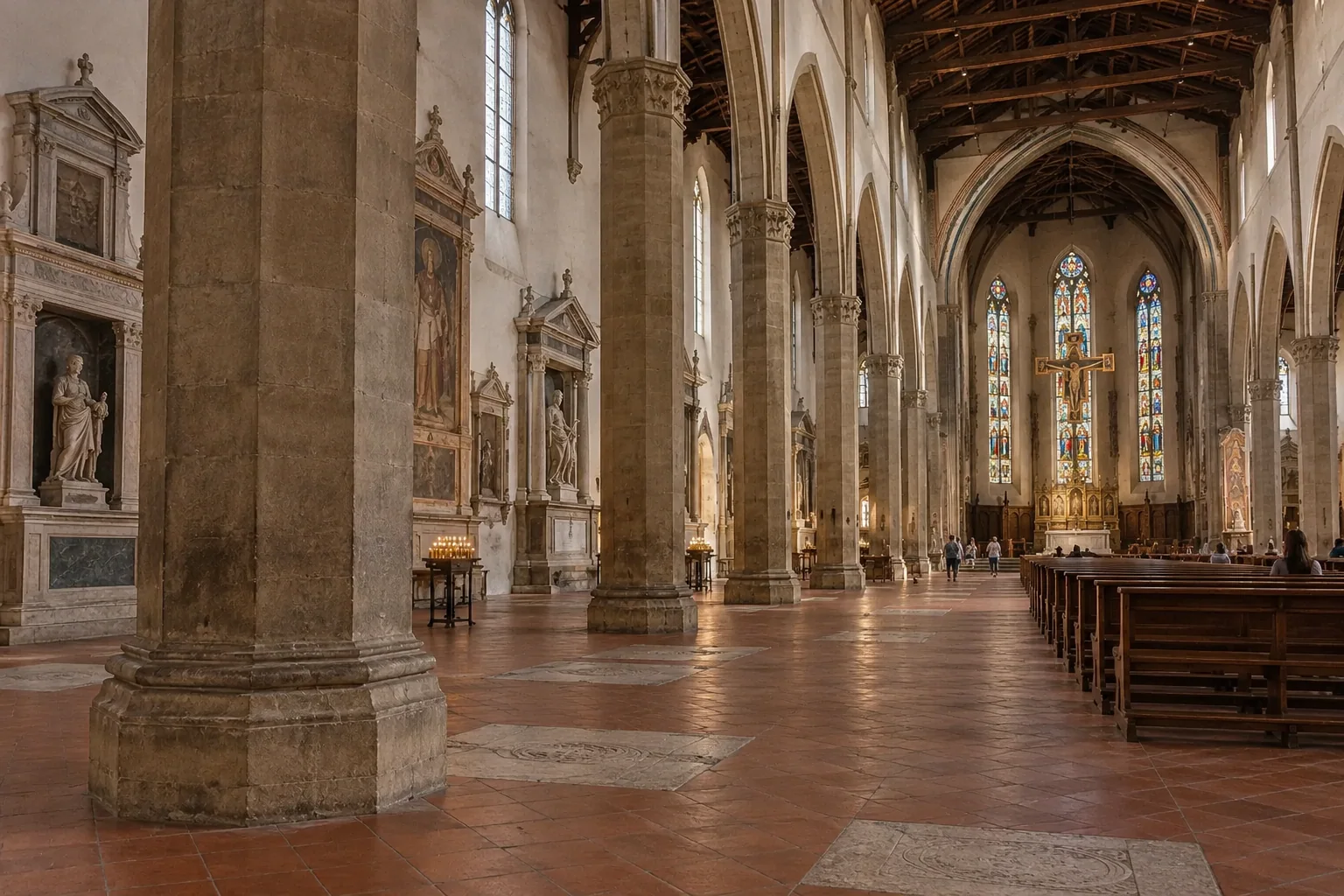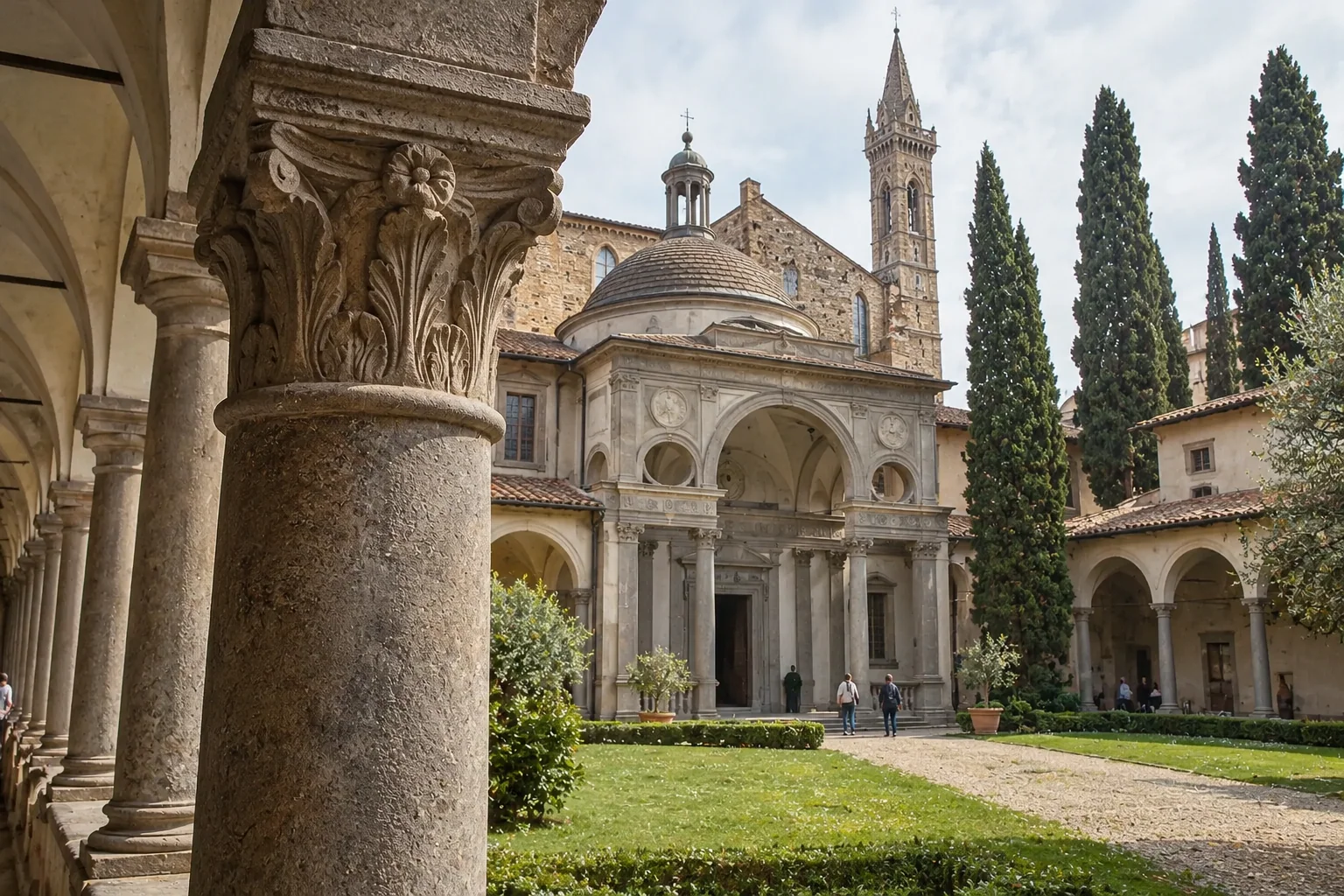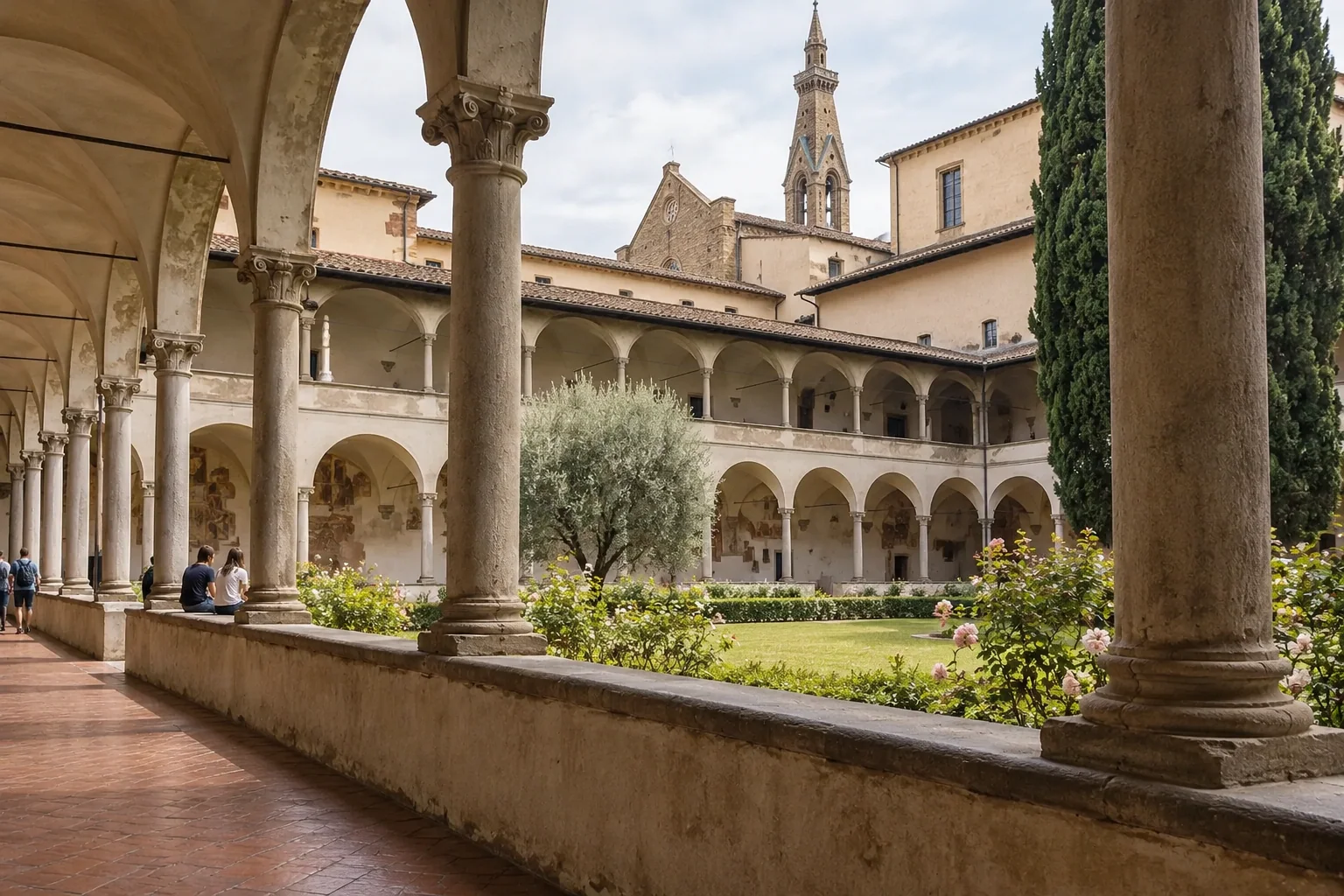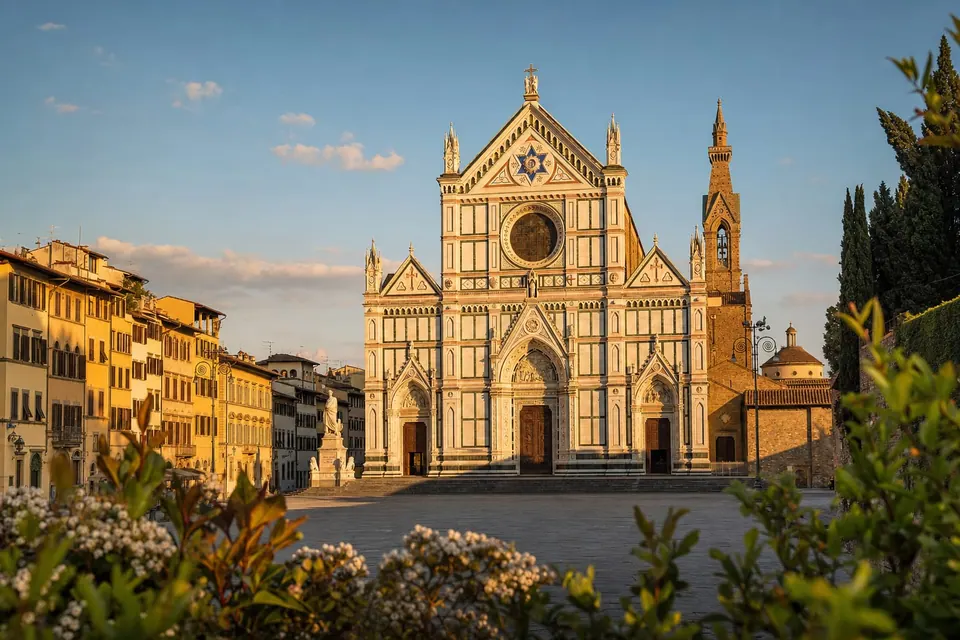
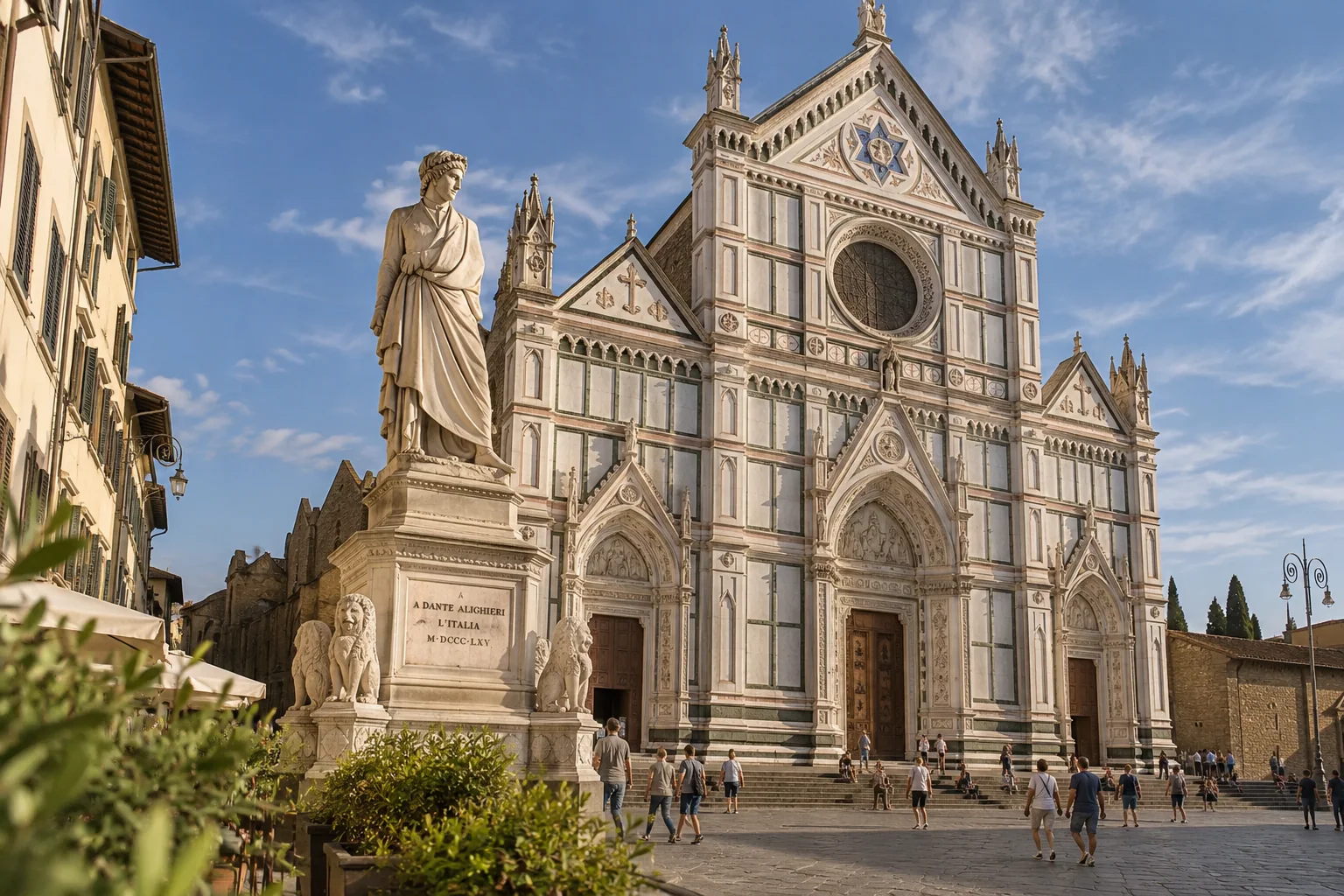
Santa Croce is Florence's Franciscan basilica, founded around 1294 or 1295 and traditionally, if cautiously, attributed to Arnolfo di Cambio; the current building was consecrated only in 1443. Its Latin-cross interior holds the largest concentration of funerary monuments in Italy, earning it the nickname Temple of the Italian Glories: Michelangelo, Galileo, Machiavelli and the composer Rossini are all buried here, alongside a cenotaph for Dante, who never returned from exile to be buried in his home city. Giotto and his workshop frescoed the Bardi and Peruzzi chapels with scenes from the lives of Saint Francis and Saint John, while Brunelleschi's Pazzi Chapel in the adjoining cloister is considered an early masterpiece of Renaissance architectural clarity. In 1566, Vasari tore out the church's original rood screen during a Counter-Reformation renovation, permanently changing how the nave reads today.
Santa Croce has been central to Florence's religious, artistic, and civic life for centuries. Its Franciscan origins, Giotto chapel cycles, Renaissance works, and monumental tombs form one of the city's richest cultural archives. The Opera di Santa Croce describes the complex as a living heritage with thousands of works still largely in their original settings, which is why the visit feels like entering a historical organism rather than a neutral museum.
Sources and citations (3)
- Opera di Santa CroceSanta Croce's masterpiecesRead source
- Opera di Santa CroceBasilicaBasilica identityRead source
- Opera di Santa CroceThe History of Santa CroceEarly and current churchesRead source