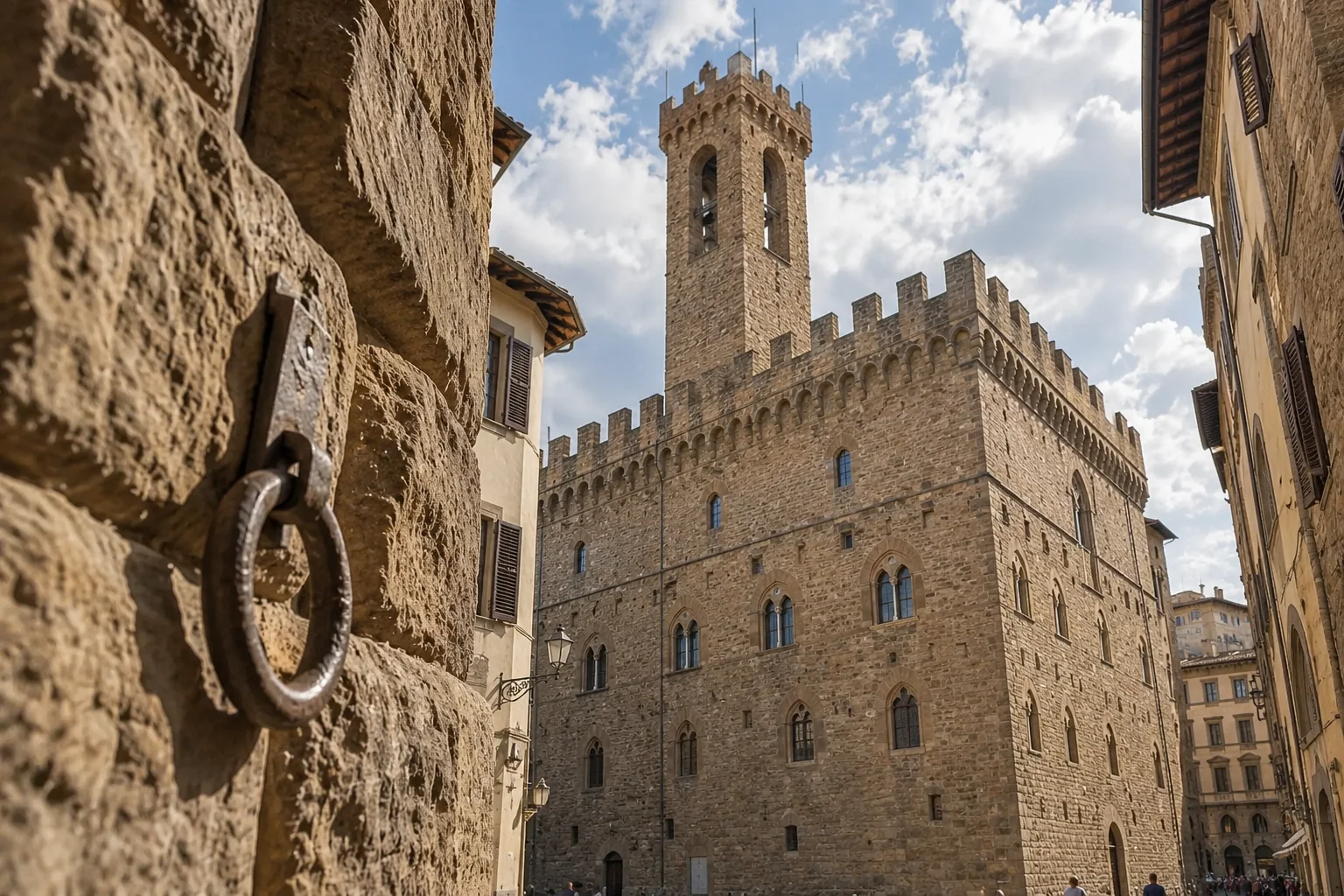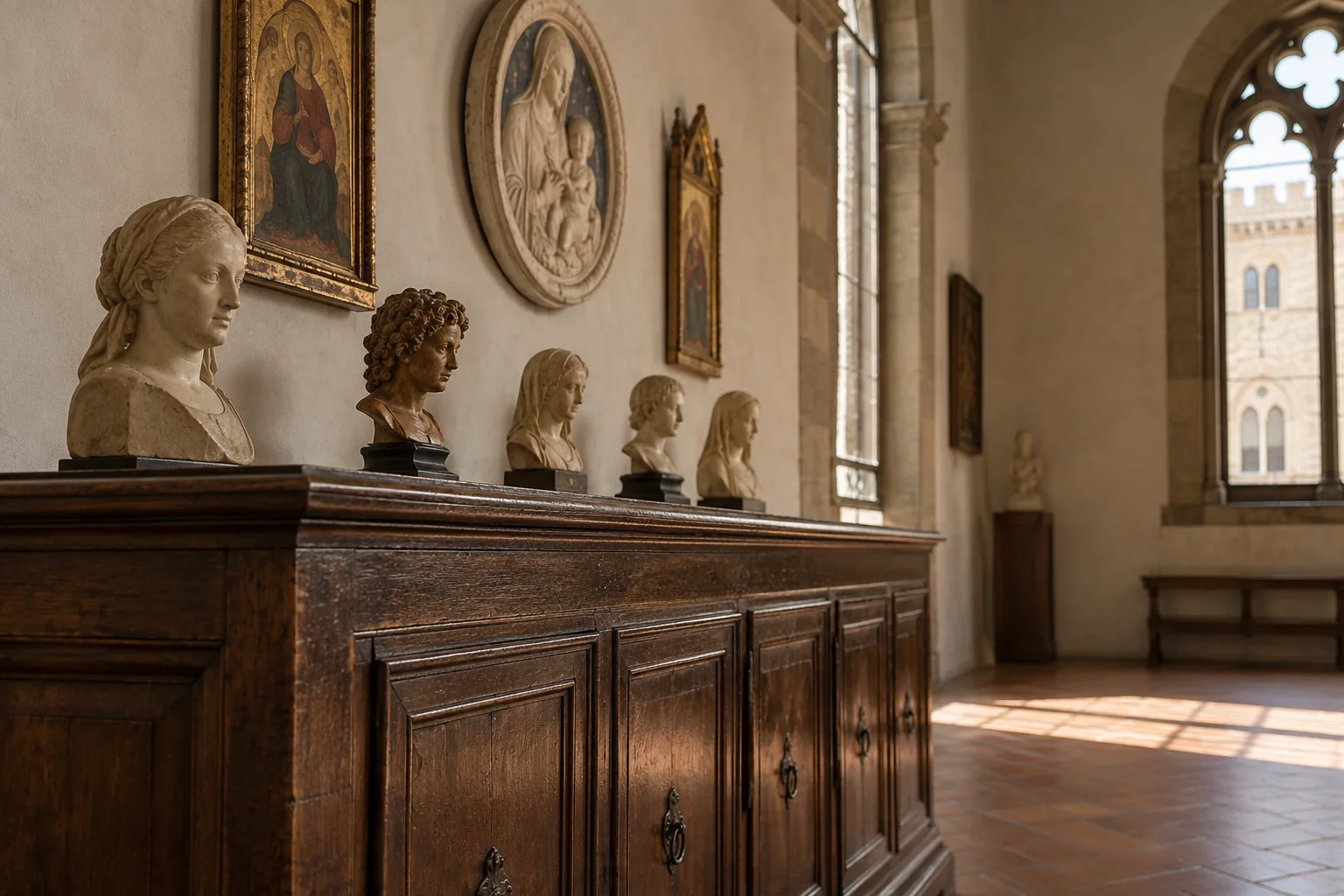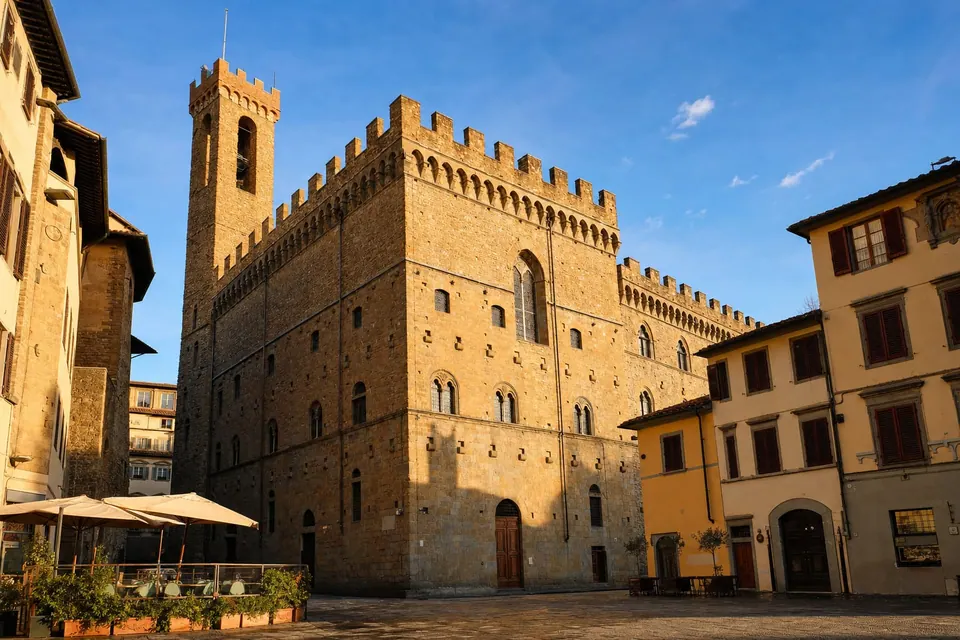
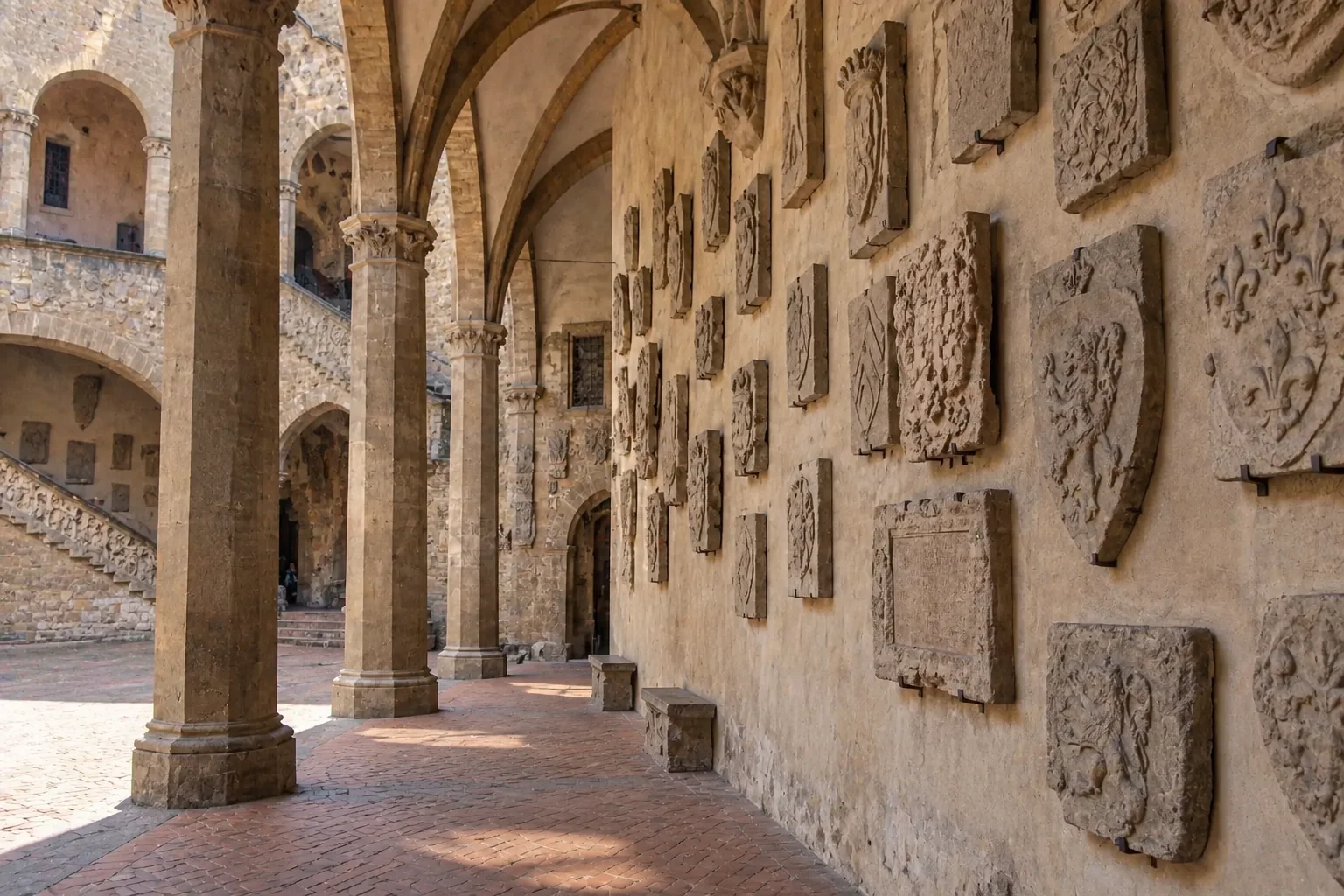
The Bargello occupies Florence's oldest surviving public palace, built from 1255 as the seat of the Capitano del Popolo and later used as the residence of the city's chief of police, the Bargello, whose name it still carries; prisoners were once executed in its severe stone courtyard. In 1865, the newly unified Italy converted it into the country's first national museum devoted to sculpture, and its collection still reads as a rebuttal to anyone who thinks Florentine art is only about painting. Donatello's bronze David, the first freestanding nude since antiquity, stands here, along with his marble Saint George; two young Michelangelo works, a drunken Bacchus and a tondo of the Madonna, show the sculptor before Rome made him famous. Add Renaissance medals, ivories, ceramics and enamels, and the Bargello becomes the best place in the city to see sculpture without the crowds pressing in.
The building had civic and judicial functions before becoming a national museum. Its collection history and display are documented by the Ministry of Culture and the Musei del Bargello.
Sources and citations (3)
- Musei del BargelloMuseo Nazionale del BargelloRead source
- Musei del BargelloChi siamoInstitutional collection overviewRead source
- Ministero della Cultura, Catalogo Generale dei Beni CulturaliIl Museo del BargelloMuseum identity and collection summaryRead source