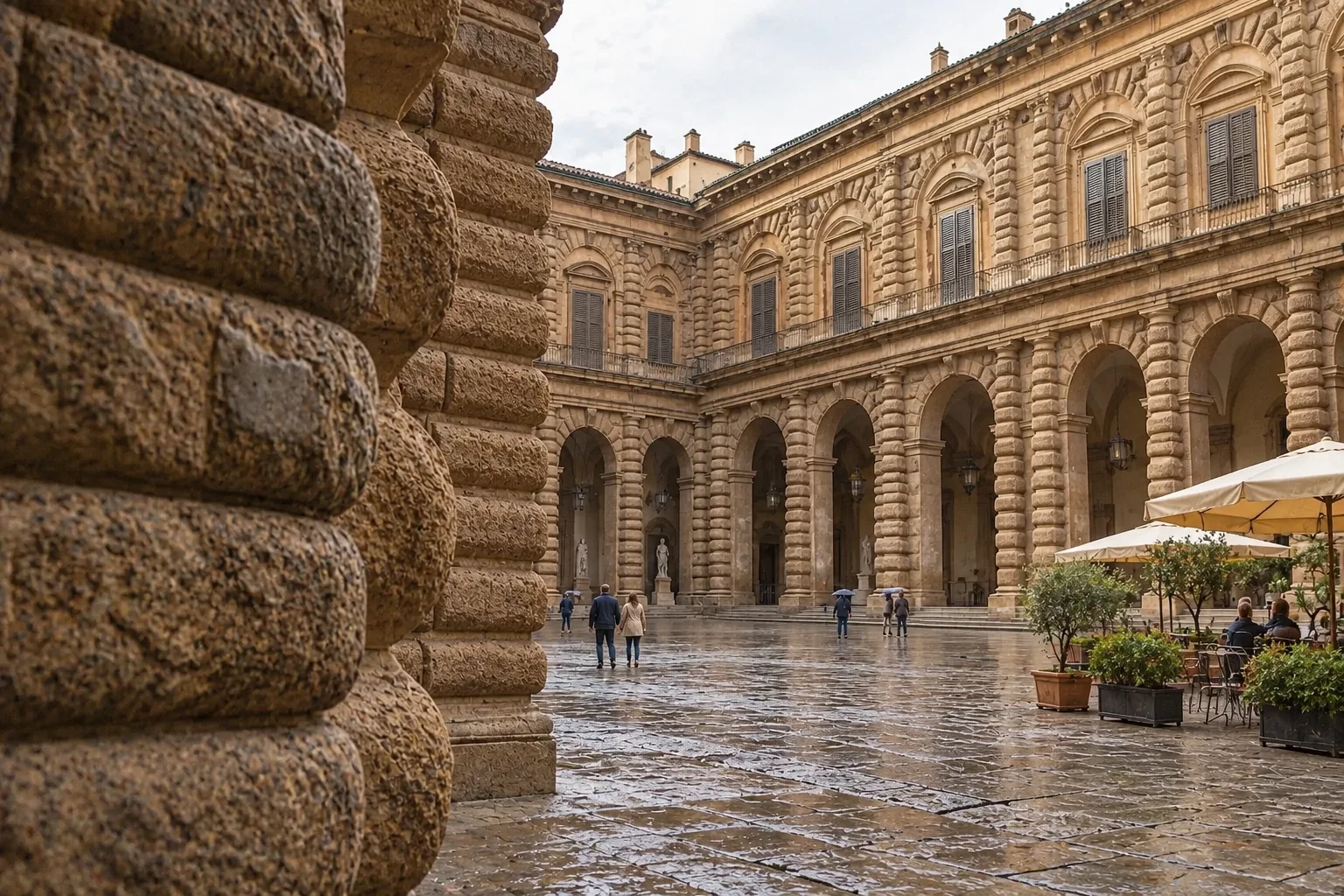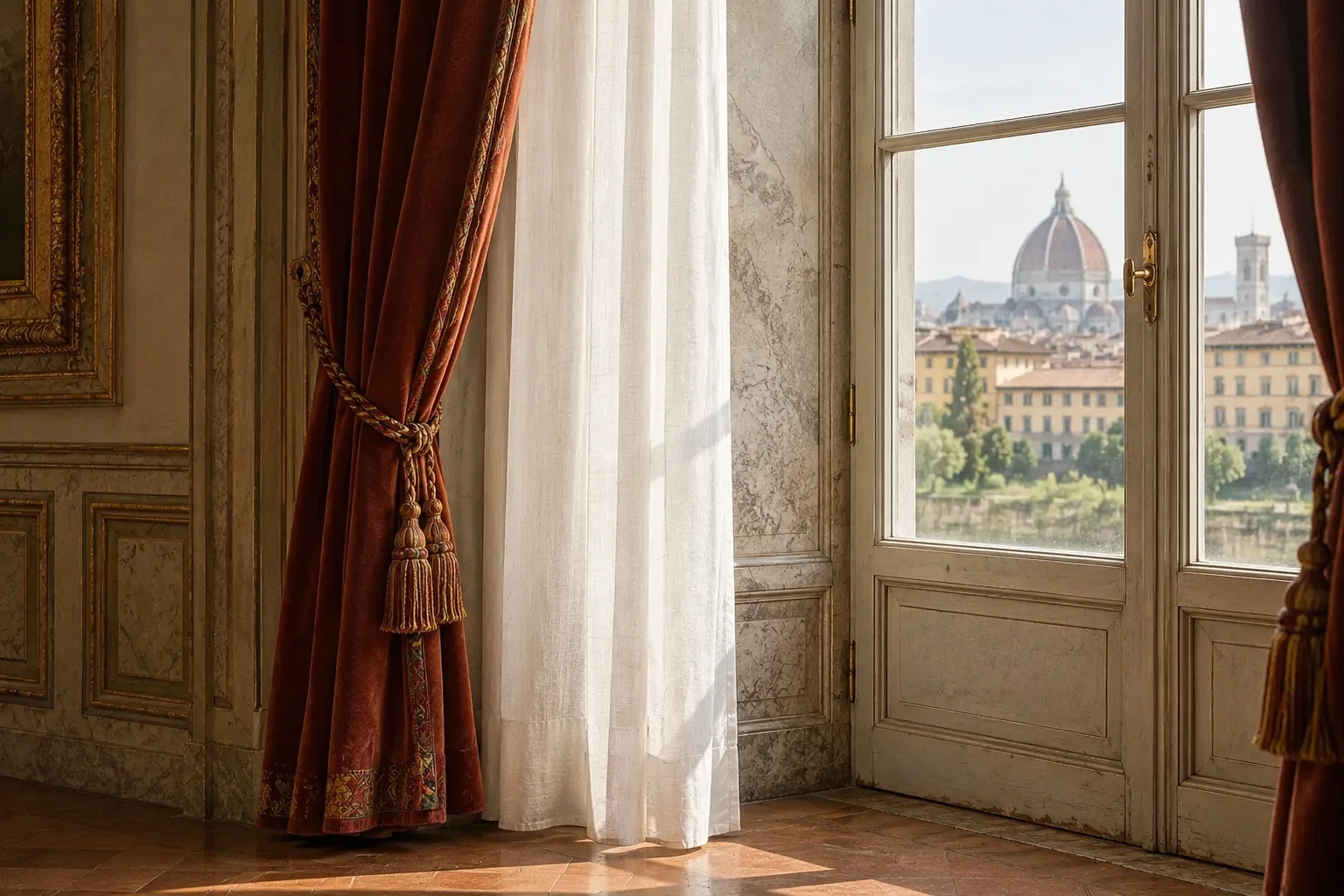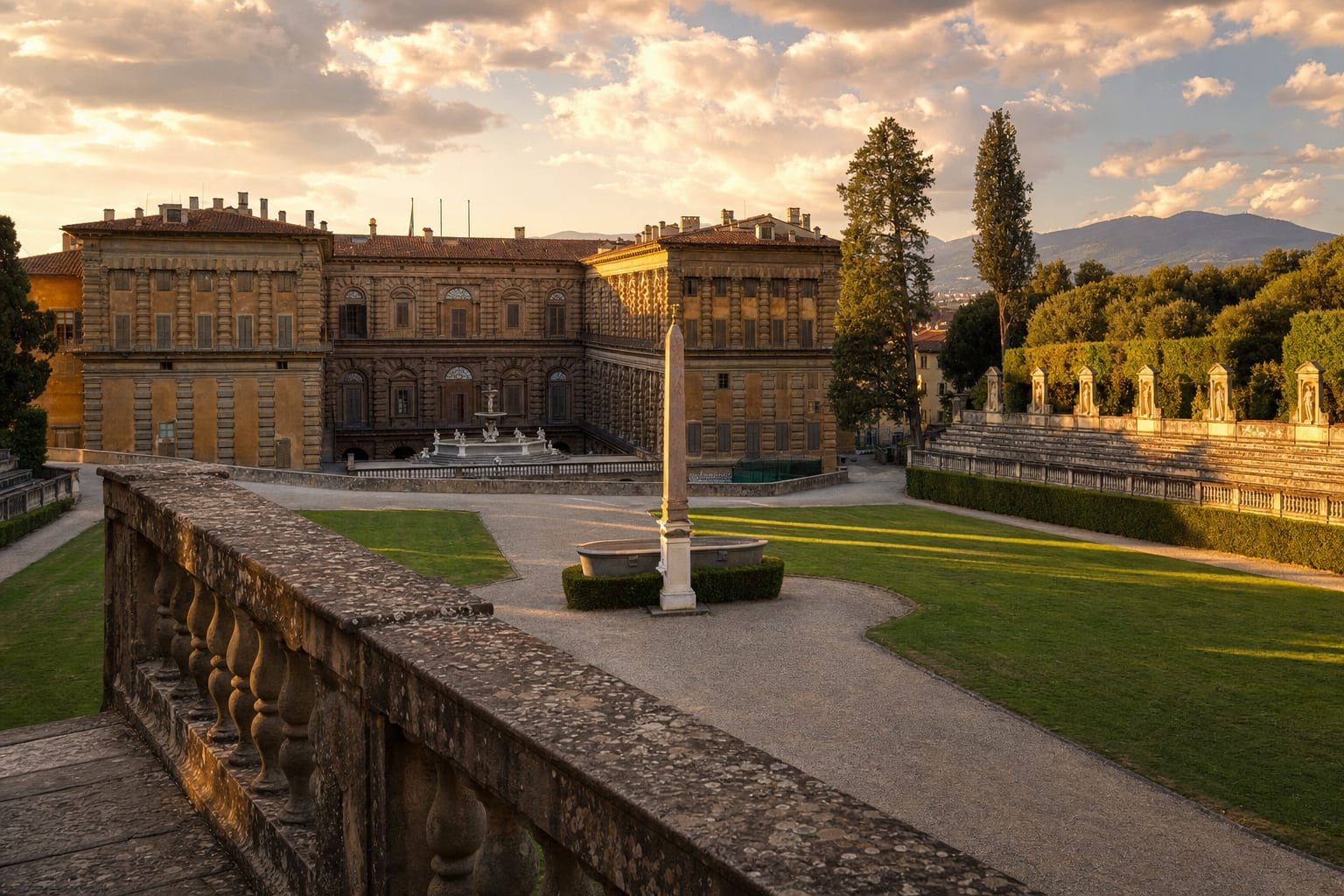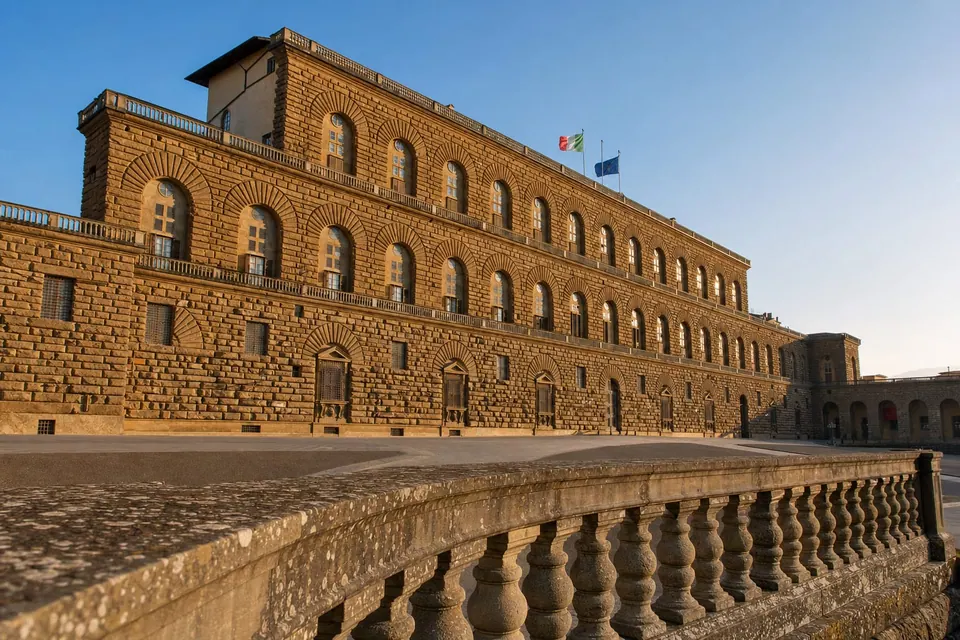
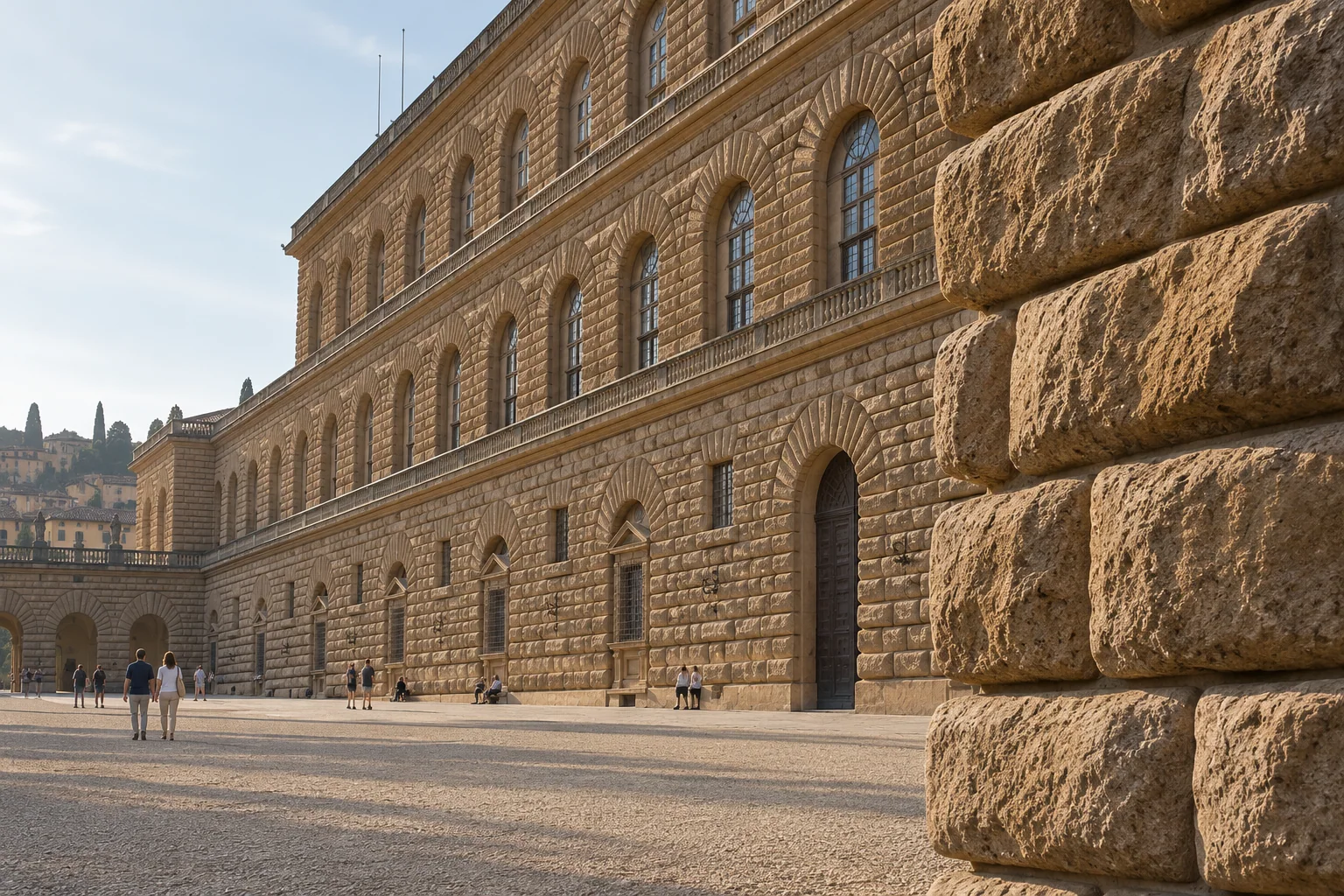
Pitti Palace began around 1458 as the private residence of the banker Luca Pitti, a display of wealth so large that Florentines joked its windows alone could swallow the facade of a rival family's house. The Medici bought it in 1549 and expanded it into the seat of the grand-ducal court, later passed through Habsburg-Lorraine and Savoy hands before becoming a museum complex under state ownership. Today its facade of rusticated stone contains several distinct collections run by the Uffizi Galleries: the Palatine Gallery's Raphaels and Titians hung salon style in gilded rooms, the Royal Apartments furnished as the Savoy kings left them, and separate museums of silver, costume, porcelain and modern art. The scale is deliberately overwhelming; the palace was built to make visitors feel small; the trick still works.
Pitti Palace records Medici, Habsburg-Lorraine and Savoy phases and today contains several Uffizi museum institutions. Its qualified early attribution and specific heritage relationships remain governed by source evidence.
Sources and citations (2)
- Gallerie degli UffiziPitti PalaceRead source
- Gallerie degli UffiziHistory, Pitti PalaceLuca Pitti and unfinished residenceRead source