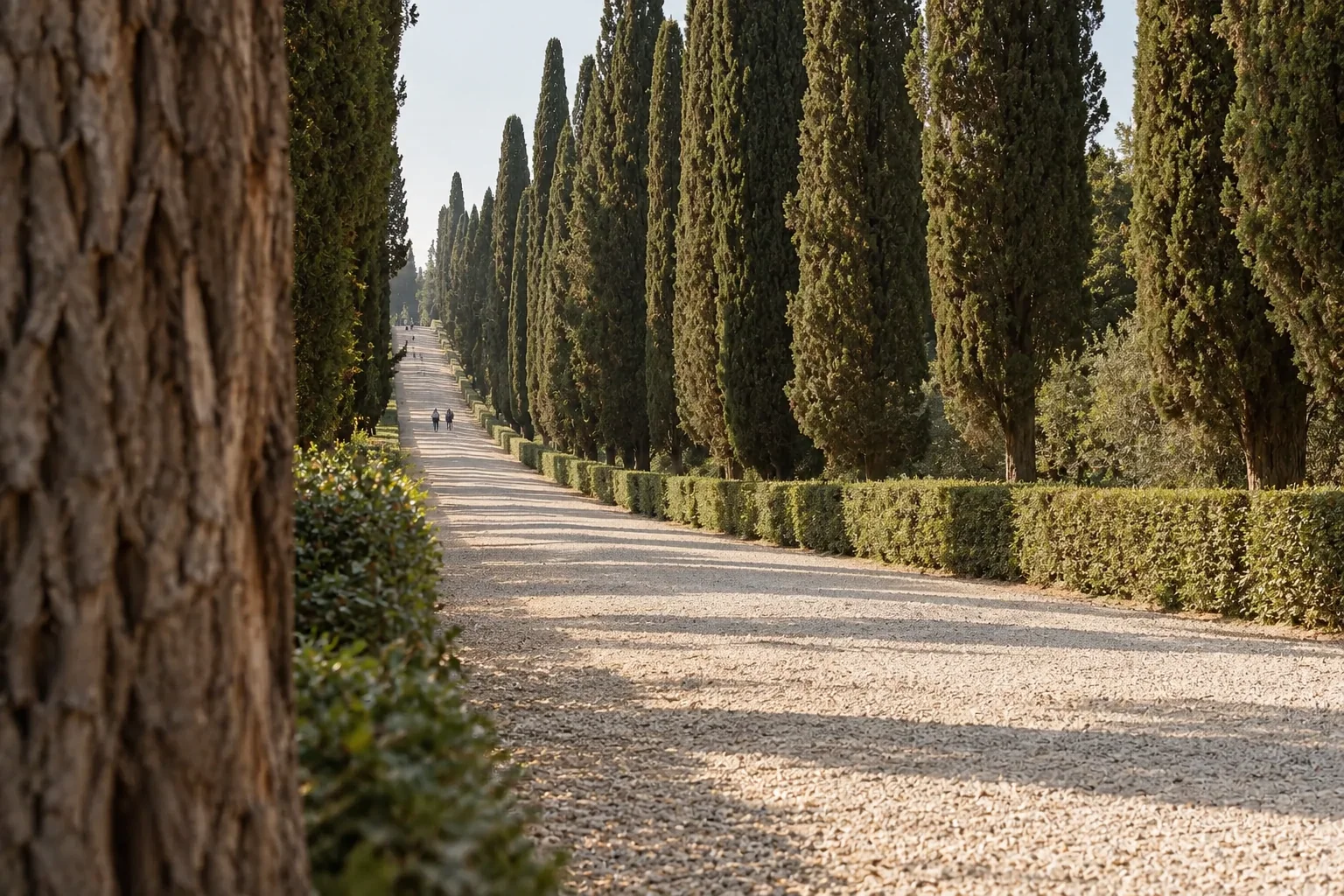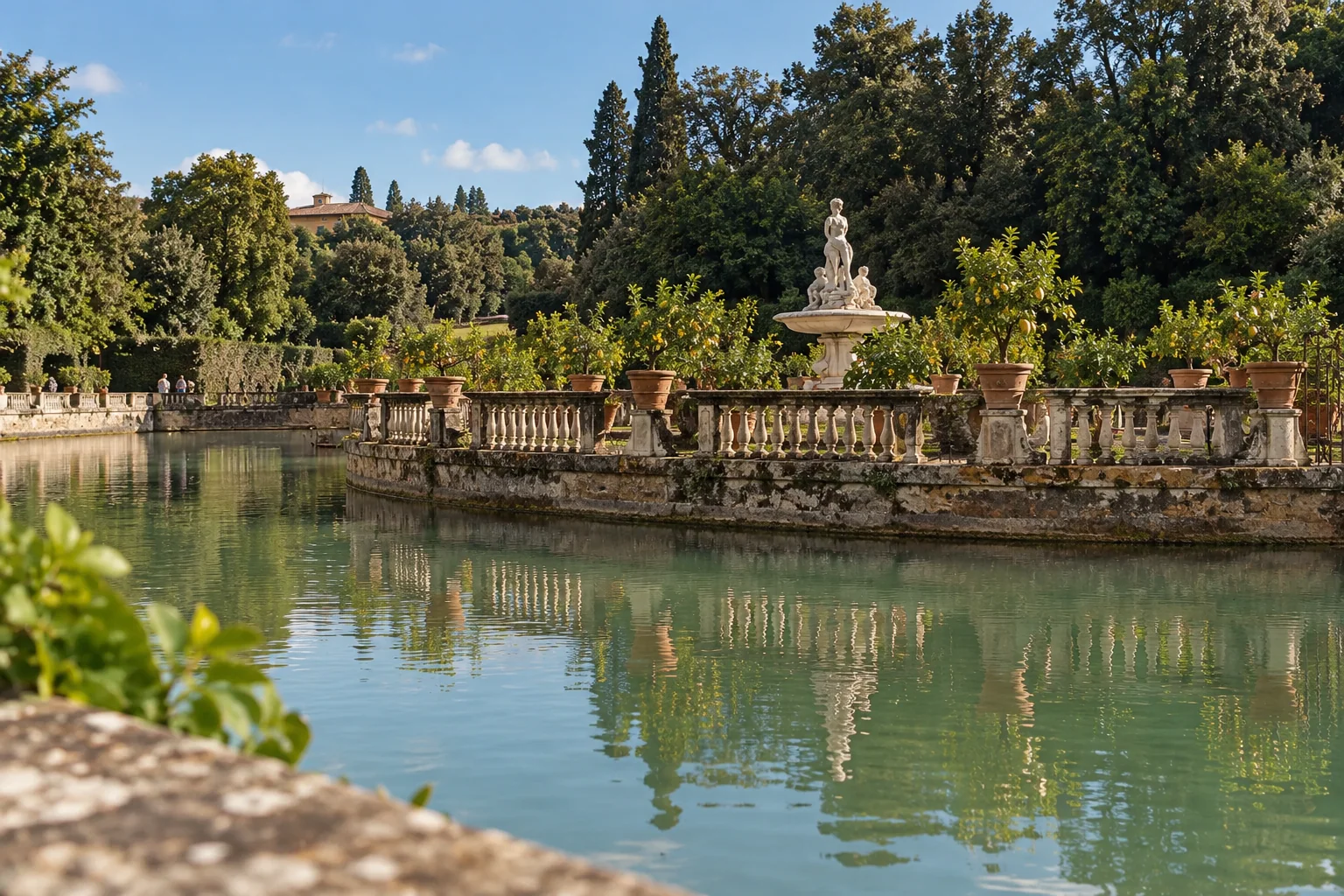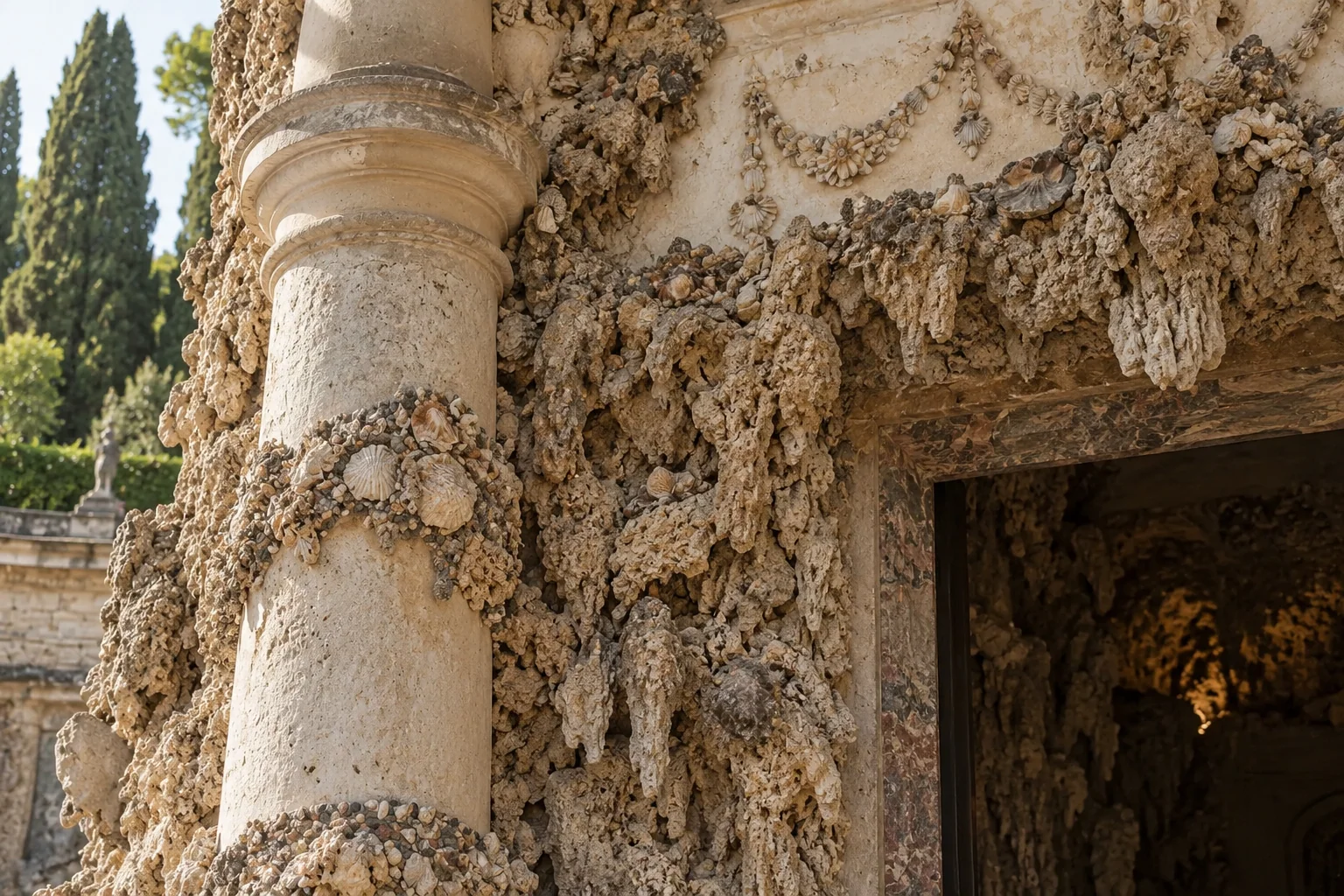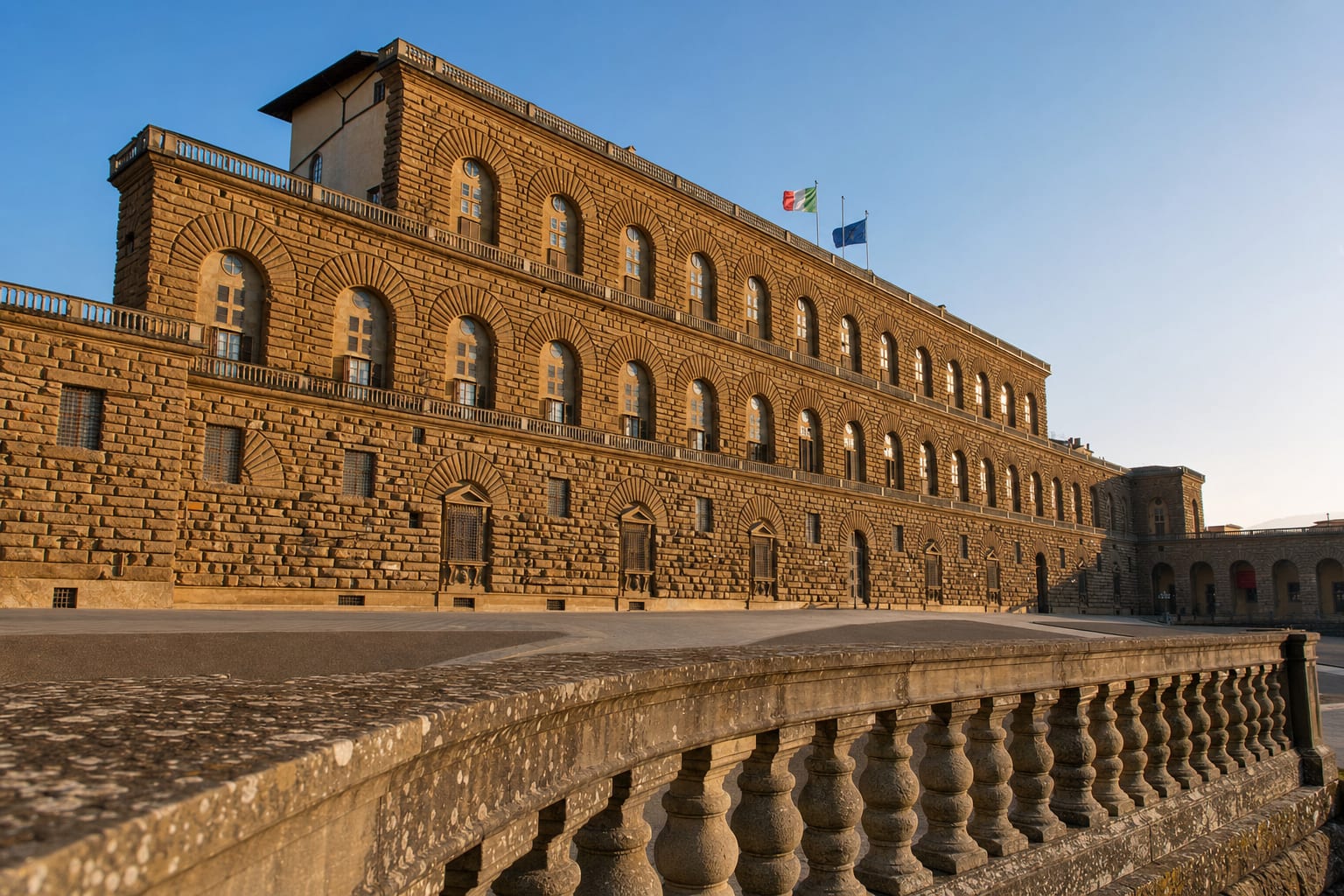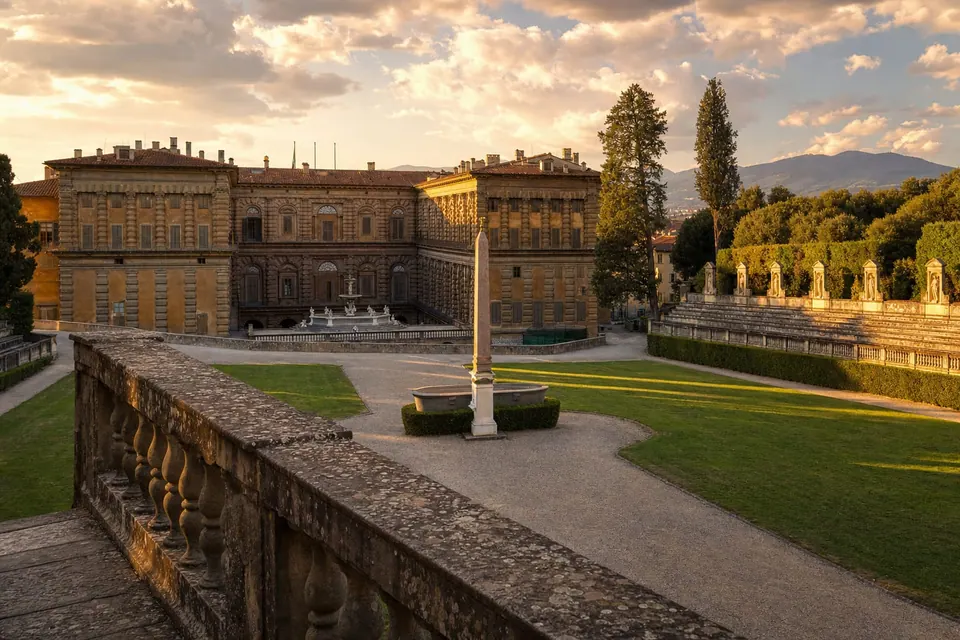
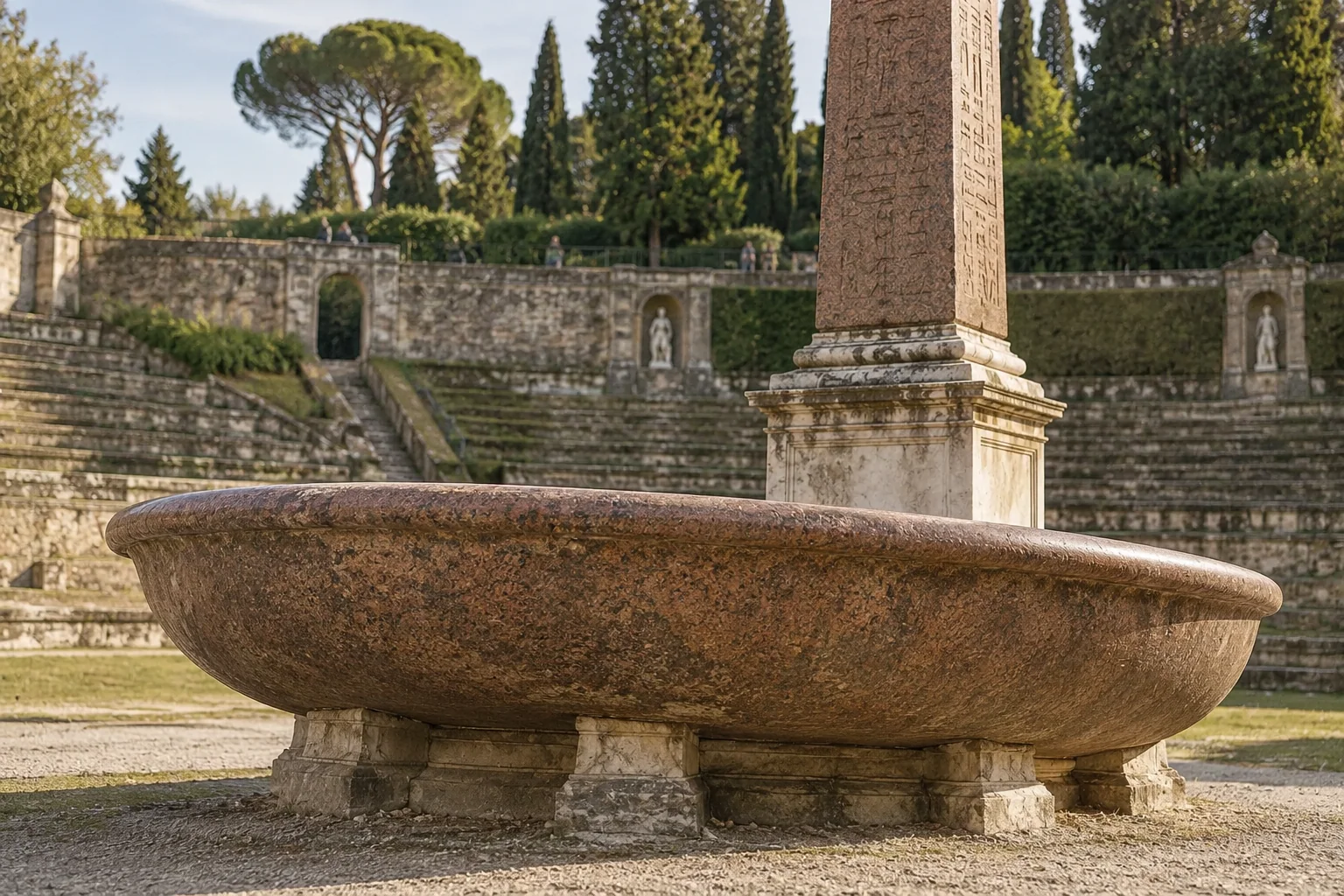
Boboli Gardens began in 1549 when Eleonora di Toledo, Cosimo I's wife, hired the sculptor and landscape designer Niccolò Tribolo to lay out formal grounds behind the newly purchased Pitti Palace. What grew over the following two centuries under successive Medici and Lorraine rulers is one of Italy's founding examples of the Italian garden style, later copied across European courts: long cypress avenues aligned on artificial perspectives, an amphitheatre carved into the hillside for court spectacles, and the Grotta Grande, where Buontalenti hid unfinished Michelangelo sculptures among artificial stalactites. Climbing the terraces rewards you with the closest thing Florence has to an aerial view without a queue, looking back over the Pitti Palace roofline to the Duomo's dome in the distance.
Boboli preserves a layered history of grand-ducal landscape design, architecture and collections. The source foundation records its development from the sixteenth through eighteenth centuries.
Sources and citations (4)
- Uffizi GalleriesBoboli GardensRead source
- Gallerie degli UffiziGiardino di BoboliGarden identity and Palazzo Pitti relationshipRead source
- Gallerie degli UffiziStoria, Giardino di Boboli1549 initiationRead source
- UNESCO World Heritage CentreMedici Villas and Gardens in TuscanyRead source