

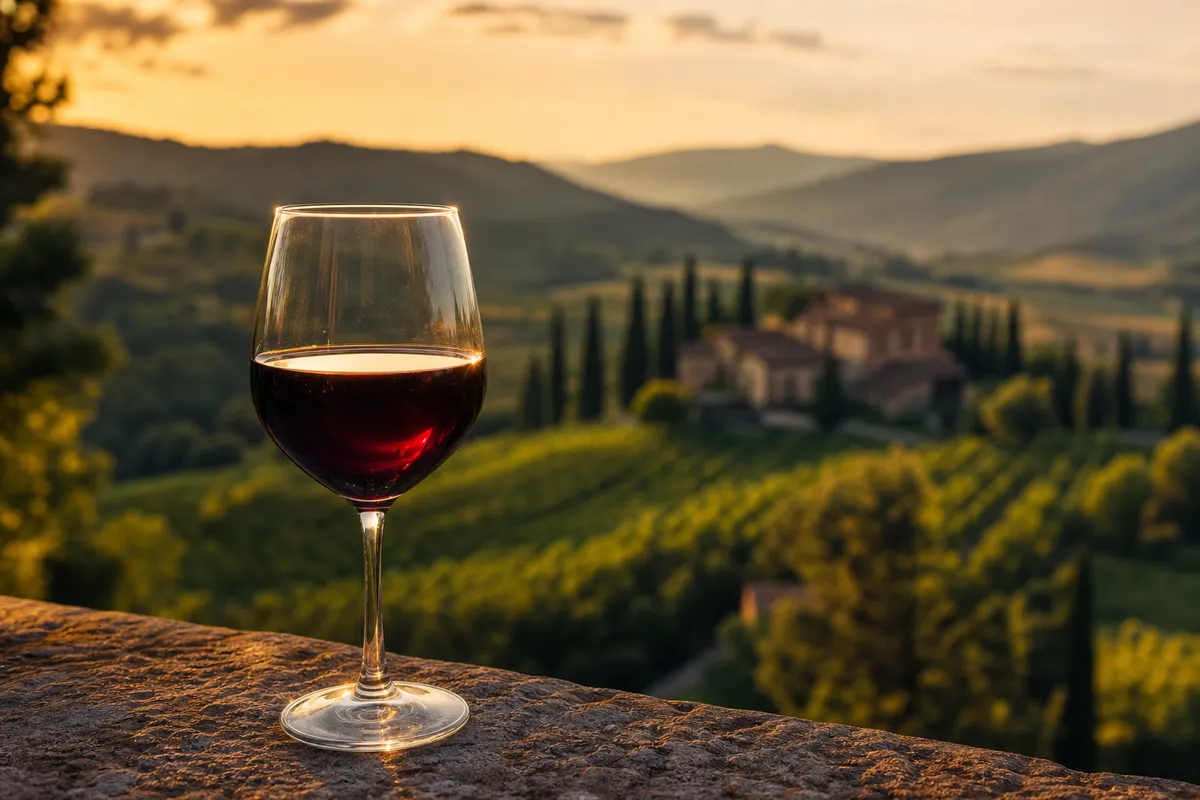
A municipality made of several centres
Piegaro rewards a territorial reading. Istat records one municipality in Umbria, in the Province of Perugia, while the municipal statute names five frazioni: Piegaro, Macereto, Ierna, Castiglion Fosco and Pietrafitta, and identifies Piegaro as the capoluogo. The name Piegaro can therefore refer to the whole municipality or to its principal settlement, and Pietrafitta, however important its museum, is a frazione and not a municipality of its own.
The settlement map is richer than the statutory list. A regional planning register recognizes Piegaro, Pietrafitta, Castiglion Fosco, Cibottola, Gaiche, Greppolischieto, Macereto, Oro and Pratalenza among the historic centres and landscape elements of the territory, and municipal planning language calls Cibottola, Gaiche and Greppolischieto borghi.
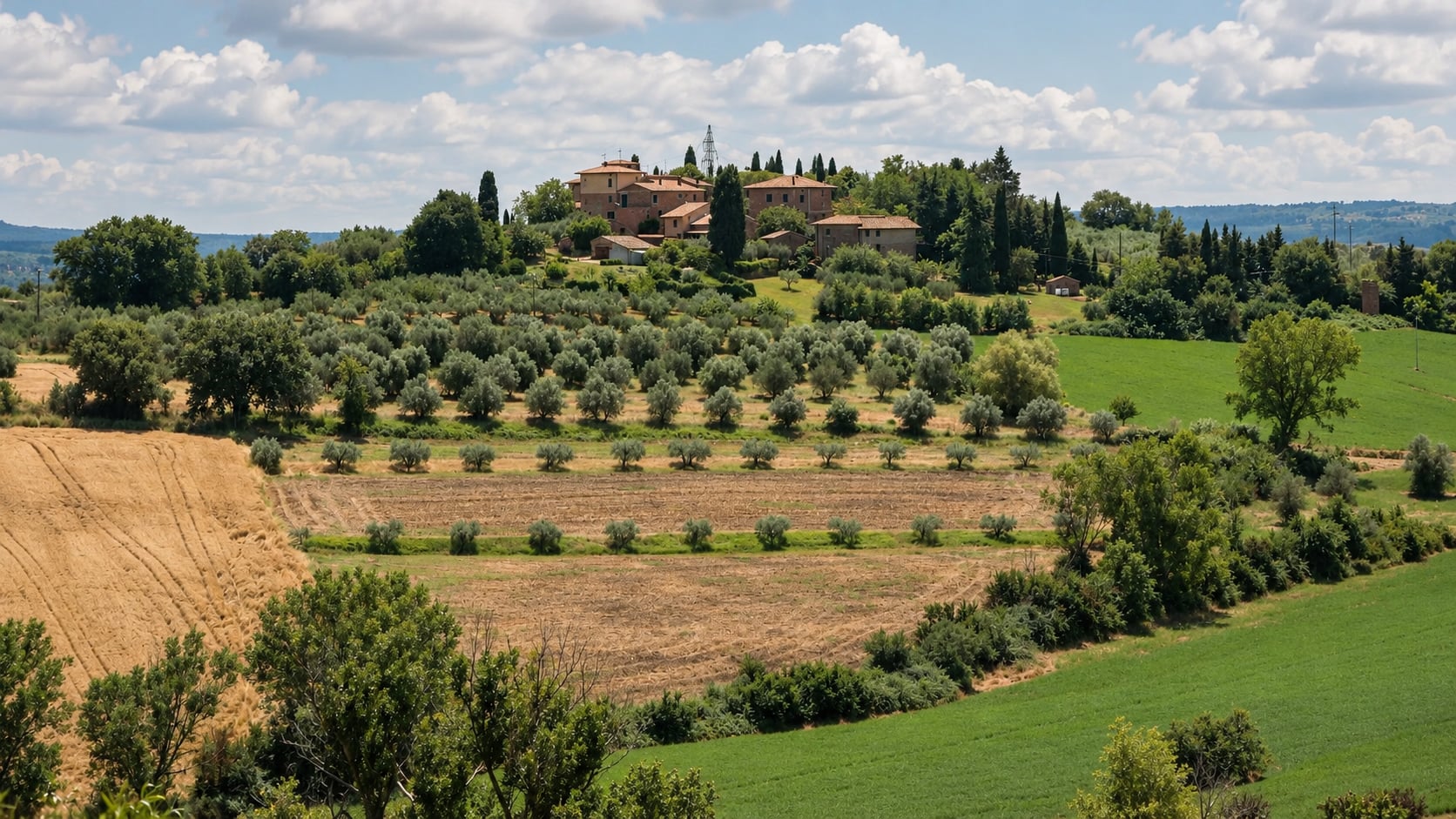
A landscape of centres and nuclei
Istat counts 23 localities for Piegaro: nine centres (Castiglion Fosco, Palombaro del Cieco, Piegaro, Pietrafitta, Ponibbiale, Nociarelle-Scarpiello, Acquaiola-Gratiano, Casaceccame and Oro), eleven nuclei (Collebaldo, Ginestreto, Polino, Abbadia Settefrati, Borghetto, Collicello, La Fontana, Macereto Alto, Pratalenza, Vignaie and Vincenze), two productive localities (Centrale Elettrica and Centrale Elettrica II) and one scattered-houses group. Piegaro is a hill municipality of many small places rather than one town.
The story of Piegaro glass
Piegaro's glass story is old. The secure historical foothold comes in the early fourteenth century: museum and MiC interpretation connect a 1321 supply of glass and mosaic material with work at Orvieto Cathedral, which documents glass production at Piegaro.
Local tradition reaches back further still: an 1860 municipal account dates glassmaking at Piegaro to 1250, a date the museum considers plausible. By 1480 the town's artisans were famous enough to be called to Gubbio by the duke. In 1485 the Duke of Calabria stayed in Piegaro and bought fine flasks from the glassworks. The works won a silver medal at the Italian industrial exhibition in Florence in 1861, and from 1895, under the engineer Zannini, production peaked at 243 varieties of articles.
Production expanded in the nineteenth century under Geremia Misciattelli, whose family service of decorated glassware the museum preserves. Semi-automatic machines using compressed air and metal moulds arrived in the 1950s, the Cooperative Glassworks of Piegaro acquired the factory in 1960, and the old works closed for good in 1968.
Piegaro's glassmakers drew much of their raw material from the landscape: sand from the bed of the Nestore or the shores of Lake Trasimeno, or marble dust, along with river stones, animal bones, oil and roof tiles. Silver, copper, iron, cobalt and sulphur were imported or won only after long processing.
Common glass was made from silicon dioxide obtained from sand, heated to about 1800 degrees, with compounds added to lower the melting point and metal oxides to change colour. The furnace burned 130 to 150 kilos of wood an hour to hold a steady 1100 degrees, and water mills for grinding quartz and steam-powered equipment for decoration and polishing came later. Glassblowing, freehand or in moulds, was the most widespread technique until the 1950s, and in 1941 the works could turn out 15,000 flasks or 10,000 bottles a day.
The glass museum as factory and collection
The Museo del Vetro is most revealing when its layers are read separately. The building retains the furnace hall, heating passages, annealing spaces, working equipment and warehouses. Its collections include bottles, flasks, demijohns, tableware, tools, pay records and factory archives that explain both hand production and later semiautomatic processes. The large green mass formed when the final molten glass solidified after the 1968 shutdown is another layer of the site.
Glass production was also household labour. The museum's social history describes the impagliatura of flasks and demijohns with marsh straw, work frequently carried out by women with help from children and older relatives, and it was part of the labour system that made the glass economy function.
Visiting the glass museum
Museo del Vetro occupies the former glassworks at Via Garibaldi 20, in Piegaro's historic centre, where it opened on 18 April 2009. You can follow the ordinary self-guided route or add a guided visit, which is reserved in advance. The museum's own pages are the place to confirm days and hours before you set out.
Pietrafitta: museum, fossils and findsite
Pietrafitta is a statutory frazione of Piegaro and the home of the Museo paleontologico Luigi Boldrini, which preserves material recovered during lignite extraction in the Tavernelle-Pietrafitta basin. The museum is managed directly by the Ministry of Culture through Musei nazionali di Perugia, and its collections are movable cultural property owned by the Ministry.
The scientific story is unusually broad. The basin records an Early Pleistocene succession from lake environments to a river system. Mining exposed plant remains, freshwater molluscs, insects and vertebrates, and research continues as new identifications are made. The official account highlights giant deer, including Praemegaceros obscurus, and Eobison degiulii, an archaic bison with an important place in the European record.
Castiglion Fosco and Greppolischieto
Castiglion Fosco's circular tower gives the settlement a powerful silhouette. The municipal account says work began in 1462 and was complete by 1500.
Churches, abbey and catalogued objects
San Silvestro Papa anchors the capoluogo's sacred history. The national church register documents it from 1275 and records later transformations, including major nineteenth-century work.
At Pietrafitta, the parish of Santa Maria Assunta and the Cappella della Madonna del Fosso have their own stories. A municipal history dates construction of Santa Maria Assunta to 1866-70, dates the Madonna del Fosso church to 1548 and says it was reduced to a chapel in 1925.
Near Pietrafitta, the Abbazia dei Sette Frati was a Benedictine complex known in medieval records as Monasterium Sancti Benedicti and later Abbatia Septem Fratres; in the sixteenth century it became a country residence associated with the della Corgna family.
The national ICCD catalogue records an eighteenth-century processional lantern and a bell dated 1698 from Piegaro, both in Catholic religious ownership.
Nestore woods and Montarale
Part of the ZSC Boschi dell'Alta Valle del Nestore, IT5210040, lies within Piegaro, and the protected site extends well beyond the municipality. Regional planning distinguishes the Nestore valley hills, Monte Arale and the lower hills of the upper Nestore valley within Piegaro's landscape.
Oil, wine and local food
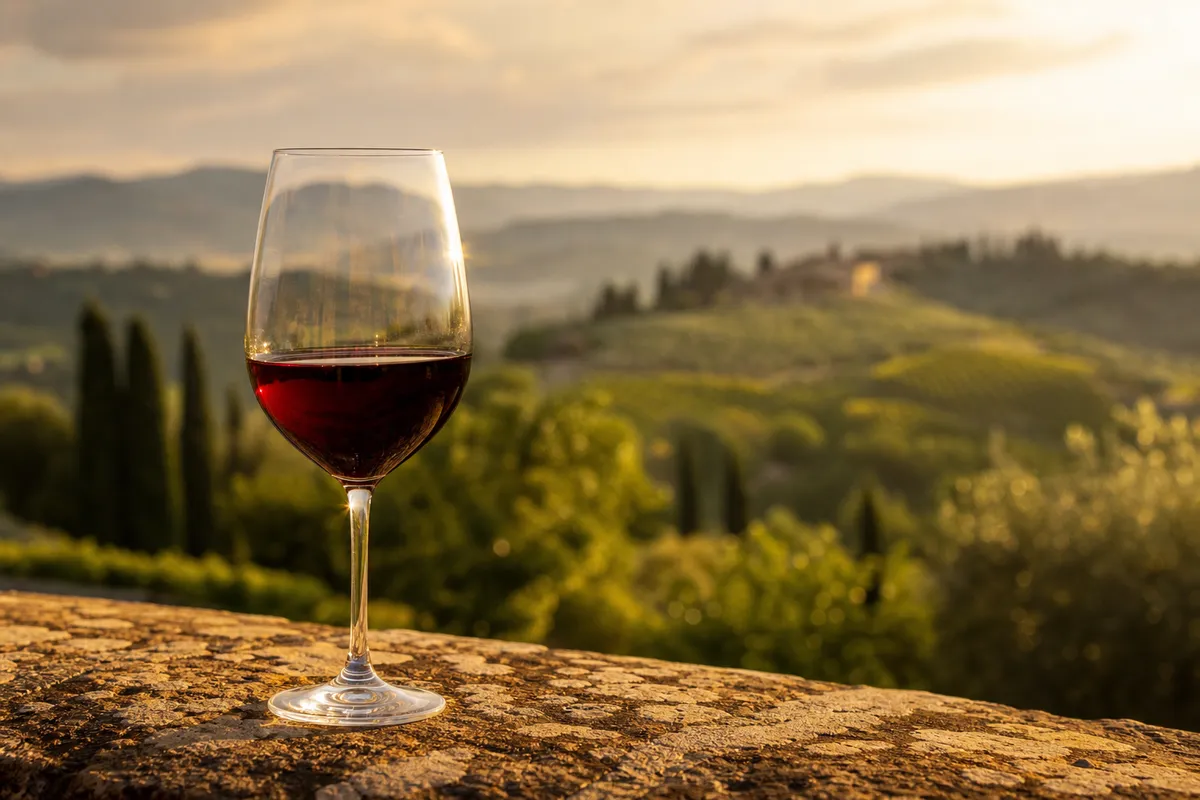
Piegaro belongs to two protected production geographies. The DOP Umbria olive oil specification includes the municipality in the Colli del Trasimeno mention, while the Trasimeno DOC technical file includes only part of Piegaro's administrative territory.
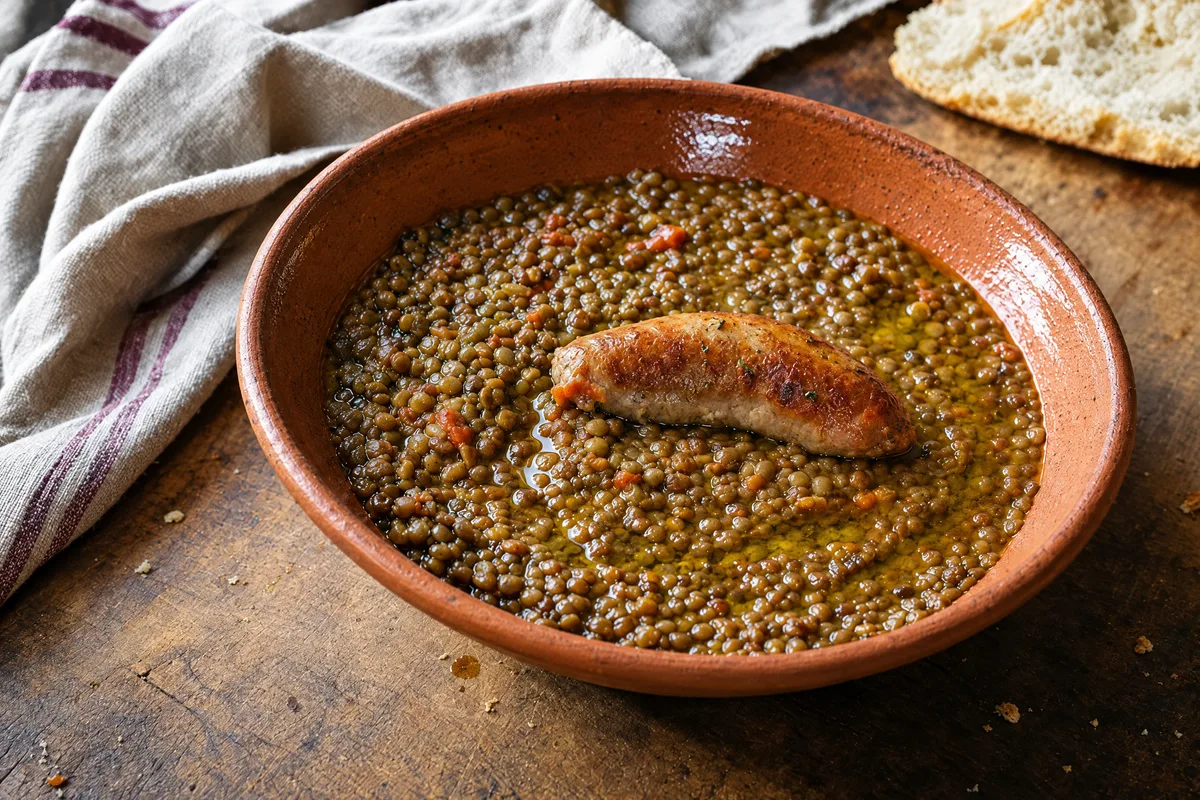
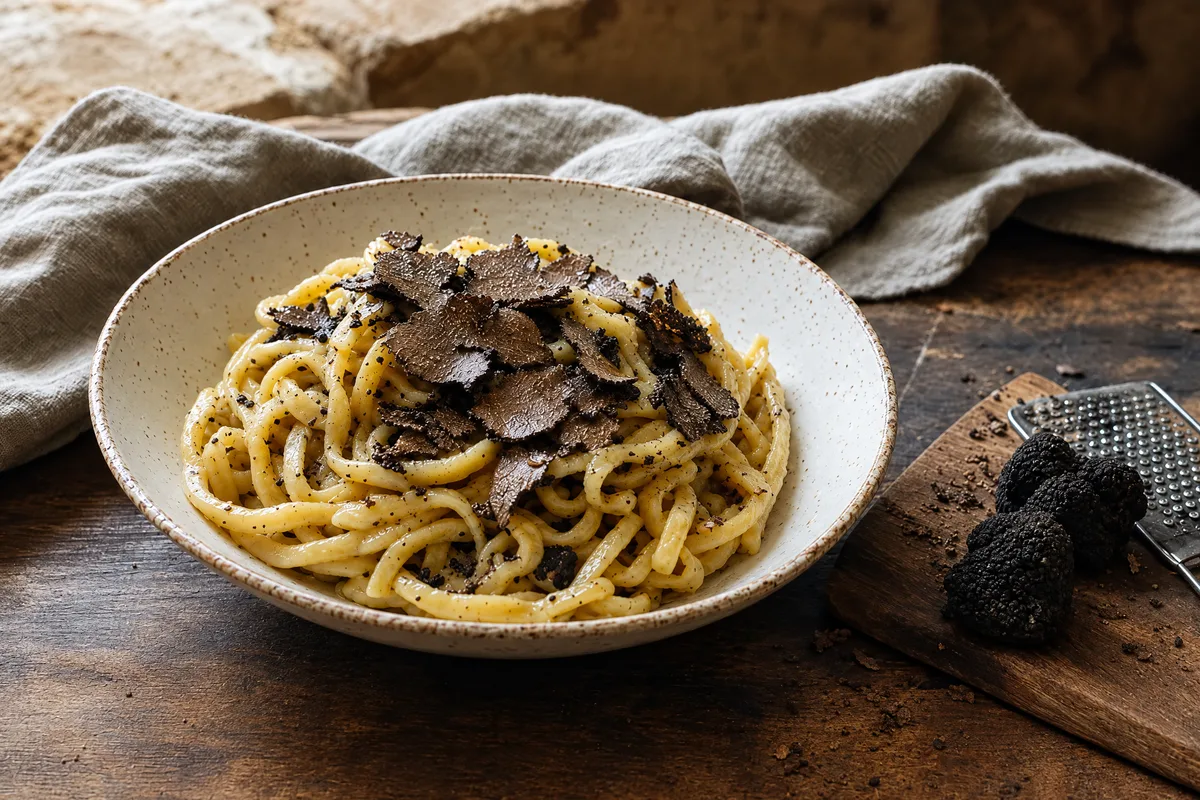
Local food leans on chestnuts, wild asparagus, olive oil, torta al testo, unsalted bread and Torta di Pasqua. Recurring seasonal events have celebrated chestnuts, wild asparagus and local oils.
A first visit
A good first visit pairs the Museo del Vetro and the Museo Boldrini, giving the capoluogo and Pietrafitta a half-day each, since the municipality is not one walkable centre. Castiglion Fosco, the smaller historic settlements, Montarale and the lake make a later layer.
More of Umbria

A letter from Italy, once a month.
The places, tables and makers we found worth your time. One email, no noise.
One letter a month. Unsubscribe at any time. We never share your address.