

A municipality that runs from hill towns to working lakeshore
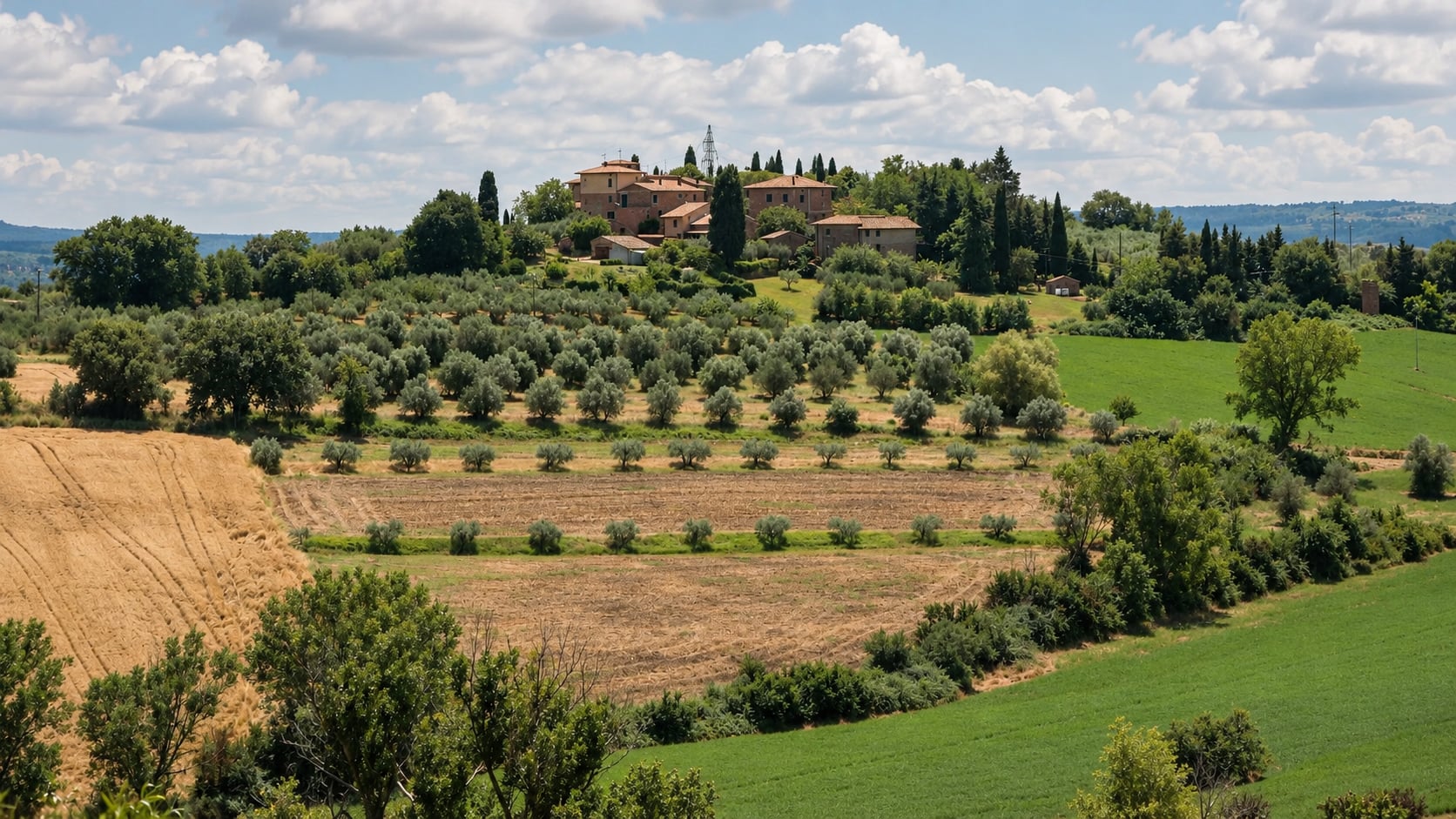
Magione is a municipality in Umbria, in the province of Perugia. Its story cannot be told as a single compact town: the municipal territory reaches from inland ridges and fortified settlements to a long shore of Lake Trasimeno. The municipal statute names seventeen frazioni or inhabited centres: Agello, Antria, Borgogiglione, Caligiana, Casenuove, Collesanto, Montecolognola, Monte del Lago, Montemelino, Montesperello, Sant'Arcangelo, San Feliciano, San Savino, Soccorso, Torricella, Vignaia and Villa. It also names the Badia dei Cavalieri di Malta and the Torre dei Lambardi as historic symbols.
This spread explains Magione's depth. The capoluogo contains the Torre dei Lambardi, Teatro Mengoni, San Giovanni Battista and Madonna delle Grazie. Montecolognola and Agello preserve distinct parish and church identities. Monte del Lago occupies a walled lakeside position, San Feliciano is a fishing and museum centre, San Savino opens onto a major wetland, and Sant'Arcangelo combines a lakeshore settlement with a historically documented fish-breeding facility.
Istat counts 25 localities in the municipality: 14 centres, nine nuclei, one productive locality and one scattered-houses group, a measure of how widely the population is spread.
Lake Trasimeno and its park
Magione participates in a protected landscape larger than the municipality. The 13,200-hectare Lake Trasimeno Regional Park extends across Castiglione del Lago, Magione, Passignano sul Trasimeno, Tuoro sul Trasimeno and Panicale. Its three islands belong to the wider park, but Isola Polvese is in Castiglione del Lago, Isola Maggiore is in Tuoro sul Trasimeno and private Isola Minore is in Passignano sul Trasimeno. None is in Magione.
The Castello di Magione and the Knights of Malta
The Castello di Magione is a historic property of the Sovereign Military Order of Malta. It arose in the twelfth century as a place of welcome for pilgrims bound for Rome along the Via Francigena, and between the fourteenth and fifteenth centuries it became a fortified residence of the Knights. A document of 1171 anchors its medieval story, and its architectural layers include work associated with Fioravante Fioravanti. In the chapel, early sixteenth-century frescoes attributed to the workshop of Pinturicchio include a Nativity and a Madonna and Child with Saints John the Baptist and James.
Tower and theatre in the capoluogo
The Torre dei Lambardi is both a civic symbol and a municipal exhibition centre. The Knights Hospitaller built it in the twelfth and thirteenth centuries to hold the food supplies, above all fish from the northern lakeshore, travelling toward Perugia. About 30 metres tall on a quadrangular base, it was built with three stone floors and three wooden levels reached by a spiral staircase, pointed arches alternating with round ones, a bastion-shaped plinth, and an entrance guarded by a moat and a small stone bridge. A restoration by the Soprintendenza rebuilt three full floors, two half-floors and the access staircase, and added a lift.
Teatro Giuseppe Mengoni began in April 1870 as a project of a local Società Anonima and carries the name of the architect of Milan's Galleria Vittorio Emanuele II. The municipality acquired it on 10 October 1877. Its horseshoe auditorium originally had 16 wooden boxes on a single level and an upper gallery under a painted-canvas ceiling. The wooden structures were removed for safety in 1933 and 1939, and after the Region acquired the theatre for a symbolic sum in 1991 it was restored in 1992-1995 under the architect Giuliano Carrozza, in a sober contemporary language, and reopened in November 1996 with 221 seats.
Churches and sacred art
San Giovanni Battista was mentioned in 1572 and became a parish in 1600. Its facade was demolished in 1832, and the church was enlarged in 1836, to a design by Luigi Poletti, and again in 1865. After war damage on 17 June 1944 it was rebuilt in 1947-48, with the main altar consecrated in 1948 and the whole church in 1949, and its altar, ambo, font and tabernacle were reworked in 1967. In 1948-49, Gerardo Dottori, assisted by Adelmo Maribelli, painted the Baptism of Jesus, four apostles, musician angels and the setting around a seventeenth-century crucifix.
Madonna delle Grazie is an attached church of the San Giovanni Battista parish. Older scholarship attributed its 1371 fresco of the Madonna and Child with eight angels and three donors to the Orvietan painter Andrea di Giovanni, documented between 1378 and 1424 and active on the frescoes of Orvieto Cathedral, an attribution that recent criticism has rejected.
The diocesan pastoral unit UP27 includes parishes at Magione, Agello, Montecolognola, San Feliciano and San Savino. Montecolognola's Santissima Annunziata parish lists Sacro Cuore at Torricella. At Agello, the parish is San Michele Arcangelo while the listed church building is San Donato. San Feliciano's parish network includes churches at Monte del Lago and Madonna della Neve at Zocco. Monte del Lago itself is a walled lakeside settlement with Sant'Andrea.
Sant'Arcangelo and the fish-breeding centre
Sant'Arcangelo is the lakeshore village of the fish-breeding centre, where a Region-managed stocking campaign in 2018 involved tench, carp and pike. Its parish is Sant'Arcangelo del Lago, San Michele Arcangelo, which also includes Santa Maria d'Ancaelle.
San Feliciano, fishing knowledge and the museum
The Museo della Pesca e del Lago Trasimeno sits at San Feliciano by the northern fishing harbour. It reopened on 19 July 1997 in former fishing-consortium premises, and it rests on decades of research by scholars, students and fishers into the language, history and life of the lakeshore communities. Fishing was for many centuries their primary resource, and the museum shows how knowledge and customs passed down through generations. The museum has fixed displays, spaces for temporary exhibitions and education, and rooms for meetings.
The displays cover boats, nets, capture tools, archaeological fishing finds, aquariums and an immersive presentation associated with Matteo dall'Isola. There is also a replica Venus, stone lures, terracotta net weights, lake plants and birds and a cooperative bulletin.
The Autodromo dell'Umbria
The Autodromo dell'Umbria, at Località Bacanella, was built from spring 1972 by members of Scuderia Carpine and inaugurated on 7 April 1973. Its twisting 1,650-metre circuit became a national venue that hosted major Italian competitions and drivers such as Michele Alboreto and Elio De Angelis.
Lake foods, wine and olive oil
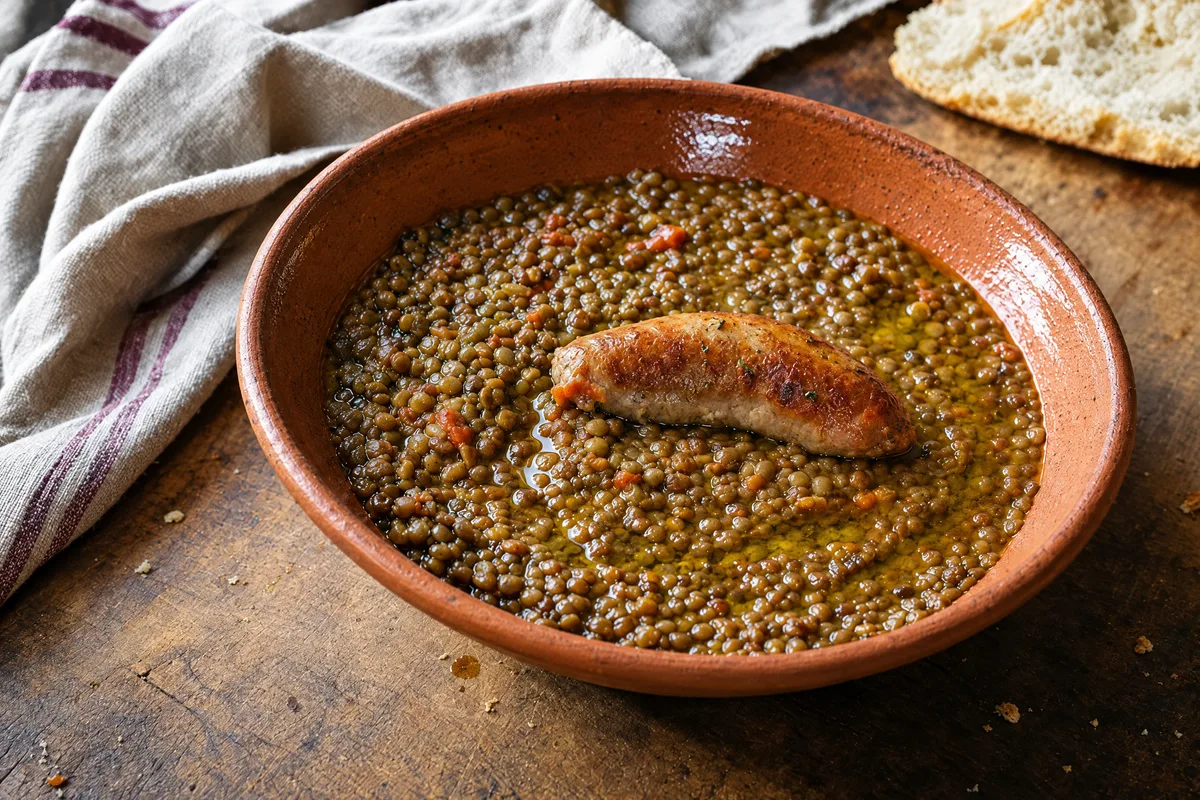
Umbria's official list of traditional agri-food products (PAT) includes Broccoletti del lago, Fagiolina del lago and six Trasimeno fish products: Anguilla del Trasimeno, Carpa del Trasimeno, Latterino del Trasimeno, Luccio del Trasimeno, Persico reale del Trasimeno and Tinca del Trasimeno.
The Broccoletti del Lago sheet places the tradition in Magione, Passignano sul Trasimeno, Tuoro sul Trasimeno, Castiglione del Lago and Panicale and describes a late-winter to early-spring season.
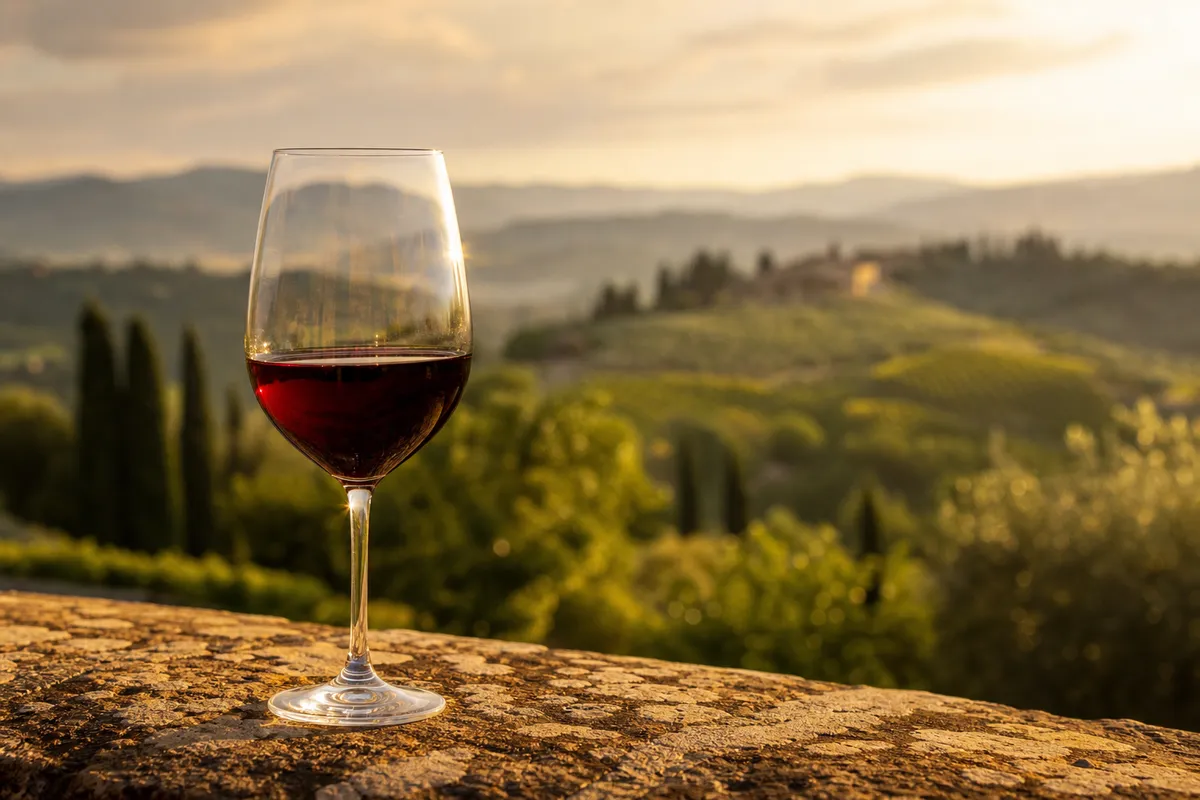
The Trasimeno DOC specification includes a delimited part of Magione, while the Umbria DOP olive-oil specification includes the whole municipality in the additional Colli del Trasimeno mention.
More of Umbria

A letter from Italy, once a month.
The places, tables and makers we found worth your time. One email, no noise.
One letter a month. Unsubscribe at any time. We never share your address.