

A hill town with a second centre down the slope
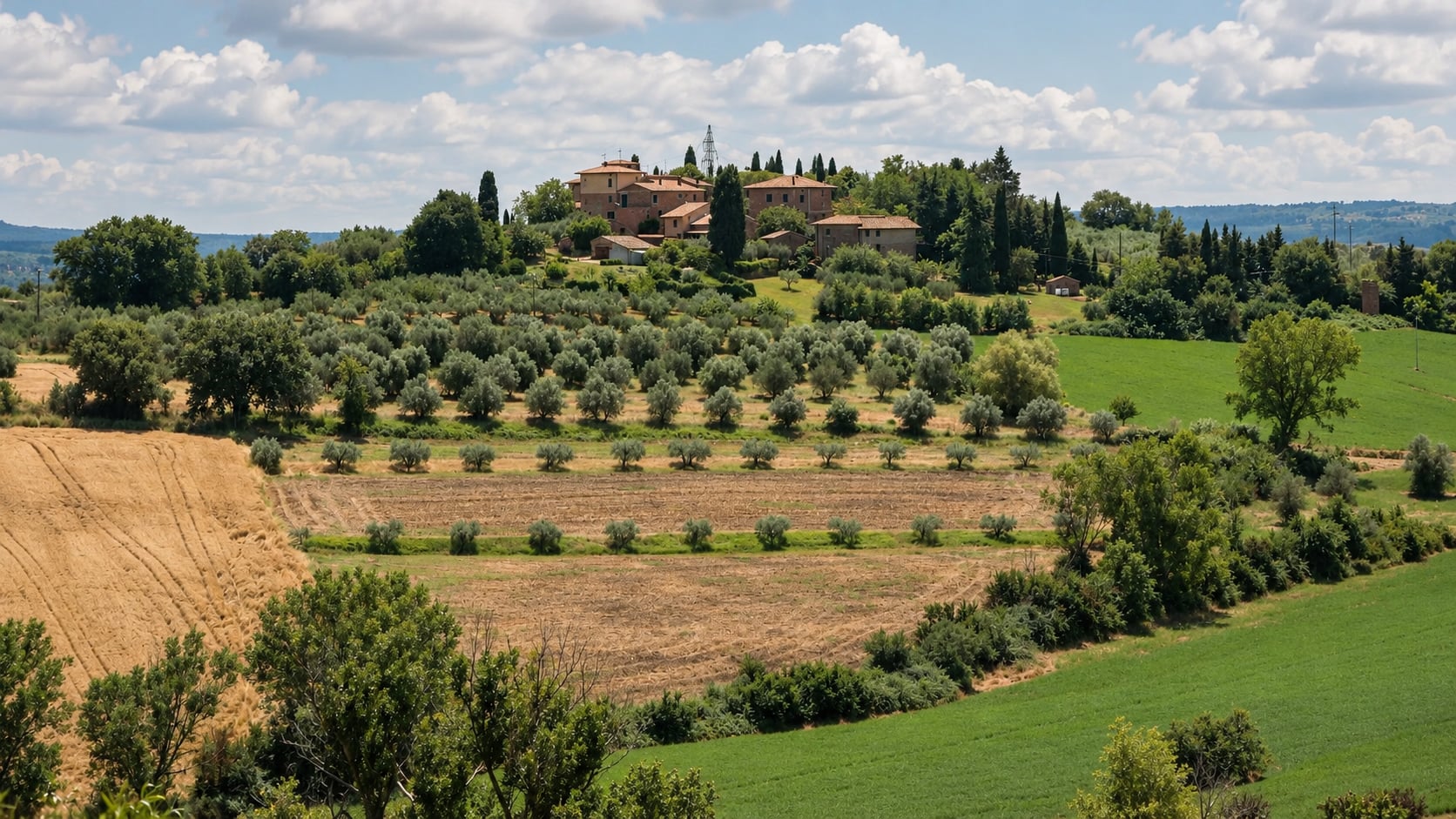
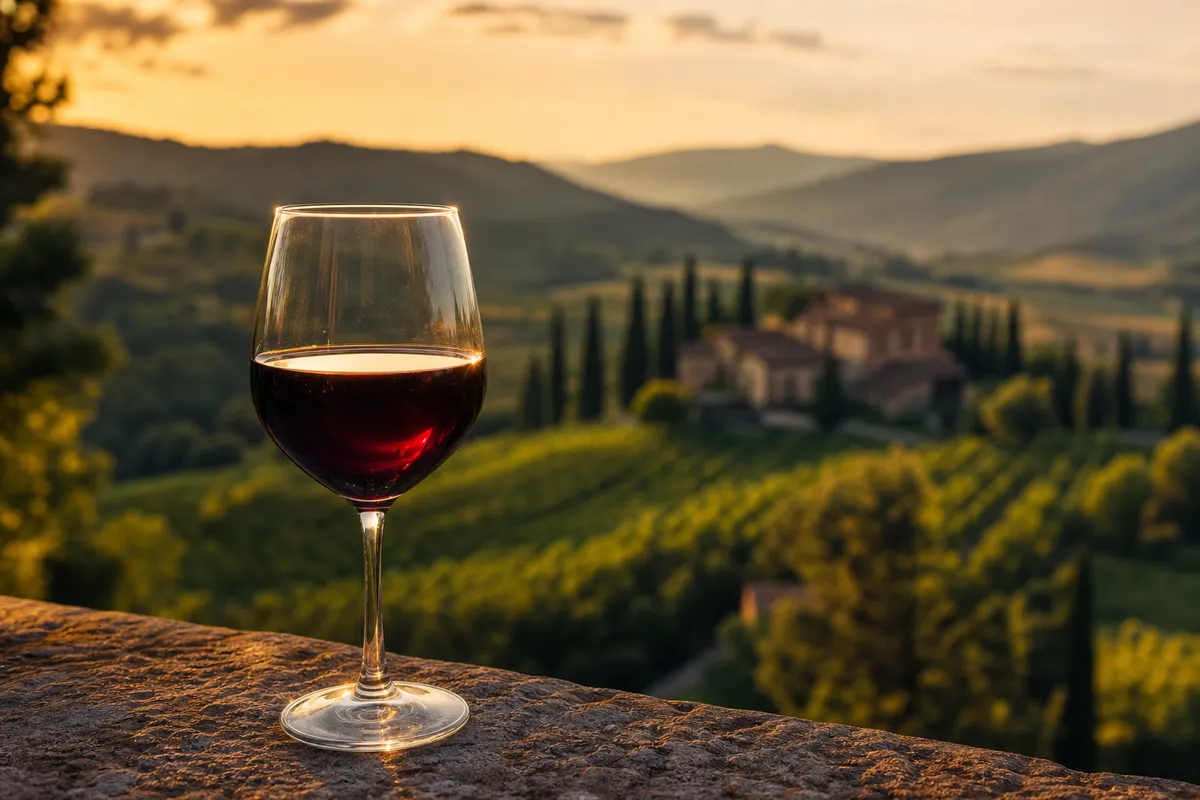
Giano dell'Umbria is a hill municipality in the province of Perugia, sitting at about 546 metres above sea level and covering 44.43 square kilometres of the Monti Martani country. It borders Gualdo Cattaneo, Montefalco, Spoleto, Castel Ritaldi and Massa Martana, which places it squarely in the quiet middle of some of Umbria's best-loved wine and olive land without being on anyone's well-worn itinerary.
The name Giano belongs to the compact old town at the top, but the municipality is wider than that. Bastardo, lower down, is the largest concentration of buildings, people, services and businesses, while the rest of the territory is scattered across hamlets and localities: Montecchio, Fabbri, Castagnola, Santo Stefano, San Sabino, Macciano and Morcicchia, along with smaller names such as Moriano, Seggiano and Palombaro. The easiest way to hold it in your head is to think of Giano as the old town, Bastardo as the everyday village, and the countryside between them as where everything else happens.
The municipal plan singles out four places as historic centres: Giano itself, Montecchio, Castagnola and Morcicchia. It also ties all four to the landscape protection decree of 29 July 2003. That is a planning classification rather than a promise of untouched streets, but it is a handy list of the old villages worth knowing by name.
Walls, a palace and a very old Comune
The civic story is nearly as old as the stones. According to the Comune, the town's palace became the Palazzo della Comunità around 1250, when the castle of Giano rose to the status of a free rural commune. Between 1927 and 1930 Giano was folded into Spoleto, and it regained its municipal autonomy in 1930.
San Felice, an abbey among the olive trees
The Abbey of San Felice stands a little way north of the centre, among olive groves and centuries-old holm oaks in the Monti Martani. The Comune traces its origins to the tenth century, with enlargements over the following centuries, and it is the place in the municipality that most rewards a slow visit.
The abbey is dedicated to San Felice, remembered as the bishop of Vicus ad Martis, today's Massa Martana, who was martyred between 304 and 306 CE under Diocletian. Local tradition says the site was chosen where the oxen carrying his body knelt down. San Felice is also the patron saint of Giano, and his feast falls each year on 30 October.
San Felice is not only a historic monument. The Missionaries of the Precious Blood keep a community and a spirituality centre here, and diocesan reporting documents continuing liturgical life, so it feels like a place that has never stopped being used.
The Roman villa at Rufione
Giano's deepest layer is Roman. In 1925 a travertine cippus with an inscription and a terracotta dolium, both dated to the first or second century CE, turned up near the ancient Via Flaminia, and since 2003 an imperial-era Roman villa has been excavated at Rufione, in the Toccioli area.
The Monti Martani and the land around them
Giano belongs to the shared landscape of the Monti Martani. The whole municipality, all 4,443 hectares of it, is classed as mountain territory, and it also falls within a protected landscape under Article 136 of the heritage code, established by the decree of 29 July 2003.
Woodland here has long had its own institution. The Università Agraria di Montecchio was established on 4 August 1894 as a public body for forest stewardship, and it looks after holm-oak woodland at about 700 metres above sea level, well above the old town itself, which stands at about 546 metres.
Wine and olive oil
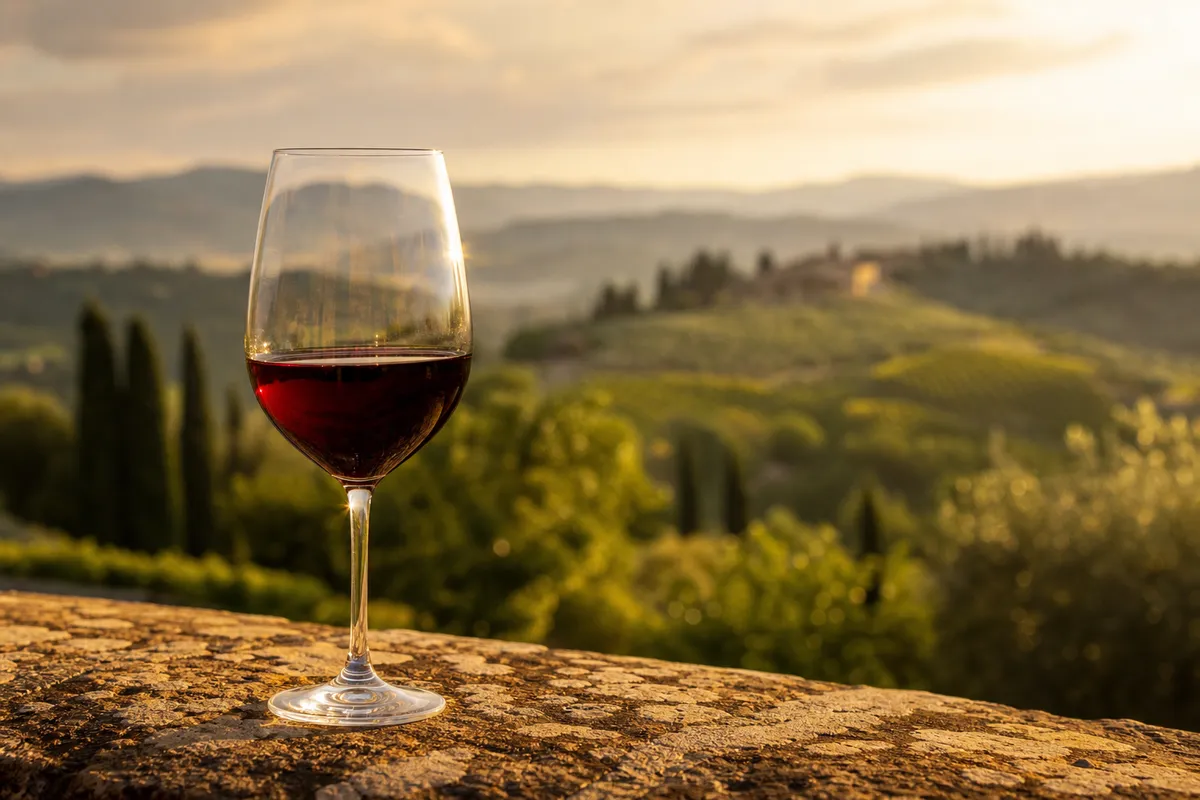
Giano sits at the meeting point of three wine geographies. The entire municipality lies within the grape-production zone of the Colli Martani DOC, while only delimited parts fall within Montefalco DOC and Montefalco Sagrantino DOCG. A DOCG Sagrantino is made from the Sagrantino grape alone, which gives that small delimited share of Giano a famous name. A bottle qualifies only if it meets the full specification, not just the address of the vineyard.
The oil story is tidier. The whole municipality lies within the olive-production area of Umbria DOP oil, carrying the geographic mention Colli Martani, and the specification names San Felice among its cultivars. That cultivar shares its name with the abbey but is a separate thing, and the protected name is Umbria DOP, with Colli Martani as a geographic mention.
More of Umbria

A letter from Italy, once a month.
The places, tables and makers we found worth your time. One email, no noise.
One letter a month. Unsubscribe at any time. We never share your address.