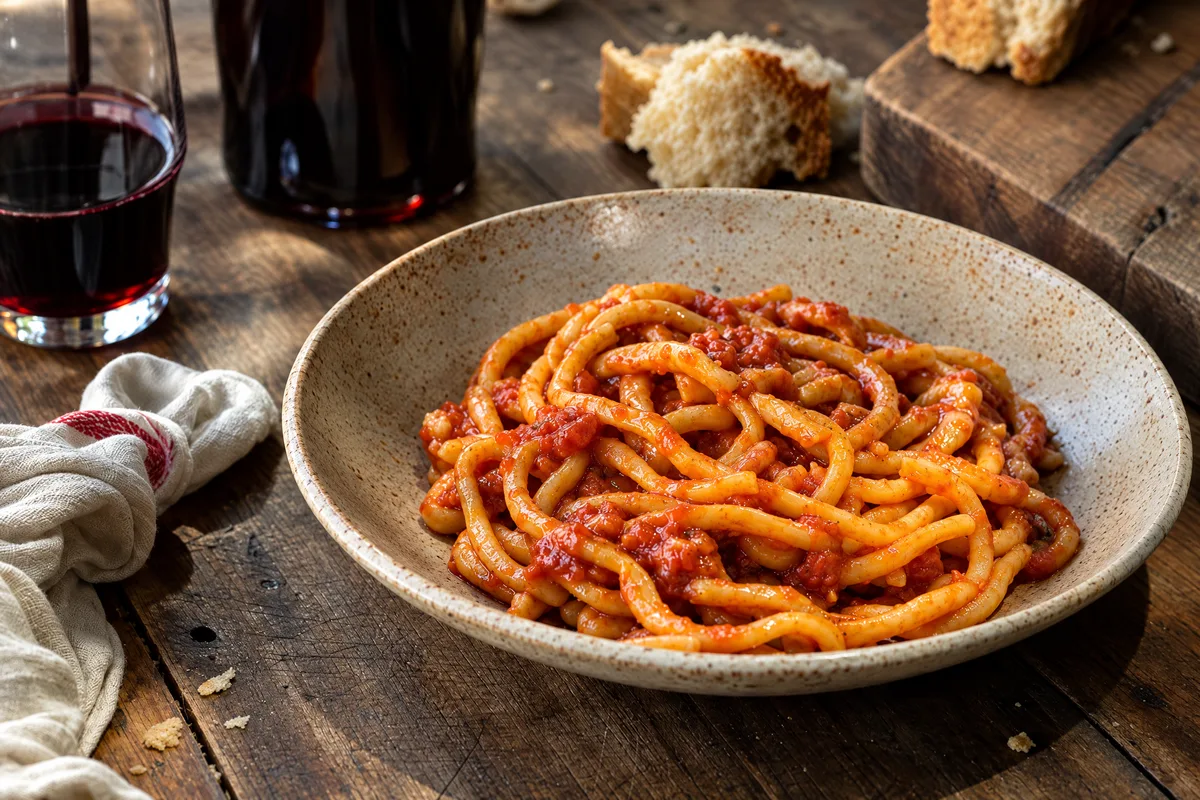
The aglione is cooked slowly in oil until it collapses and never colors, which is what gives the sauce its sweet, rounded garlic flavor instead of a sharp one. The pici are hand-rolled from flour, water, a little oil and salt, no egg, so they stay chewy enough to stand up to a thick tomato sauce.
Make ahead Prepare the sauce while the dough rests. Reheat it gently if needed before tossing with the pici.
Pici all’Aglione
Prep 50 min · Cook 35 min · Rest 30 min · Serves 4 · Difficulty Medium
Method
Knead flour, 20 ml oil, a pinch of salt, and about 200 ml warm water into a firm, smooth dough. Rest 30 minutes under a bowl.
40 min
Roll the dough 1 cm thick, oil the surface lightly, and cut into thin strips. Roll each strip under your palms, from the center outward, into a long noodle the width of a bucatino. Park the pici on semolina.
40 min
Slice the aglione thin and melt it in the oil over the lowest heat, never coloring, until it crushes under a fork, 10 to 12 minutes; help it with a splash of wine.
12 min
Crush the garlic into the oil, add the tomatoes, breaking them by hand, the chile, and salt. Simmer until thick and sweet, about 20 minutes.
20 min
Boil the pici in well-salted water until tender with a proud chew, 4 to 6 minutes depending on thickness.
6 min
Transfer the pici to the sauce with a ladle of their water and toss over the heat until each noodle is gloved in red. Serve hot, no cheese required.
3 min
Kitchen notes
Choose aglione. Use aglione for the named sauce. Ordinary garlic makes a different variation.
Irregular is authentic. Pici should vary like handwriting. Even thickness matters only within a single noodle, so it cooks evenly end to end.
The same pici take famously to briciole, fried breadcrumbs, when tomatoes are out of season; keep that trick for winter.