

Skip to content

Toma Brusca

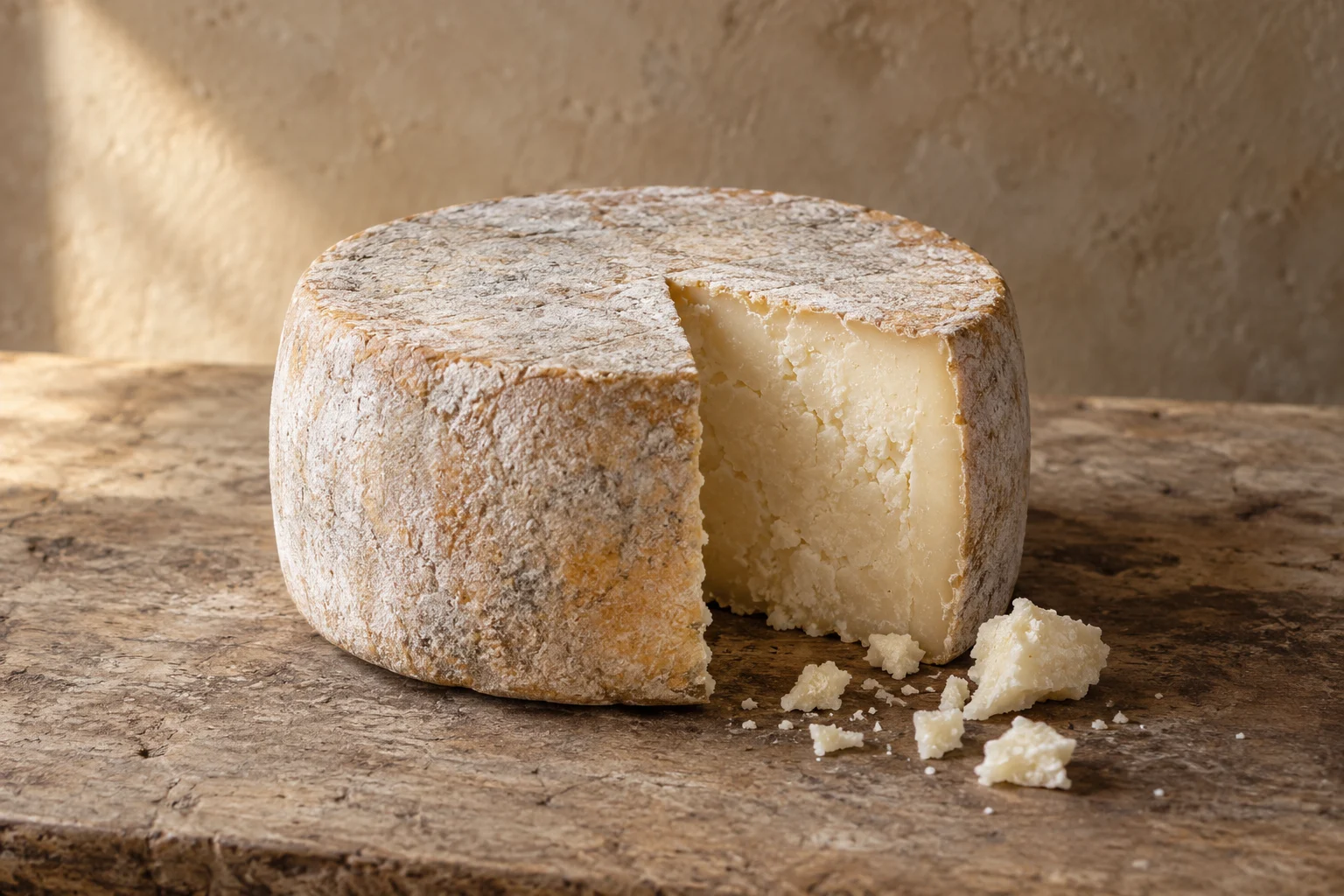
Toma brusca refers here to Piedmont’s Toma del Lait Brusc, a cheese made from acidified, partly skimmed raw cow’s milk.

Milk
Partly skimmed raw cow’s milk
Area
Susa Valley, Turin province

The sour-milk tradition of the Susa Valley

Brusc refers to the acidity that gives this Piedmontese toma its character.

The regional account connects the cheese to the old need to use milk that had acidified in summer before refrigeration. Today the described process deliberately acidifies the milk before coagulation. Traditionally eaten with boiled potatoes or bread, the cheese also appears crumbled into potato-gnocchi sauces.
Acidity before coagulation

Piemonte’s catalog requires the milk to acidify before coagulation. It describes a chalky, crumbly paste with no eyes and at least seventy days of maturation.

The Susa Valley

Piemonte’s Italian product profile places both the milk supply and cheesemaking in the Susa Valley, in Turin province.

Piedmont

A crumbly toma with an acidic edge

Look for Toma del Lait Brusc or Bianca Alpina. The regional Italian profile describes a firm, chalky and crumbly paste without eyes, colored ivory to pale straw. Its acidity varies with maturation; ask about the wheel’s maturity when choosing it.

Questions worth asking

What does brusc mean?

The regional profile explains it as sour, referring to the acidified milk used for this cheese.

How can I serve it in a Piedmontese way?

Try it with boiled potatoes or bread, its traditional accompaniments in the regional account. The profile also describes crumbling it into potato-gnocchi sauces.

Is Bianca Alpina a different cheese here?

The regional Italian product profile presents Toma del Lait Brusc and Bianca Alpina as names for this cheese.

A letter from Italy, once a month.

The places, tables and makers we found worth your time. One email, no noise.

One letter a month. Unsubscribe at any time. We never share your address.

Help us get it right

What is it about?
