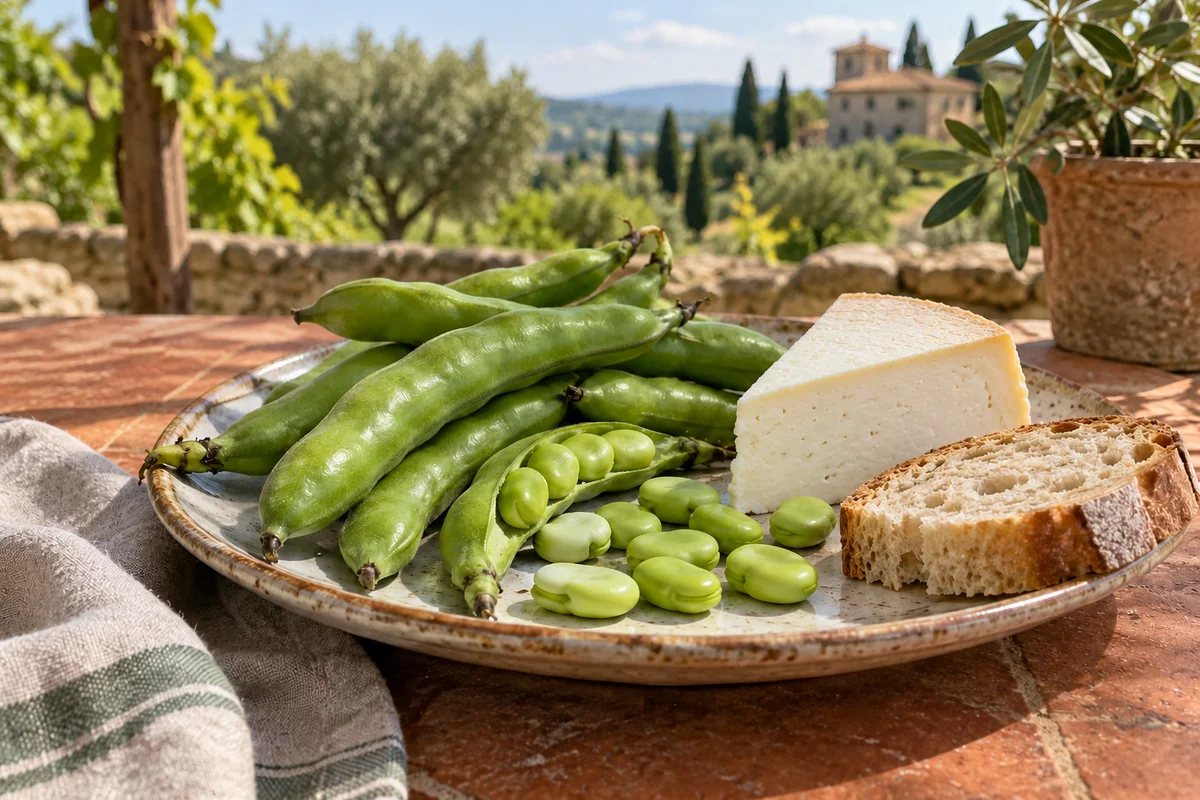
Fresco
- Matures
- At least 20 days
- Rind
- Thin, smooth, pale yellow
- Inside
- White to pale straw, soft and yielding; milky and gently sweet
- The mark
- Inked on the side of the wheel
- Best for
- Neat slices for a board, or eating on its own
Tuscany's protected sheep's milk cheese, sold young and soft for slicing or aged and firm enough to grate.
The same rules, two very different cheeses. Choose by what you want on the plate: a tender slice, or something firm enough to flake and grate.

Sheep raising and cheesemaking have a long history in this part of Italy, but ancient cacio is not the same thing as today's regulated DOP. The Consorzio traces regional sheep cheese through the Roman period and to cacio marzolino in later writing.
Those references give cultural context; they do not prove that any ancient wheel followed the current rules. The modern protection has firmer dates: the Pecorino Toscano protection consortium was founded on 27 February 1985, and the cheese received European DOP recognition on 2 July 1996.
Those dates describe the institution and the protected name, not the invention of the cheese. Today the DOP name links a specific product, method and production area under a written specification.

Production starts with whole sheep's milk from the designated zone, used raw or heat-treated up to pasteurisation. Calf or vegetable rennet sets it at 33 to 38°C; the rules do not require lamb rennet.
Once set, the curd is broken differently for the two forms: roughly hazelnut-sized pieces for the soft cheese, much smaller corn-kernel pieces for the firm one. It goes into moulds, where whey drains by hand pressing or steaming, and is salted dry or in brine. Those choices shape the cheese before it spends its 20 days, or its four months, maturing.
Finally the wheel is marked around its side: ink for the soft cheese, heat for the aged. The approved label and dairy identification make the name traceable beyond colour or shape. A darker rind alone says little about authenticity, since permitted surface treatments can change it.
The protected area takes in all of Tuscany, plus Allerona and Castiglione del Lago in Umbria and eleven towns of northern Lazio: Acquapendente, Onano, San Lorenzo Nuovo, Grotte di Castro, Gradoli, Valentano, Farnese, Ischia di Castro, Montefiascone, Bolsena and Capodimonte. Milk, cheesemaking and maturing all happen inside it.
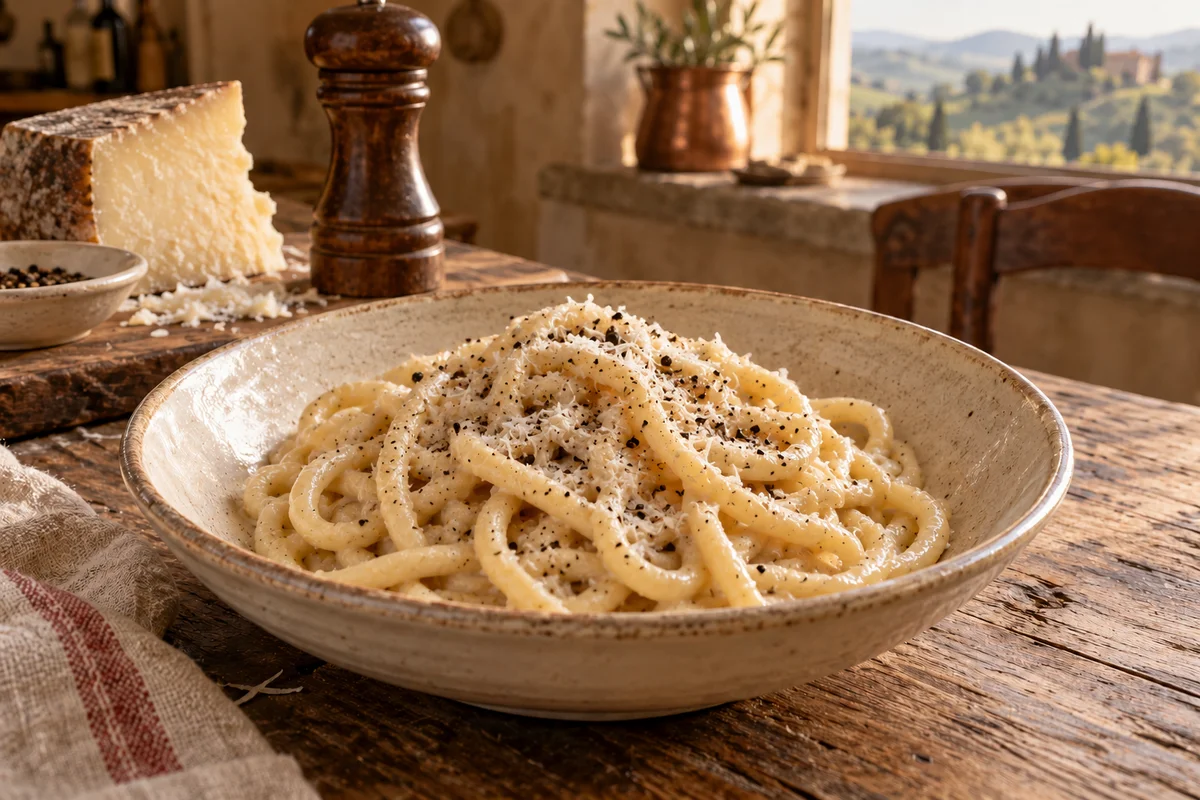
TuscanyServe the fresh cheese in slices so its soft texture stays the point. Slice or flake the aged cheese, and grate it when you want its flavour carried through pasta rather than eaten as a separate bite. The Consorzio suggests aged Pecorino Toscano with honey, preserves or caramelised fruit, and grated over pici, tortelli maremmani or pasta with game sauce.
For pairings, try a thin slice of fresh pecorino with ripe pear and plain bread. Set flakes of aged pecorino beside a little honey rather than pouring it over, and pour a glass of Chianti Classico with the aged form.

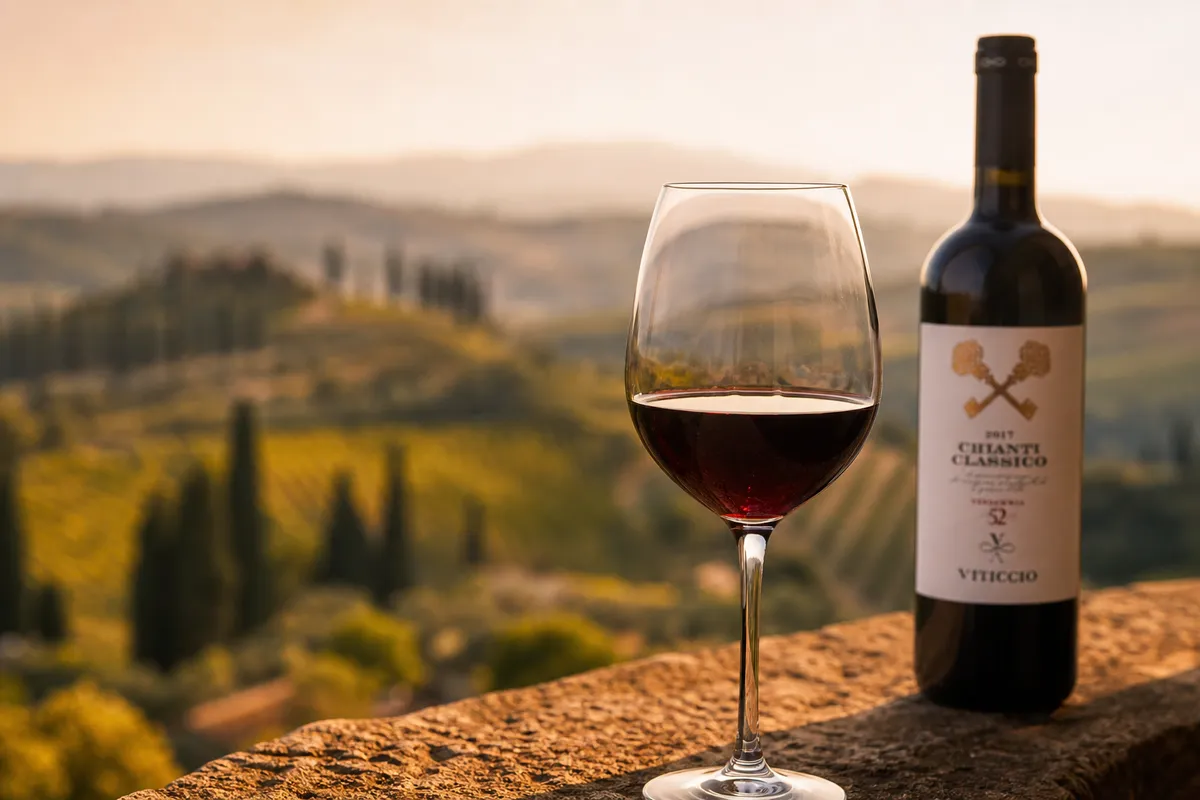 Chianti ClassicoAged Pecorino Toscano with Chianti Classico, a pairing the Consorzio itself suggests.
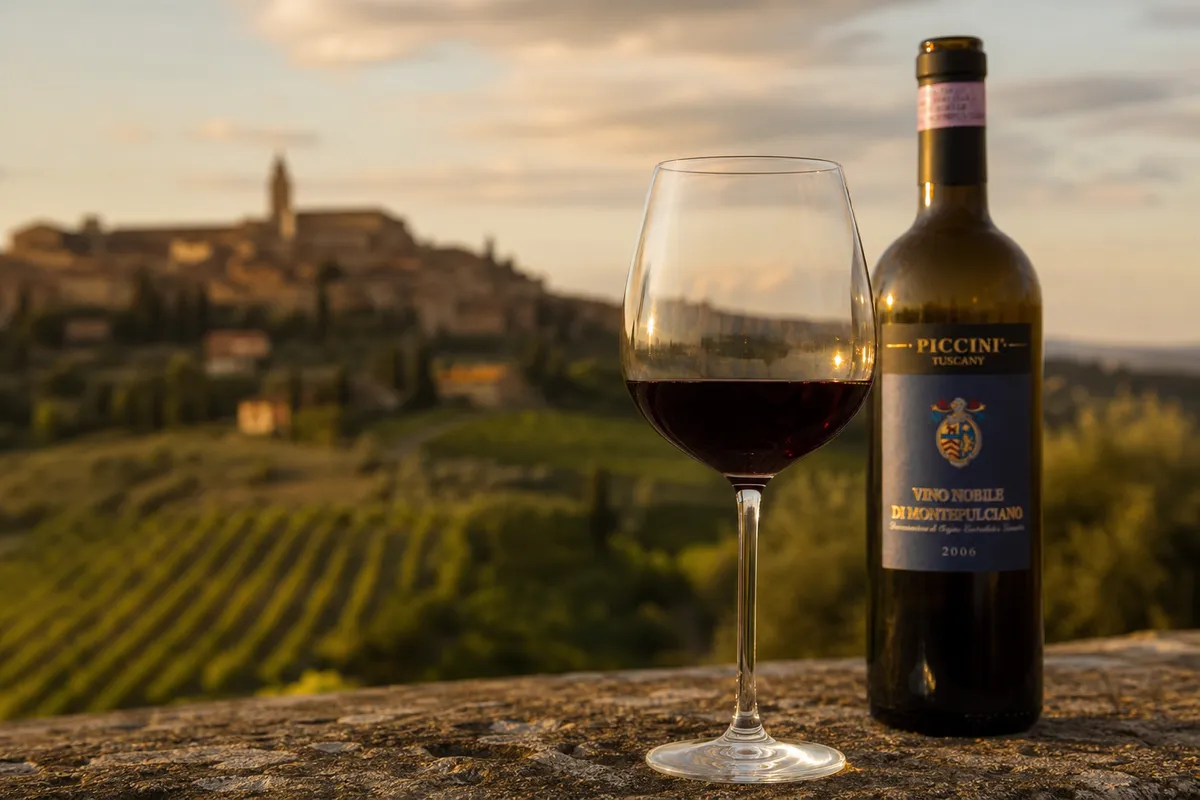 Vino Nobile di MontepulcianoAged pecorino flakes with a glass of Vino Nobile.
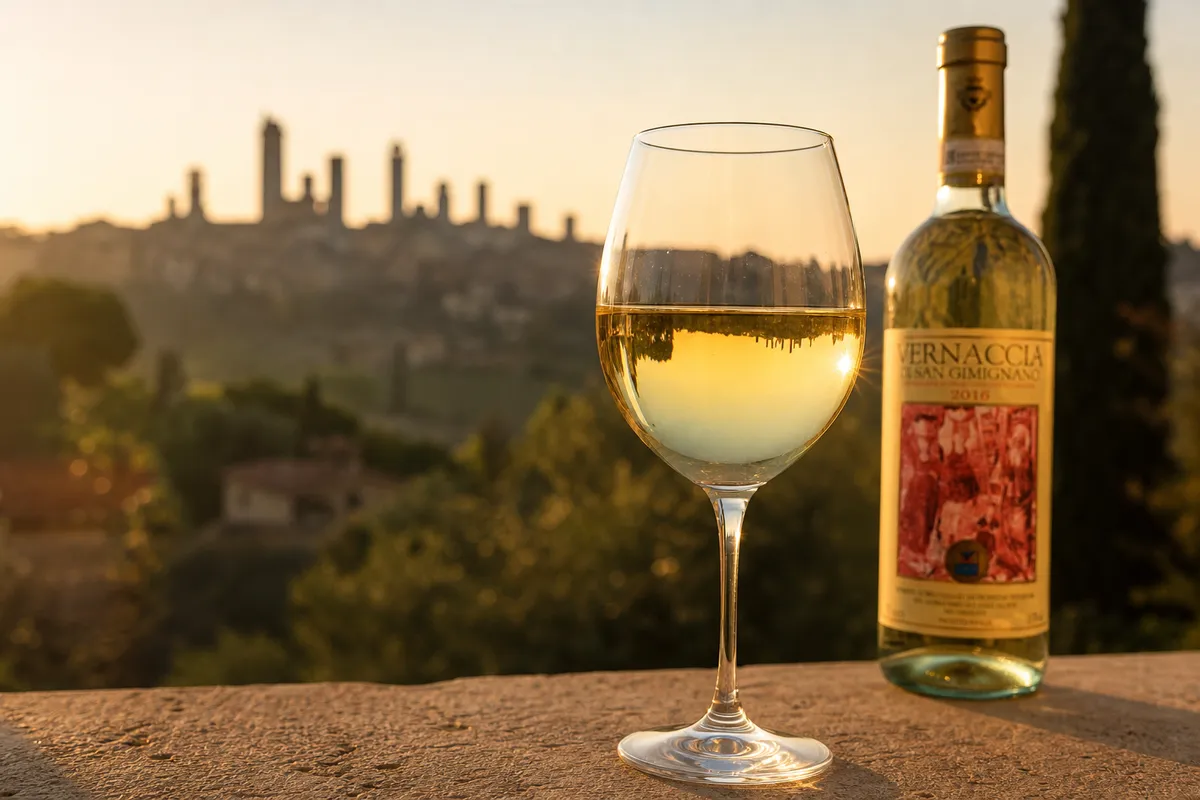 Vernaccia di San GimignanoFresh pecorino with a crisp, cool Vernaccia.
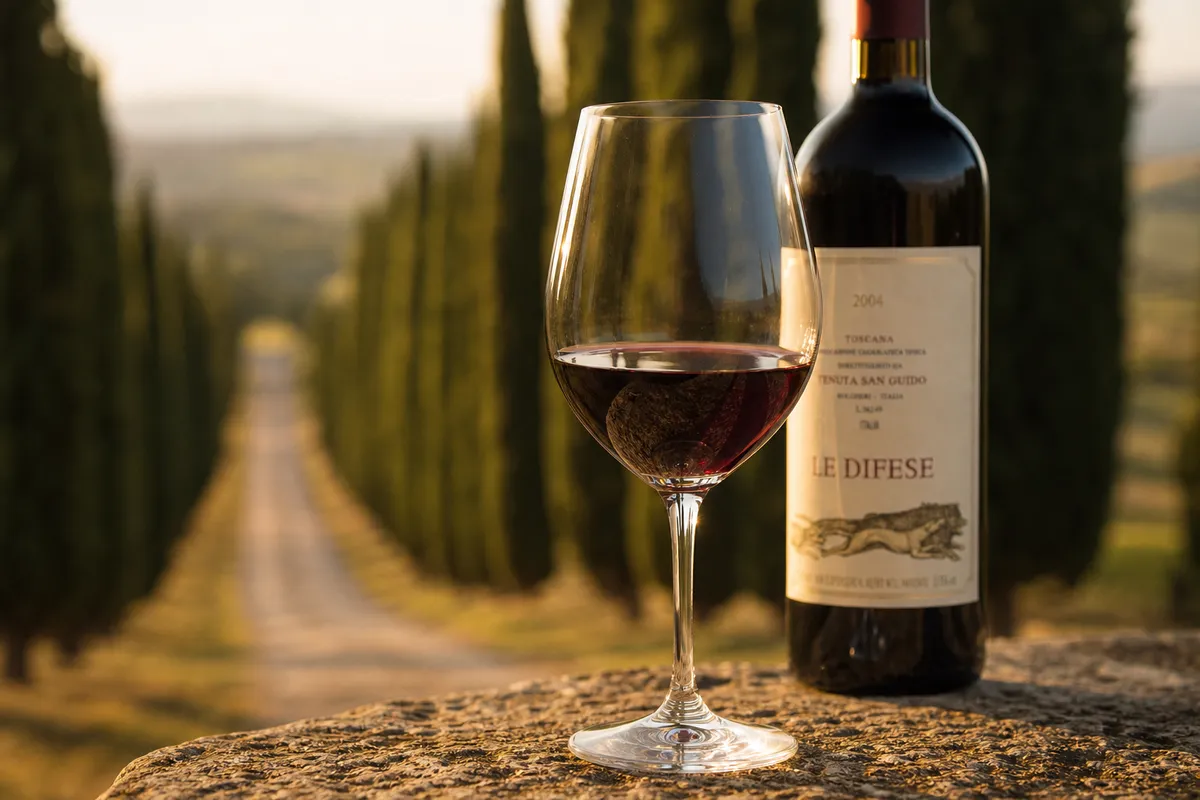 BolgheriTry Pecorino Toscano with Bolgheri in a comparative cheese-and-wine tasting.
At the counter, start with the full name, Pecorino Toscano DOP, and the approved label, not simply "Tuscan pecorino." A whole wheel carries the origin mark on its side, inked on the soft form and fire-branded on the aged one; the mark identifies the dairy that made it.
If the seller cuts a piece from a wheel, ask to see the wheel's mark or the producer details rather than assuming an unmarked wedge is a fake. Prepacked portions from the area carry the mark on the package; portions packed elsewhere show the dairy's or ripener's logo.

Once cut, cover the exposed face and keep the cheese in the less cold part of the fridge. Take out only what you will eat about 30 minutes before serving, then put the rest straight back. For a wrapped piece, follow the storage directions on its label.
No. The rules allow calf or vegetable rennet. If it matters for your diet, check the individual producer; the DOP name alone does not say which was used.
No. The rules permit raw milk and heat treatment up to pasteurisation. Read the label or ask the dairy how a particular cheese was made.
No. Surface treatment can change the rind's colour, even to dark or reddish tones. Authenticity rests on the approved mark and traceability, not a fixed shade.
The places, tables and makers we found worth your time. One email, no noise.
One letter a month. Unsubscribe at any time. We never share your address.