

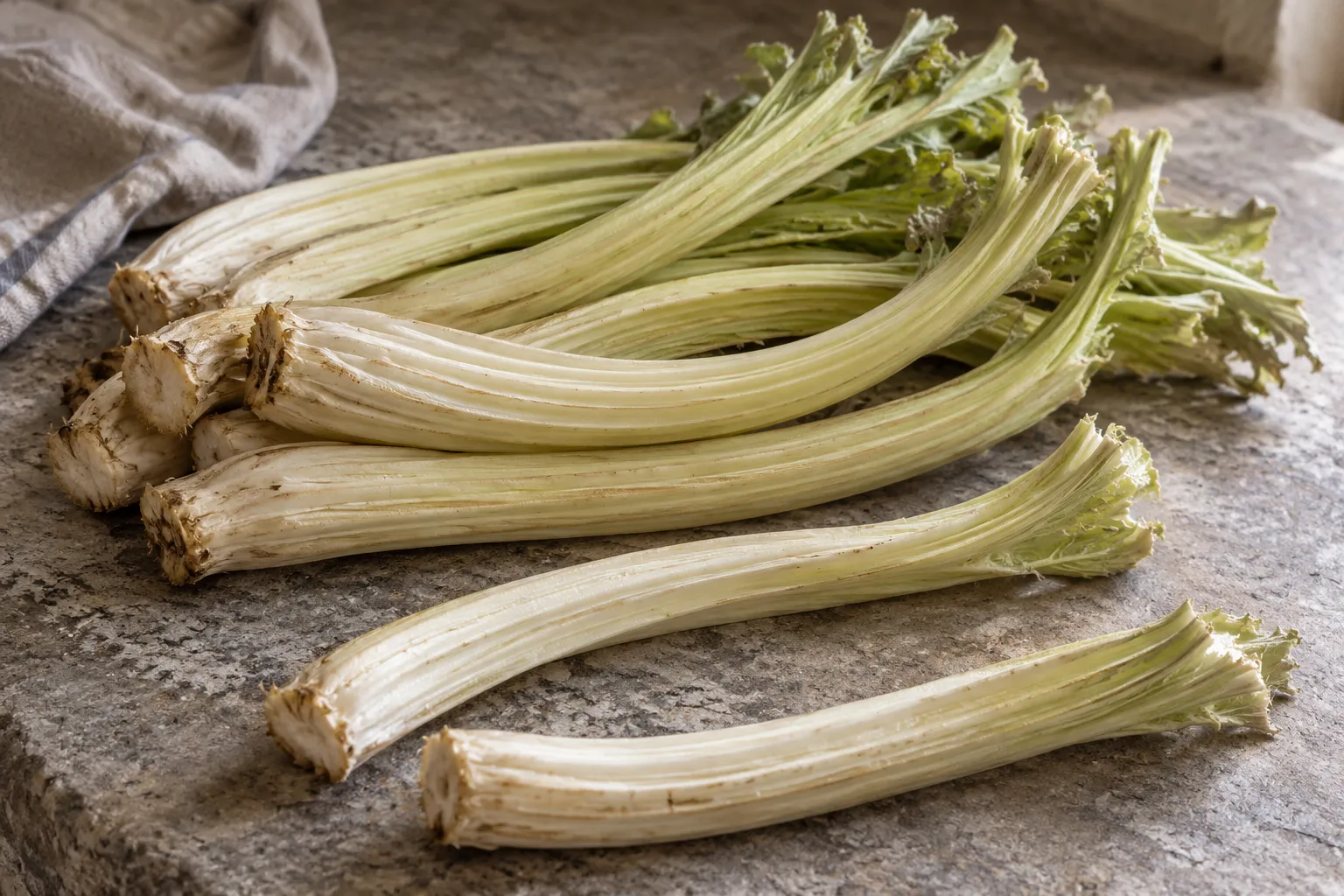
Bianco avorio example
- Characteristics
- Spineless ribs; described as easy to blanch
Cardoon is grown for its fleshy leaf ribs, with named types and blanching methods that give different results.
For the local Nizza Monferrato product, growers bend and bury the plants for blanching. This method gives the ribs their bent shape and makes them white, crunchy and sweeter. This is a particular local practice, rather than a rule for every cardoon.
The local Cardo gobbo di Nizza Monferrato is eaten raw with bagna cauda, the hot sauce of olive oil, garlic and anchovies. For other cardoons, use cooked ribs in a gratin, following preparation directions for the type you buy.
If you want the Nizza Monferrato example, ask for its name and provenance. A pale rib alone does not identify that product. For another cardoon type, ask how the grower recommends preparing it.
The places, tables and makers we found worth your time. One email, no noise.
One letter a month. Unsubscribe at any time. We never share your address.
