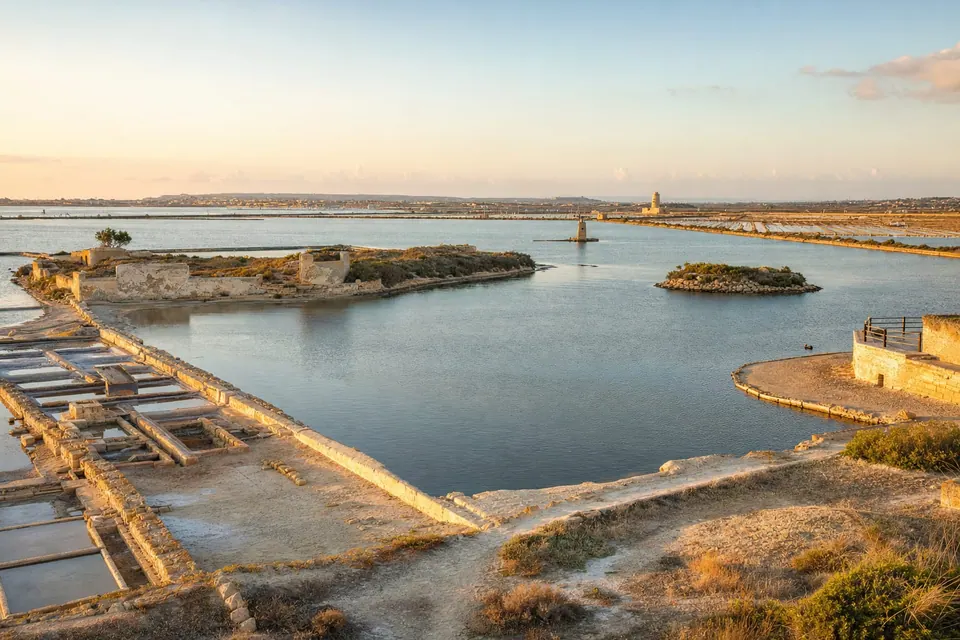
Salt has been worked from these shallow lagoons between Trapani and Marsala since Phoenician times, when the traders who built the port city of Mozia on the island in the lagoon's center needed it to preserve fish and hides for shipping.
The saltworks still standing today, mostly around the Ettore e Infersa pans, use the same basic method: seawater channeled into progressively shallower pools until only crystals remain, ground once by windmill and now mostly by pump. Microscopic algae tint the last pools pink and orange as the water concentrates, especially at low water in late summer, and old sailing windmills with their fabric sails still stand over the white salt pyramids. A nature reserve protects the lagoon's four islands and its salt-loving plants, including a wild marigold found nowhere else on earth. Small boats cross from the shore to Mozia in minutes, timed for visitors chasing the evening light.
Sources and citations (3)
- Regione SicilianaRiserva Naturale Isole dello Stagnone di MarsalaReserve identity, municipality and descriptionRead source
- Regione SicilianaArticolazione per sistemi e componentiSaltworks infrastructure and environmental conditionsRead source
- Regione SicilianaApprovazione nuovo regolamento della Riserva naturale orientata Isole dello Stagnone di MarsalaArticle 7, salt cultivation and traditional cropsRead source