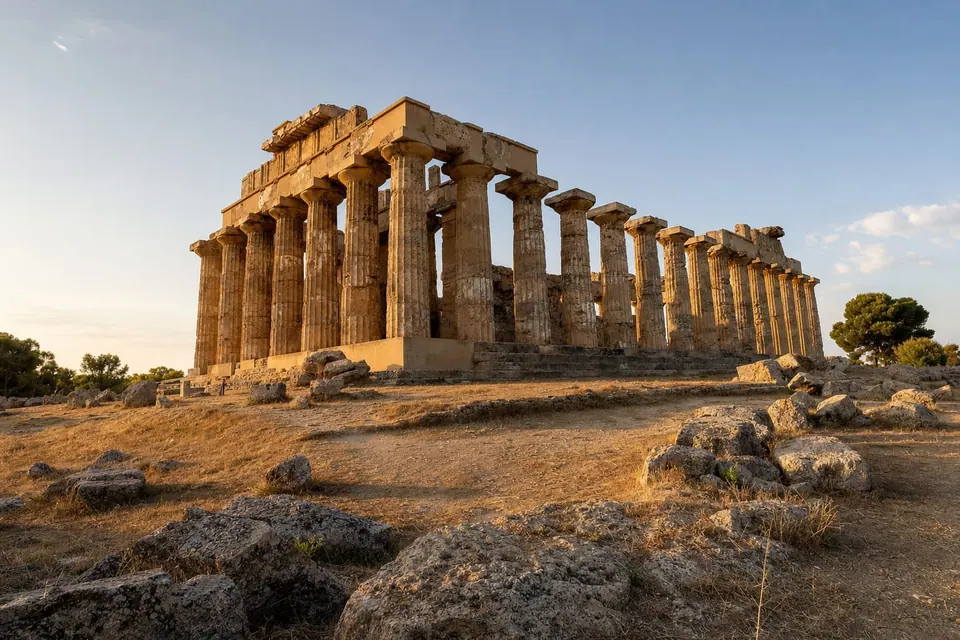
Selinus was founded around 628 BCE by Greek colonists from Megara Hyblaea and grew rich enough to build temples on a scale rare even in Magna Graecia, until Carthage sacked it in 409 BCE and the city was never rebuilt.
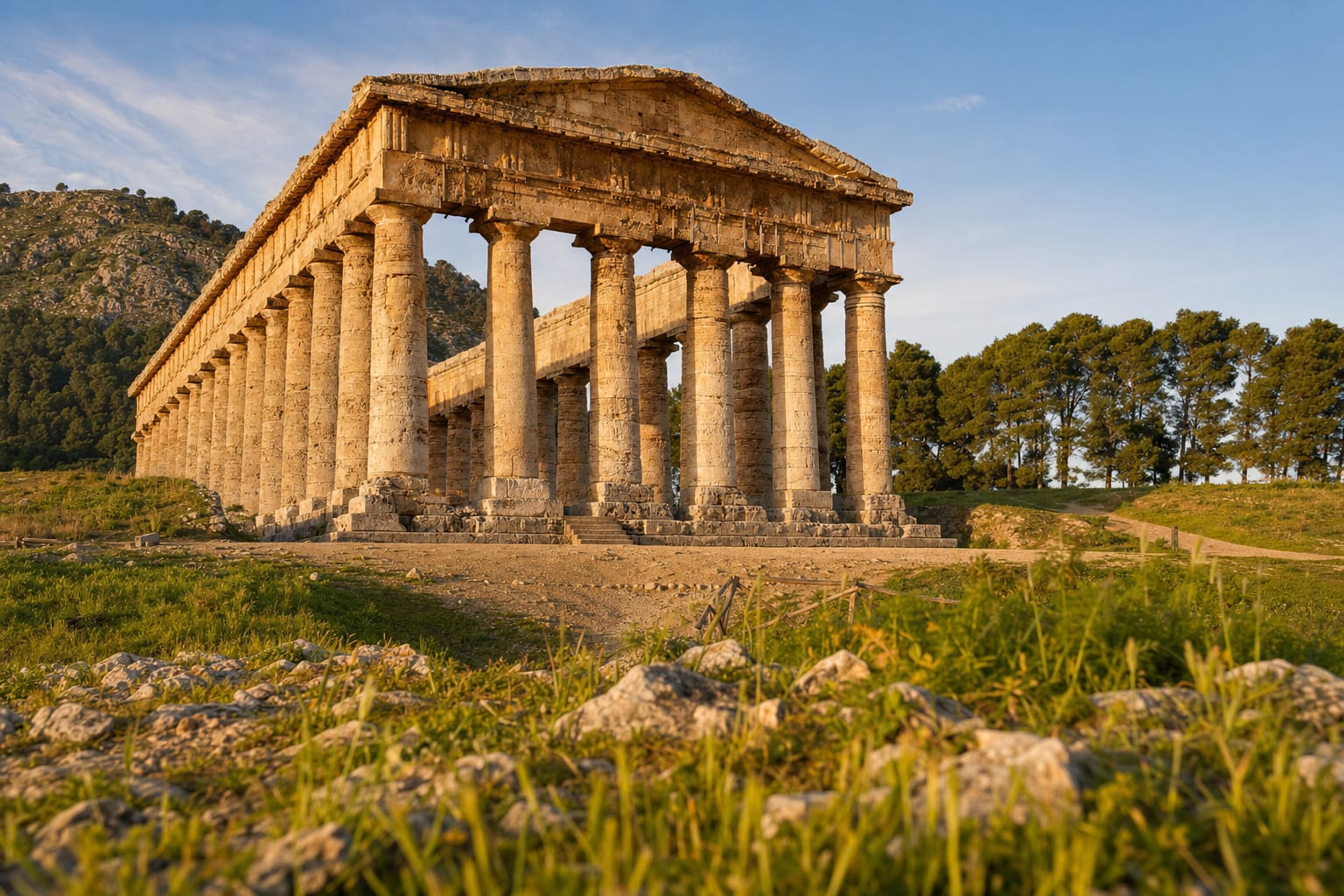
The result is a ruined landscape above the Mediterranean: on the eastern hill, Temple E, dedicated to Hera, was re-erected in the 1950s and now stands against the sea wind; nearby lie the toppled giants of Temple G, among the largest in the Greek world. Across the valley the acropolis sits over the dunes, and farther west is the sanctuary of Demeter Malophoros. It is one of the largest archaeological parks in Europe, so plan a full morning.
Sources and citations (2)
- Parco archeologico di Selinunte, Cave di Cusa e PantelleriaArea archeologica di SelinunteArchaeological areas and craft districtRead source
- Parco archeologico di Selinunte, Cave di Cusa e PantelleriaParco archeologico di SelinuntePark scope and current noticesRead source