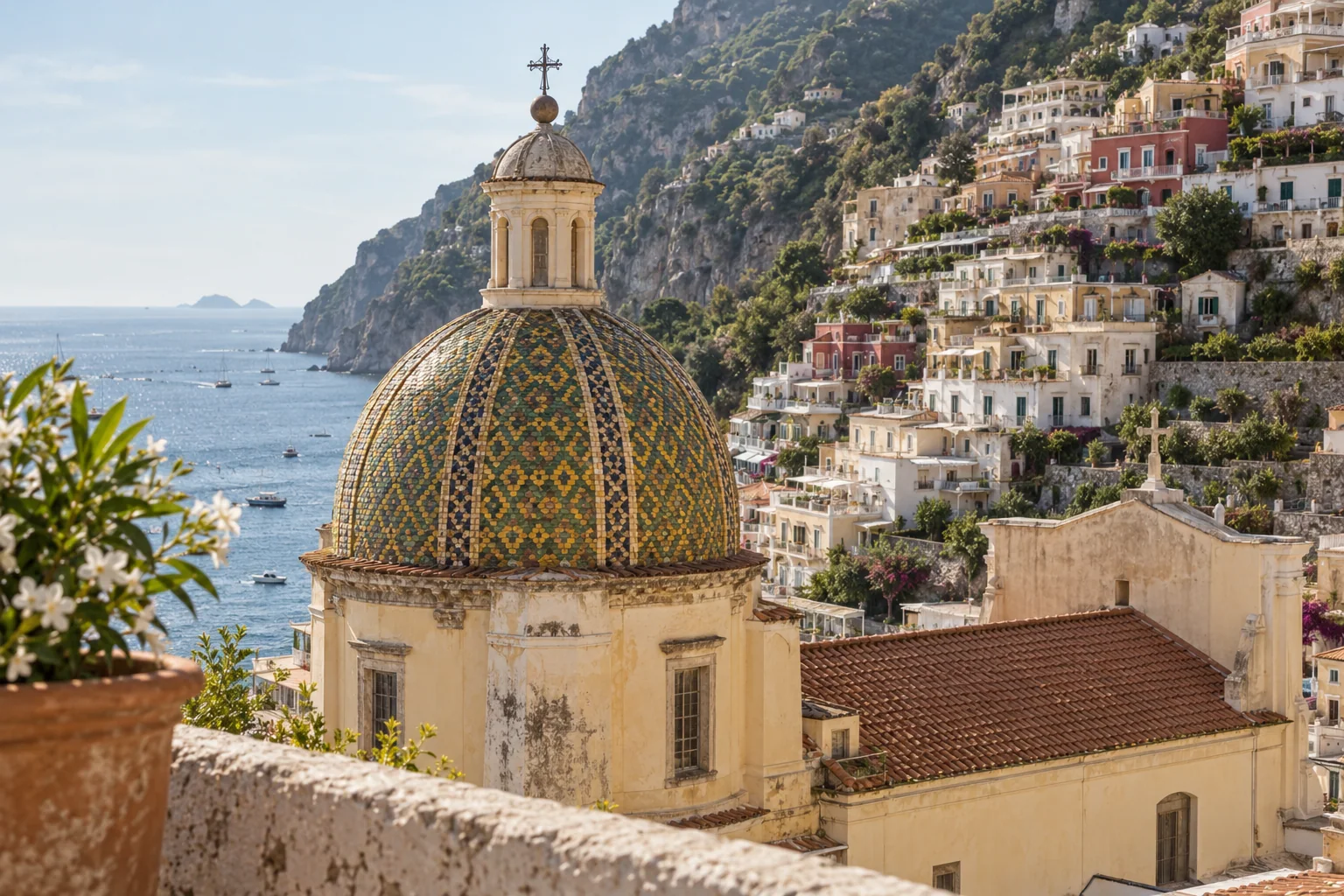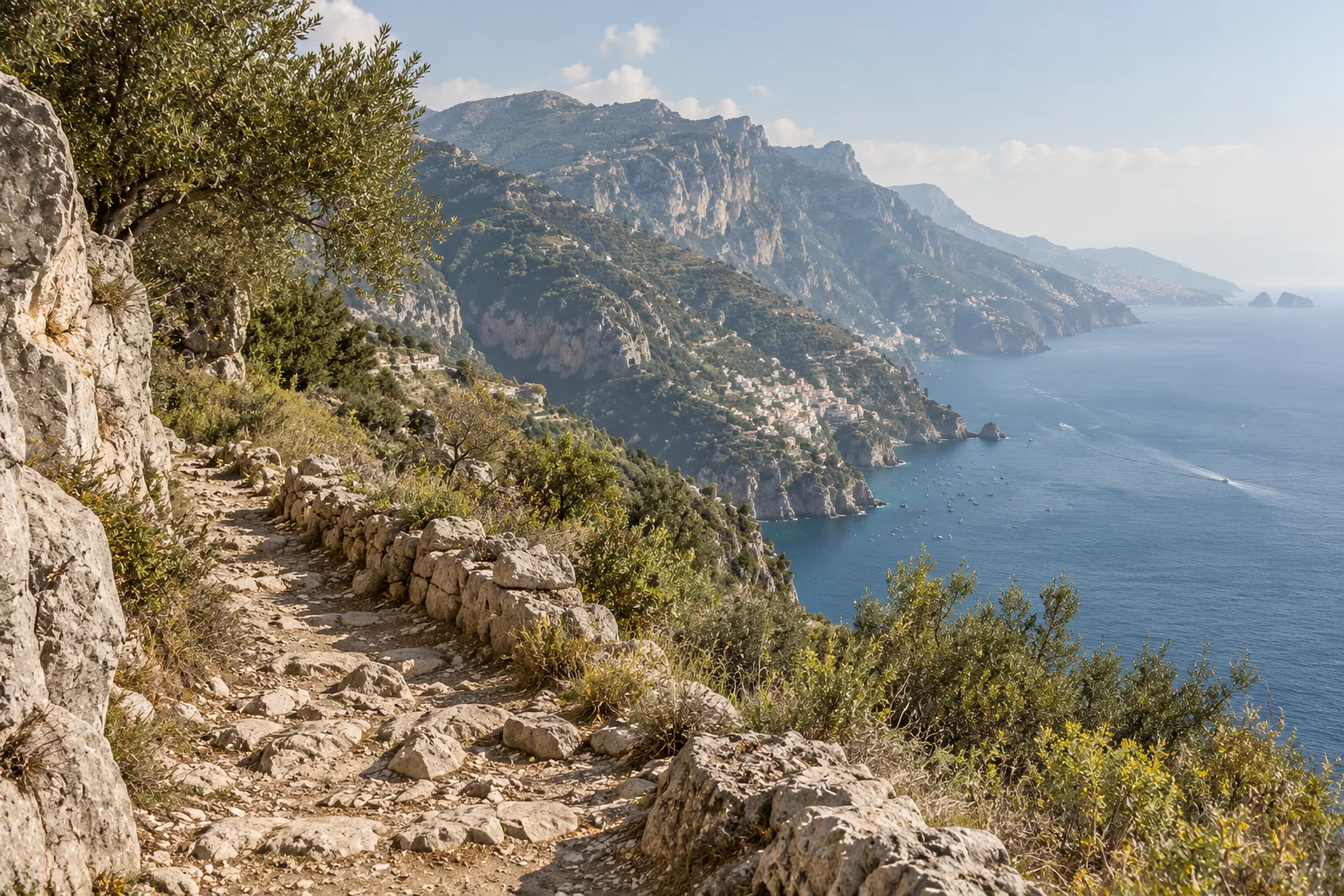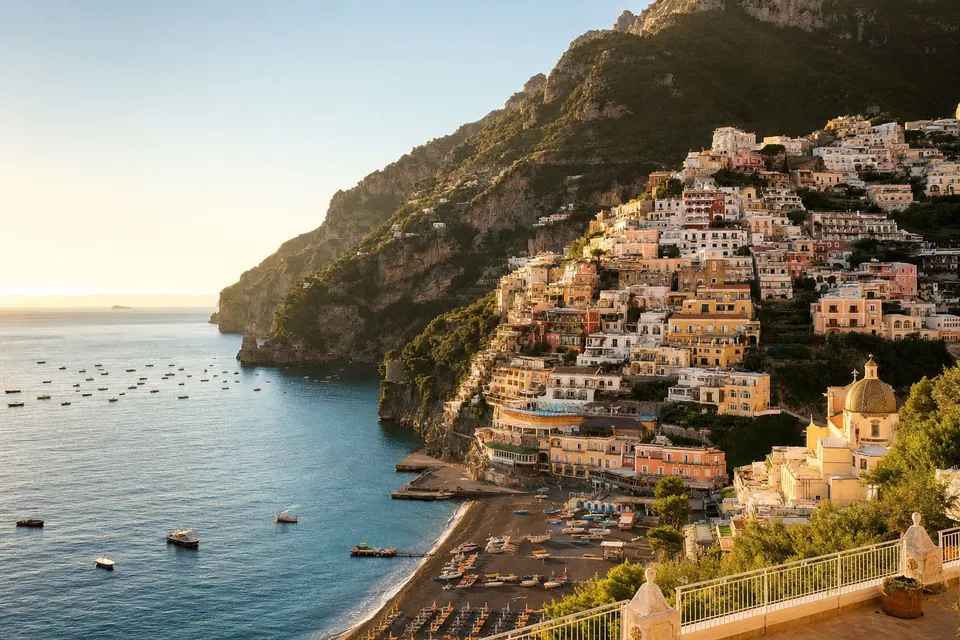
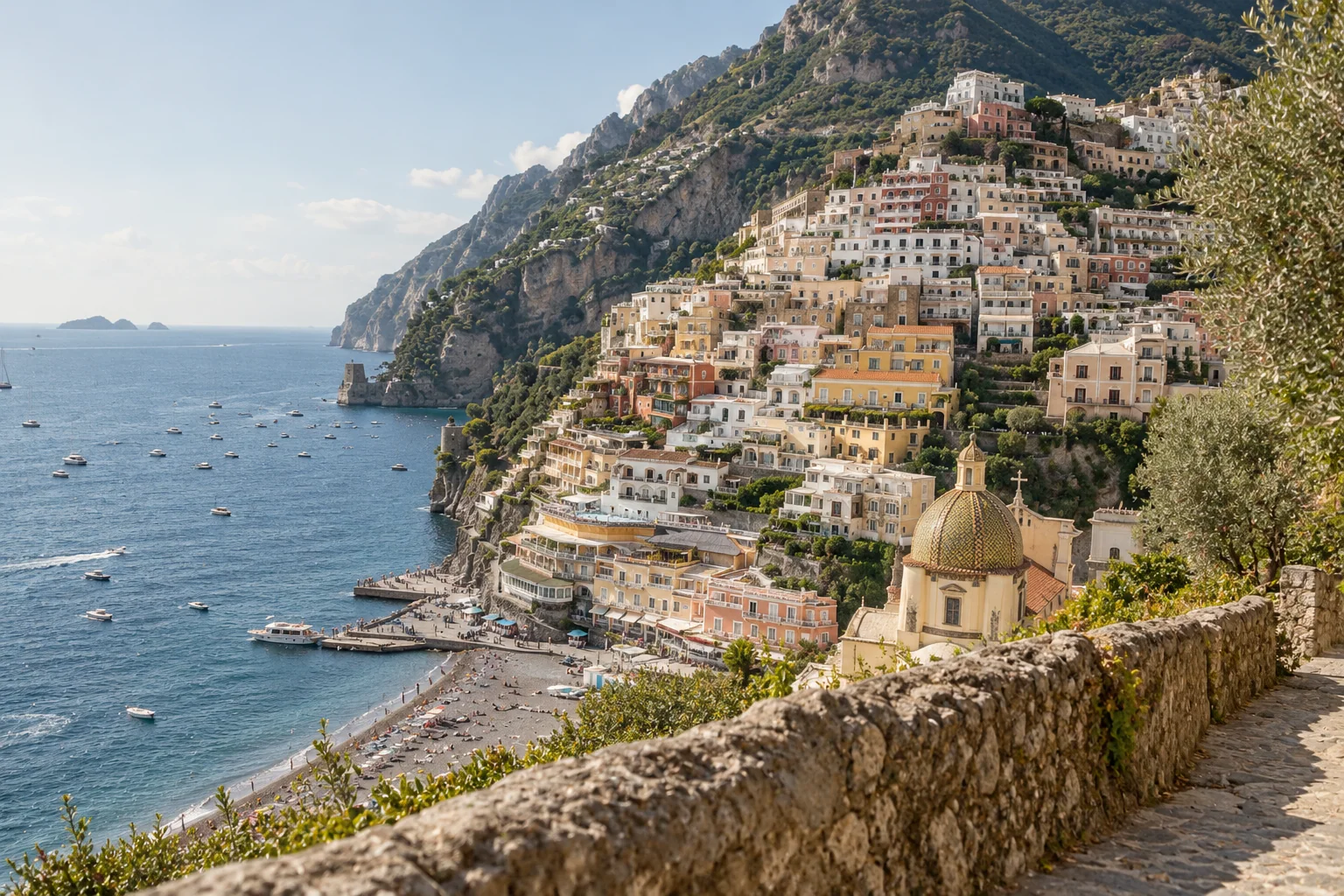
Positano tumbles down a near vertical slope of the Amalfi Coast so steeply that its houses seem stacked rather than built beside one another, an arrangement UNESCO recognizes within the wider Costiera Amalfitana cultural landscape. Evidence at the local La Porta cave points to Palaeolithic and Mesolithic use of this coastline long before Rome existed, while the bay below the modern village holds the remains of a Roman villa of otium, a leisure residence developed from the late first century BCE. Three watchtowers built at Fornillo, Trasita and Sponda in the 16th century once warned of Saracen pirate raids, part of a defensive chain along the whole coast, and in 1668 Positano bought its own freedom from feudal control to become a città regia, answering directly to the crown rather than a local lord. Today the same steep geography that made it hard to conquer makes it hard to leave: nearly every view down toward the water looks like the one used to sell the whole coast.
A layered coastal settlement whose prehistoric, Roman, medieval and early-modern evidence contributes to the cultural landscape of the Amalfi Coast.
Sources and citations (3)
- UNESCO World Heritage CentreCostiera AmalfitanaProperty description and inscription dataRead source
- Comune di PositanoMuseo Archeologico Romano di PositanoHistoryRead source
- Comune di PositanoPiano Urbanistico Comunale, relazione tecnicaHistorical contextRead source