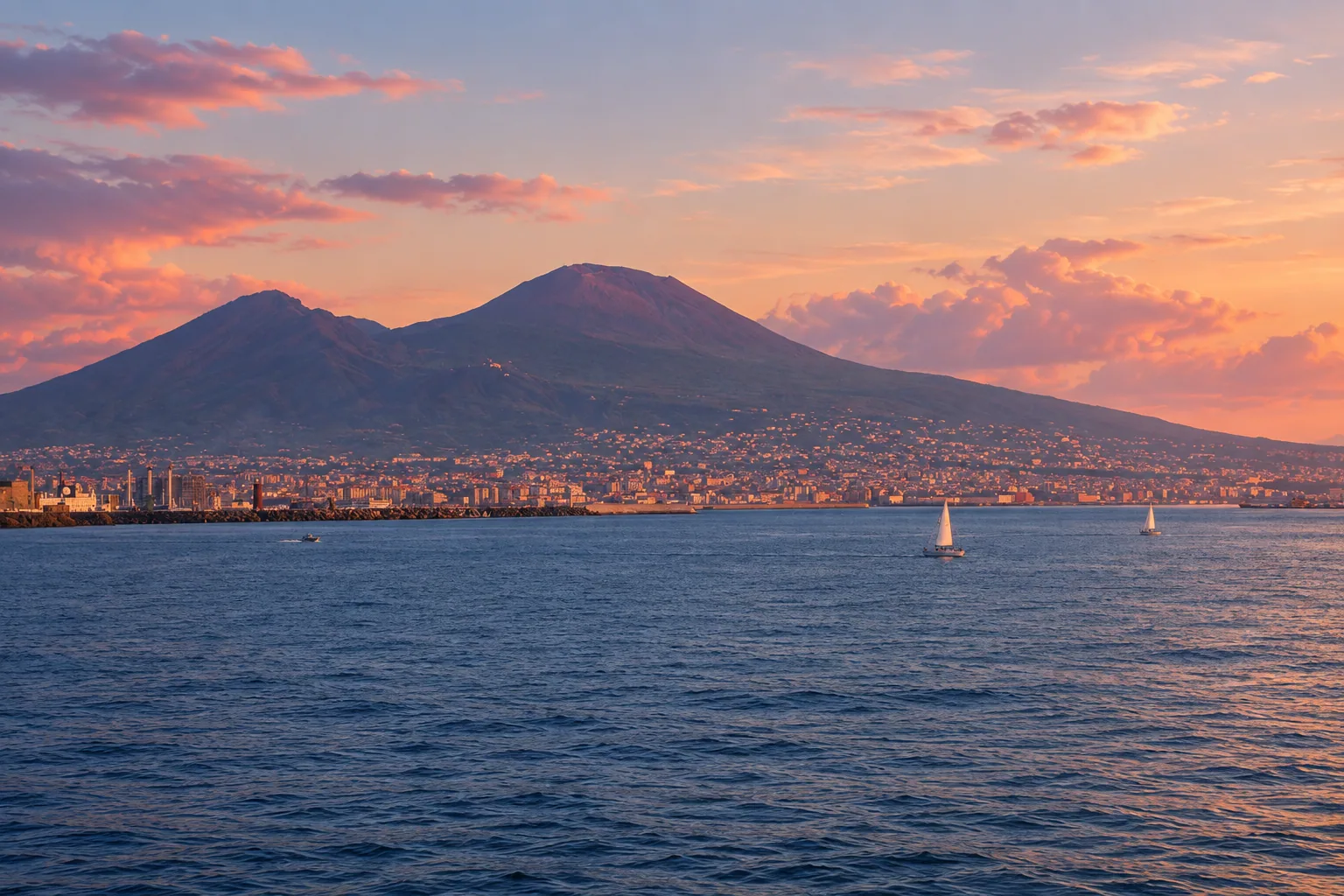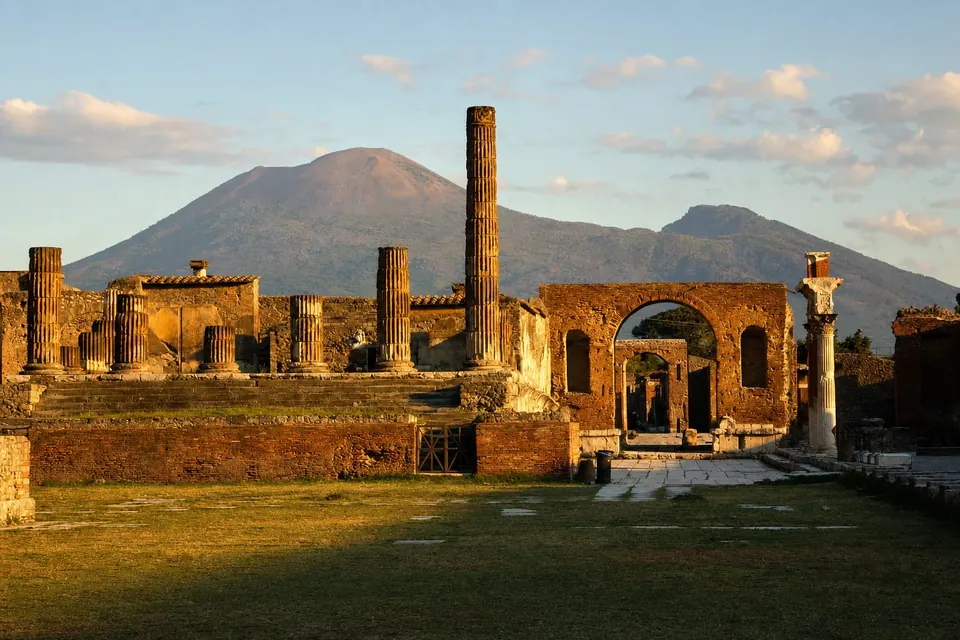
Pompeii is the Roman city that the eruption of Vesuvius sealed under ash and pumice on an August day in 79 CE, killing the residents who stayed and, in the process, freezing an entire town mid-life.
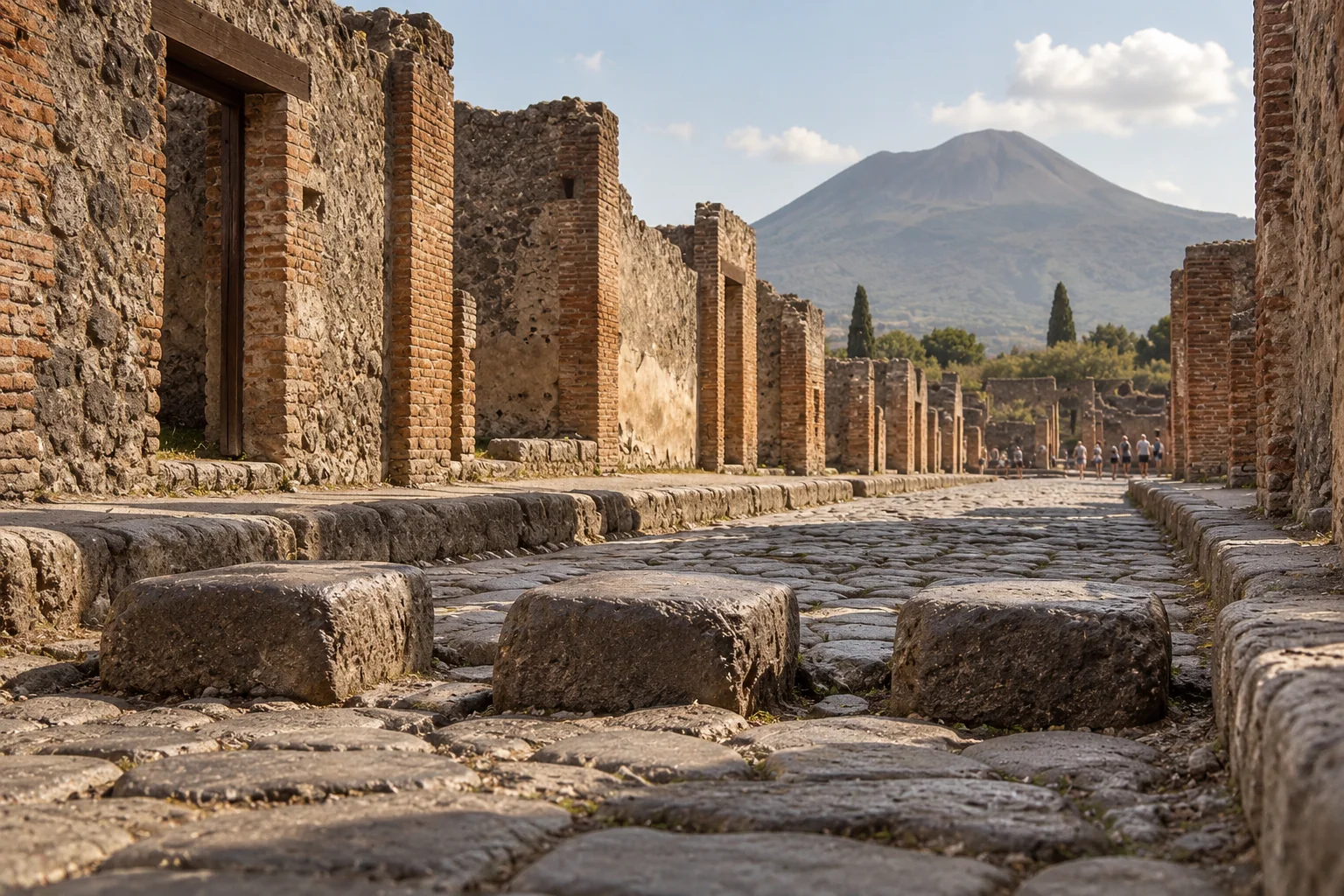
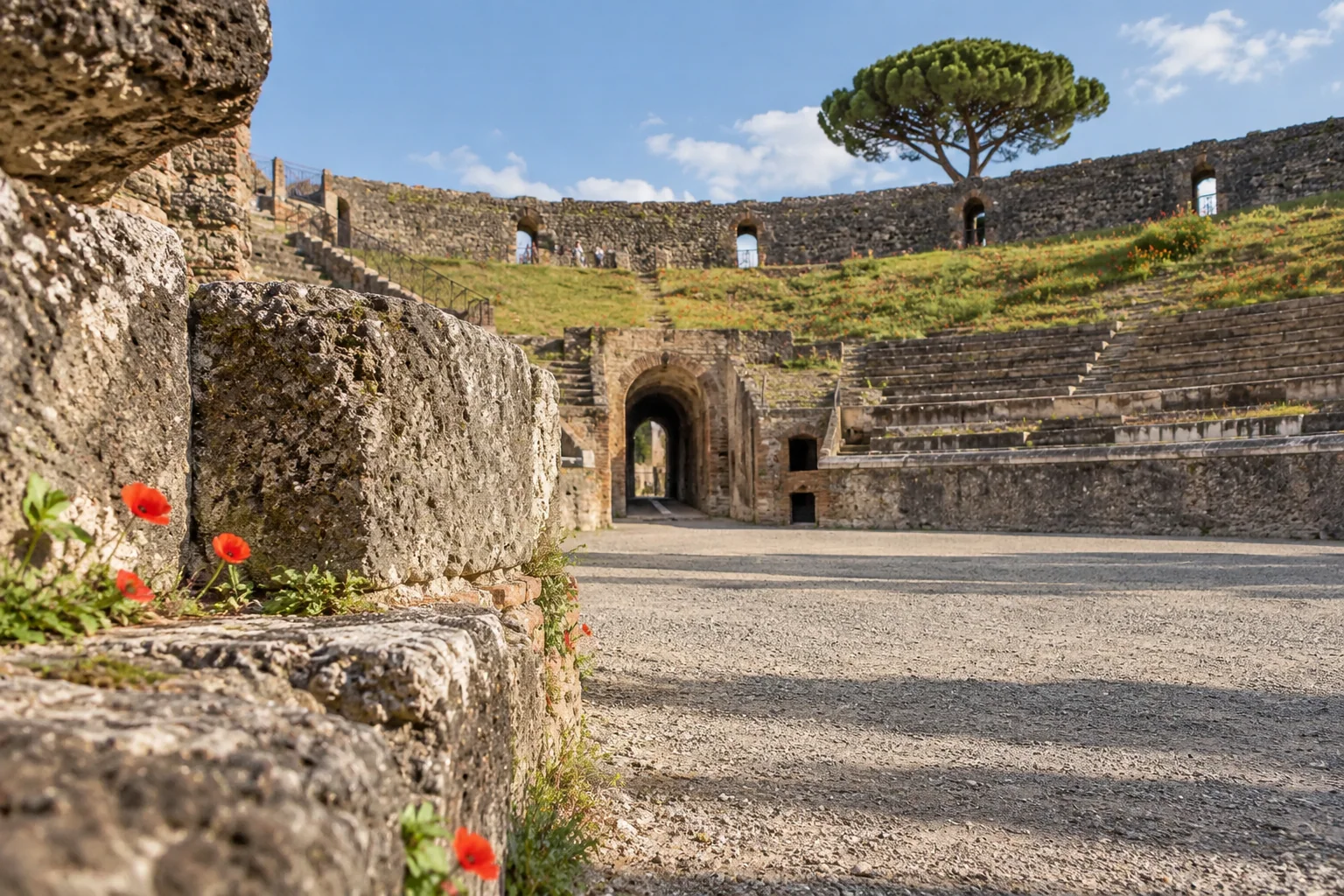
The Ministry of Culture's park covers 66 hectares, with about 50 excavated: paved streets rutted by cart wheels, bakeries with their ovens intact, the Forum, two theatres, an amphitheatre older than the Colosseum, and houses still holding their frescoes and mosaics. Plaster casts taken from voids in the ash preserve the postures of people and animals at the moment of death. Bourbon excavators found the site in 1748 and it has been dug, studied and argued over ever since; new digs still turn up fresh rooms most seasons.

A whole city, not a single ruin
Pompeii is best understood as an archaeological city. Its surviving urban fabric includes streets, houses, shops, the Forum and its public buildings, sacred areas, bath complexes, two theaters and an amphitheater.1,2
That breadth is what makes the place so rewarding. Domestic, commercial, religious, civic and entertainment spaces belong to one urban system, yet they differ in function, date, decoration and state of preservation, so no single villa, fresco or body cast can stand for the whole.1
Scale depends on where you draw the boundary. The archaeological area is 66 hectares, with roughly 50 hectares excavated once suburban zones are counted, while the excavated city itself covers 44 hectares. Different boundaries, same vast, walkable town.1,2
A city buried in 79 CE
Pompeii was buried by the eruption of Vesuvius in 79 CE, largely under thick deposits of volcanic ash and lapilli. That ash and lapilli are the reason the urban fabric survives so exceptionally.1
Survival was never perfect. What you see is the result of burial, centuries of excavation and continuing conservation, and some areas remain unexcavated or under study. A site of this scale needs constant maintenance: exposed walls can remain vulnerable because ancient drainage, roofing and other infrastructure can only be partly reinstated.2
Streets, houses and the Forum
Much of Pompeii's value lies in how its evidence stays connected. A paved street links shopfronts, homes, public buildings and the movement of a busy town, which is why walking the grid teaches more than hopping between famous rooms.1
The paved streets of Pompeii and Herculaneum are lined with remarkable residential and commercial buildings. The atrium house is an inward-looking type centered on a courtyard, later enlarged with columns, arcades and more formal rooms under Hellenistic influence.2
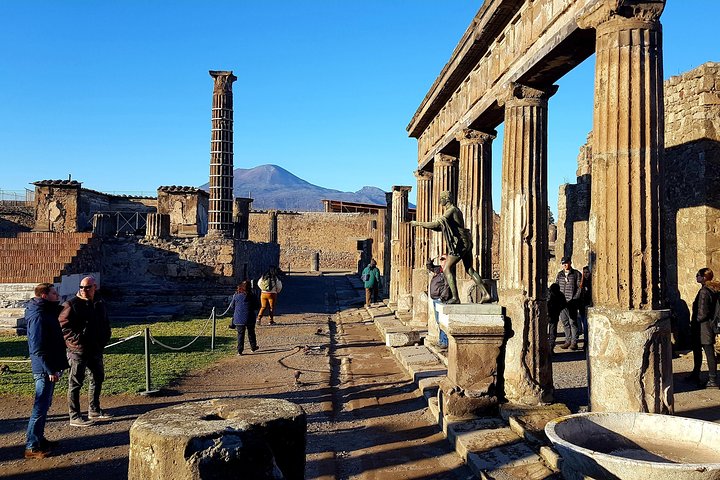
The Forum is the civic heart of the town, with the Capitolium, the Basilica and the temples around it.2,1
Houses, shops and graffiti
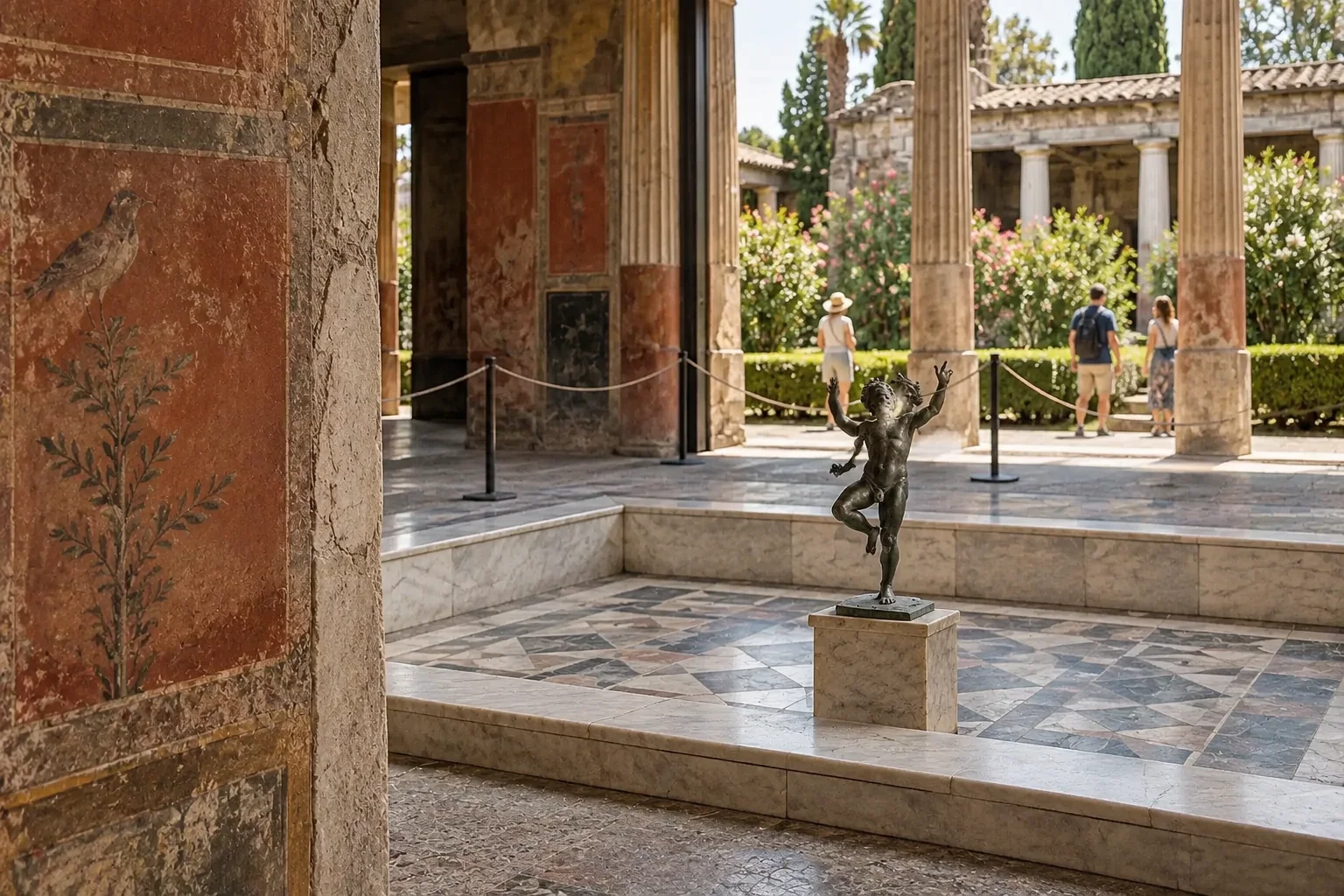
Pompeii's houses preserve spatial relationships: street, entrance, atrium, courtyard, reception room, service space and garden can often still be read together. Their architecture tells you how a home was organized, though not who lived, worked or was enslaved inside.2
The town's graffiti add a human voice. Political slogans tied to an election expected at the time of the eruption sit alongside more personal and often insulting inscriptions, which makes the walls an archive of both public and private expression.2
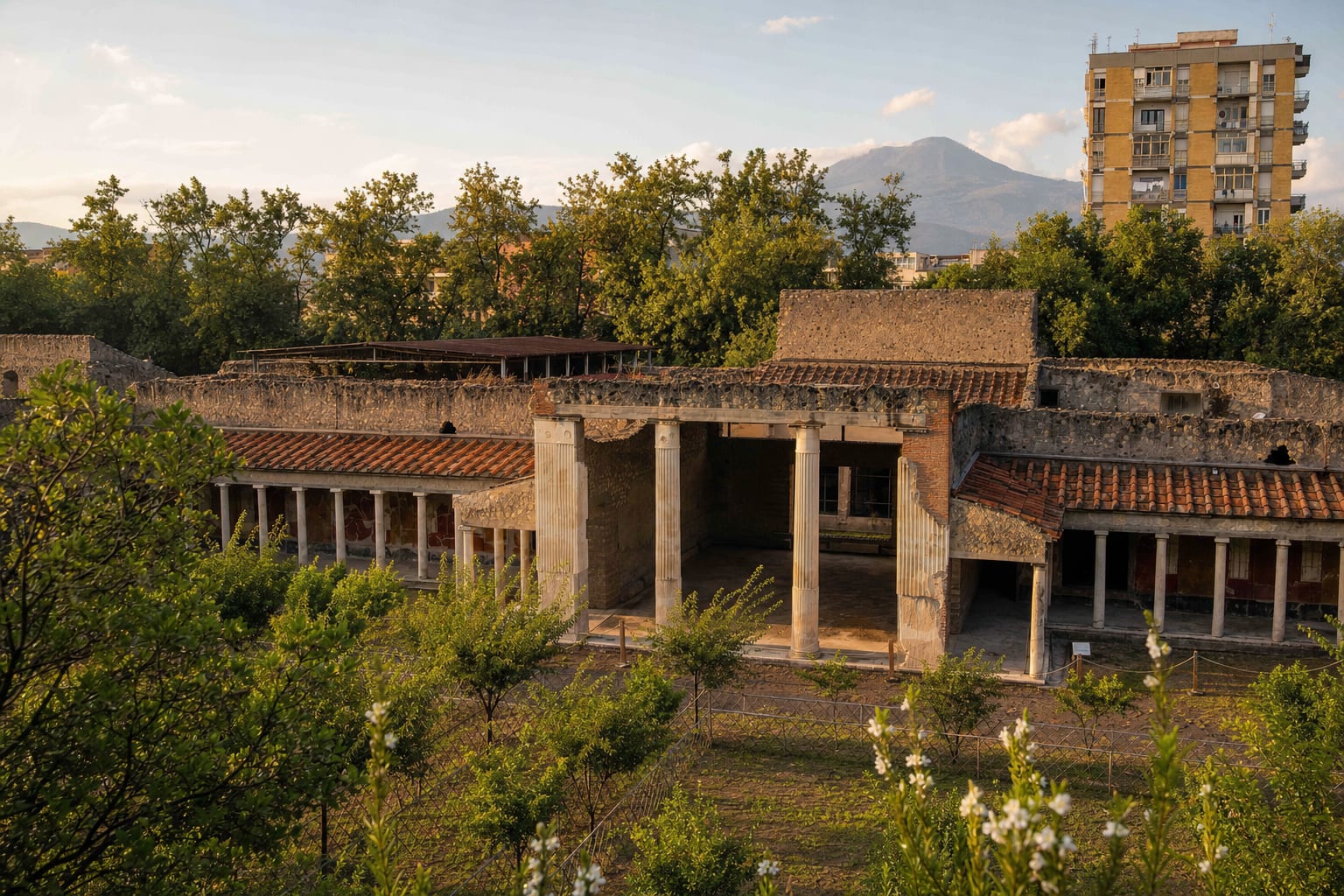
A few houses have become shorthand for the whole idea. The House of the Faun and the House of the Chaste Lovers are outstanding mansions, and the House of the Surgeon is a good example of the earlier atrium house. Just outside the walls, the Villa of the Mysteries takes its name from wall paintings in its triclinium that depict the initiation rites of the cult of Dionysus.2
How Pompeii was rediscovered
The city's second life as archaeology began under the Bourbons. Finds near Civita refocused excavation there on 23 March 1748; only in 1763 were the remains recognized as ancient Pompeii, after an earlier identification with Stabiae.3
The Regio V excavations, begun under the Great Pompeii Project, were part of a wider program to stabilize exposed excavation fronts, manage soil drainage and reduce hydrogeological pressure on ancient walls, including the study of spoil left by earlier campaigns.3
That spoil matters because nineteenth- and early-twentieth-century excavators discarded fragments they thought uninteresting. Today conservation, excavation and specialist analysis, from volcanology and palaeobotany to anthropology and archaeozoology, are combined, so what is excavated, what is unexcavated and what earlier methods altered are all part of the story.3
Part of a World Heritage property
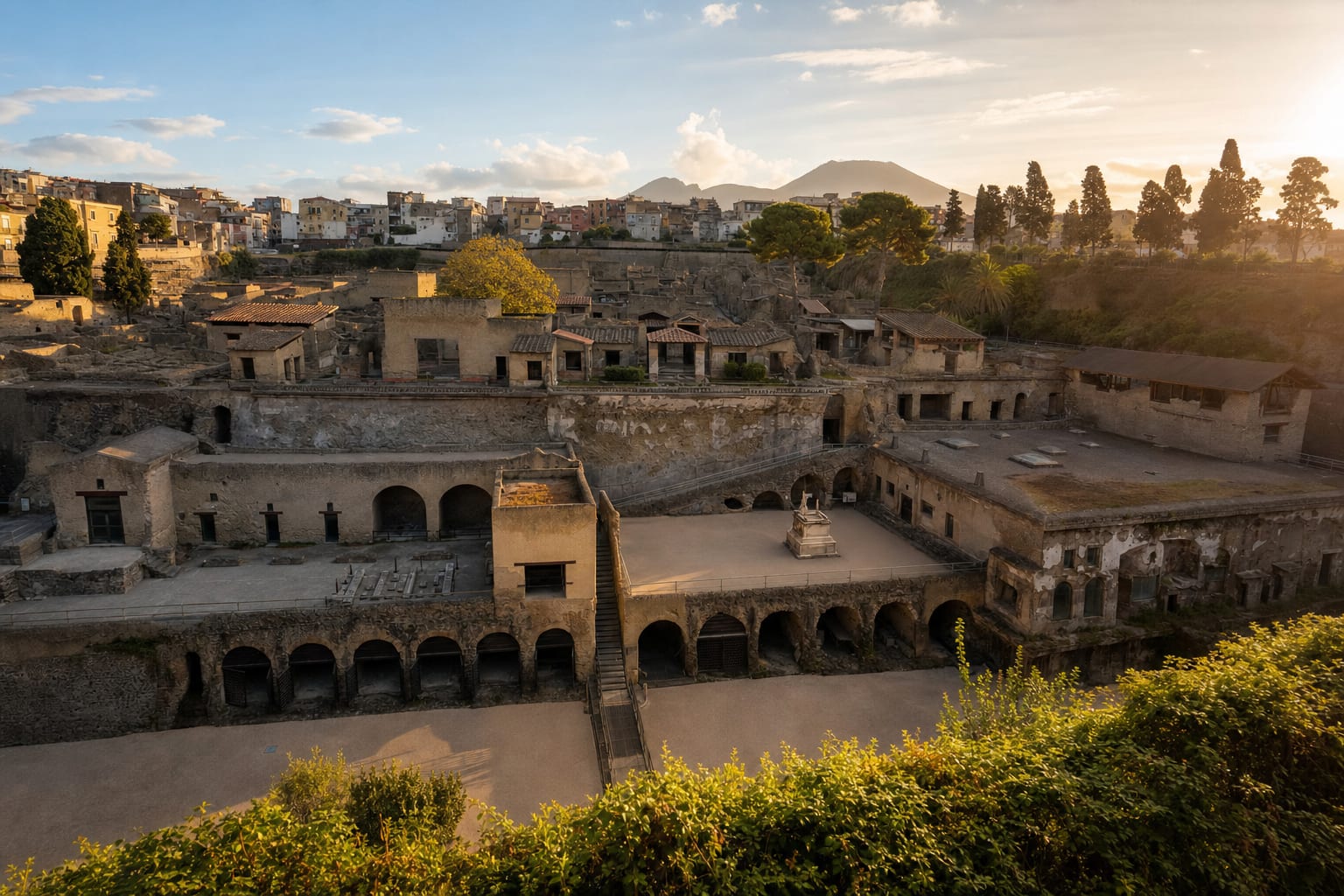
Pompeii forms part of the serial UNESCO World Heritage property Archaeological Areas of Pompei, Herculaneum and Torre Annunziata, inscribed in 1997 under criteria (iii), (iv) and (v). The property brings together the ancient towns of Pompeii and Herculaneum, the Villa of the Mysteries west of Pompeii, the Villa of the Papyri west of Herculaneum and the villas at Torre Annunziata.2
Its criteria celebrate exceptional evidence for Roman urban, architectural, decorative and daily life, and for urban and suburban settlement at the moment of the 79 CE eruption. Herculaneum and the Torre Annunziata villas are companions to Pompeii rather than parts of it.2
Reading the site
Begin by asking what kind of evidence is in front of you: street, public precinct, bath, theater, amphitheater, house, shop or garden. Then look at what sits beside it. The best visits come from noticing how neighboring functions fit together, not from racing between highlights.1
Treat casts, wall paintings, graffiti, water systems, objects and gardens as different kinds of evidence, each with its own history of recovery and display. The casts preserve skeletal remains and also traces of nineteenth- and twentieth-century archaeological practice, so they are not a transparent window onto a final human moment.2
Entry rules, routes and access conditions are set by the Park and change over time, so check the Park's official website before you go.2
Sources and citations (3)
- Ministero della CulturaParco archeologico di Pompei – Area archeologica di PompeiSite descriptionRead source
- UNESCO World Heritage CentreArchaeological Areas of Pompei, Herculaneum and Torre AnnunziataDescription (read via web.archive.org snapshot; unesco.org returns 403)Read source
- Pompeii Archaeological ParkNew excavations in Regio VExcavation historyRead source