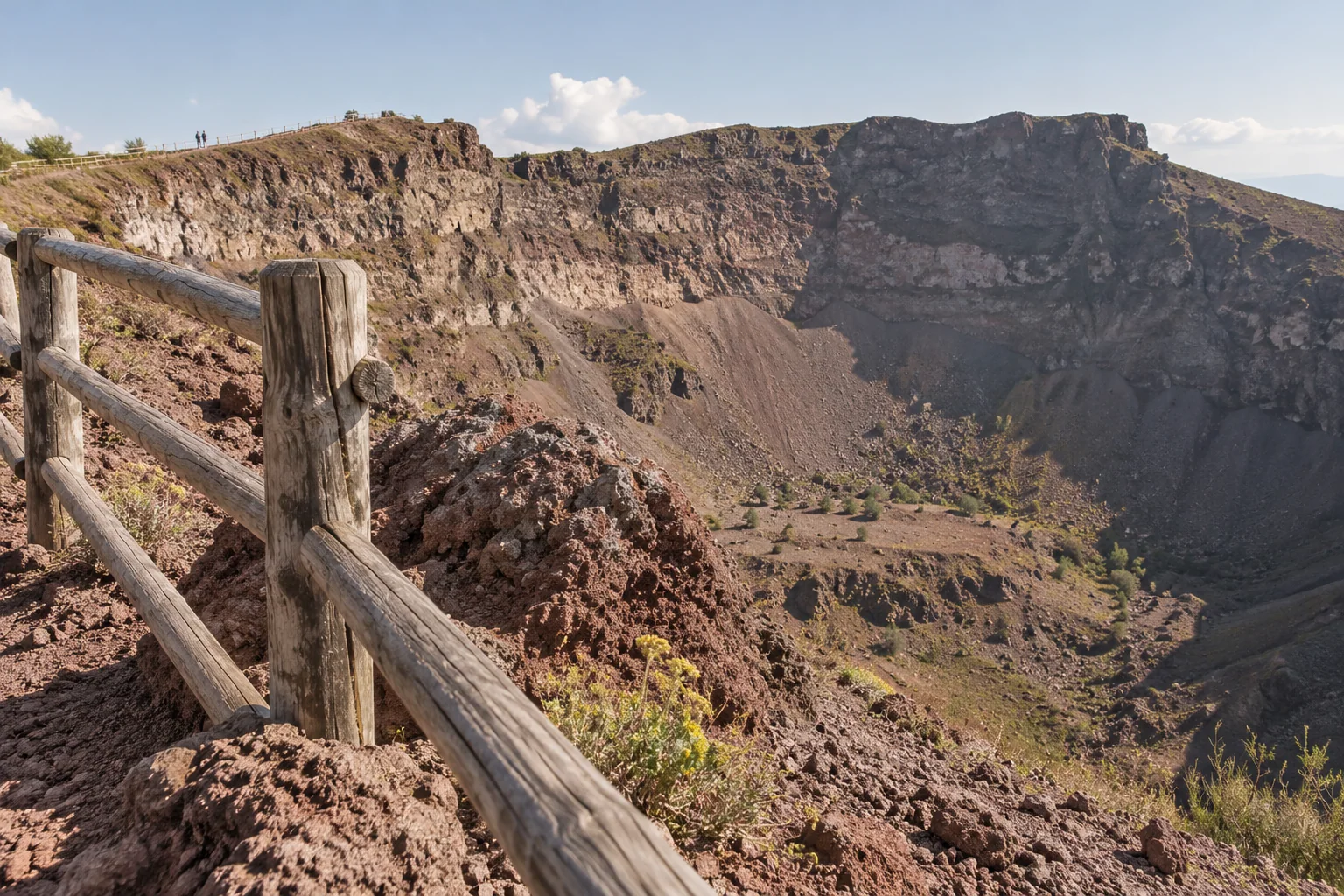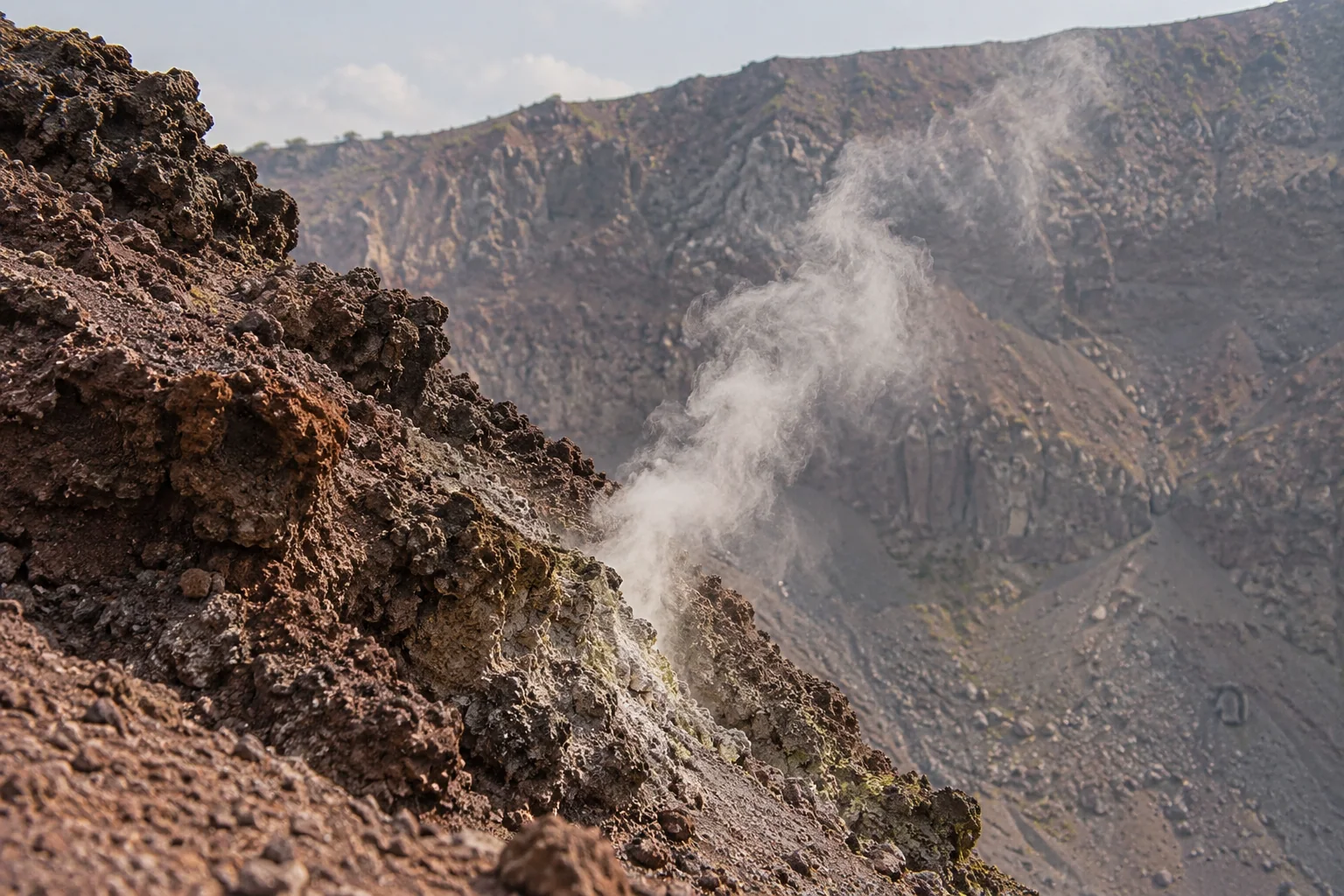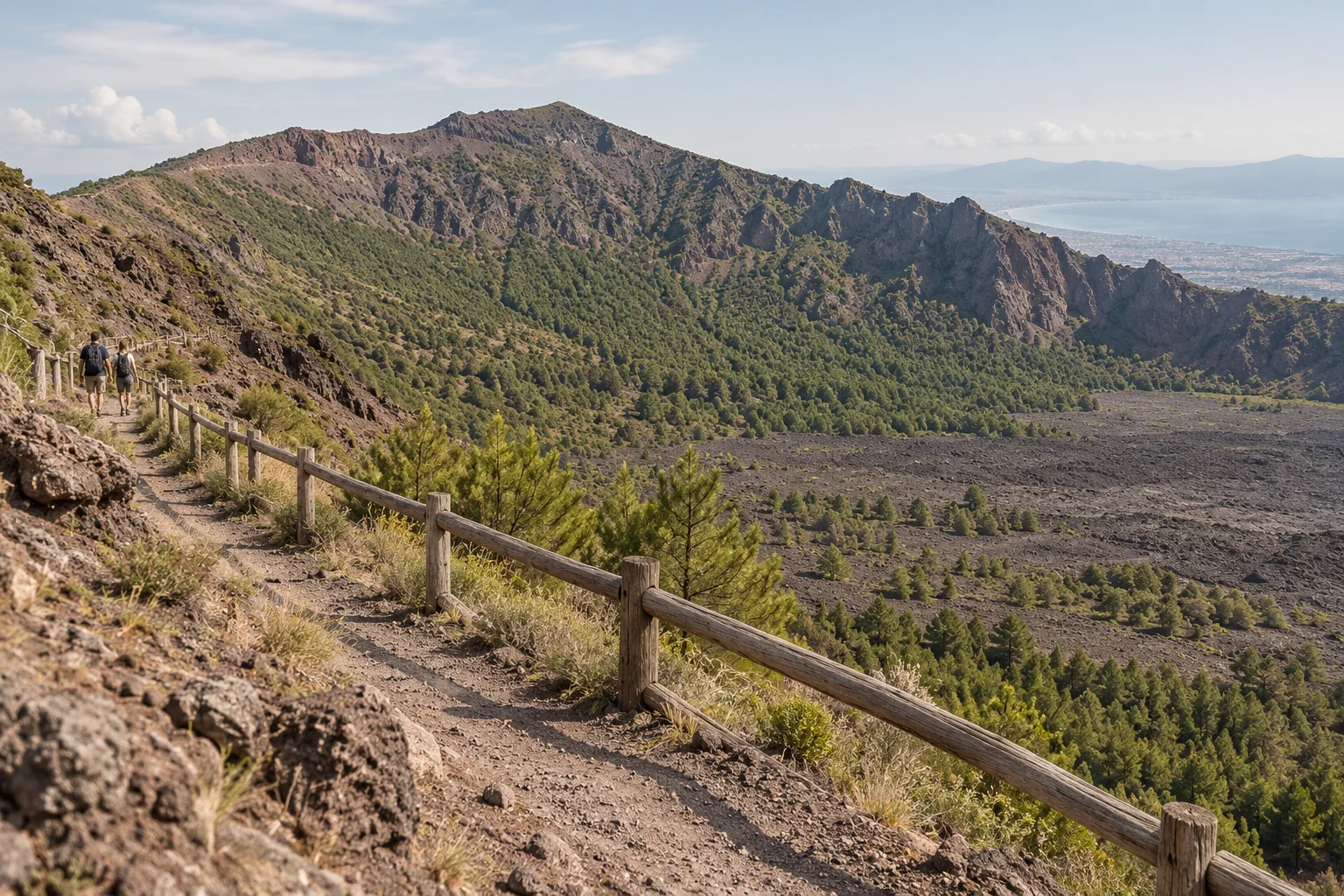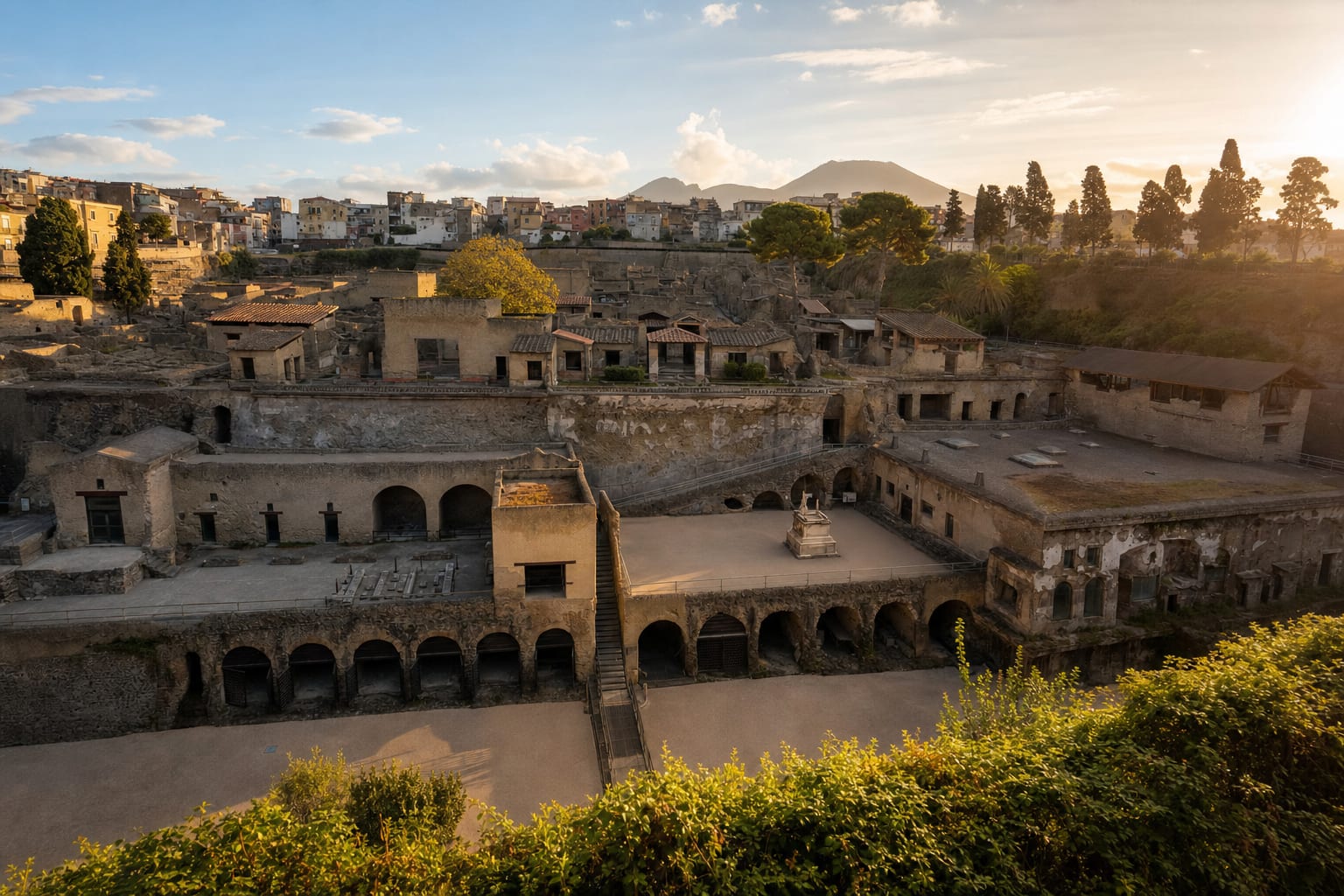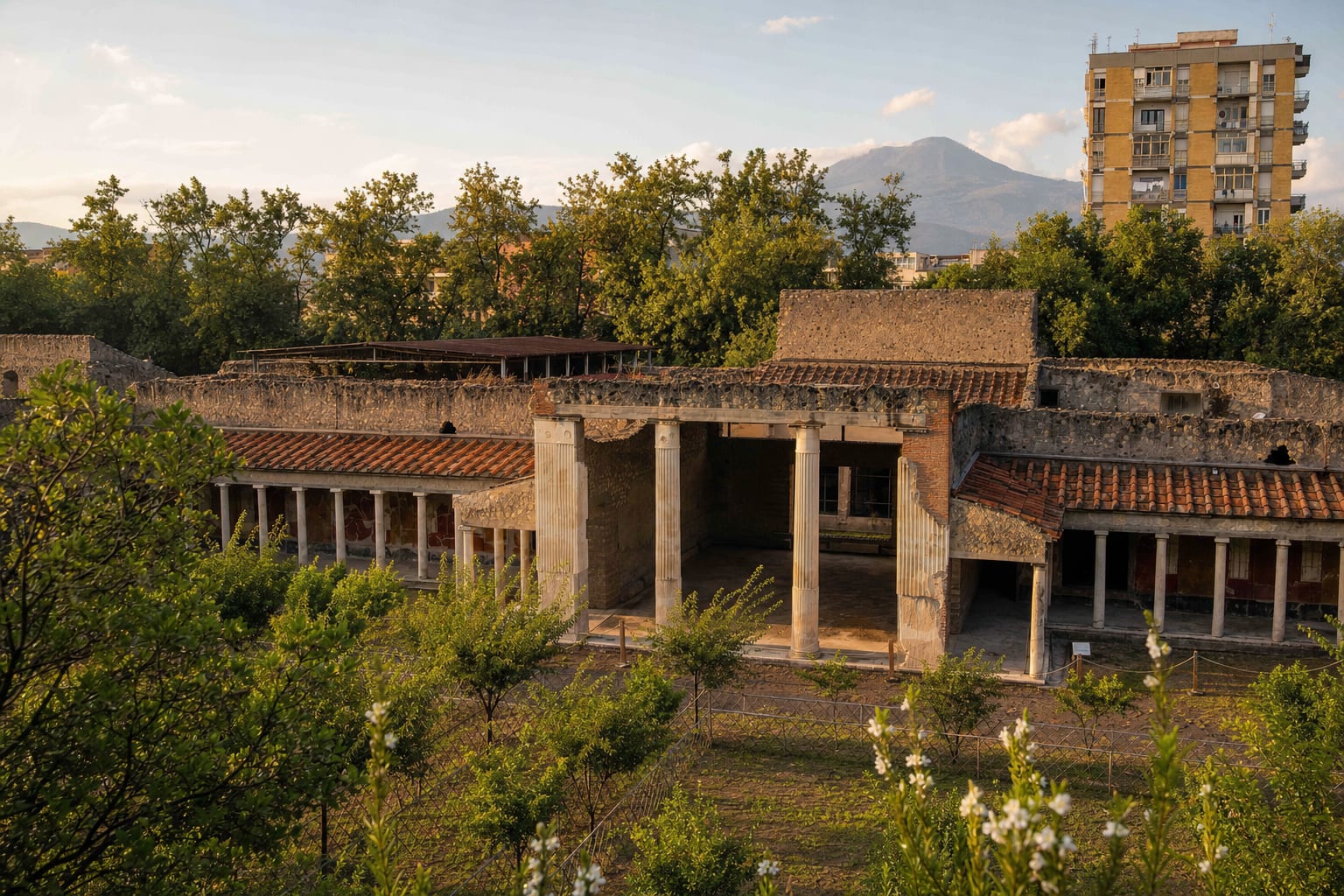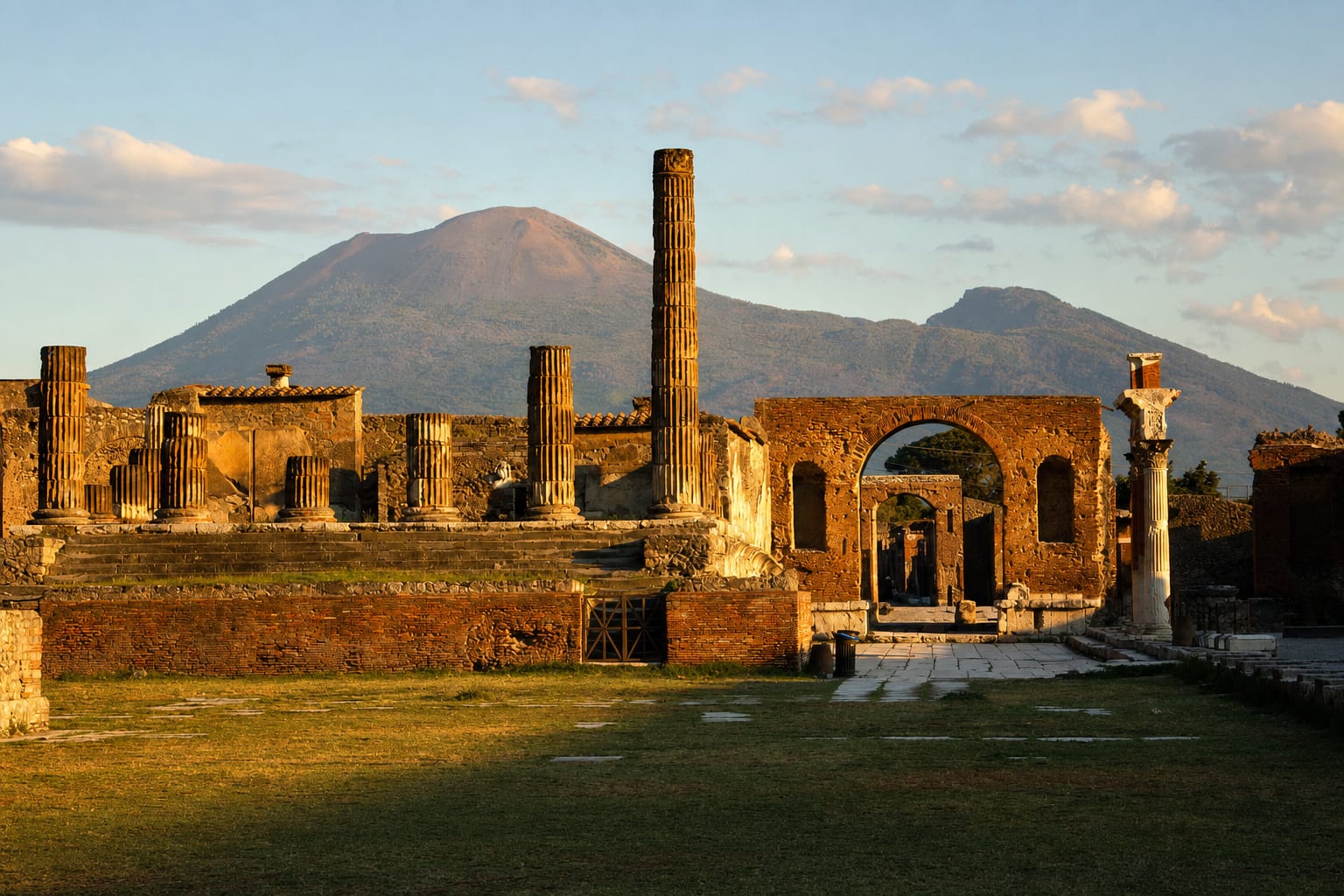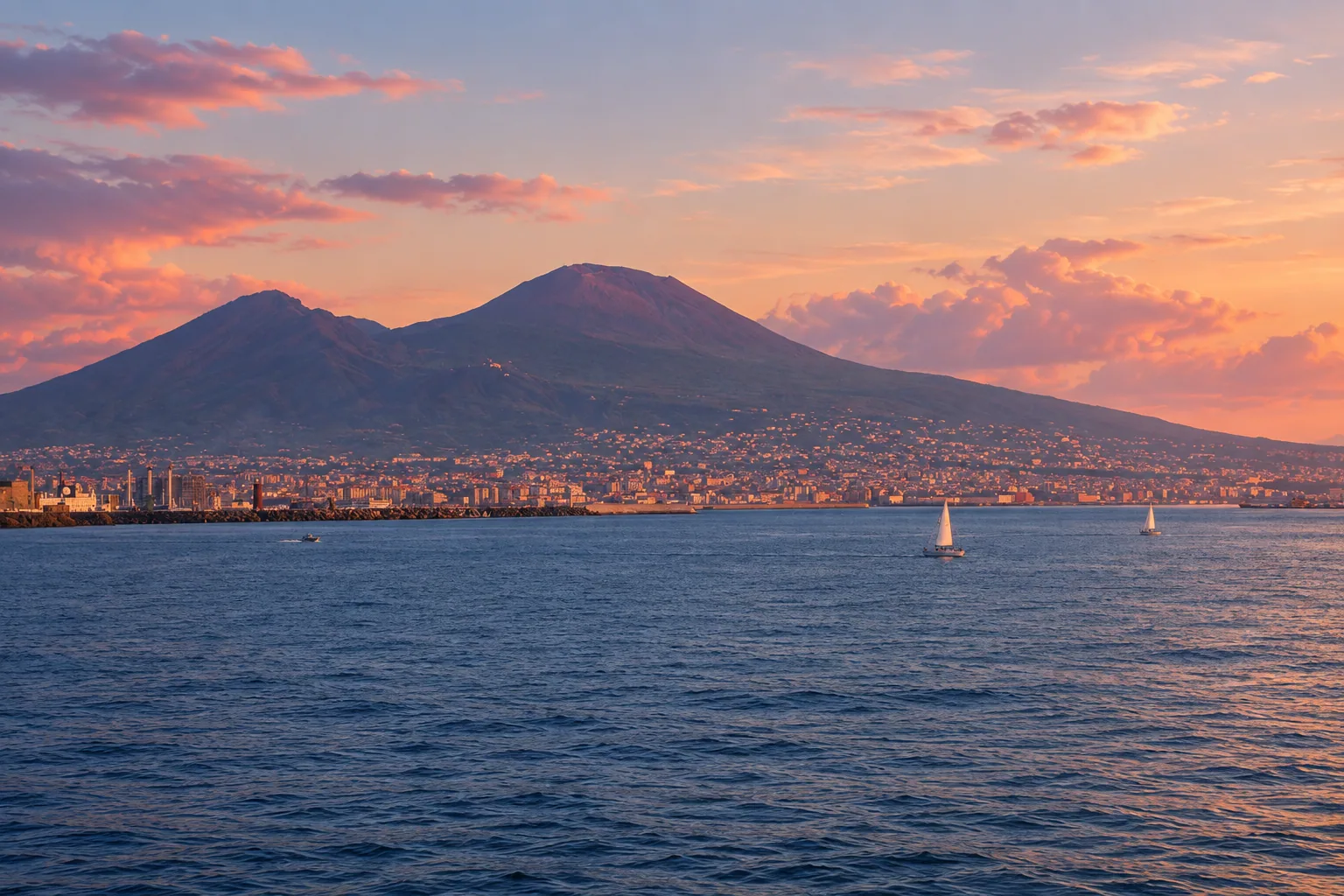
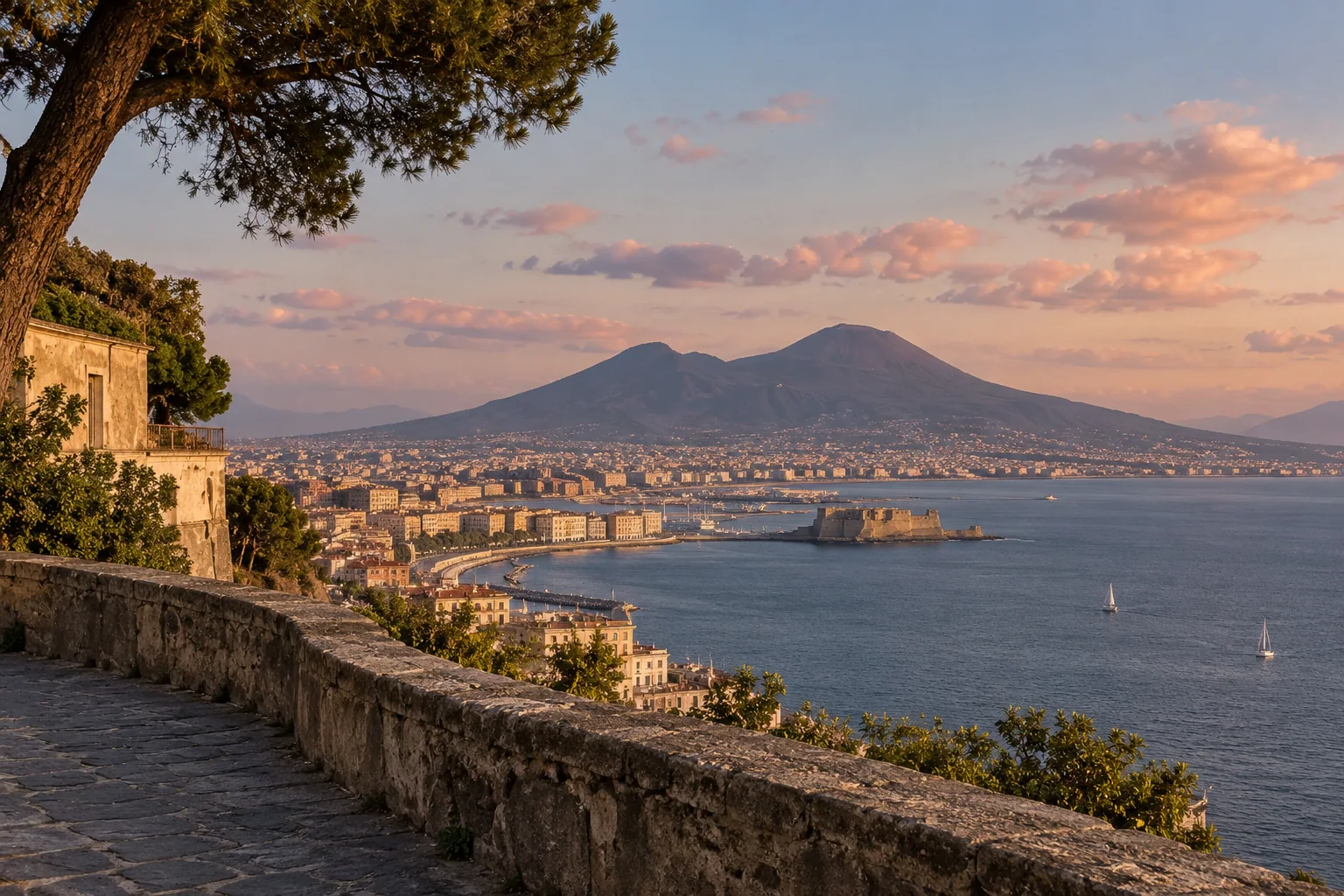
Vesuvius is the volcano that buried Pompeii and Herculaneum in 79 CE, and it still stands watch over the Bay of Naples from behind Torre del Greco. INGV, Italy's volcanological institute, classifies it as quiescent since its last eruption in 1944, with low seismic activity and fumaroles rather than open lava. The Vesuvius National Park manages trail number five, the Gran Cono, a steep walk of switchbacks up bare volcanic rock to the crater rim, where sulfur vents still smoke and the view stretches from Capri to the Sorrentine peninsula. Entry is ticketed and capped, with sales handled entirely online. It rewards an early start: the crowds and the heat both build fast once the tour buses arrive from Naples.
Its eruptions shaped the Vesuvian landscape and are central to regional volcanological research; the current monitored phase follows the 1944 eruption.
Sources and citations (3)
- INGV — Osservatorio VesuvianoThe 1944 eruption1944 eruption historyRead source
- INGV — Osservatorio VesuvianoVesuvio: monitoringMonitoring overviewRead source
- UNESCOSomma-Vesuvio and Miglio d’Oro Biosphere ReserveReserve overviewRead source