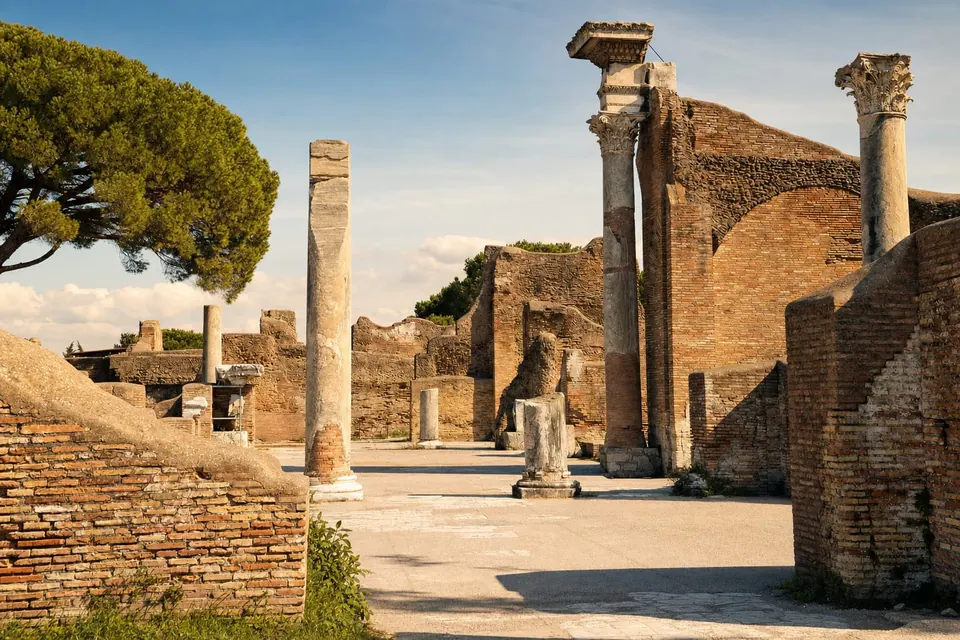
Ostia was Rome's harbor city, and when the Tiber moved and the sea retreated it was buried and forgotten rather than destroyed, so daily life survives street by street: the bakeries with their millstones, the thermopolium bar with its painted counter, the apartment blocks that look strikingly modern.
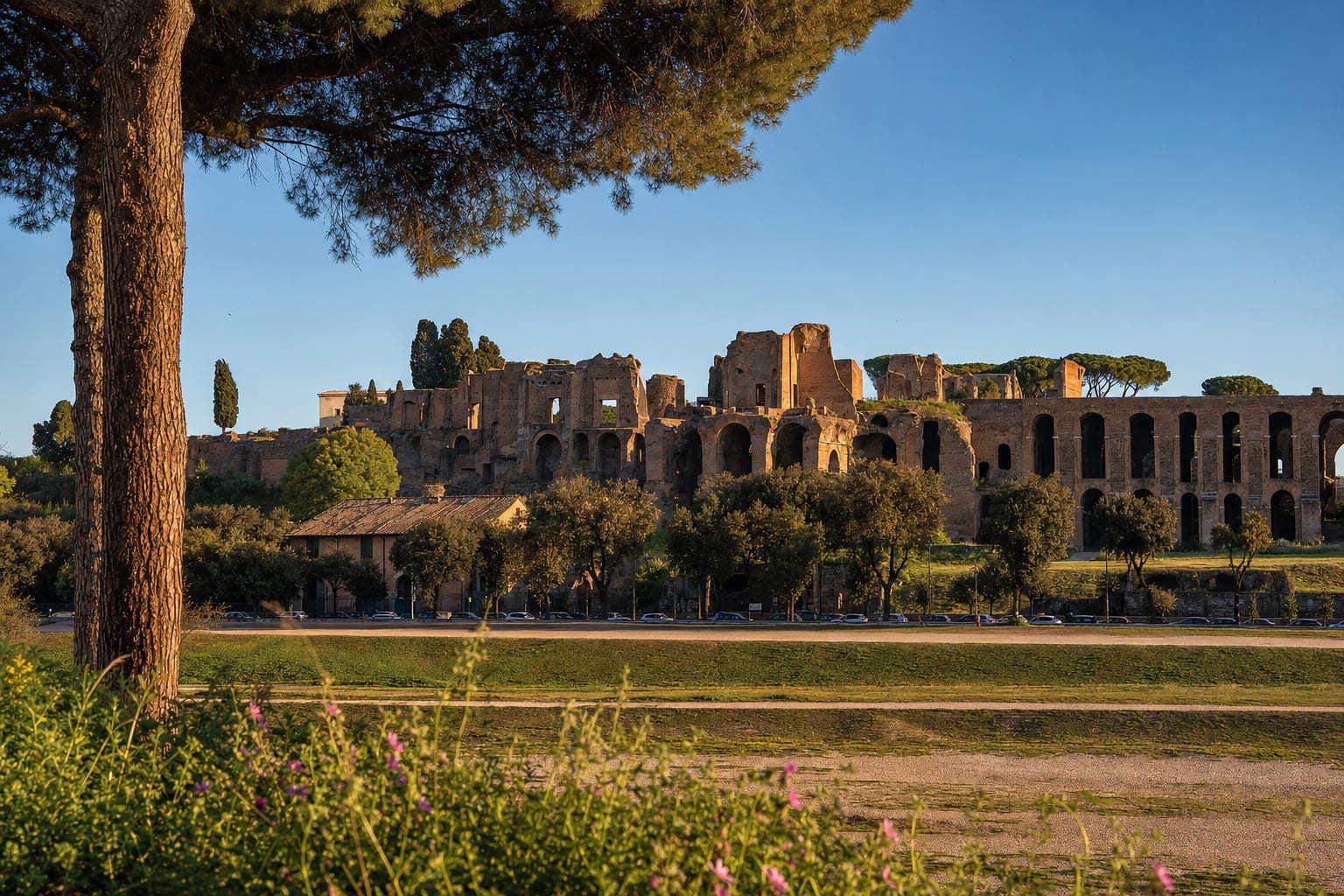
In the Piazzale delle Corporazioni, black-and-white mosaics outside the offices advertise the shipping firms that worked here, with elephants for Africa and grain measures for the corn trade. A theatre still seats a crowd, and the museum holds the sculpture found on site. Set among pines and wild grass, it is quieter than Pompeii and only a train ride from Rome.