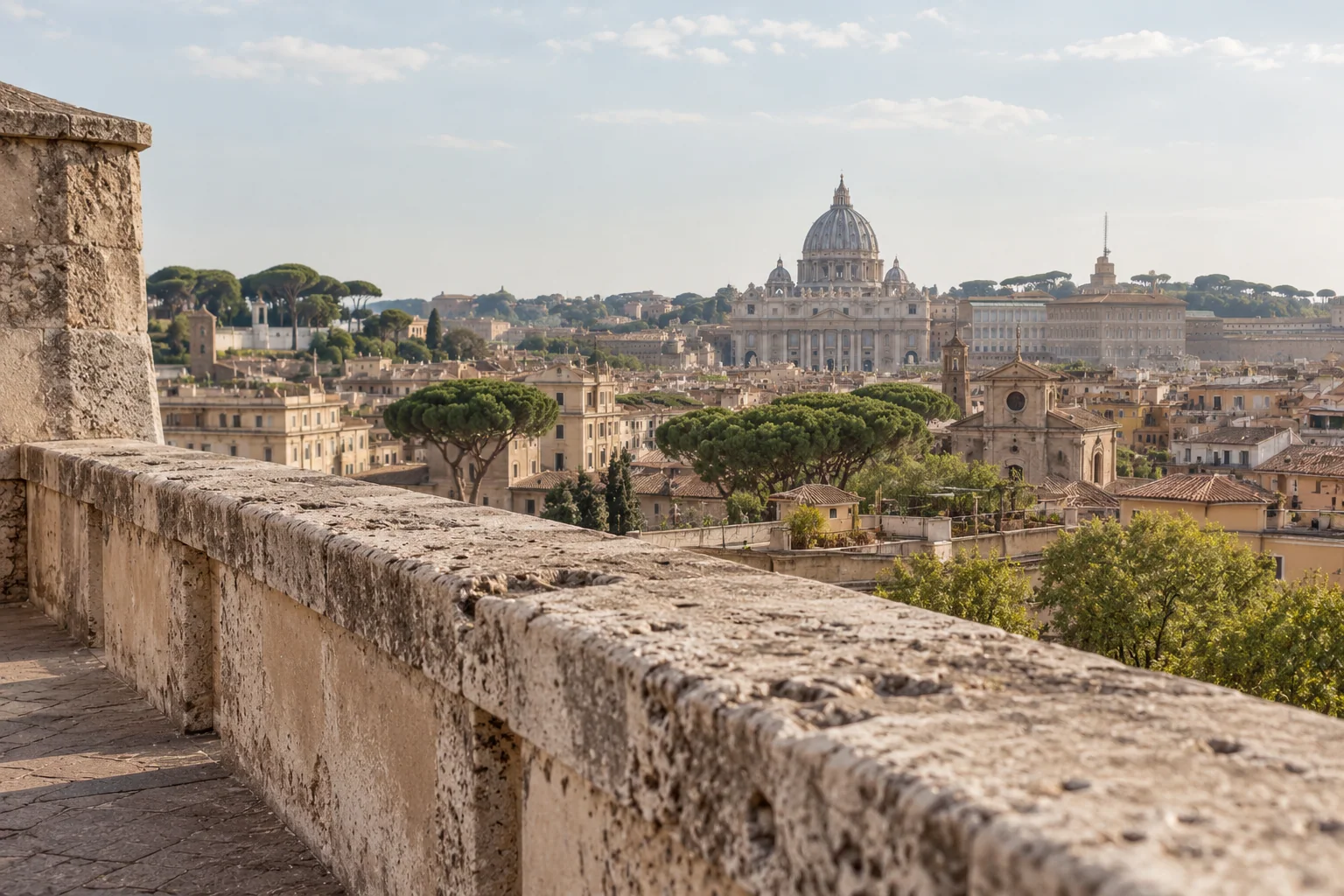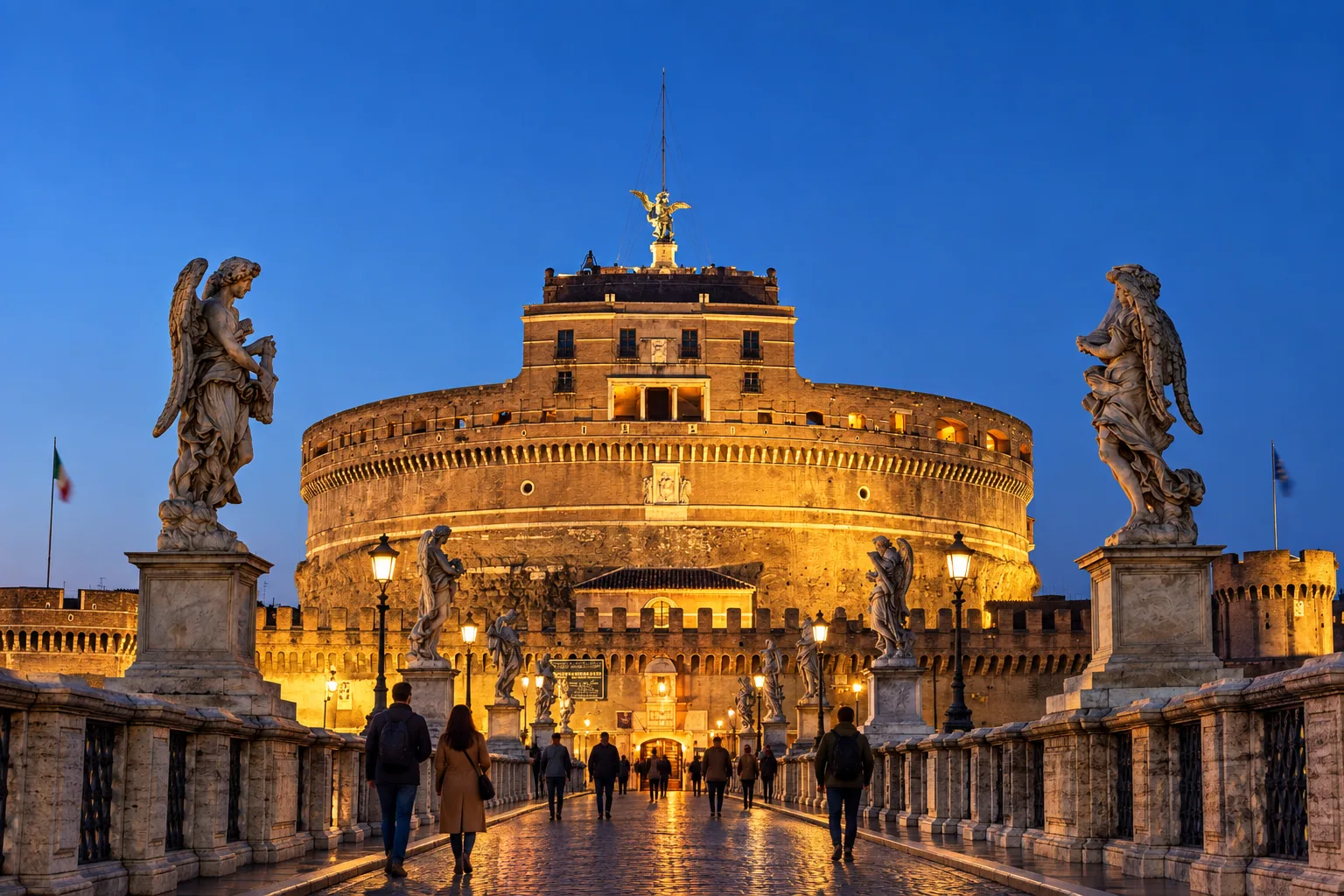
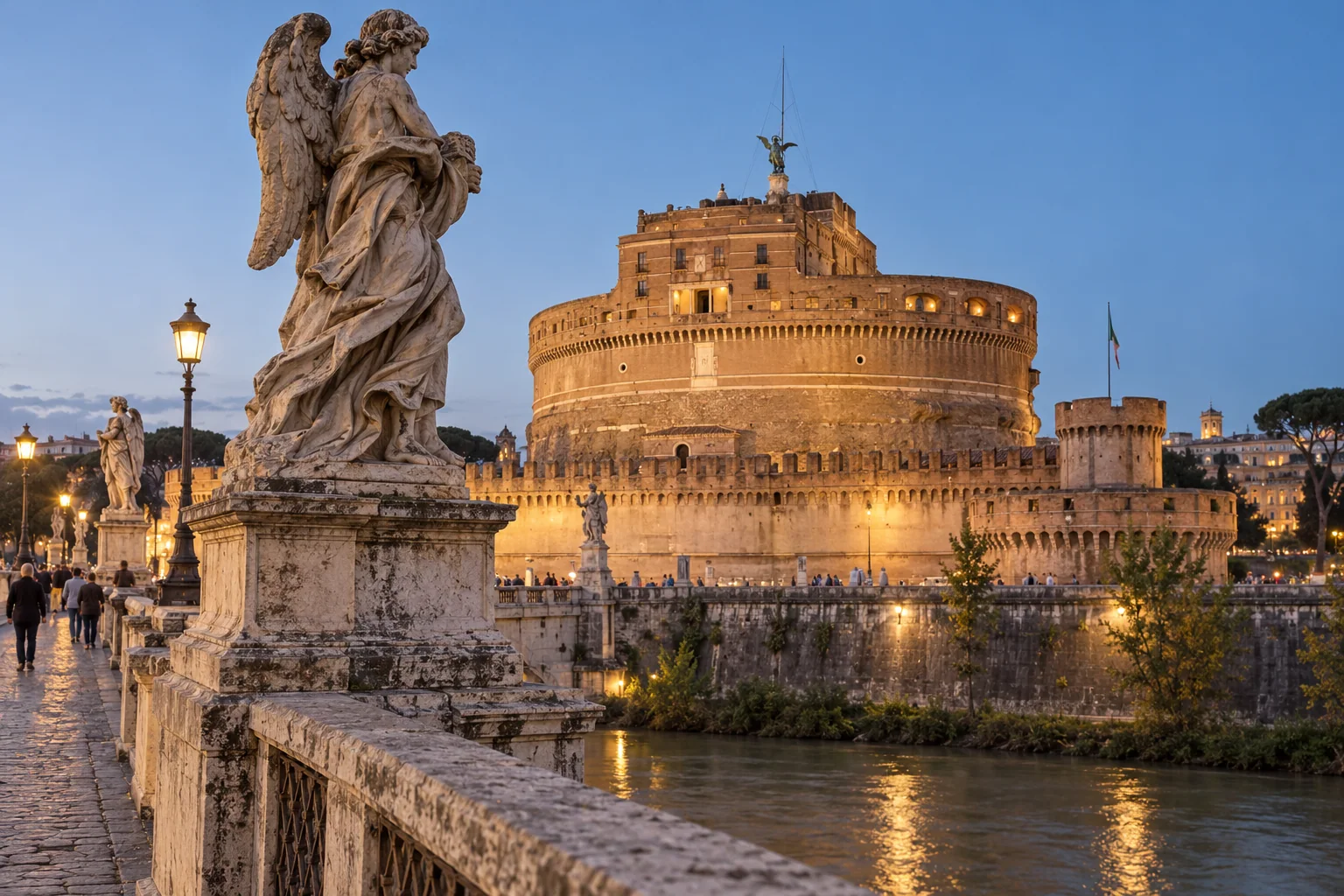
Hadrian built this drum-shaped mausoleum for himself and his family, laying the first stone in about 135 and seeing it finished, after his death, under his successor Antoninus Pius in 139.
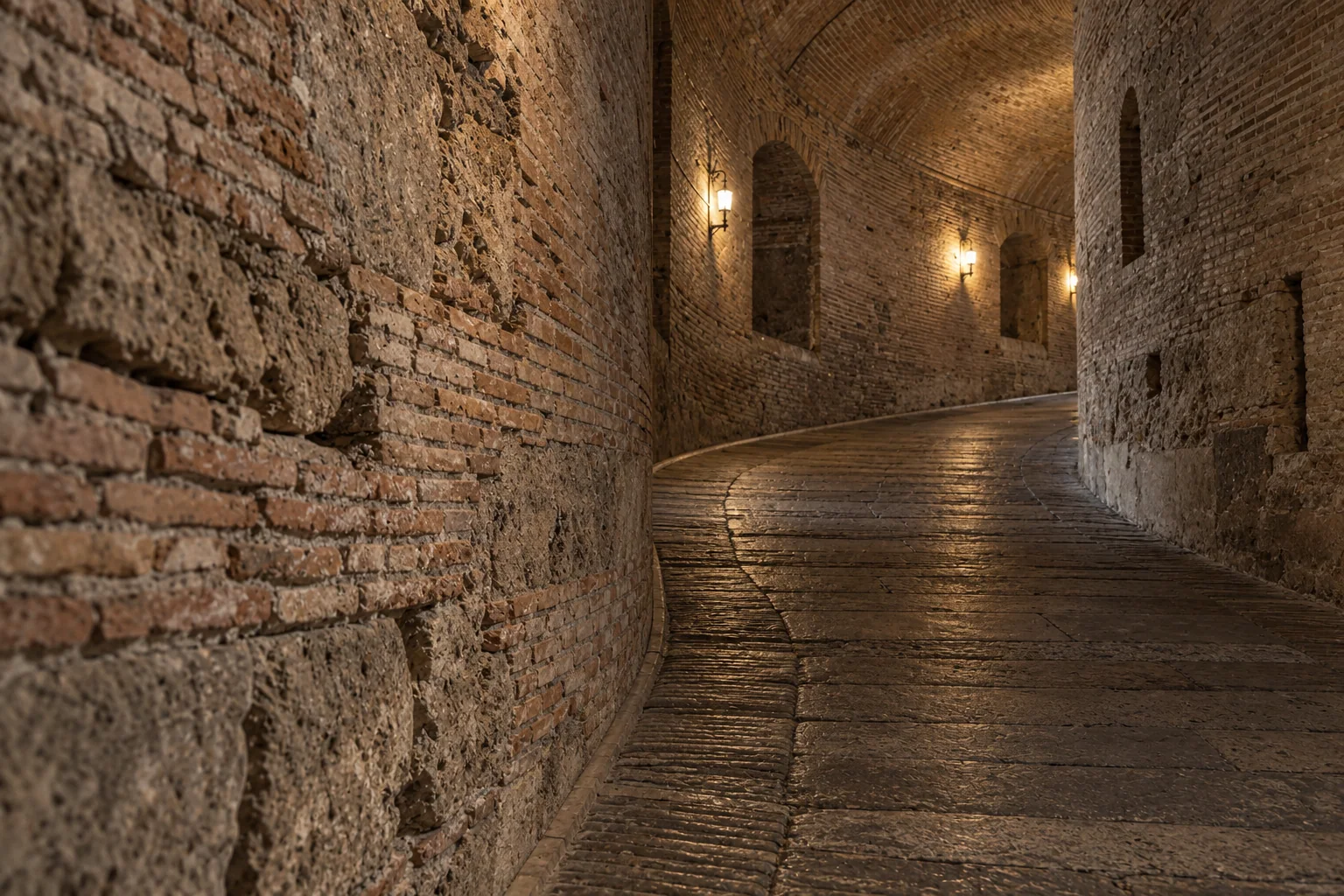
Rome’s popes later folded it into the city’s defenses and linked it to the Vatican by the Passetto di Borgo, a raised corridor Pope Clement VII used to escape the Sack of Rome in 1527. Its name comes from a medieval legend of Pope Gregory the Great seeing the Archangel Michael sheathe his sword above the ramparts to mark the end of a plague, which explains the bronze angel on the terrace. The castle was also a papal prison, holding Benvenuto Cellini and Giordano Bruno, and is now a national museum.
Sources and citations (3)
- Pantheon e Castel Sant'Angelo – Direzione Musei nazionali della città di RomaMuseo Nazionale di Castel Sant'AngeloThe MuseumRead source
- Ministero della CulturaIl Castello racconta la sua storiaHistory opening paragraphRead source
- UNESCO World Heritage CentreHistoric Centre of Rome, the Properties of the Holy See in that City Enjoying Extraterritorial Rights and San Paolo Fuori le MuraProperty scope and inscription metadataRead source