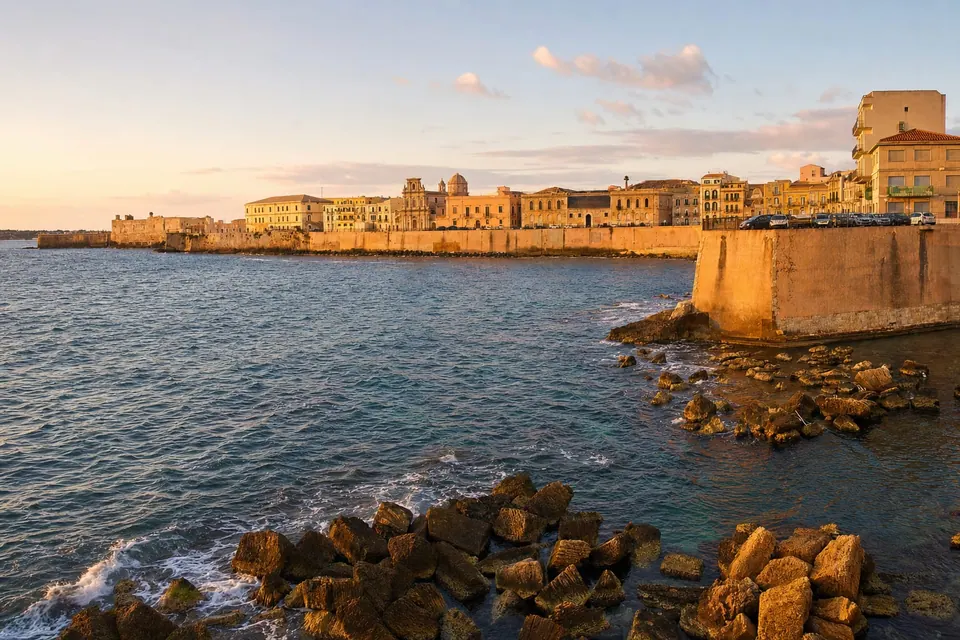
Greek settlers from Corinth founded Syracuse on this small island around 734 BC, drawn by the Fonte Aretusa, a freshwater spring that still bubbles up within yards of the sea exactly as the myth of the nymph Arethusa demanded.
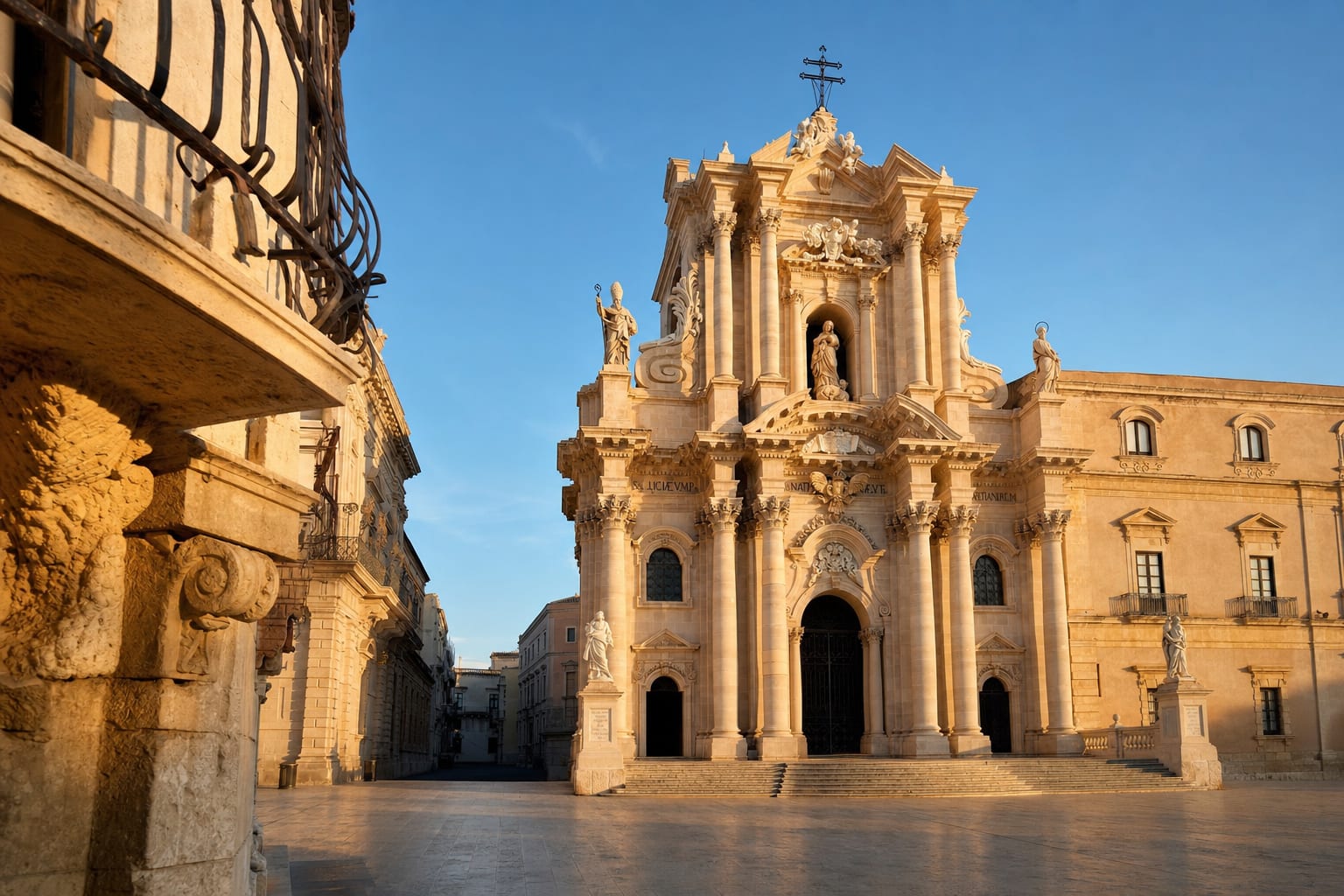
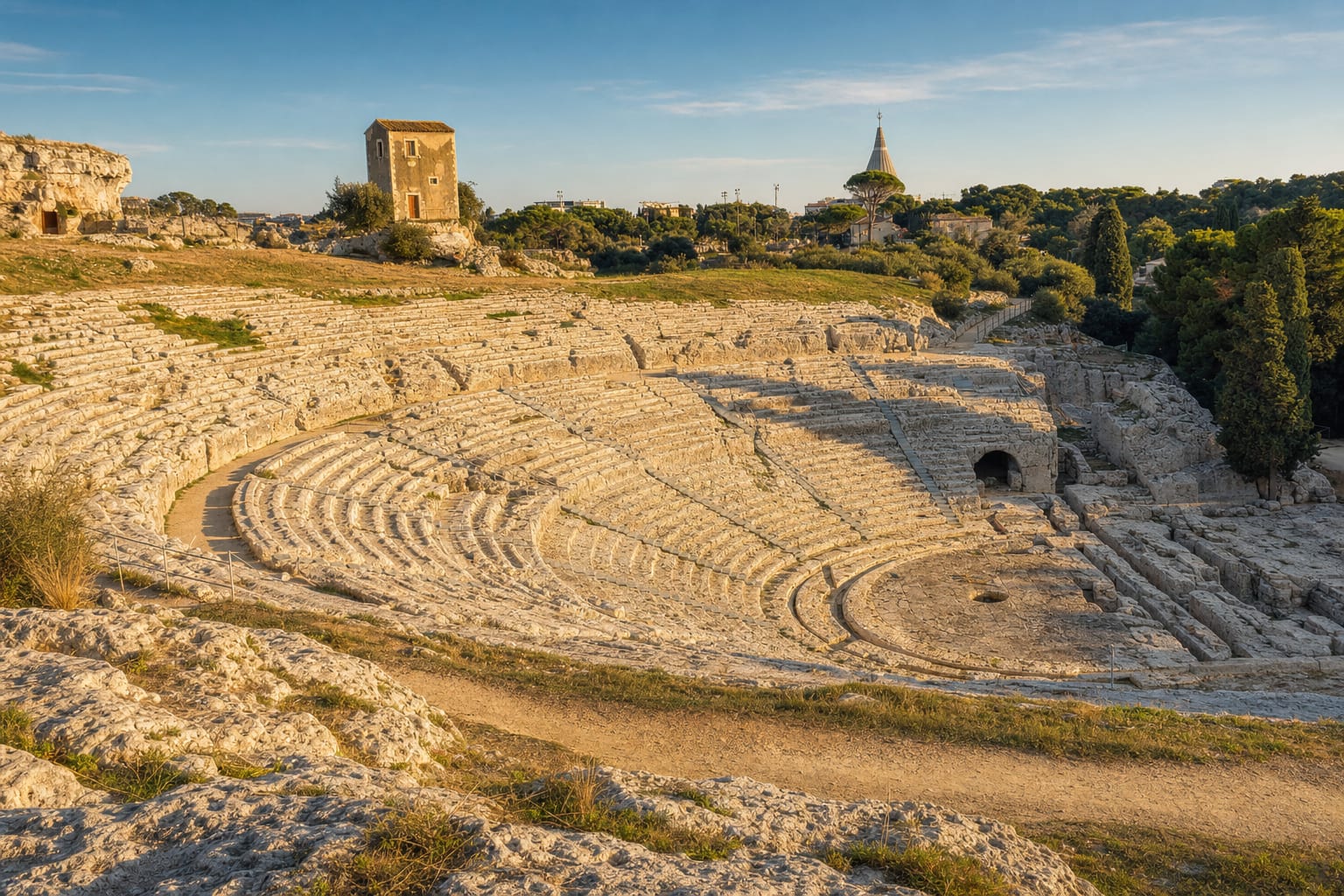
Twenty-seven centuries of building sit on top of each other in barely a kilometer of streets: the stubby Doric columns of the sixth-century BC Temple of Apollo, Sicily's oldest, rise beside the fish market, while the Baroque cathedral on Piazza Duomo hides fifth-century BC Athena temple columns inside its own walls. Ortigia and the rest of ancient Syracuse together form a UNESCO World Heritage Site listed in 2005. In the evening, when day-trippers leave for the mainland, the lungomare and the old Jewish quarter, the Giudecca, belong almost entirely to residents again.
Sources and citations (2)
- UNESCO World Heritage CentreSyracuse and the Rocky Necropolis of PantalicaProperty data and Brief synthesisRead source
- Comune di SiracusaSyracuse and the Rocky Necropolis of PantalicaOrtigia and Piazza Duomo archaeologyRead source