Skip to content

Syracuse Cathedral

The cathedral built inside a Greek temple of Athena, its Doric columns still holding up the walls.

  • Ortigia
  • Church
Where
Ortigia
Best for
Doric columns in the walls
Allow
30 minutes
Tickets
From €2
Checked September 2026

The Doric columns of Athena's temple, built in the fifth century BCE, still stand inside and along the walls of Syracuse Cathedral, doing structural work after some twenty-five centuries.

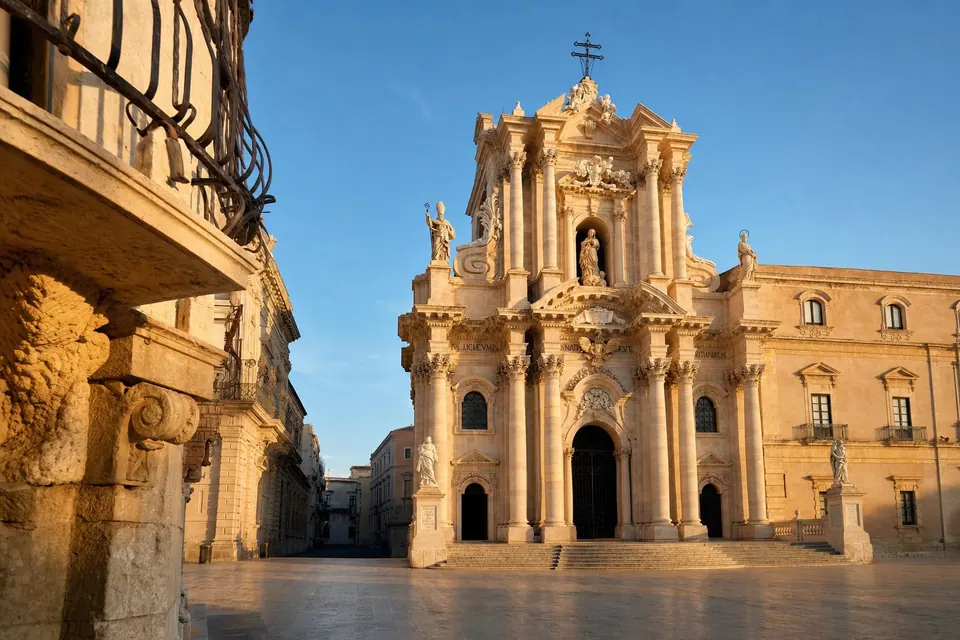
When the temple was turned into a church in the seventh century, the spaces between the columns were walled up and side aisles cut through; Arab, Norman and Renaissance layers followed, and the earthquake of 1693 brought the front down. The swaggering Baroque facade, with its statues, was raised afterward and is the newest layer of Sicily's longest-running sanctuary. Inside, look for Antonello Gagini's Madonna of the Snow, the silver statue of Saint Lucy, patron of Syracuse, and Vanvitelli's tabernacle chapel.

Sources and citations (2)
  1. Arcidiocesi di SiracusaChiesa CattedraleHistorical introductionRead source
  2. UNESCO World Heritage CentreSyracuse and the Rocky Necropolis of PantalicaProperty description and inscription dataRead source
Five things worth finding

If you see nothing else, see these.

  1. The Doric columns of Athena’s templeGreek, fifth century BCE

    Put a hand on a column that was holding up a Greek temple 2,500 years ago and is still holding up a church. The aisles are simply cut through the old temple walls.Inside the nave and along the walls

  2. Gagini’s Madonna of the SnowAntonello Gagini, sixteenth century

    A marble Madonna that stayed intact through the 1693 earthquake that brought down the old facade.Chapel at the end of the left aisle

  3. The silver statue of Saint LucyPietro Rizzo, 1599 to 1600

    Syracuse’s patron saint in repoussé silver, the most precious object in the cathedral and the center of the city’s December devotion.Chapel of Saint Lucy, right aisle

  4. Vanvitelli’s tabernacleLuigi Vanvitelli, with a marble altar frontal by Filippo Valle, 1762

    A wooden tabernacle by a great architect, set beside a marble frontal of the Last Supper.Chapel of the Sacrament, right aisle

  5. The Baroque facadeAndrea Palma, eighteenth century

    Statues and swagger in pale limestone, rebuilt after the quake and set against the old Greek columns inside, a whole history on one piazza.Piazza Duomo

Plan your visit

Everything you need before you go.

Tickets
From €2
Booking
No booking needed
Time needed
30 minutes
Best time
Early morning, before the day-trippers reach Ortigia
Getting there
The cathedral faces Piazza Duomo, at the heart of Ortigia island, reached on foot across the bridges from mainland Syracuse. Traffic on the island is restricted, so park on the mainland or in the paid lots at the island's entrance.
Accessibility
Described as step-free, with no architectural barriers for visitors in wheelchairs.

A combined ticket also covers the Secreta Palatii (Sveva Chapel, Alagoniana Library and Bishop's Prison); a virtual-reality experience is sold as an add-on. The cathedral is a working church: dress modestly (shoulders and knees covered) and expect visits to pause during services. Last updated September 2026. Prices change, so check the official site before you go.

Walk the outside of the north wall before you go in: on the side street you can see the Doric columns exactly as the Greeks left them, half swallowed into the later masonry.

Get directionsGoogle MapsApple Maps

Good to know

How long should you spend at Syracuse Cathedral?

About 30 minutes is enough: find the Doric columns in the nave, walk the side chapels for Saint Lucy and the Madonna of the Snow, then step back out to the piazza.

Is Syracuse Cathedral worth visiting?

Yes, it is one of the most layered buildings in Sicily: a Greek temple, a Byzantine church, Norman and Baroque additions in one space. It is also on Ortigia’s most beautiful square.

Do you need to book Syracuse Cathedral?

No. You buy your entry at the door, and the only real planning is to avoid Mass times and go early before day-trippers reach Ortigia.

A letter from Italy, once a month.

The places, tables and makers we found worth your time. One email, no noise.

One letter a month. Unsubscribe at any time. We never share your address.

Help us get it right

What is it about?