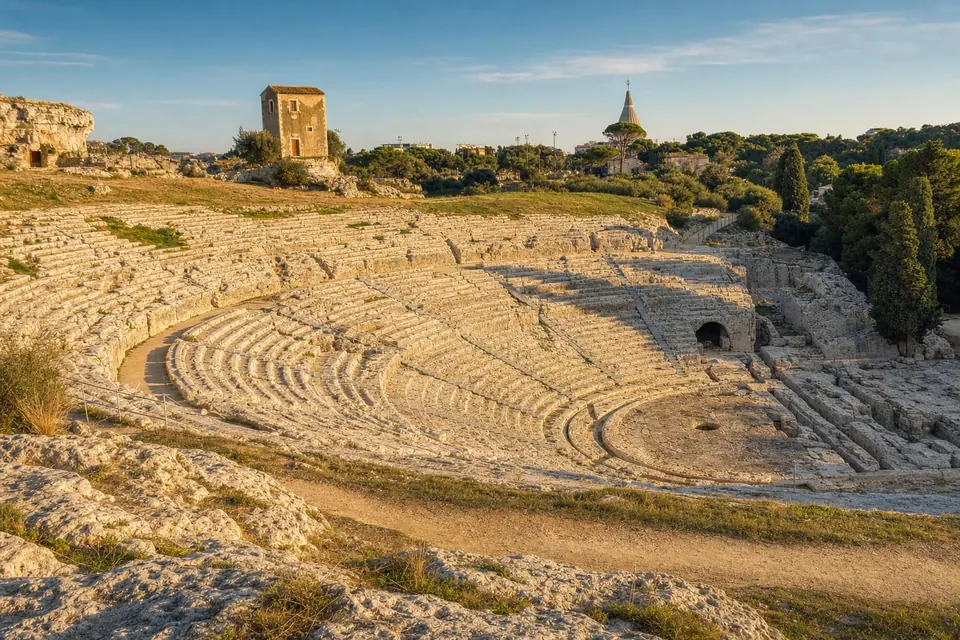
Syracuse cut its theatre straight into the limestone of the Temenite hill in the fifth century BC, then enlarged it under Hiero II two centuries later to seat some fifteen thousand people.
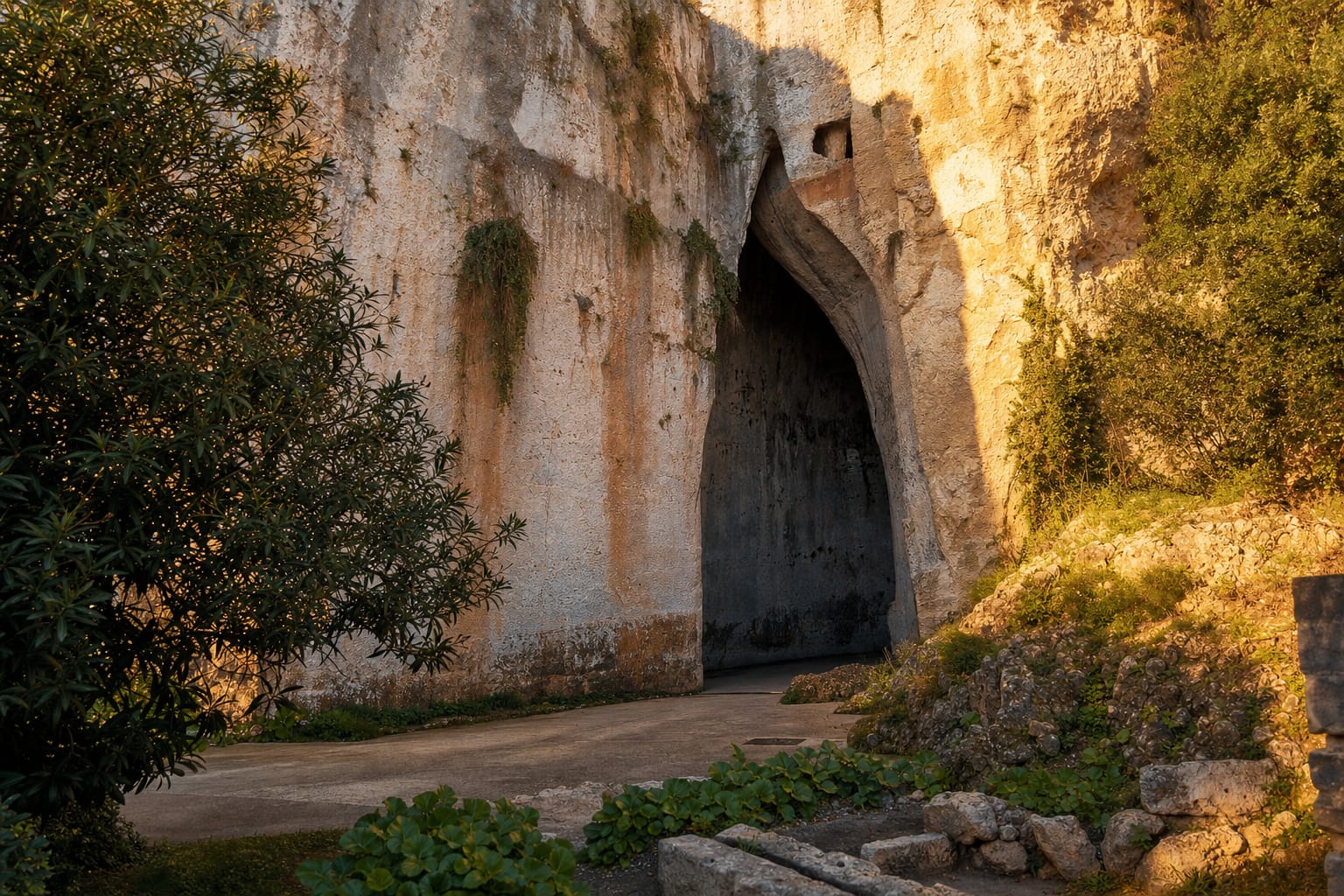
Aeschylus gave the world premiere of his Women of Etna here in 470 BC, honoring the new city of Etna, and came back to restage The Persians, first performed in Athens two years earlier. The rock-cut cavea still does what its builders intended: sit high in the upper rows and a voice from the stage carries without help. Every May and June the INDA Foundation revives that acoustic trick with a season of Greek tragedy performed on the same stone terraces, actors working the same sightlines Syracusans chose twenty-five centuries ago. The nearby Latomie quarries, cut for building stone, later held thousands of Athenian prisoners after the failed siege of 413 BC.
Sources and citations (2)
- UNESCO World Heritage CentreSyracuse and the Rocky Necropolis of PantalicaProperty data and Brief synthesisRead source
- Parco archeologico di Siracusa Eloro, Villa del Tellaro e AkraiParco archeologico di SiracusaGreek Theatre descriptionRead source