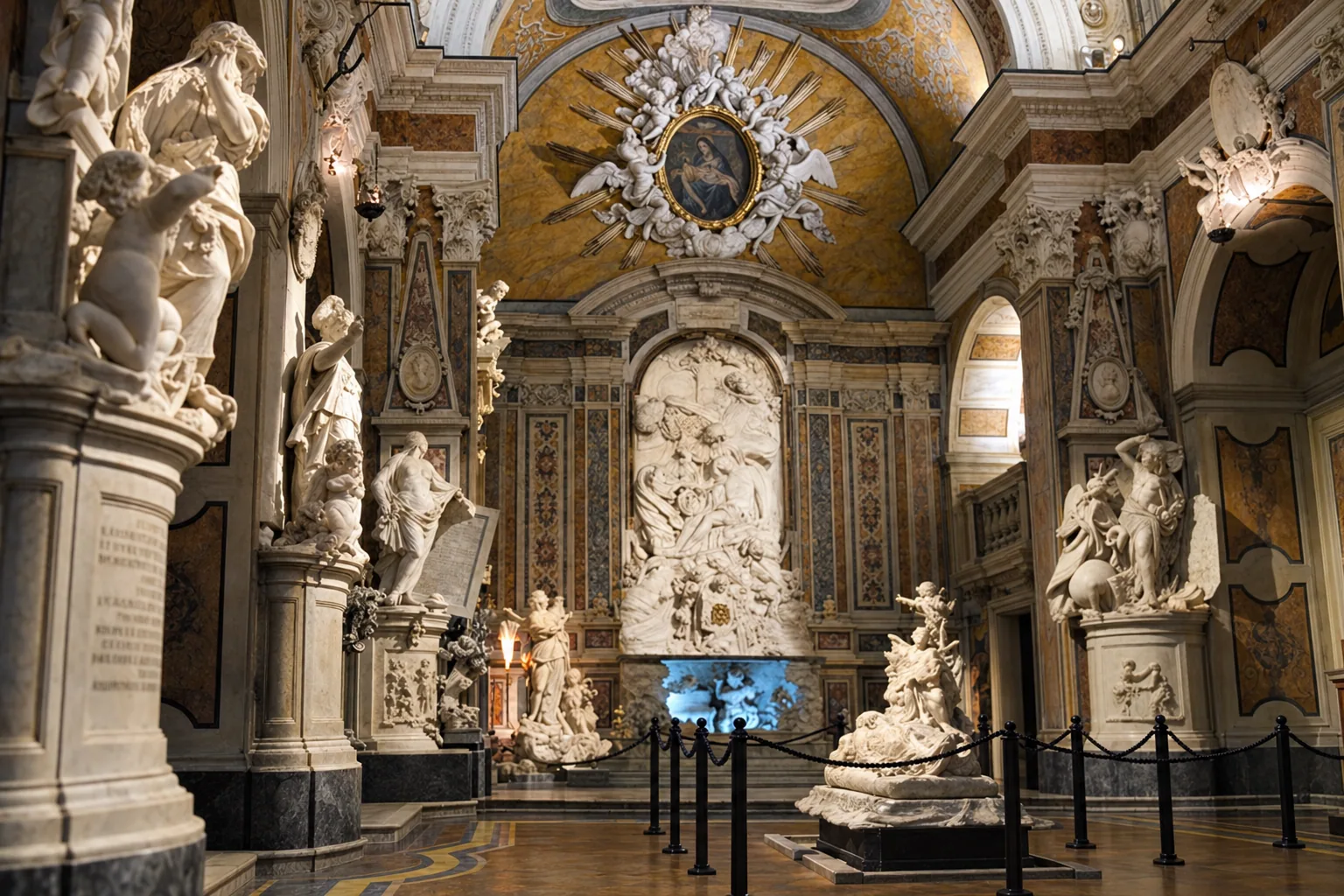
Sansevero Chapel began in 1593 as the di Sangro family's private burial chapel, but Raimondo di Sangro, the eccentric seventh prince and a real scientist as well as a Freemason, rebuilt it in the 1740s into a single artistic and philosophical program completed by 1766. Giuseppe Sanmartino's Veiled Christ of 1753 anchors the room, a marble figure draped in a marble shroud so thin the body seems to breathe beneath it, carved entirely from one block despite centuries of rumors that Raimondo turned real cloth to stone by alchemy. Antonio Corradini's Modesty and Francesco Queirolo's Disillusion flank him in equally virtuoso marble, while the underground Cavea displays Giuseppe Salerno's so called Anatomical Machines, two skeletons with veins rendered in wax and wire, another Sansevero legend historians have since debunked.
A di Sangro burial chapel and coherent eighteenth-century patronage programme whose popular myths require careful correction.
Sources and citations (5)
- Museo Cappella SanseveroHistory of the ChapelHistoryRead source
- Museo Cappella SanseveroVeiled ChristStatueRead source
- Museo Cappella SanseveroThe legend of the veilLegend correctionRead source
- Museo Cappella SanseveroAnatomical MachinesMachinesRead source
- UNESCO World Heritage CentreHistoric Centre of NaplesProperty recordRead source