Skip to content

Mount Etna

Europe's great active volcano, reached by cable car from Rifugio Sapienza above Catania's vineyards.

  • Catania
  • Nature
Where
Catania
Best for
Europe's tallest active volcano
Allow
4 hours
Best time
Morning, for clear skies
Tickets
Free

Etna rises more than 3,300 meters over eastern Sicily and rarely rests through a full season; UNESCO lists it for the sheer diversity and continuity of volcanic activity documented for at least half a million years.

Most visits begin at Rifugio Sapienza on the south side, where the Funivia dell'Etna cable car climbs through fields of black lava to about 2,500 meters. From there, guides lead groups on foot or in modified four wheel drive Unimogs toward the still smoking Barbagallo craters formed in 2002. Lower down, the same volcanic soil that occasionally threatens villages feeds some of Sicily's most distinctive vineyards, where Nerello Mascalese roots dig into mineral rich ash. Craters, trails and access all shift with the mountain's mood, so it is worth checking conditions the morning you go.
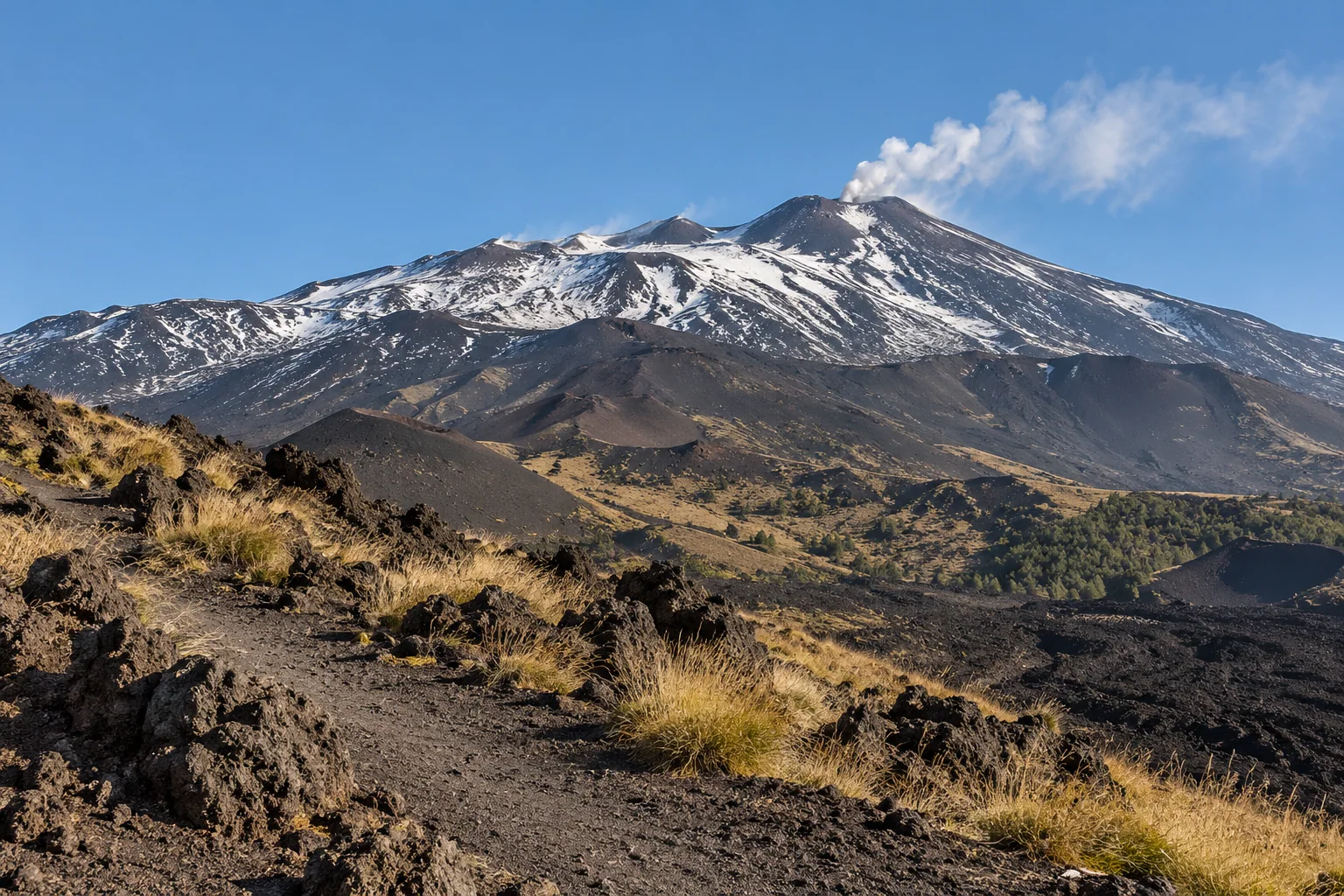
Mount Etna’s snow-streaked summit above black lava fields and tufts of dry grass
The summit rises over fields of black lava, with a thin plume of steam drifting from the craters.
Sources and citations (2)
  1. UNESCO World Heritage CentreMount EtnaProperty data and Outstanding Universal ValueRead source
  2. UNESCO World Heritage CentreMount Etna – map of inscribed propertyInscribed-property mapRead source
Look closer

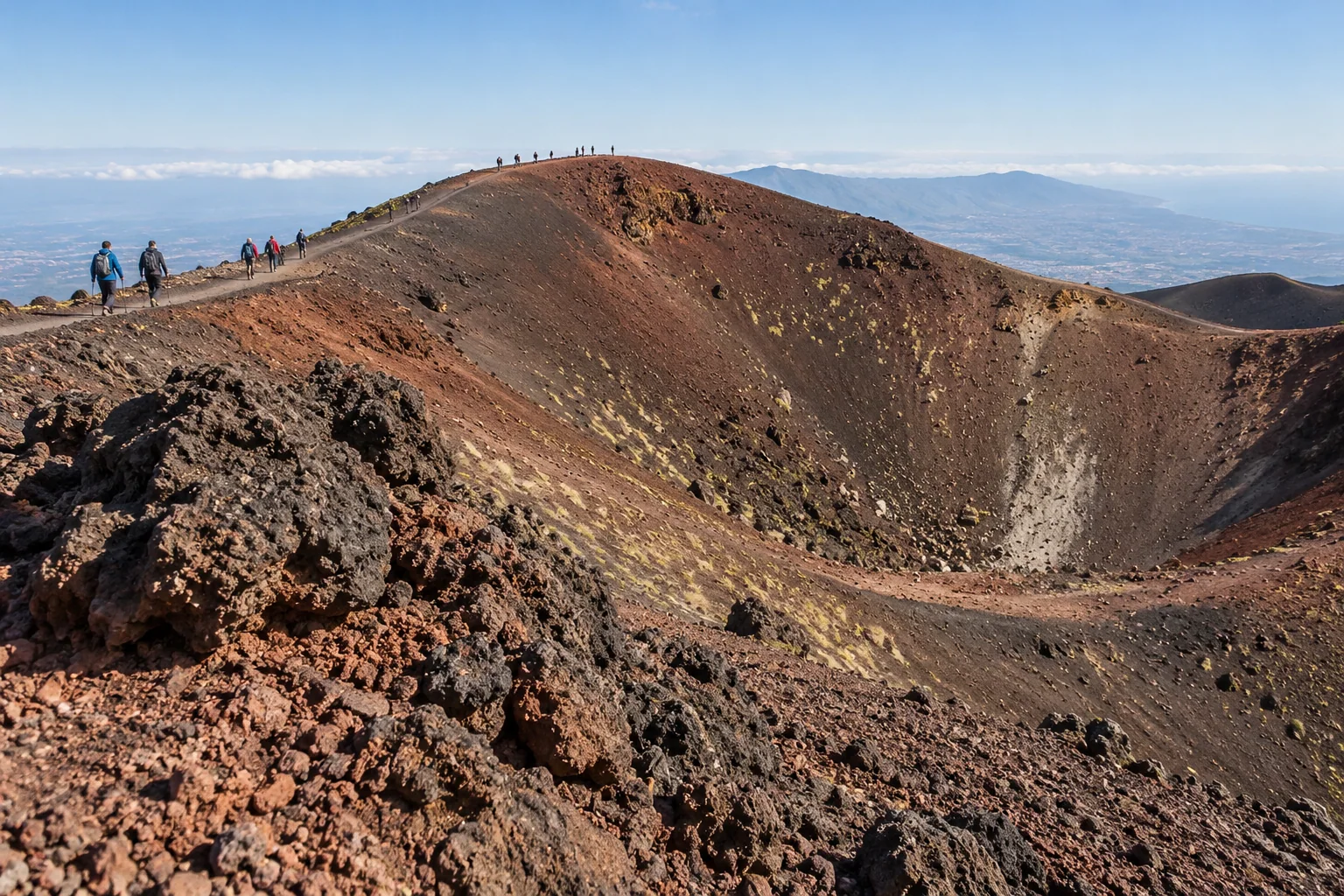
Hikers walking the rim of an extinct cinder cone on Etna
The Silvestri cratersTwo extinct cones just above Rifugio Sapienza, an easy loop over rust-red and black cinder without a guide.
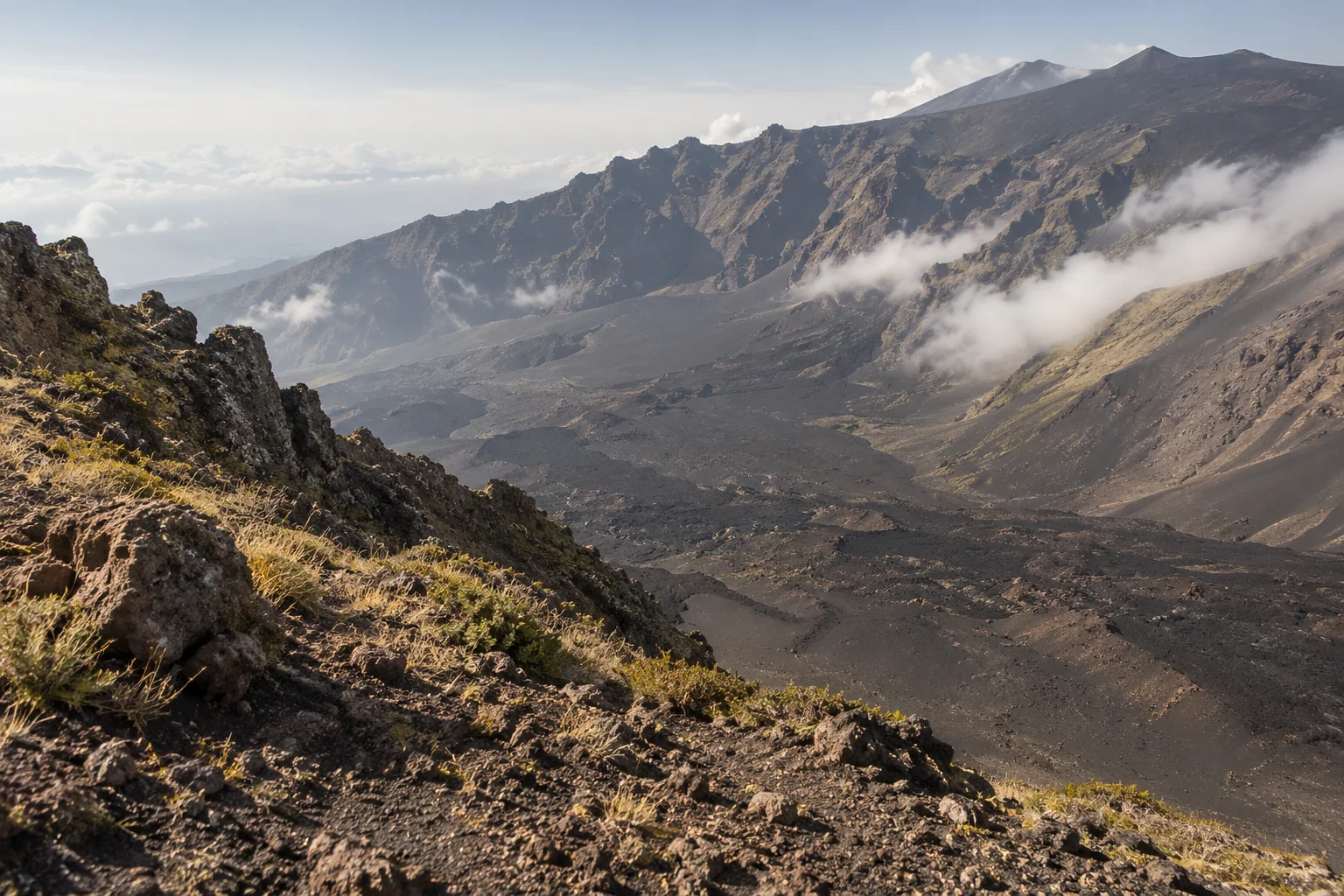
The steep-walled Valle del Bove with lava streaks and drifting cloud
Valle del BoveA horseshoe-shaped hollow streaked with old lava flows; its scale only sinks in from the rim.
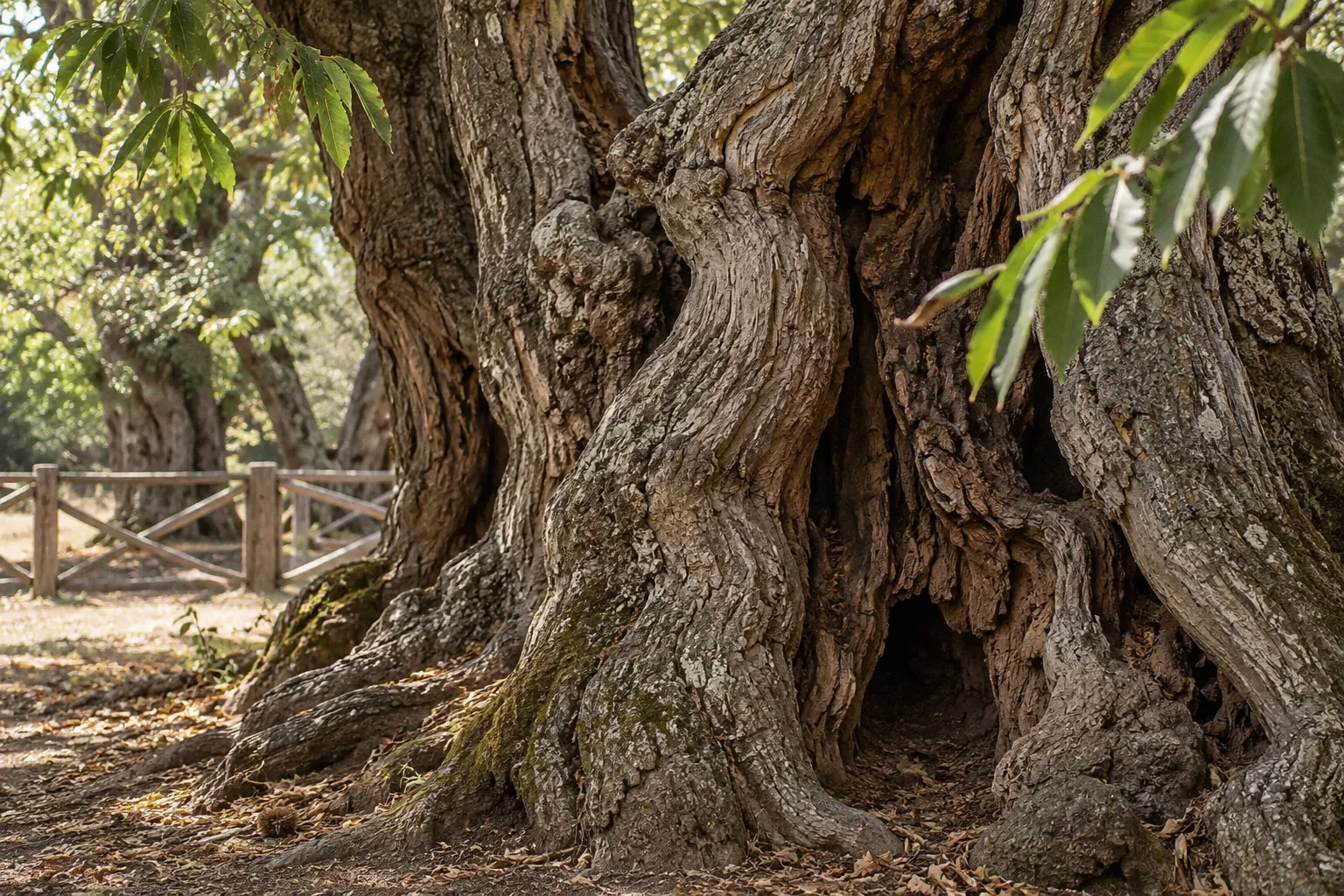
The gnarled trunk of the Hundred Horse Chestnut on Etna’s eastern slope
The Hundred Horse ChestnutAt Sant’Alfio, one of the oldest and largest trees in Europe, said to have sheltered a queen and her hundred knights from a storm.

Five things worth finding

If you see nothing else, see these.

  1. Silvestri Craters

    Two extinct cones left by the 1892 eruption, an easy loop over black cinder that puts you inside a volcanic landscape without a guide.Just above Rifugio Sapienza, south side

  2. Barbagallo craters

    Craters that opened in the 2002 eruption, where guides take small groups to look down into a recent vent.Above the cable car’s upper station, on guided excursions

  3. Valle del Bove

    A huge horseshoe-shaped depression left by a flank collapse thousands of years ago, steep-walled and streaked with old lava flows; the scale only sinks in from the rim.East flank of the volcano

  4. Monti Sartorius

    A line of small cones reached by an easy trail through pine woods, on the quieter side of the mountain that most day-trippers skip.North side, near Piano Provenzana

  5. Hundred Horse Chestnut

    An immense ancient chestnut, among the oldest and largest trees in Europe, said by legend to have sheltered a queen and her hundred knights from a storm.Sant’Alfio, on the eastern slope

Plan your visit

Everything you need before you go.

Tickets
Free
Booking
No booking needed
Time needed
4 hours
Best time
Morning, for clear skies; take the first cable car up before clouds and crowds build.
Getting there
Rifugio Sapienza is a drive or AST bus ride from Catania on the south side; Piano Provenzana serves the quieter north side.
Accessibility
The cable car cabins and base station are accessible, but the paths and craters above are rough, uneven lava and are not wheelchair accessible.

The park itself is free. The Funivia dell'Etna round trip to 2,500 meters costs €54 for adults (€31 ages 5 to 10); the Tour 3000 package with cable car, guided Unimog and summit guide is about €82. Book online in July and August.

Bring real hiking boots and a warm layer even in August: at 2,500 meters the wind cuts through T-shirts fast, and volcanic ash chews through sneakers.

Get directionsGoogle MapsApple Maps

Good to know

How long should you spend on Mount Etna?

Plan on about four hours for the classic south side visit: the cable car, a guided walk or 4x4 ride toward the upper craters, and time to wander the Silvestri craters by the refuge. Add a half day if you want a winery stop on the lower slopes.

Do you need a guide to visit Etna?

You can ride the cable car and walk the lower craters on your own, but higher up you generally need a licensed volcanological guide, and how far groups may go depends on the mountain’s activity that day. In high season it is sensible to book a small-group excursion ahead.

Can you see Etna and a winery in one day?

Yes. Go up in the morning, when skies are usually clearest, then drop to the vineyards where Nerello Mascalese grows in volcanic ash for a late lunch and a tasting. Many operators sell this as one day from Catania, which spares you the mountain driving.

A letter from Italy, once a month.

The places, tables and makers we found worth your time. One email, no noise.

One letter a month. Unsubscribe at any time. We never share your address.

Help us get it right

What is it about?