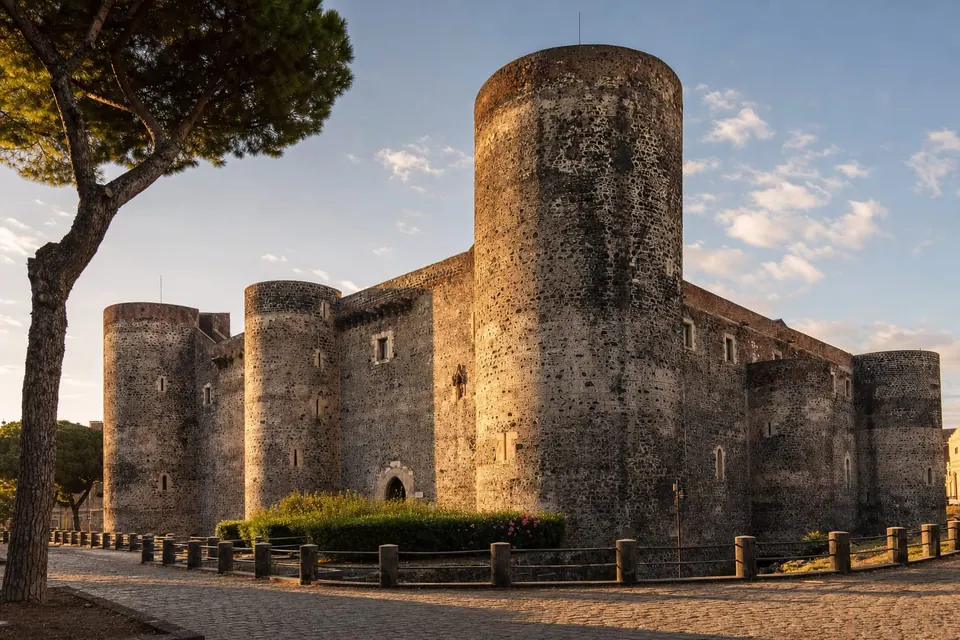
Emperor Frederick II raised Castello Ursino in Catania between 1239 and 1250 as a royal stronghold on a sea cliff. In 1669 Etna’s lava filled the moat and pushed the coastline out, and the castle now stands well inland, in a square of its own.
It survived the earthquake of 1693 that flattened most of Catania. Its square towers and thick walls of dark lava stone are austere, but inside the Museo Civico opened in 1934 holds the city’s inheritance: the Biscari collection of antiquities, Greek pottery, Roman marbles and coins, and paintings from the fifteenth to the nineteenth century. Come for the building as much as for the rooms, and for the courtyard.
Sources and citations (2)
- Museo Civico Castello UrsinoIl CastelloCastle overview and institutional historyRead source
- City of Catania TourismLa StoriaOpening construction chronologyRead source