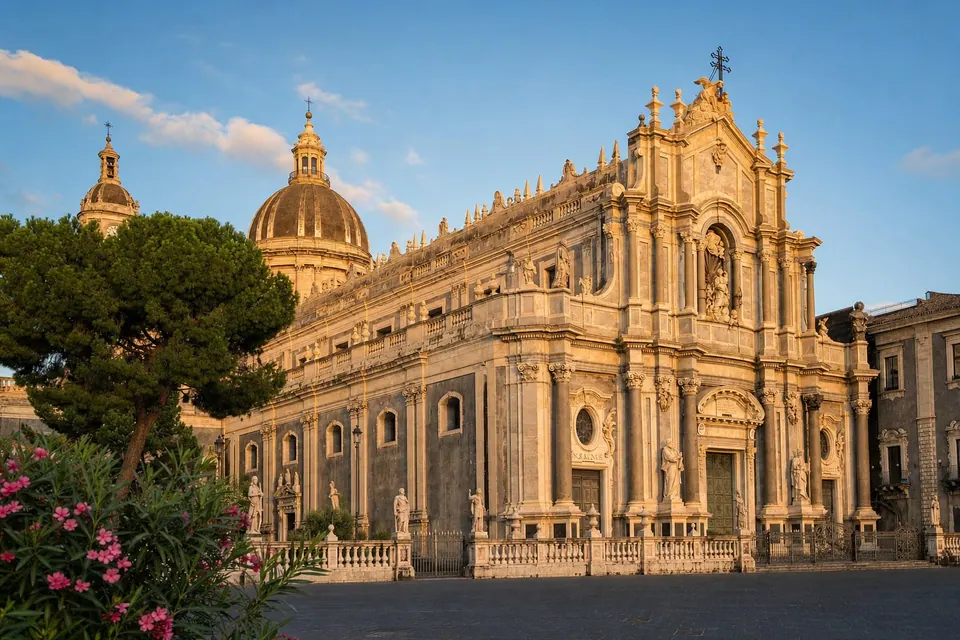
Roger I, the Norman count who took Sicily from its Muslim rulers, founded Catania's cathedral in 1078 over the ruins of a Roman bath complex, dedicating it to Saint Agatha, the city's third-century martyr and patron.
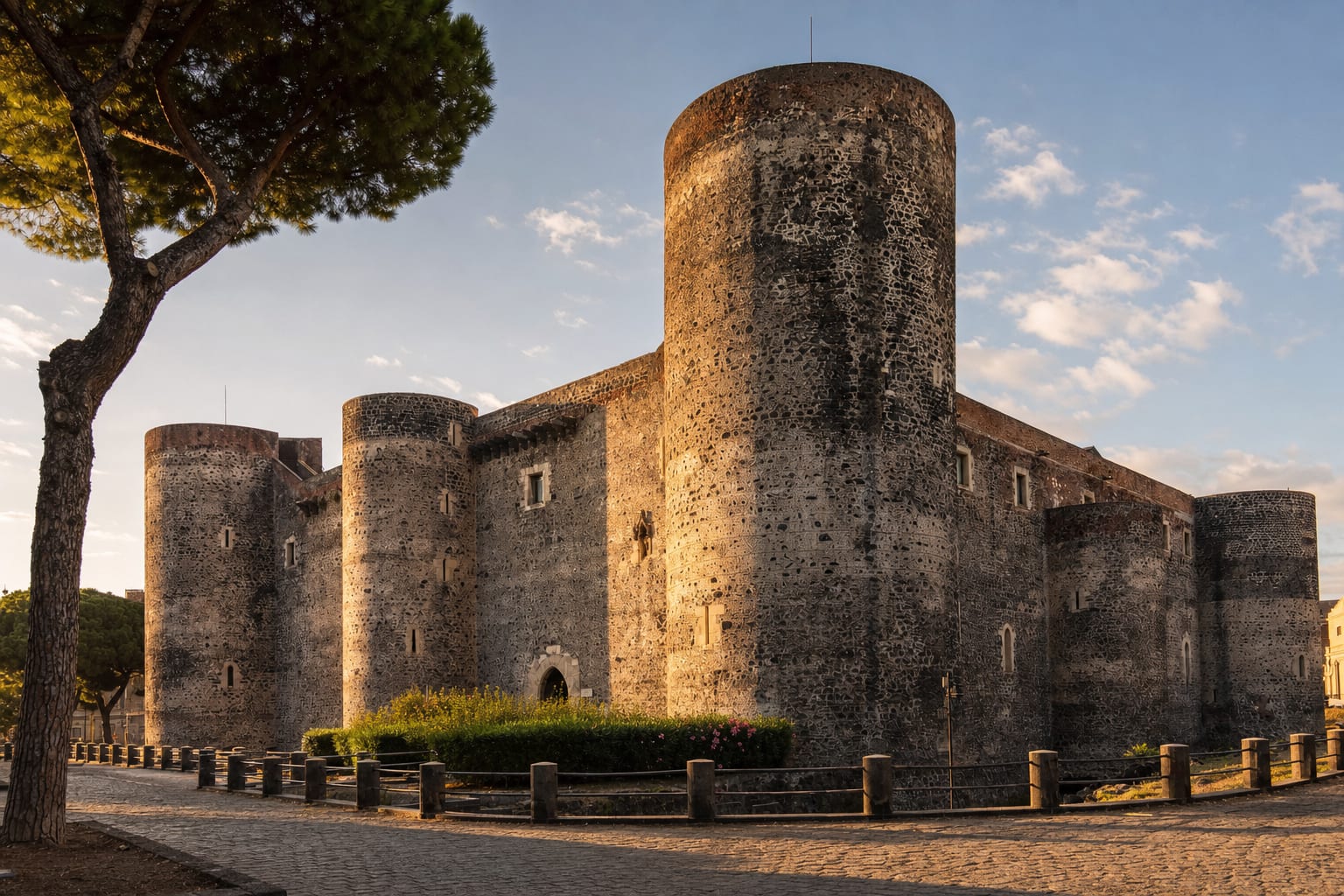
An earthquake and fire gutted it in 1169, leaving only the apses and a strip of the transept, and the catastrophic 1693 quake that leveled much of eastern Sicily forced a near-total rebuild. What stands today is Gian Battista Vaccarini's 1711 Baroque facade in black lava and white limestone, the same volcanic stone Etna has supplied the city for centuries, fronting Norman apses that somehow survived it all. Composer Vincenzo Bellini is buried inside, and each February the cathedral becomes the epicenter of the Festa di Sant'Agata, one of the world's largest religious festivals.
Sources and citations (2)
- City of Catania TourismLa Cattedrale di Sant'AgataIdentity, construction dates, and historical notesRead source
- City of Catania TourismDuomoL’area presbiterialeRead source