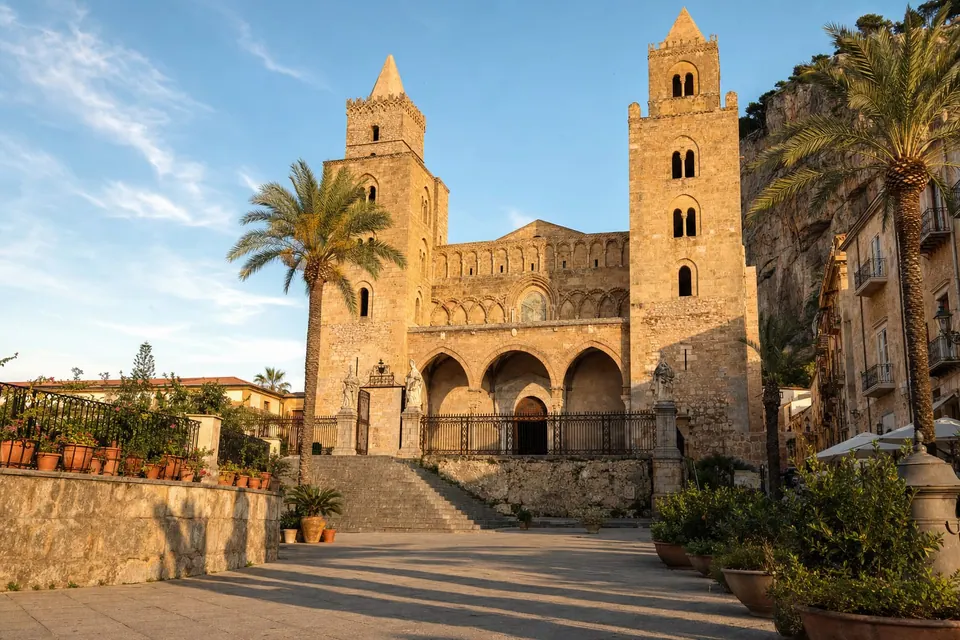
Roger II vowed to build a cathedral if he survived a violent storm at sea in 1130, and Cefalù's twin-towered church, begun the following year, was his thank-you. It rises directly above the beach, a fortress as much as a place of worship, its facade framed by two mismatched Norman towers finished only in the fourteenth century.
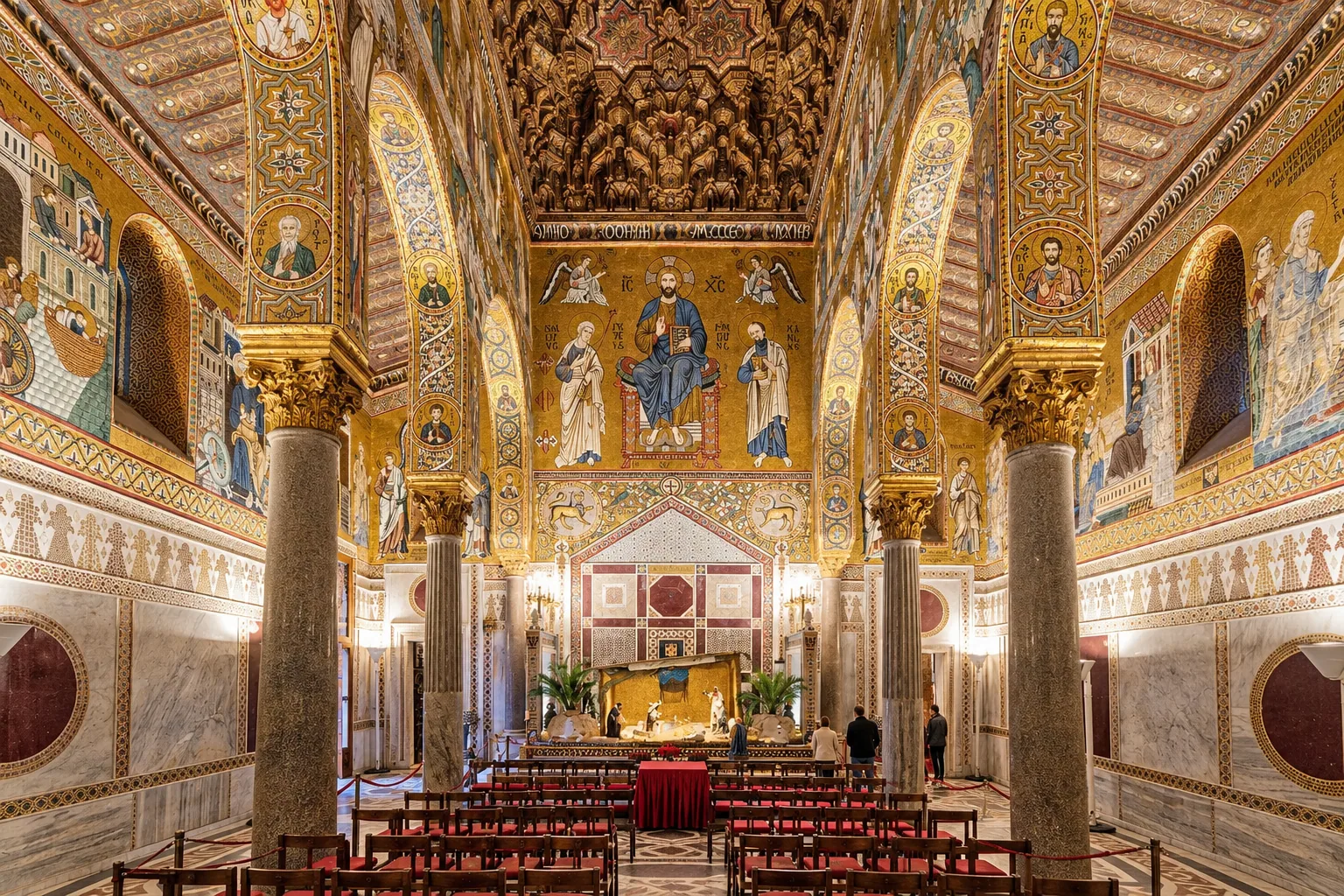
Inside, the apse holds one of Sicily's earliest and, by most accounts, most tender depictions of Christ Pantocrator, his long fingers raised in blessing over a nave he seems to watch rather than command. The cathedral forms part of the same 2015 UNESCO listing that covers Palermo and Monreale, evidence of how thoroughly Norman kings, Byzantine mosaicists, and Arab craftsmen reshaped medieval Sicily together.
Sources and citations (3)
- Diocese of CefalùCenni Storici1131 refoundation passageRead source
- UNESCO World Heritage CentreICOMOS Evaluation: Arab-Norman Palermo and the Cathedral Churches of Cefalú and MonrealeCefalù Cathedral history and development contextRead source
- UNESCO World Heritage CentreArab-Norman Palermo and the Cathedral Churches of Cefalú and MonrealeProperty description, component list, and inscription dataRead source