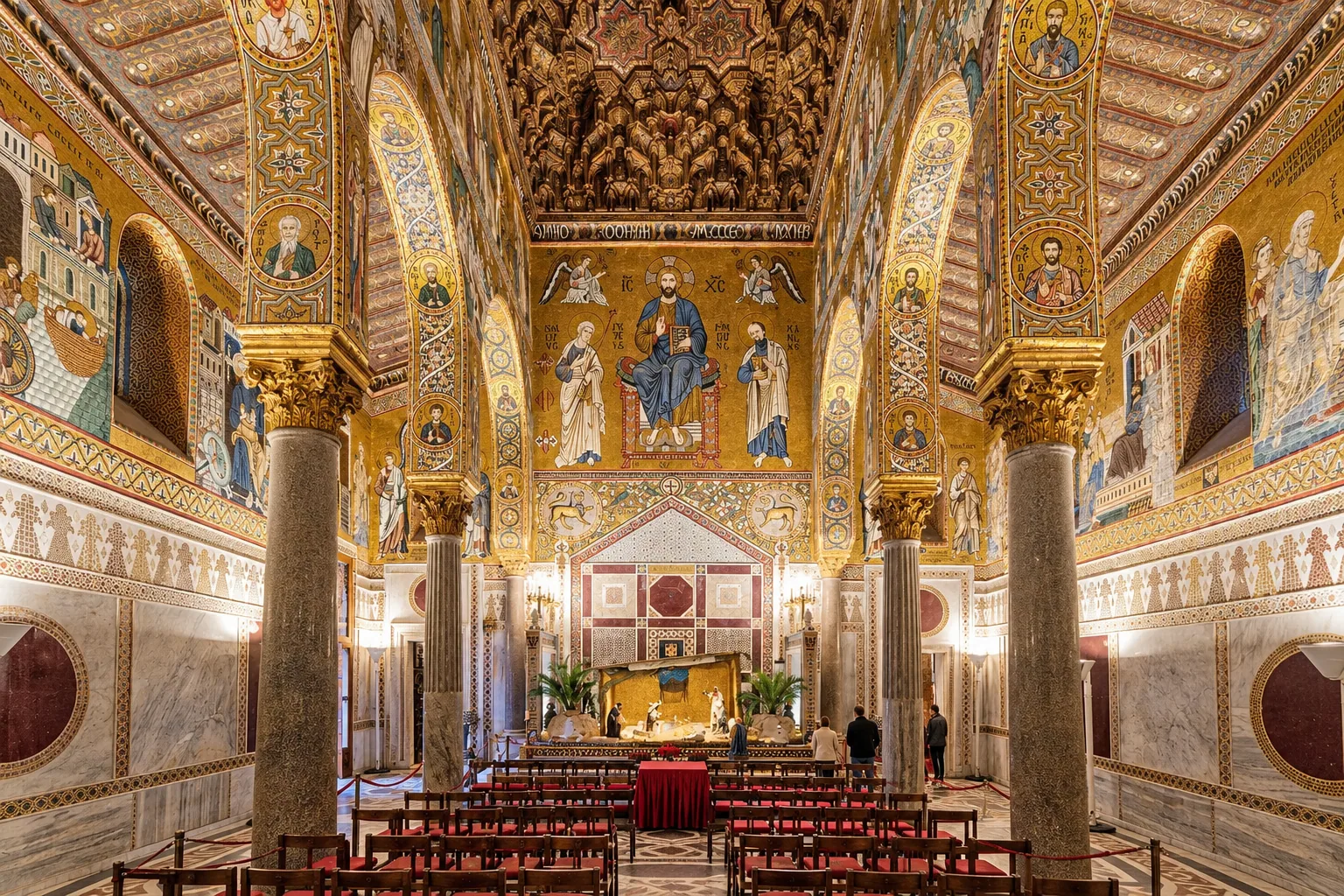
Roger II, the Norman king who unified Sicily, commissioned this private chapel in 1132 as a statement of the multicultural kingdom he'd built: Byzantine mosaicists laid gold-ground scenes of Christ and the saints, Arab craftsmen carved and painted the wooden muqarnas ceiling with scenes of courtly life and mythical beasts (the only Fatimid-style ceiling of its kind to survive largely intact), and the floor plan itself follows Latin basilica tradition.
Nowhere else in the medieval world did these three traditions share one room so completely, or so harmoniously. The mosaic program, added over decades, climaxes in the apse, where a severe, staring Christ Pantocrator looks down the length of the nave. Bring small binoculars if you have them: the ceiling's painted details, thirty feet up, are otherwise hard to make out.
Sources and citations (2)
- Cappella Palatina, PalermoLa Cappella Palatina: storiaOpening history and dedication passagesRead source
- UNESCO World Heritage CentreArab-Norman Palermo and the Cathedral Churches of Cefalú and MonrealeProperty description, component list, and inscription dataRead source