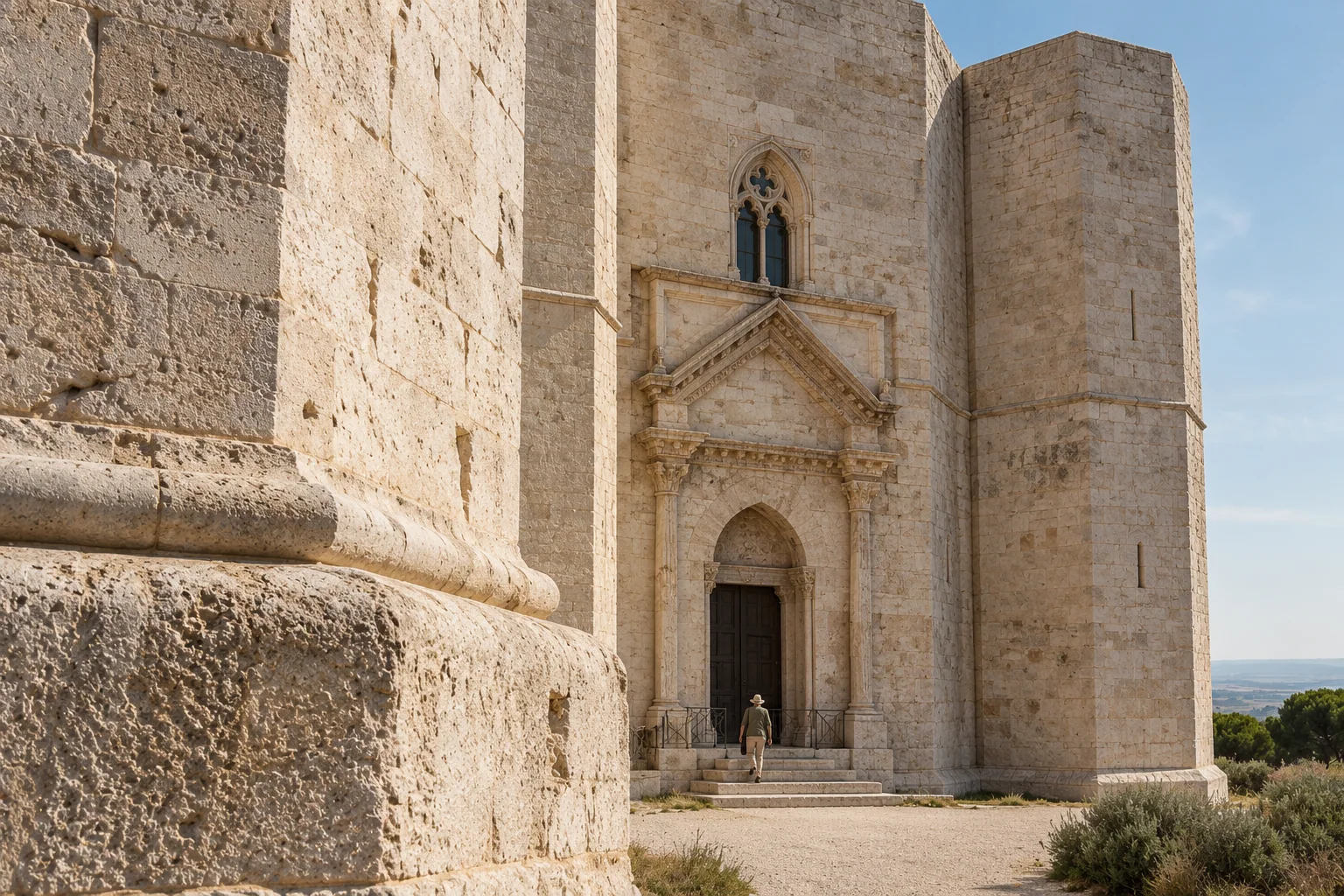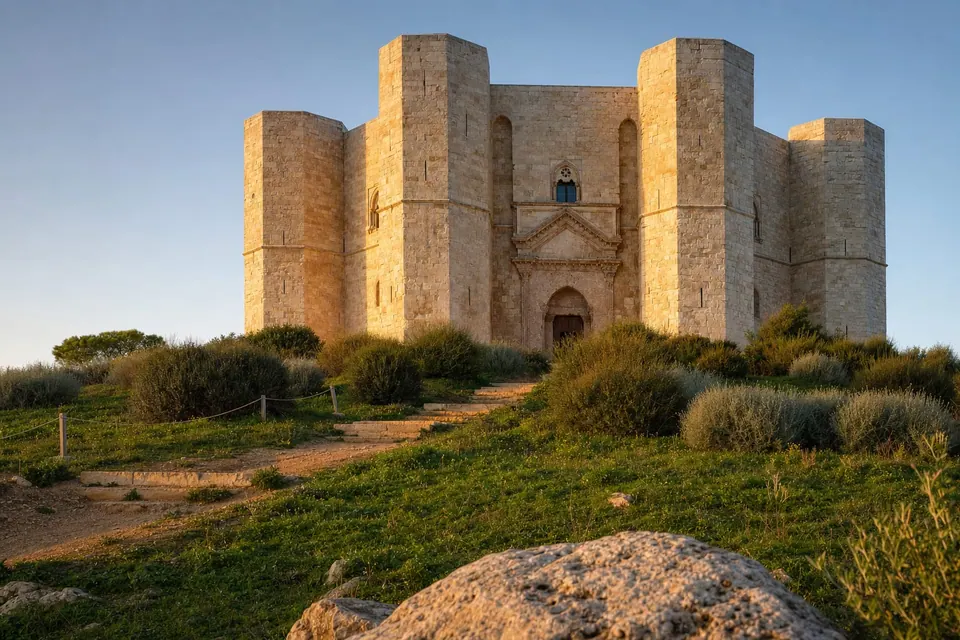
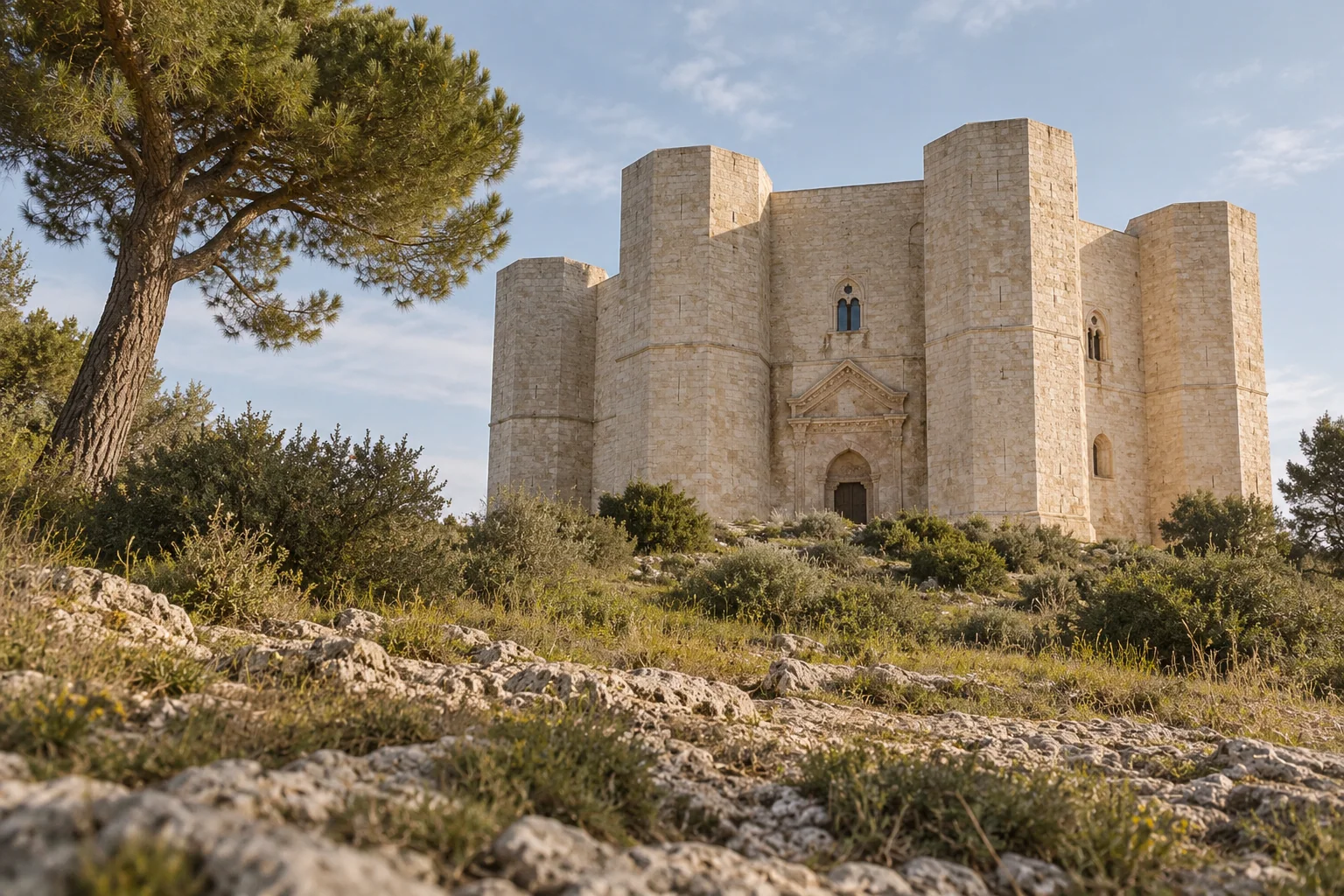
Castel del Monte stands alone on a Murgia hilltop in Puglia, an octagon with eight octagonal towers built for Holy Roman Emperor Frederick II sometime around 1240, and no surviving document explains why he built it or what he actually used it for.
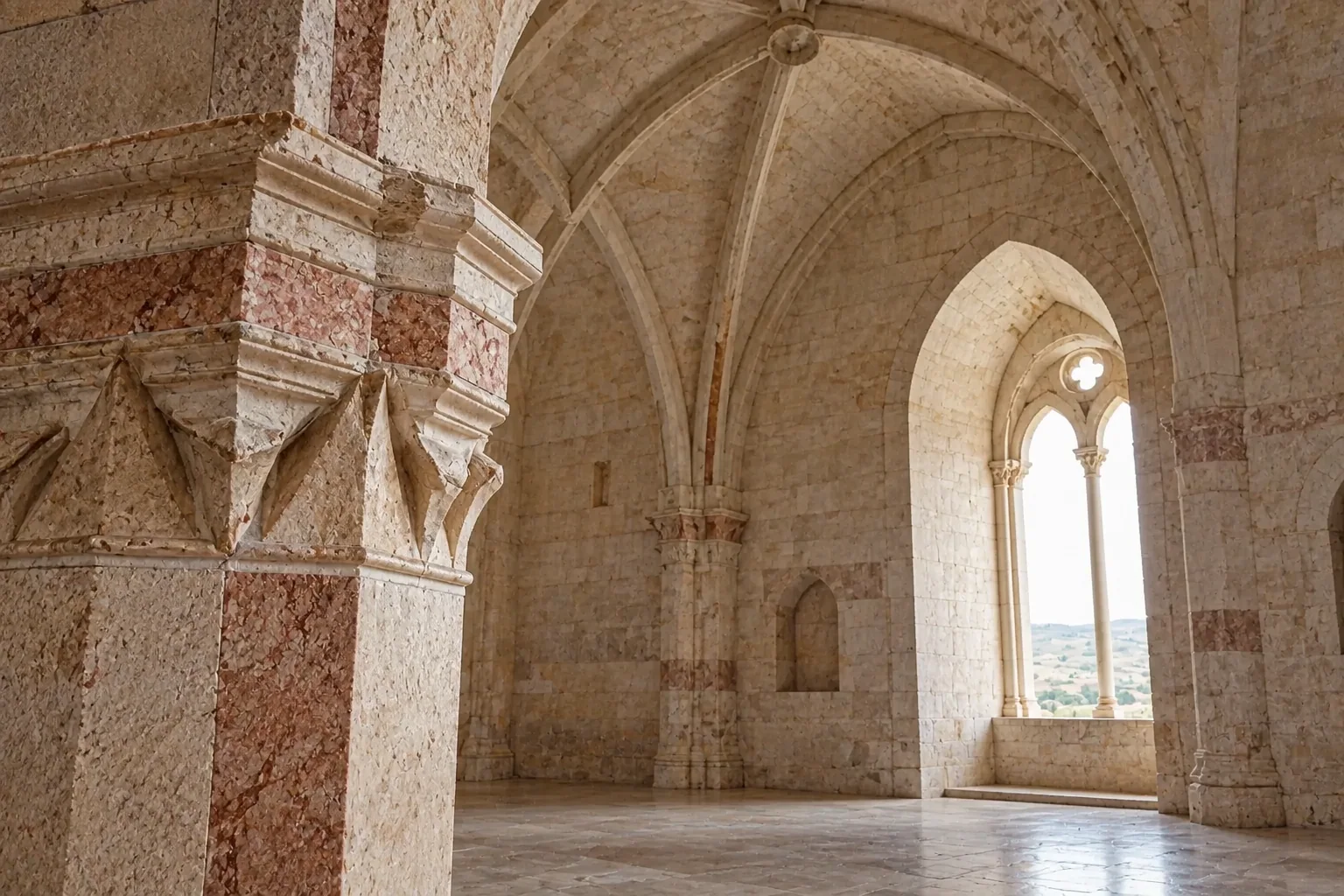
It was clearly not a conventional fortress: there is no moat, no drawbridge, and no space for a garrison or provisions to withstand a siege, which has fueled centuries of theories ranging from hunting lodge to astronomical observatory to a deliberately encoded expression of the medieval science and mathematics Frederick was famous for pursuing. The number eight repeats obsessively throughout, in the towers, the courtyard and the room layout, echoing both Islamic and Byzantine octagonal traditions that this notably cosmopolitan, multilingual emperor would have known well from his court in Sicily. Stripped of its original marble and decoration centuries ago, the castle now appears on the Italian one cent coin, an odd modern afterlife for a building that still keeps its founder's actual purpose a secret.
Sources and citations (3)
- UNESCO World Heritage CentreCastel del Monte, 398revProperty recordRead source
- Ministero della CulturaStoria e struttura di Castel del MonteStructure descriptionRead source
- Direzione regionale Musei PugliaCastel del MonteHistorical notesRead source