

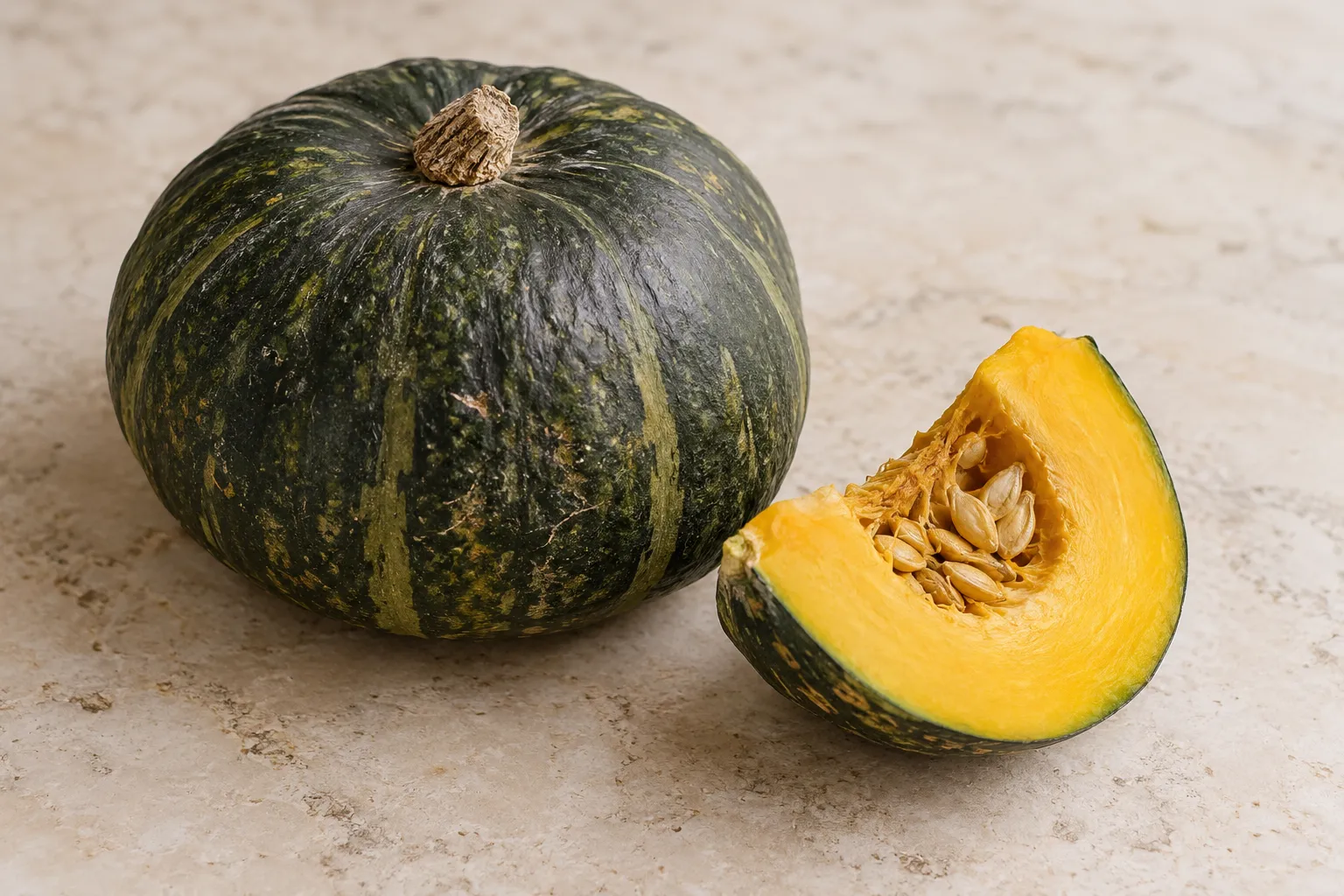
Crown Prince example
- Characteristics
- Bluish skin and orange flesh
Winter squash is grown to maturity for its edible fruit, with varieties that differ in shape, skin color and flesh.
Roast pieces of squash and serve them with lentils and sage, or blend the cooked flesh into a soup. Ask which variety you are buying before deciding the cut: a pear-shaped fruit and a small striped one offer different starting shapes.
For a risotto, cooked squash can become a smooth cream stirred into the rice. Riso Scotti finishes its version with butter, Parmigiano, black pepper and sage.
Ask for the variety and choose a fruit shape that suits the dish. The RHS examples illustrate some of the range; orange flesh in these examples should not be taken as a rule for every winter squash.
The RHS recommends a well-ventilated place for mature winter squash, with fruits spaced apart and checked for deterioration. This advice concerns whole fruit prepared for storage; keeping quality depends on the variety.
The places, tables and makers we found worth your time. One email, no noise.
One letter a month. Unsubscribe at any time. We never share your address.
