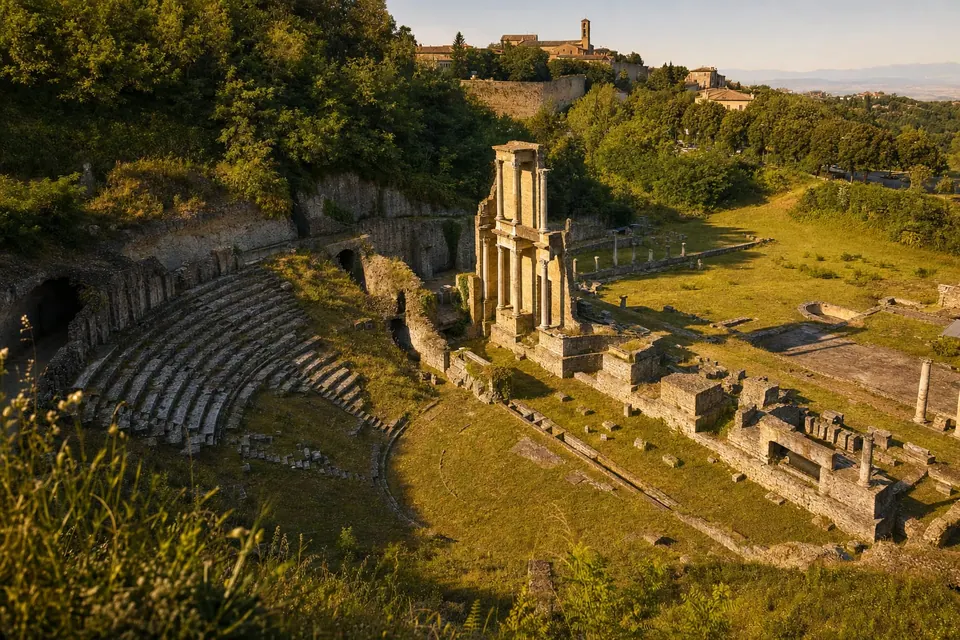
Volterra's Roman theatre was built in the late first century BC, under Augustus, and then simply vanished from view: by the Middle Ages it had been buried under centuries of the town's refuse, and it stayed that way until archaeologists uncovered it in the 1950s. What emerged was a near-complete cavea with three tiers, still legible enough to make out where actors, then honored citizens, then everyone else sat. Alongside the theatre are the remains of a fourth-century bath complex, added when the theatre itself had gone out of use, a reminder that Roman towns recycled their monuments as readily as they built new ones. The Enrico Fiumi acropolis park nearby is a separate site, with its own Etruscan and Roman temple remains, so the two are easy to confuse when planning a visit. Today the theatre is viewed from a raised walkway above the excavation rather than walked through.
The Ministry of Culture identifies the theatre as Augustan-period and distinguishes its Vallebuona context from Volterra's separate Etruscan acropolis area.
Sources and citations (2)
- Ministero della CulturaAree archeologiche di VolterraVallebuona area identityRead source
- Ministero della Cultura, Soprintendenza Archeologia Belle Arti e Paesaggio per Pisa e LivornoInterventi di messa in sicurezza e restauro del Teatro e delle Terme di Vallebuona a Volterra2026 safety and restoration recordRead source