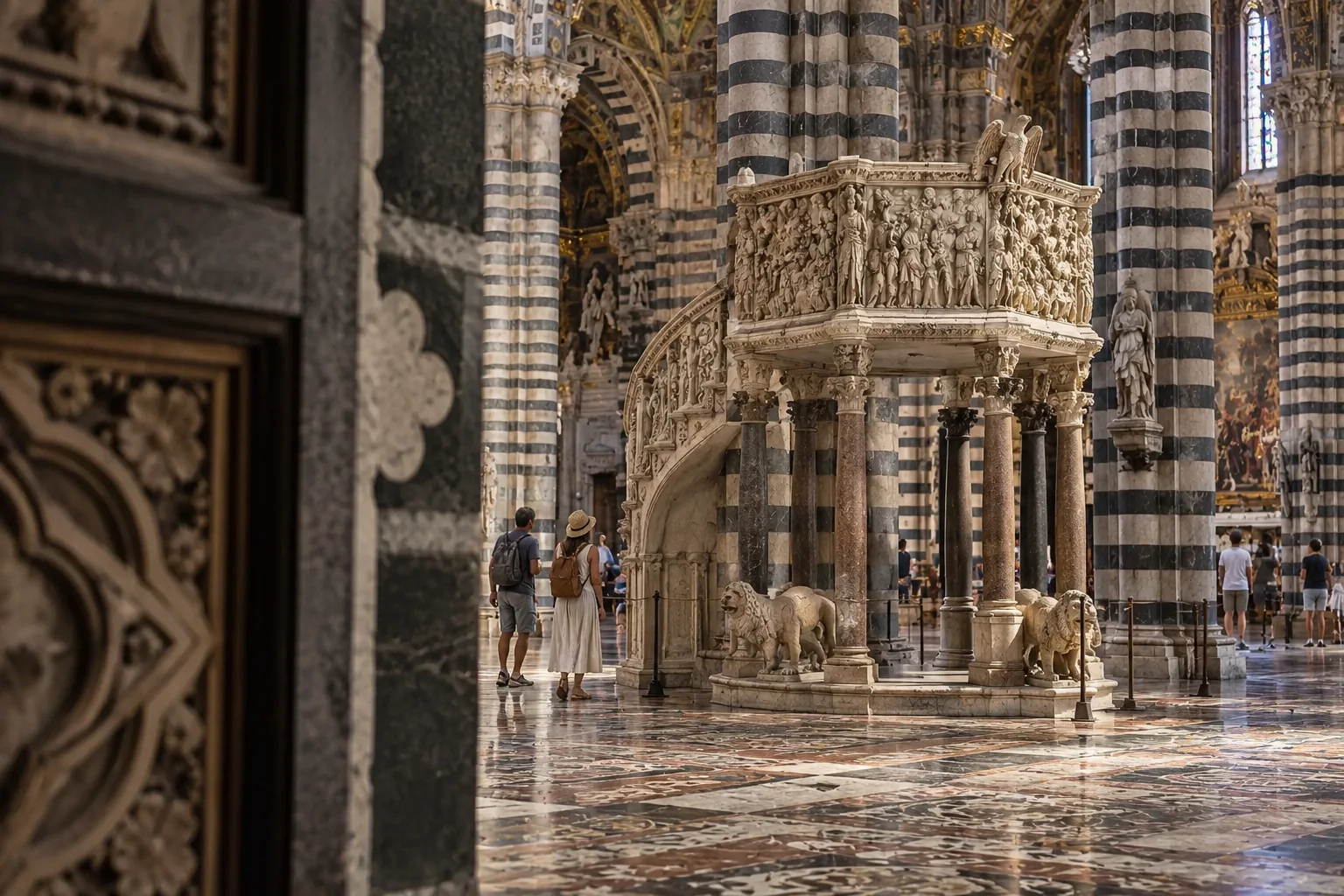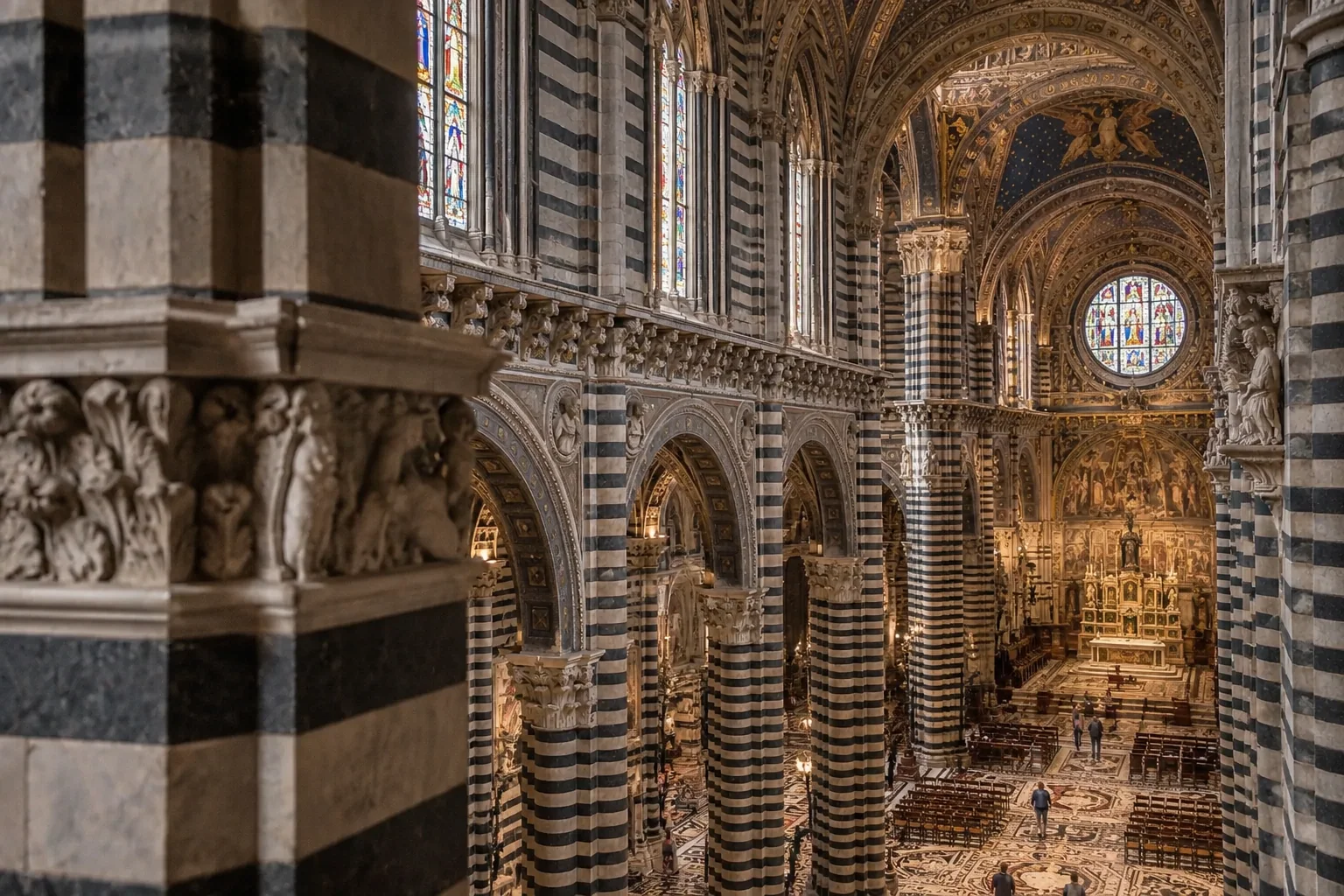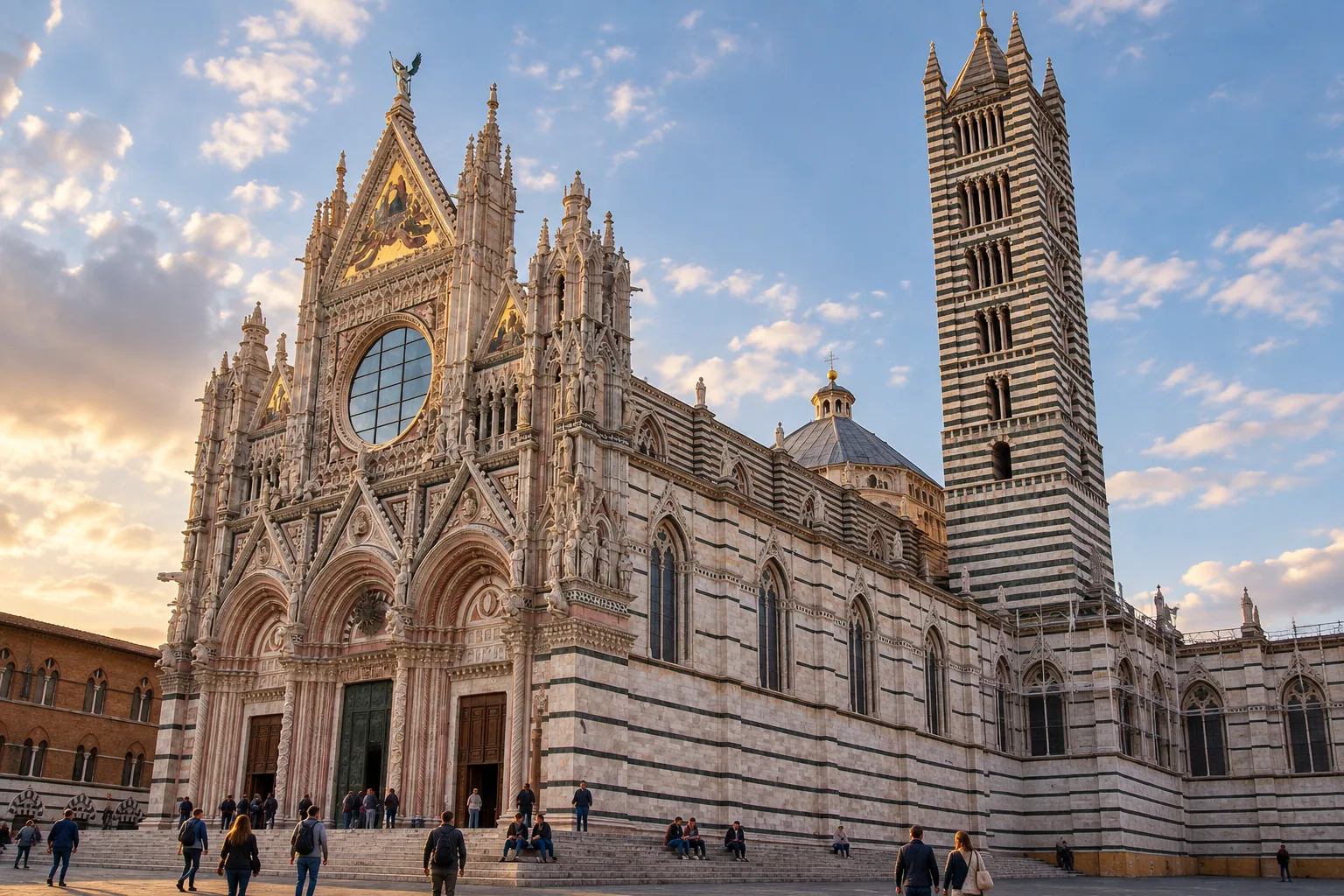
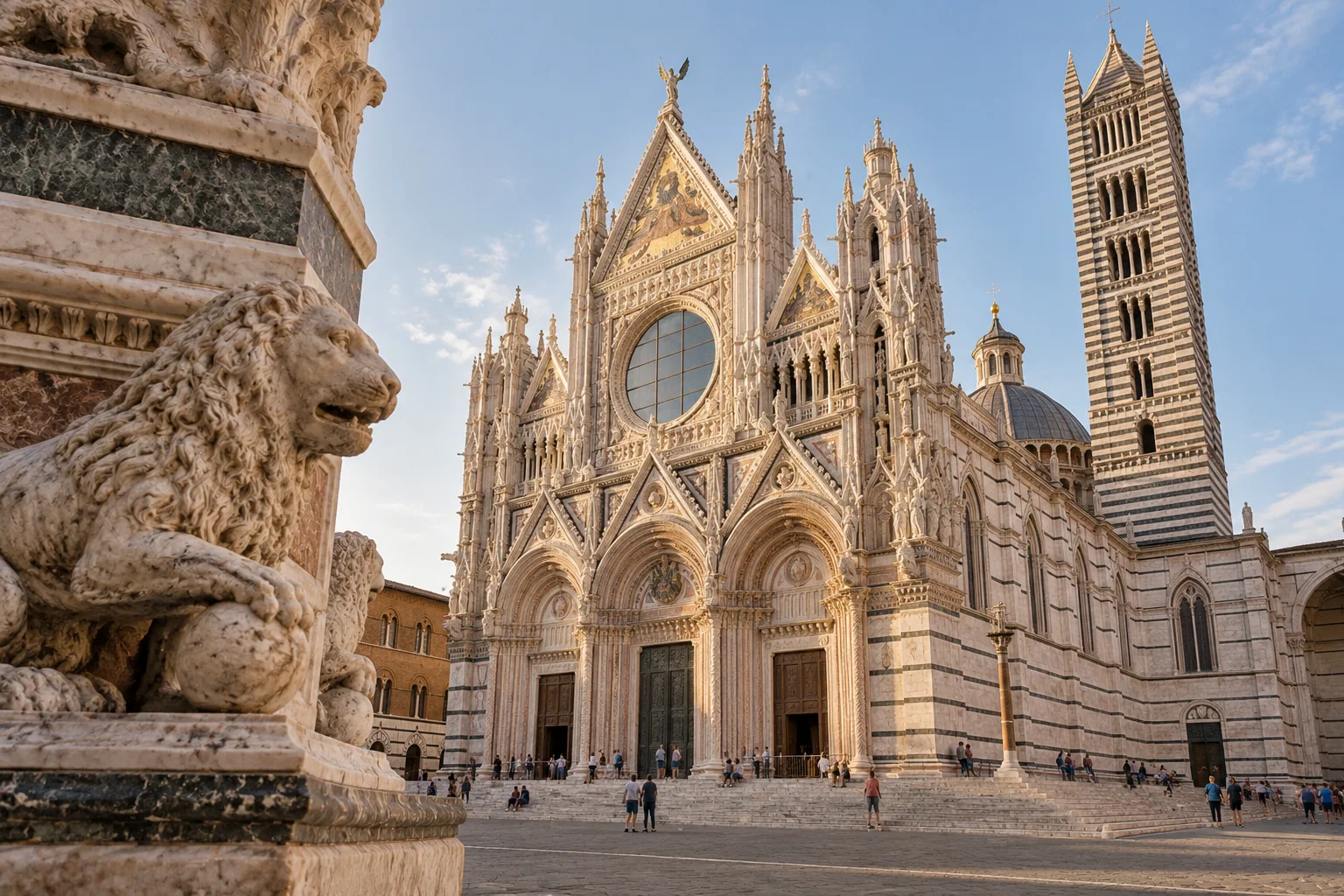
Siena Cathedral, dedicated to Santa Maria Assunta, was built mostly between the 1220s and the 1380s in banded black and white marble that repeats across the whole complex. Its floor is the real astonishment: 56 inlaid and engraved marble panels made between the 14th and 19th centuries, most kept covered and uncovered only for a few weeks each summer to protect them from footsteps. Nicola Pisano carved the pulpit between 1265 and 1268 with crowded, dramatic New Testament scenes, one of the first great works of Gothic sculpture in Italy. Ambitious plans in the 1330s to triple the building's size into a new nave were abandoned after the Black Death of 1348 devastated Siena; the unfinished wall of that Nuovo Duomo still stands beside the cathedral as a visible monument to the plan that never happened.
The Cathedral floor programme began in the 14th century and was completed in the 19th century. Nicola Pisano carved the pulpit between 1265 and 1268. Original façade sculptures by Giovanni Pisano are now displayed in the Museo dell'Opera, as is Duccio's Maestà.
Sources and citations (3)
- Opera della Metropolitana di SienaThe CathedralRead source
- Comune di SienaLa CattedraleMunicipal landmark identityRead source
- UNESCO World Heritage CentreHistoric Centre of SienaRead source