Skip to content

Pienza Cathedral

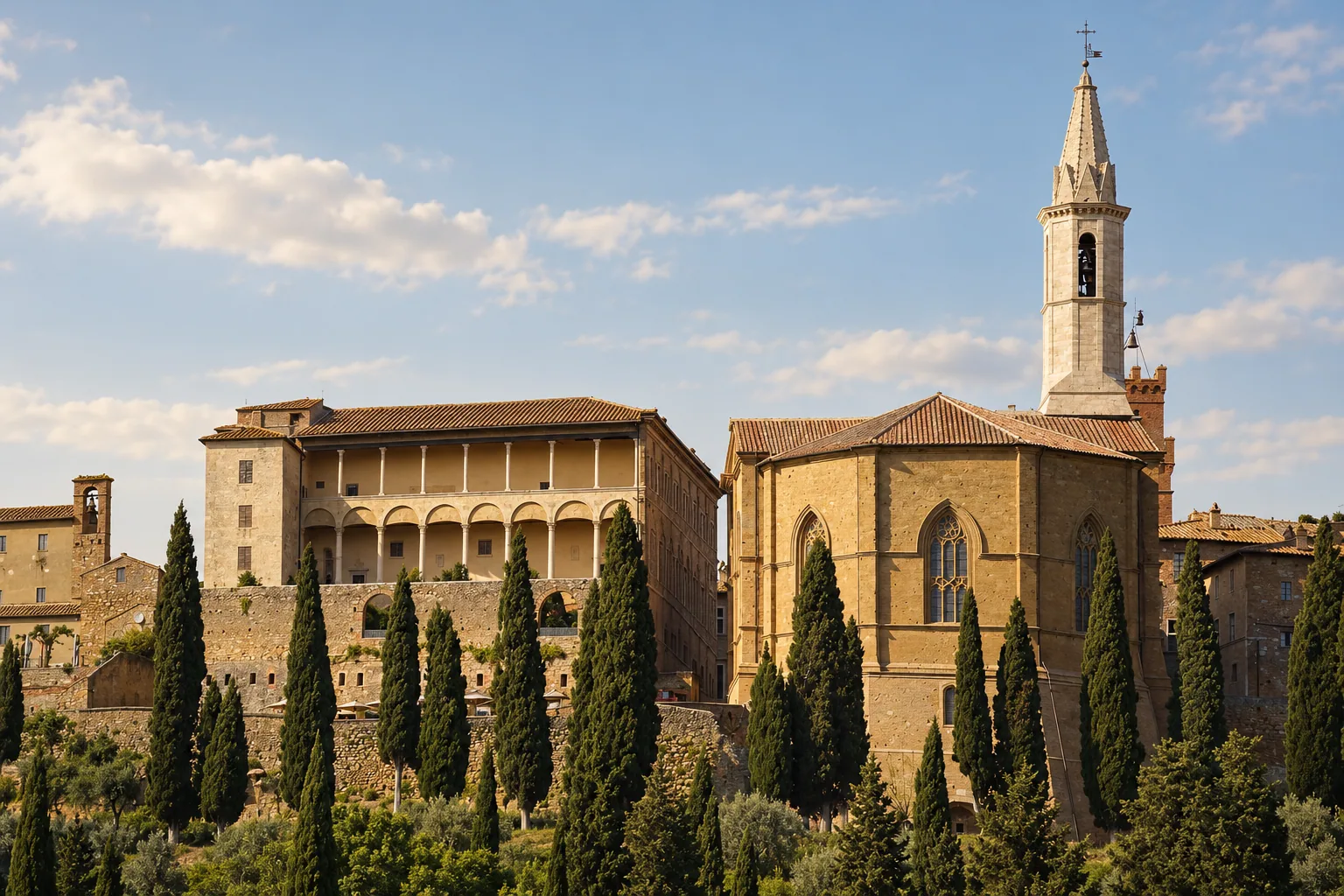
Pope Pius II's 1459-62 co-cathedral, a German hall church transplanted to Tuscany.

  • Pienza
  • Church
Where
Pienza
Best for
Pope Pius II's commission
Allow
30 minutes
Tickets
Free

Pope Pius II, born Enea Silvio Piccolomini in the village then called Corsignano, decided in 1459 to remake his birthplace into an ideal Renaissance town and renamed it Pienza after himself; the co-cathedral of Santa Maria Assunta, designed by Bernardo Rossellino, anchors the plan and was raised and consecrated within three years, on August 29, 1462. Pius, who had traveled widely in Germany as a papal legate, asked for a hall church interior with three naves of equal height, a northern Gothic form almost unheard of in Tuscany, lit by tall windows that flood the nave with rare light. The travertine facade, carrying the Piccolomini coat of arms, looks out over Piazza Pio II, part of the same unified design. The ground beneath the apse proved unstable almost immediately, and cracks that appeared within Pius's own lifetime still require monitoring today.

The co-cathedral is a principal monument in Pius II's Renaissance redesign of Pienza, with its 1459–62 construction and 1462 consecration documented by the cathedral authority.

Sources and citations (4)
  1. Comune di PienzaPiano di gestione sito UNESCOPius II urban projectRead source
  2. Fabbriceria della Concattedrale di Santa Maria AssuntaI luoghiChurch identityRead source
  3. UNESCO World Heritage CentreHistoric Centre of the City of PienzaProperty 789Read source
  4. UNESCO World Heritage CentreVal d'OrciaSeparate-property distinctionRead source
Five things worth finding

If you see nothing else, see these.

  1. The hall-church interiorBernardo Rossellino, 1459 to 1462

    Three naves of equal height lit by tall windows, a northern Gothic idea that Pius II brought to Tuscany.Main nave

  2. Vecchietta’s AssumptionVecchietta, about 1461

    The Sienese master’s altarpiece for the cathedral’s main altar.Main altar

  3. The three other altarpiecesSano di Pietro, Matteo di Giovanni, Giovanni di Paolo

    Pius II commissioned Sienese painters, and the paintings still hang in the chapels they were made for.Side chapels

  4. The Piccolomini facadeTravertine

    A travertine front with the Piccolomini arms, part of the same design as the square.Piazza Pio II

  5. The cracked apse

    The ground beneath the apse moved almost at once, and the cracks have been monitored for centuries.Behind the main altar

Plan your visit

Everything you need before you go.

Tickets
Free
Booking
No booking needed
Time needed
30 minutes
Best time
Morning, when light through the tall windows is strongest
Getting there
The cathedral faces Piazza Pio II in the tiny walkable center of Pienza, reached by car from Montepulciano or Montalcino; park just outside the walls, since the historic core is pedestrian only.

As an active co-cathedral, entry is free; modest dress is expected.

Walk to the far end of the apse and look for the visible cracks and tilt in the floor and walls; they are a genuine, still-monitored structural story, not a restoration flourish.

Get directionsGoogle MapsApple Maps

Good to know

How long should you spend at Pienza Cathedral?

About 30 minutes for the nave, the altarpieces and the facade.

Is Pienza Cathedral worth visiting?

Yes, it is the heart of the ideal Renaissance town of Pienza and a rare hall-church interior in Tuscany.

Do you need to book Pienza Cathedral?

No. It is a working church and you can walk in; mornings give the best light through the tall windows.

A letter from Italy, once a month.

The places, tables and makers we found worth your time. One email, no noise.

One letter a month. Unsubscribe at any time. We never share your address.

Help us get it right

What is it about?