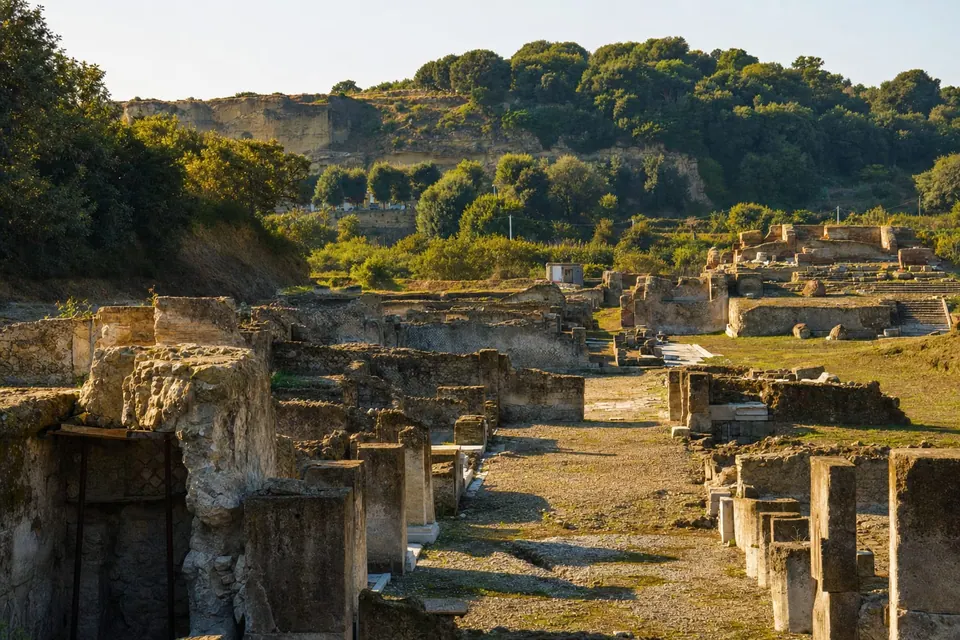
Cuma was founded in the second half of the eighth century BCE by Euboean settlers from Chalcis and Eretria, the first Greek colony on the Italian mainland, and it grew across the acropolis of Monte di Cuma and the lower city. On the upper terraces stand the foundations of the temples of Apollo and Jupiter, linked by a sacred way, with a belvedere over Lake Avernus and the sea. The park's famous trapezoidal tuff gallery, some 130 meters long and lit by side openings, is conventionally called the Cave of the Sibyl, though the archaeologists now read it as a Samnite military work, not securely the oracle of Virgil's Aeneid. The legend is better than the evidence, and worth visiting all the same.
An early Greek settlement in the West with archaeological layers spanning Greek, Samnite, Roman and later phases.
Sources and citations (2)
- Ministero della CulturaParco archeologico di CumaHistoryRead source
- Parco Archeologico dei Campi FlegreiParco archeologico di CumaGallery interpretationRead source