Skip to content

Castel dell'Ovo

Naples’ oldest castle rises from Megaride, where Greek and Roman landscapes meet the layered history of a Norman-era fortress on the bay.

  • Naples
  • Castle
Where
Via Eldorado, Naples
Best for
Its Megaride setting

Castel dell’Ovo rises from Megaride at the edge of the Bay of Naples, opposite Via Partenope. The Ministry of Culture describes it as the city’s oldest castle. Its massive tufa walls belong to a much longer story than their present outline suggests: UNESCO identifies substantial Norman-period remains, remodelled repeatedly in later centuries.

Before the medieval stronghold, Megaride formed part of the coastal setting of Greek Parthenope, alongside Monte Echia. The Comune’s historical account then places the islet within the grounds of the Roman villa associated with Lucullus. Remains of hermitages linked to the Basilian nuns of Santa Patrizia add another layer, recorded by the Ministry’s regional office.

The name belongs to folklore. In a medieval legend, Virgil hides an enchanted egg in the castle, tying the safety of Naples to its survival. Read it as a story about the city’s imagined protection, rather than a documented explanation of how the fortress was built. Compare its waterfront setting with Castel Nuovo, then follow Naples’ later royal history at the Royal Palace. For a visit inside Castel dell’Ovo, confirm current entry arrangements with the Comune before travelling.

A substantial survival from Norman Naples, remodelled repeatedly across later periods; its name carries a separate medieval egg legend.
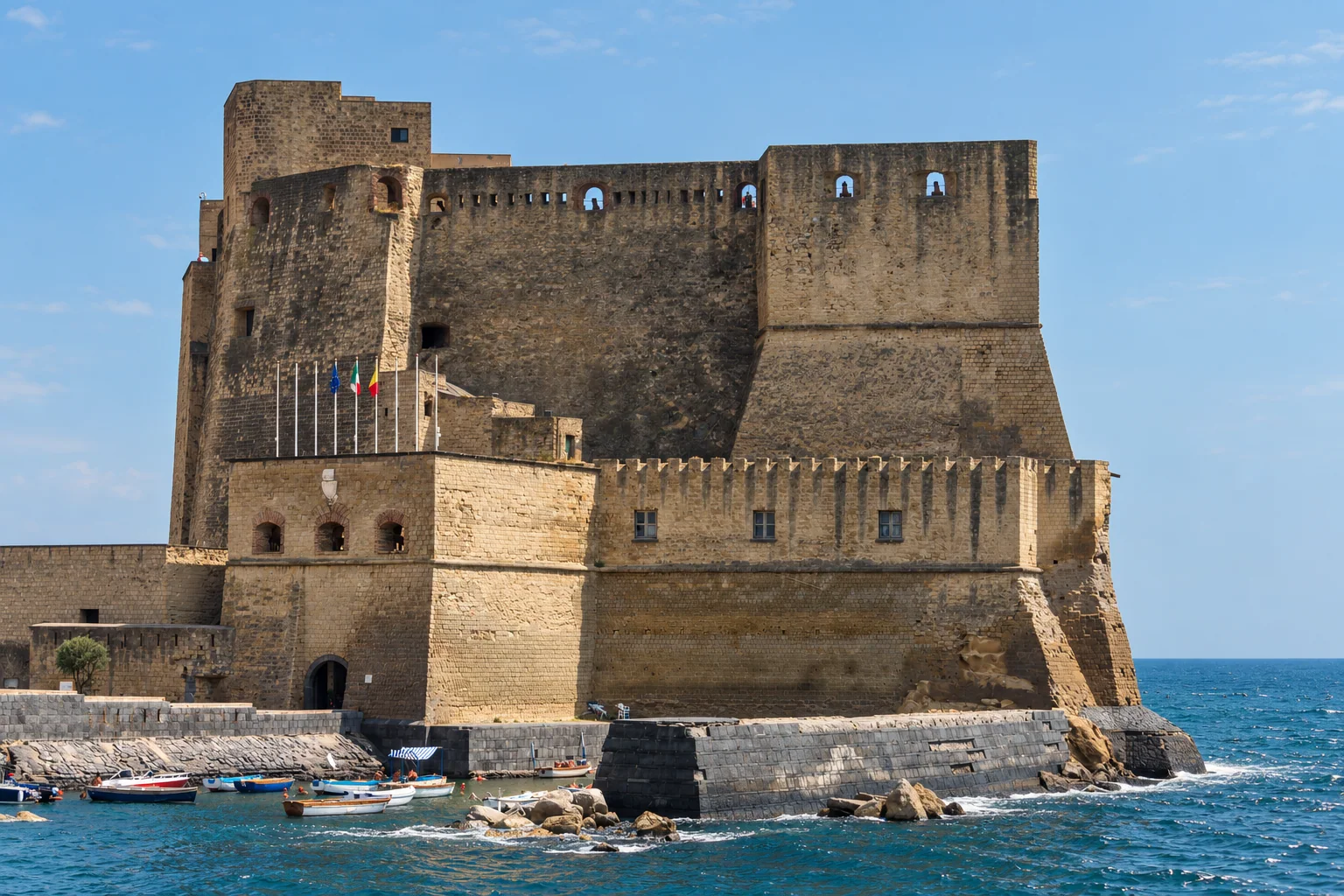
Castel dell’Ovo’s layered walls rise directly above the rocky edge of Megaride.
Sources and citations (8)
  1. Ministero della CulturaCastel dell'Ovopage lines 106–147: place name, description, visitor schedule/reservation listing and stale date; lines 148–160: address, municipal telephone and emailRead source
  2. Comune di NapoliCastel dell’Ovo - Comune di Napoli visitor pagedirect fetch returned HTTP 403; an indexed record is reported as updated 2025-08-12, not a current visitor confirmationRead source
  3. Comune di NapoliDeliberazione di Consiglio Comunale n. 133 del 14 ottobre 2025 - Documento Unico di Programmazione 2026/2028PDF p.74 lines 2286–2295: inner rooms, systems, routes and facilities/accessibility works; PDF p.75 lines 2333–2338: target completion Q1 2027Read source
  4. UNESCO World Heritage CentreHistoric Centre of Naplessynthesis lines 54–56Read source
  5. Comune di Napoli1. La Sirena ParthenopePDF page1 lines19–22: Roman Villa di Lucullo on the islet, estate from Pizzofalcone to sea, subsequent Norman fortressRead source
  6. Regione Campania cultural ecosystem / Comune di Napoli historical archive recordComune di Napoli, Archivio storico dell’Ufficio di Urbanistica - Ecosistema digitale per la cultura della Regione Campaniadescription lines 34–35Read source
  7. Comune di NapoliCastel dell’Ovo tra storia e leggendaprevious packet identifies sections on the medieval egg legend; direct fetch returned HTTP 403 during this check; Root indexed PDF search8October2026: opening paragraph legend; following paragraph Roman villa of Lucio Licinio Lucullo.Read source
  8. Ministero della Cultura, Segretariato regionale per la CampaniaSede - Segretariato regionale del Ministero della Cultura per la Campaniadescription lines 36–37Read source
Look closer

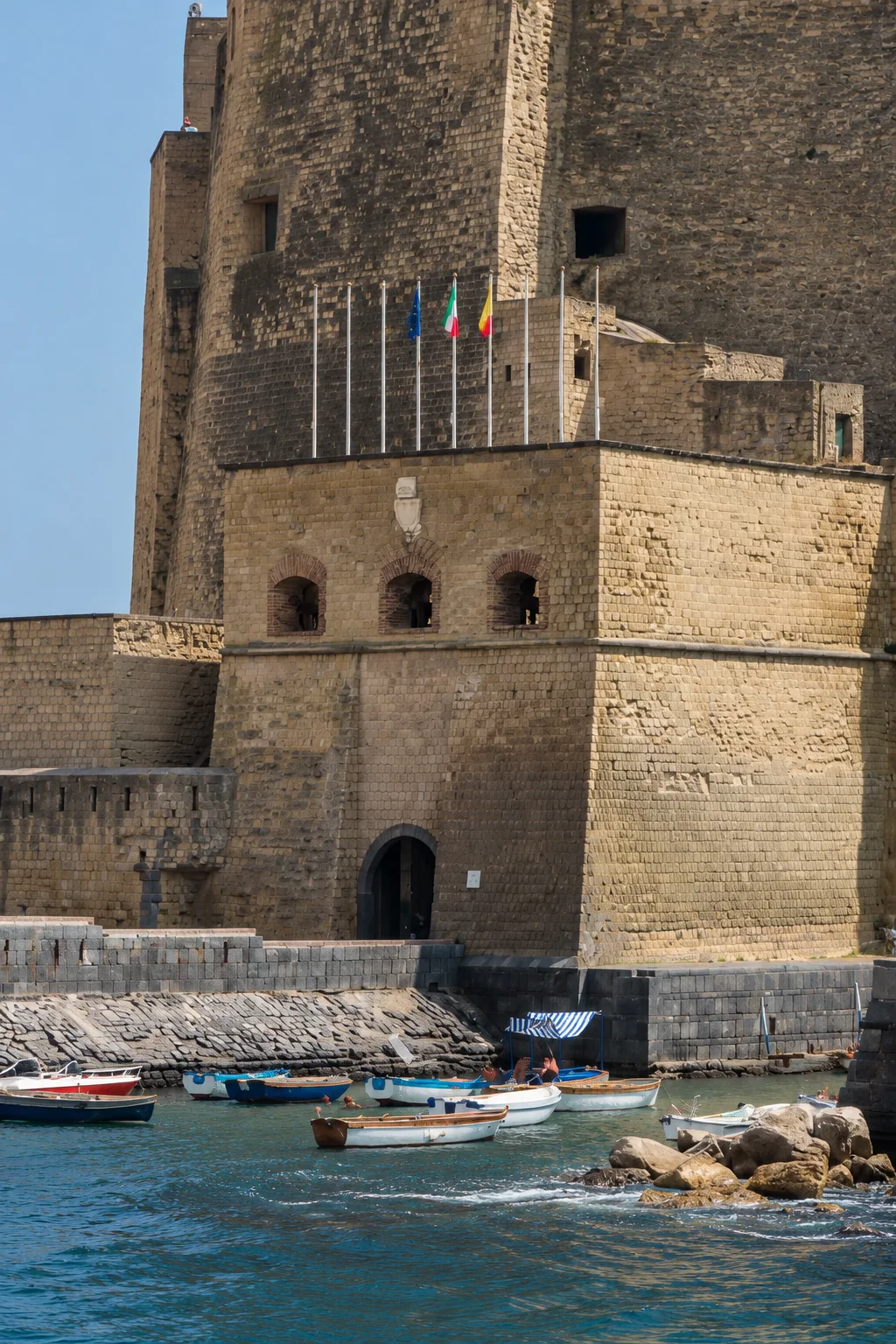
Portrait view of Castel dell’Ovo’s projecting entrance block, with three upper arches, terrace flagpoles, a dark lower doorway and stone seawall.
The entrance elevationThree arched openings sit above the dark waterline entrance beneath the terrace flagpoles.
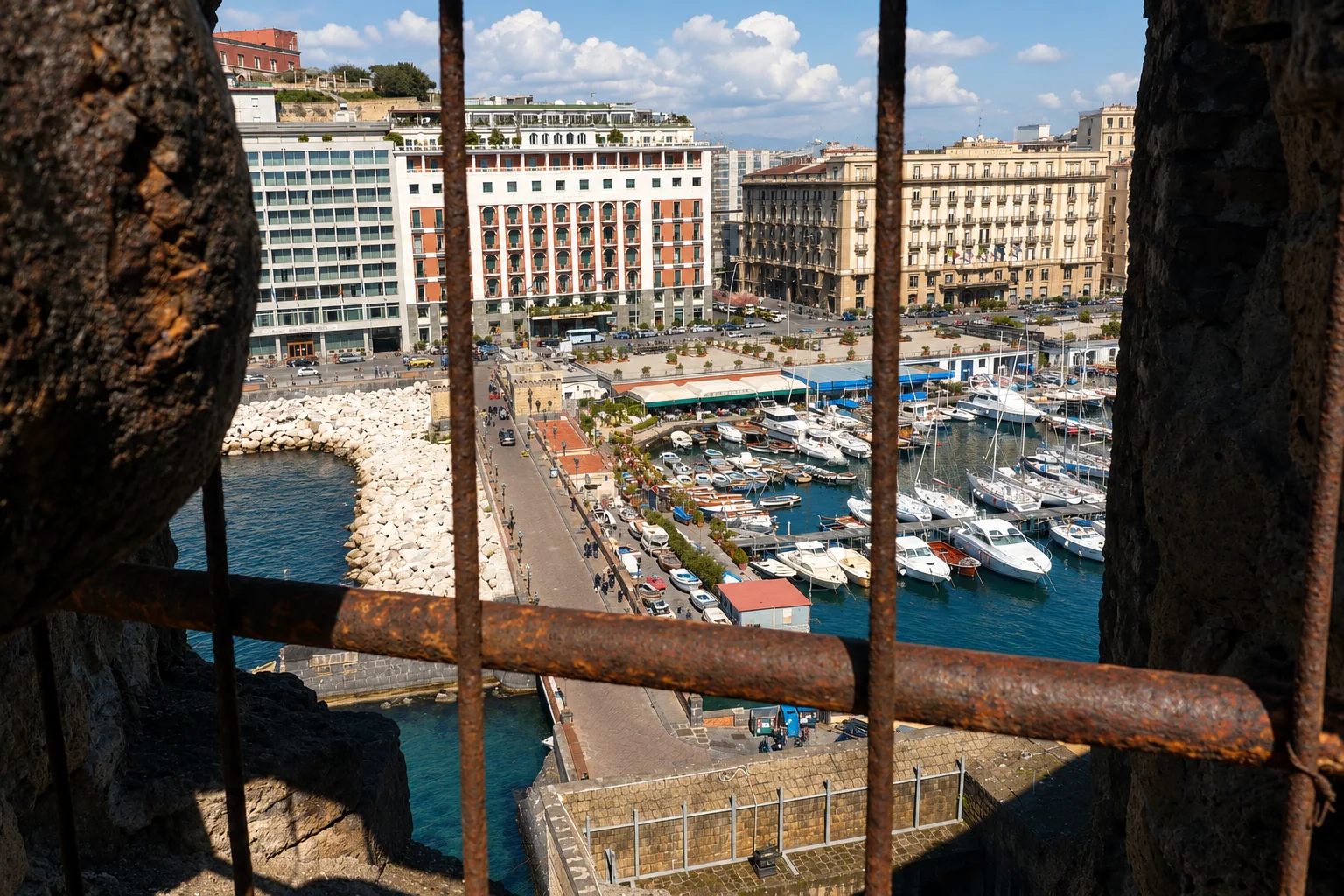
An outward view from the fortress shows the causeway between water and the small harbour; current interior access must be checked separately.
The link to the mainlandAn outward view from the fortress shows the causeway between water and the small harbour; current interior access must be checked separately.
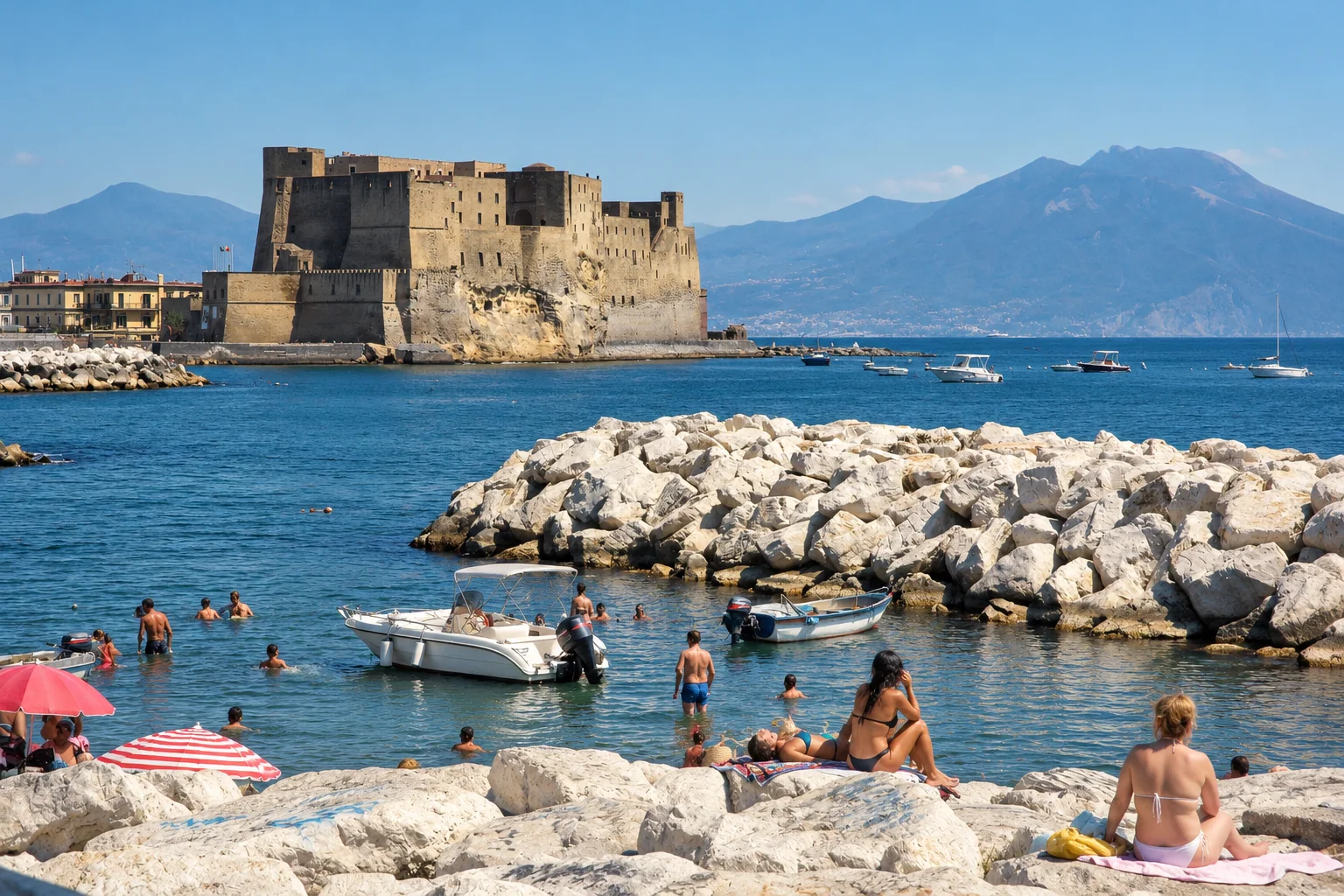
Seen from the Colonna Spezzata shore, the castle belongs to a wider landscape of water, rock and mountain horizon.
Across the coastal waterSeen from the Colonna Spezzata shore, the castle belongs to a wider landscape of water, rock and mountain horizon.

Five things worth finding

If you see nothing else, see these.

  1. Megaride and Parthenope

    A Comune di Napoli historical archive record places Greek Parthenope across the area that includes Megaride and Monte Echia, before the later foundation of Neapolis. This is the wider coastal setting behind the castle’s site.The coastal area between Megaride and Monte Echia

  2. The Lucullian shore

    The Comune’s historical account places Megaride within the grounds of the Roman villa associated with Lucullus, whose estate extended from Pizzofalcone to the sea.Pizzofalcone and Megaride

  3. A Norman stronghold, remodelled later

    UNESCO describes Castel dell’Ovo as one of Naples’ substantial survivals from the Norman period, subsequently remodelled several times. The Ministry’s regional office identifies the building as tufa and says it was fortified in the Norman age.Castle on Megaride

  4. Basilian hermitage remains

    The Ministry’s regional office records hermitage remains associated with the Basilian nuns of Santa Patrizia.Historical remains at the site

  5. Virgil’s enchanted egg

    A medieval tale links Virgil’s hidden enchanted egg to the safety of Naples.Medieval legend associated with the castle

Plan your visit

Everything you need before you go.

Entry arrangements
Confirm current entry and reservation arrangements with the Comune.
Getting there
Head for Via Partenope for seafront views of the castle on Megaride. Confirm the current castle entrance and visitor route with the Comune before arranging an interior visit.
Accessibility
Contact the Comune before visiting to ask which areas are open and what access arrangements and facilities are available for your needs.

Check current admission and reservation information with the Comune di Napoli before an interior visit.

From Via Partenope, take in the castle against the bay. Treat the Virgil-and-egg story as folklore, and check the Comune’s current visitor information before planning to go inside.

Get directionsGoogle MapsApple Maps

Via Eldorado, 1, 80132 Napoli (NA)

Tours worth booking

A few we would book ourselves, to get more from your visit.

Booking through these links may earn Italia Magnifica a commission, at no cost to you.

    • Viator
    • 8h
    • 5.0★ · 28 reviews
    • Viator
    • 2h 30m
    • 5.0★ · 25 reviews
    • Viator
    • 8h
    • 5.0★ · 22 reviews
    from €1,712Book this tour
    • Viator
    • 3h
    • 5.0★ · 9 reviews
    • Viator
    • 2h
    • 5.0★ · 8 reviews
    • Viator
    • 3h
    • 5.0★ · 7 reviews

Good to know

Why is it called Castel dell’Ovo?

A medieval legend says Virgil hid an enchanted egg in the fortress to protect Naples. The story explains the name but is folklore, not a documented historical event.

What was on Megaride before the medieval castle?

Greek Parthenope occupied the wider area of Megaride and Monte Echia. A Roman villa traditionally associated with Lucullus later extended to the shore; the castle developed over this older landscape.

Is Castel dell’Ovo Naples’ oldest castle?

The Ministry of Culture describes it as the city’s oldest castle. UNESCO notes that it preserves substantial Norman-period fabric, altered several times later.

Can visitors enter the castle and its ramparts?

Before planning an interior visit, ask the Comune di Napoli whether a visitor route is currently available.

Is entry free, and do I need to book?

Check current admission and reservation arrangements with the Comune before you go.

Is the castle accessible, and how long should I allow?

Ask the Comune which areas and access arrangements are available; the time needed depends on the route currently open to visitors.

A letter from Italy, once a month.

The places, tables and makers we found worth your time. One email, no noise.

One letter a month. Unsubscribe at any time. We never share your address.

Help us get it right

What is it about?