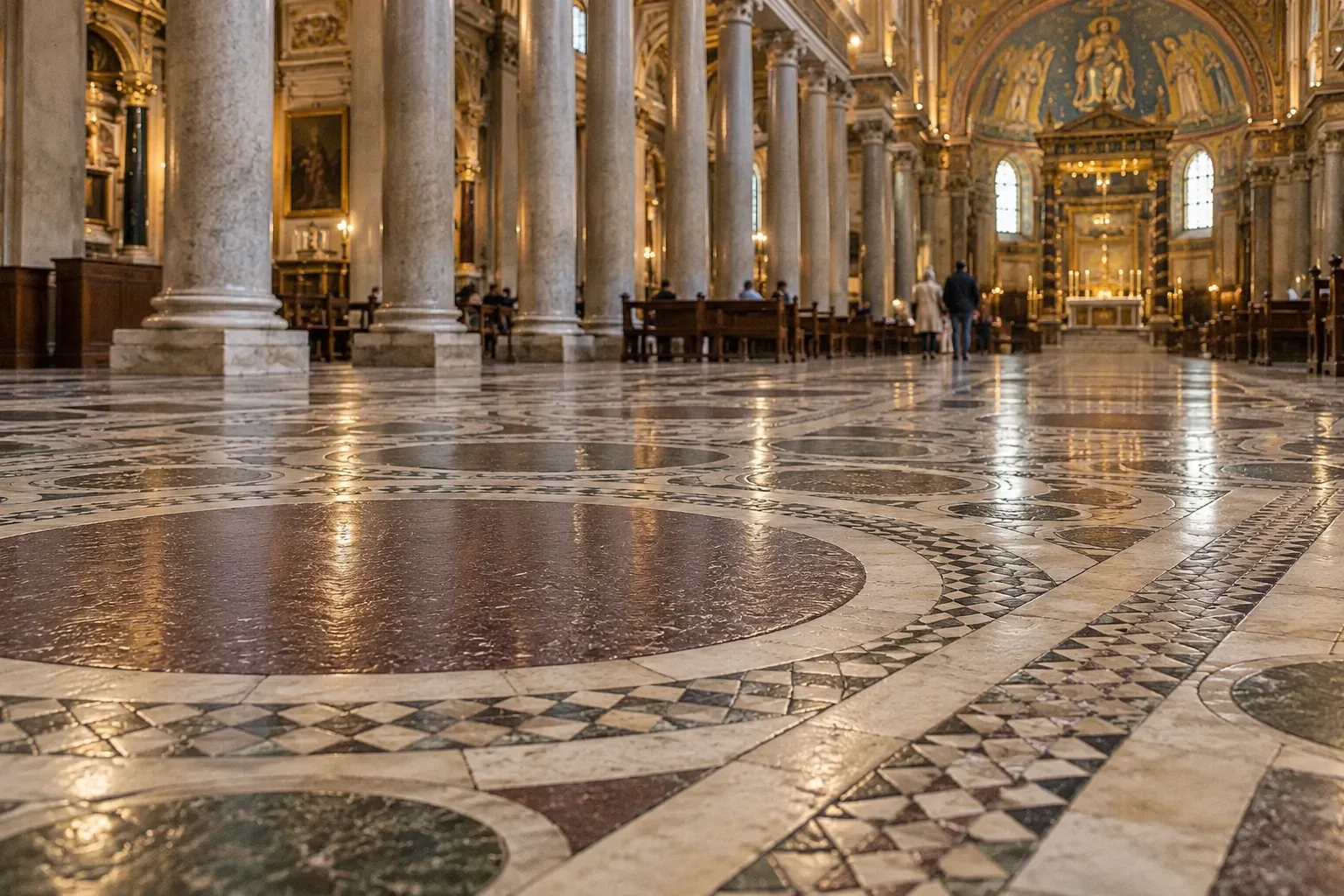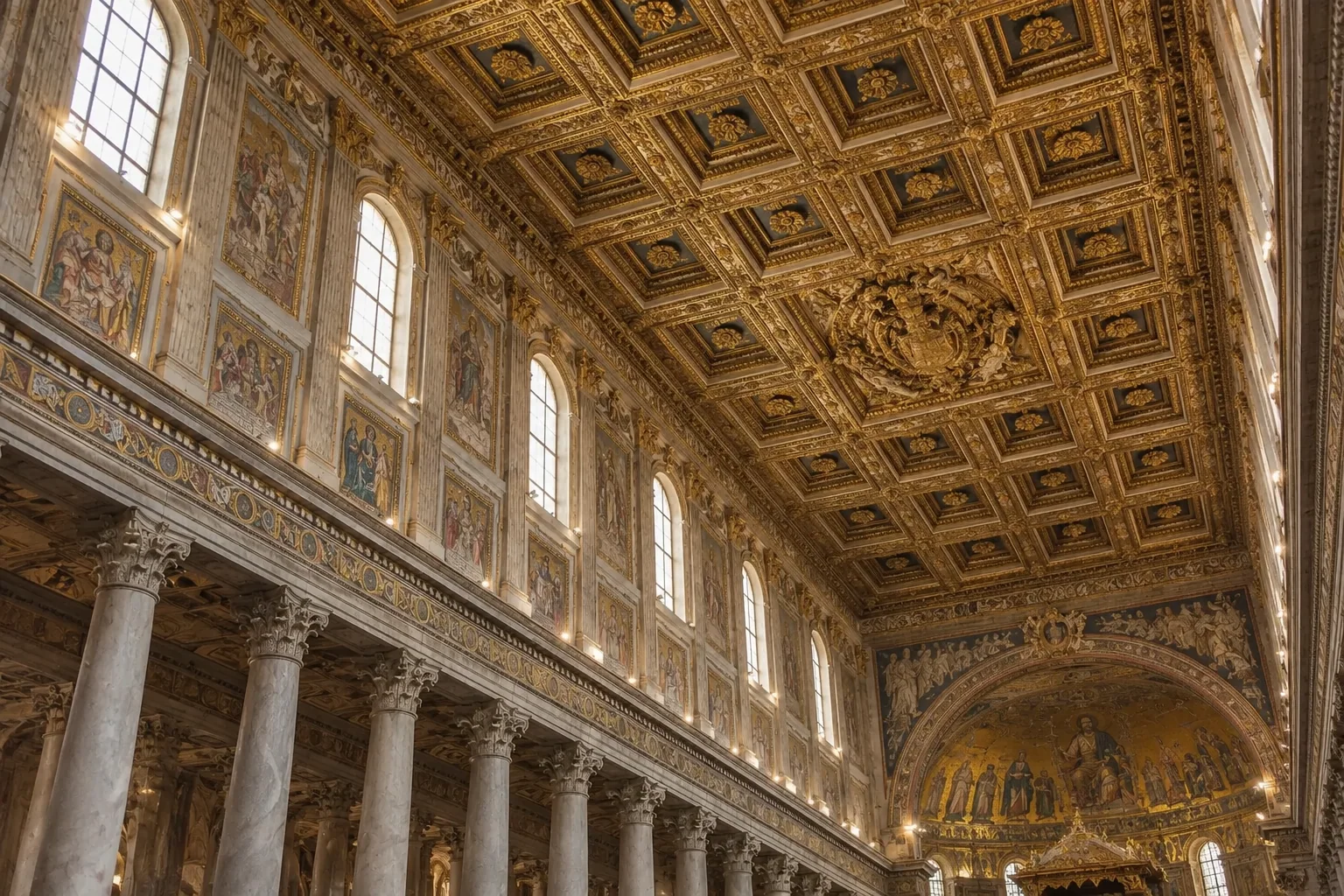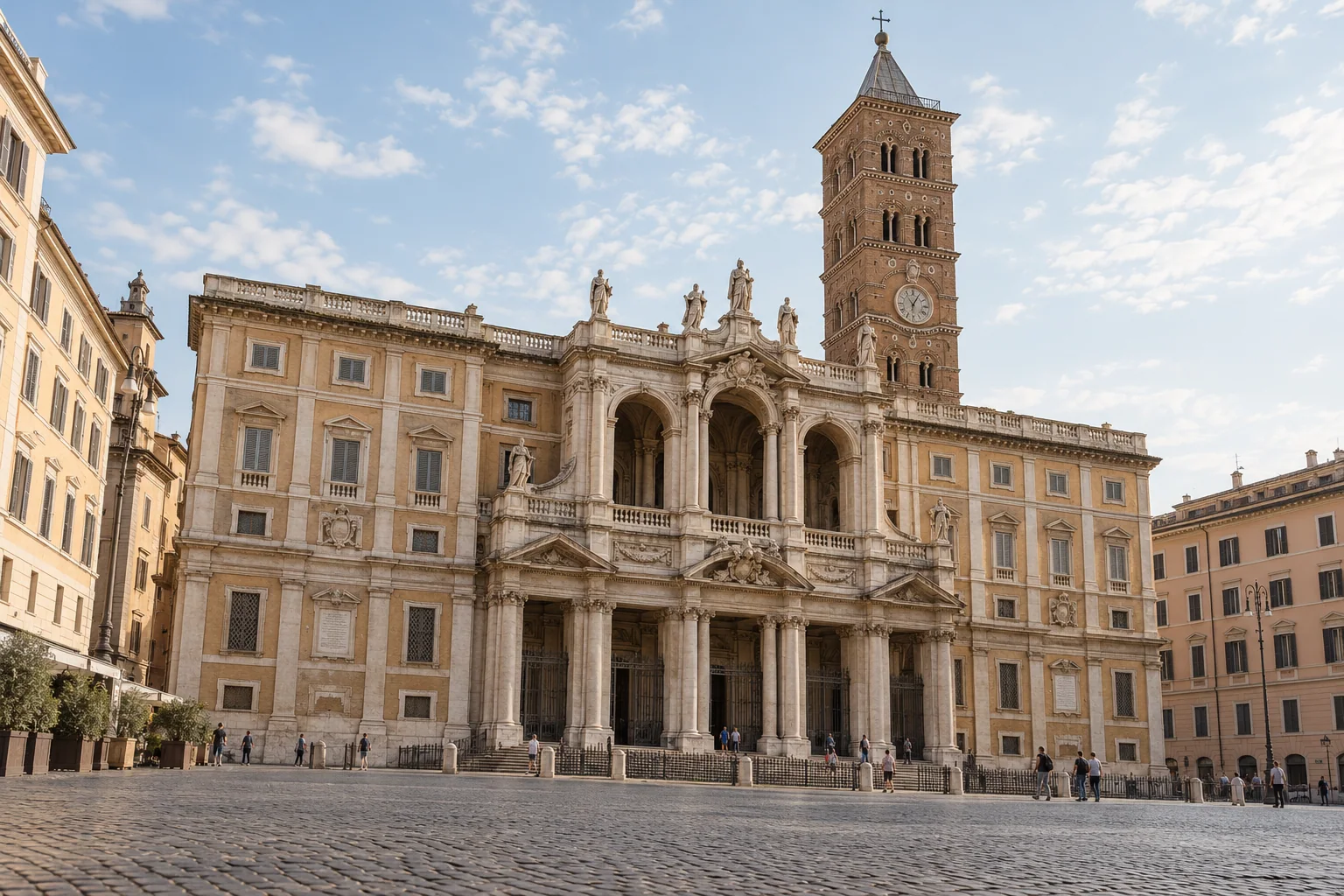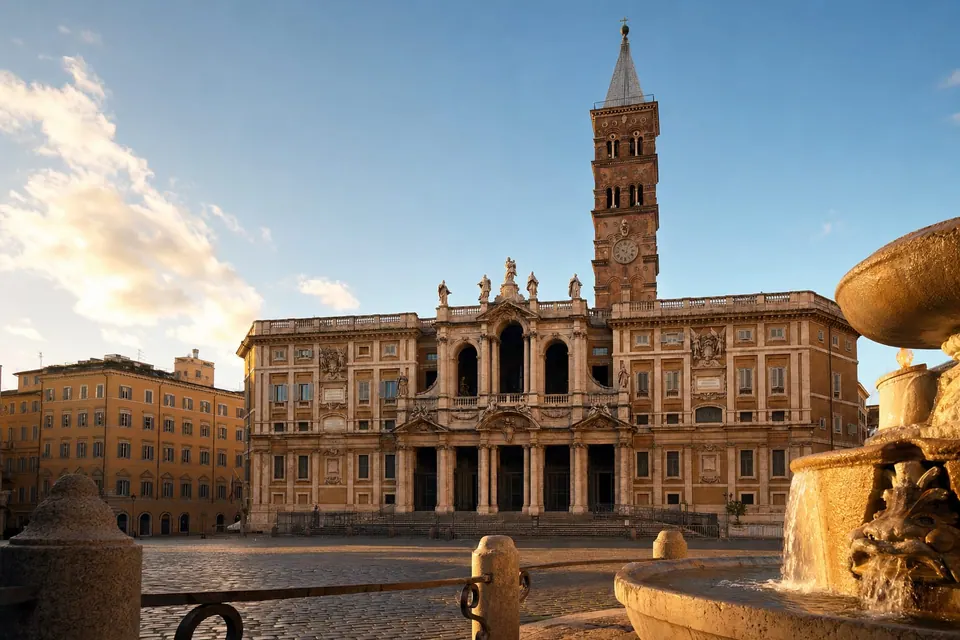
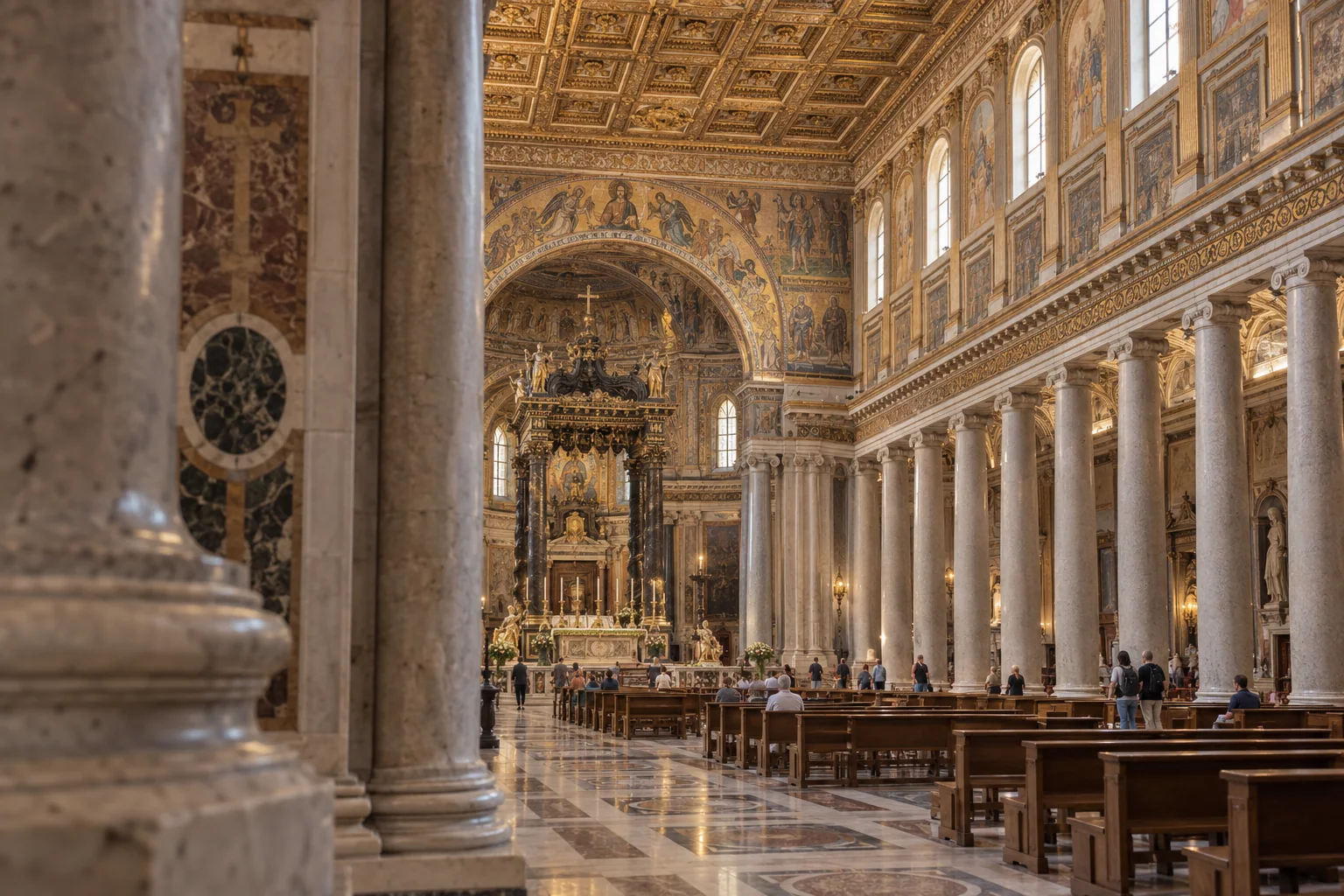
Santa Maria Maggiore is one of Rome's four papal basilicas, and its core dates to the fifth century, built in the wake of the Council of Ephesus in 431 CE, which formally affirmed Mary as Theotokos, mother of God, and touched off a wave of Marian church building across the Christian world.
Its nave and triumphal arch still carry mosaics from that original fifth century campaign, among the oldest surviving in any Roman church, while later centuries layered on Jacopo Torriti's shimmering apse mosaic, a Cosmatesque inlaid marble floor, Arnolfo di Cambio's sculpted Nativity scene, and a coffered wooden ceiling gilded, according to tradition, with some of the first gold brought back from the Americas. Devotional legend holds that the Virgin herself directed the church's location by causing snow to fall on the Esquiline Hill in the middle of an August night, a story the basilica still commemorates every year rather than something that appears in its construction records.
Sources and citations (3)
- Basilica Papale di Santa Maria MaggioreHistory, Art and SpiritualityHistory, Art and SpiritualityRead source
- Holy See Press OfficeThe Papal Basilica of Santa Maria Maggiore: IntroductionInside the BasilicaRead source
- UNESCO World Heritage CentreHistoric Centre of Rome, the Properties of the Holy See in that City Enjoying Extraterritorial Rights and San Paolo Fuori le MuraProperty scope and inscription metadataRead source