

All the monuments, city by city
The landmarks and masterpieces worth planning a day around.
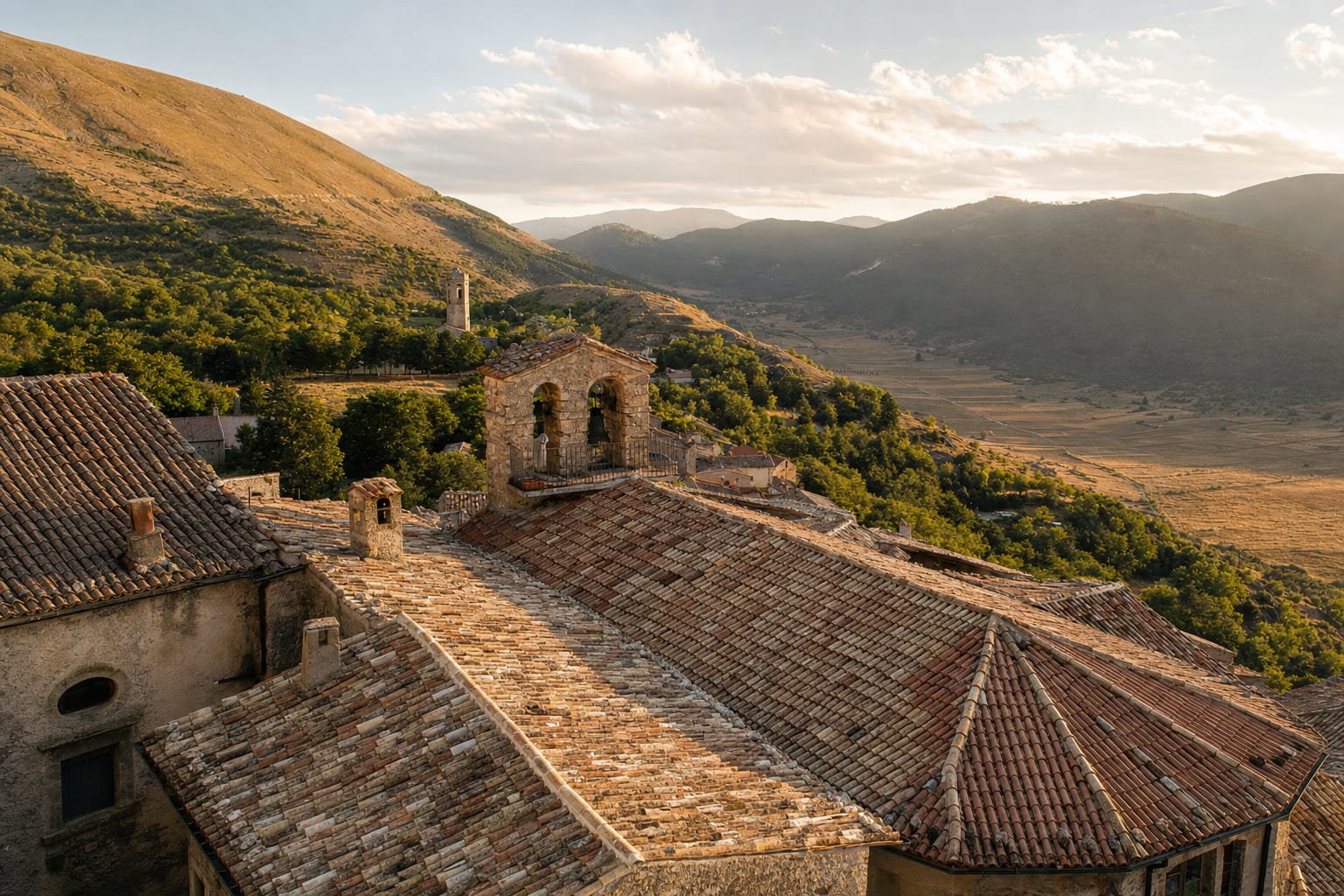 Santo Stefano di SessanioSanto Stefano di SessanioMedici mountain borgo, scattered-hotel revival, lentil terraces, stone lanes intactThe Medici family bought this fortified wool-trading village on the slopes of Gran Sasso in the sixteenth century, and their coat of arms still marks the entrance gate. It nearly emptied out over the following centuries, down to around 70 residents by the 1990s, until 1994, when entrepreneur Daniele Kihlgren began restoring its stone houses one by one as an albergo diffuso, a hotel scattered through the existing village fabric rather than concentrated in one building, without erasing the worn textures that made the place feel intact. The 2009 L'Aquila earthquake brought down the medieval Torre Medicea, the tower that had long served as the village's emblem, along with the roof and facade of a Baroque church, but Santo Stefano has since rebuilt without losing the stone lanes and low doorways that survived. Terraced fields below still grow the tiny, prized lentils that give the village its September harvest festival.Plan the visit
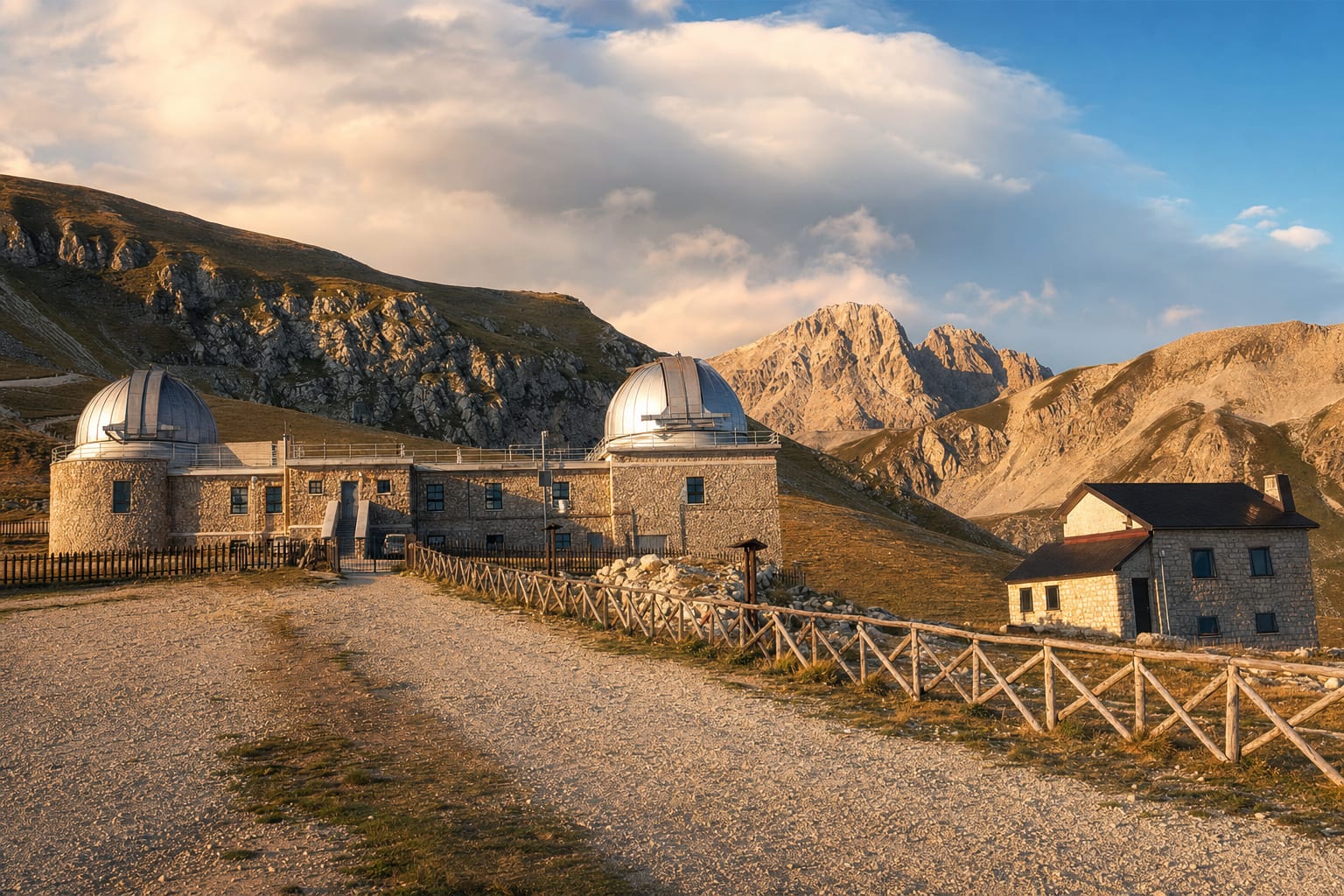 L'AquilaCampo ImperatoreLittle Tibet plateau, Corno Grande backdrop, Mussolini's 1943 prison hotel, observatory, high pasturesCampo Imperatore is the high plateau of the Gran Sasso, some 18 kilometers long and up to 8 wide, between about 1,500 and 2,100 meters, and locals call it Little Tibet after the mountaineer Fosco Maraini compared it to a Tibetan valley. It is a wide, treeless pasture that turns green in June, grazed by sheep and horses, under the rock wall of Corno Grande, the highest peak of the Apennines. At the top of the cable car stands the hotel where Mussolini was held prisoner in 1943 before his rescue by German paratroopers under Otto Skorzeny; beside it are an astronomical observatory and an alpine botanical garden. Spaghetti Westerns and Ladyhawke were shot here.
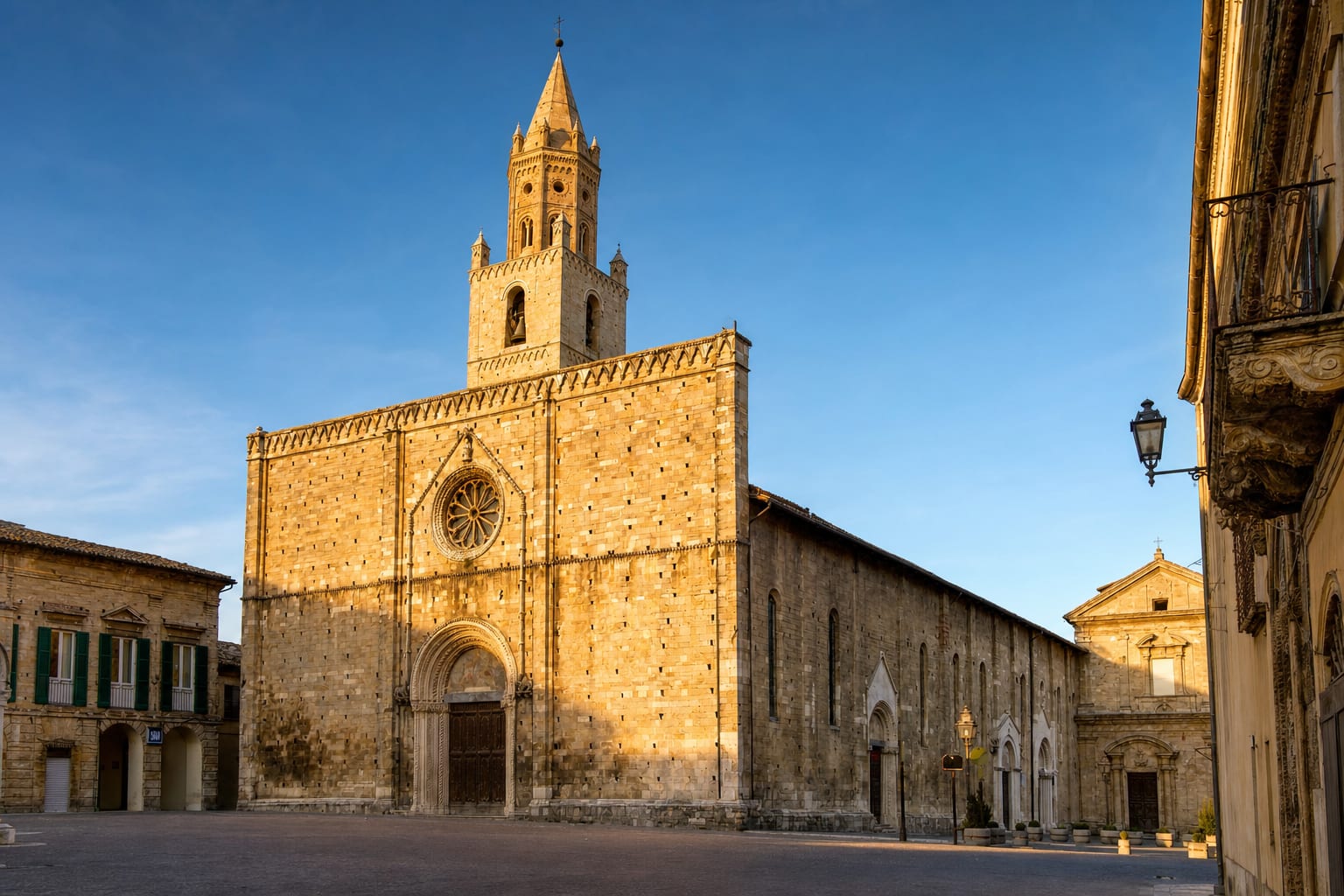 AtriAtri CathedralAndrea De Litio fresco cycle, Abruzzo's Sistine choir, Roman cistern crypt, calanchi badlands settingAtri's cathedral hides the quiet Renaissance of Abruzzo. Consecrated in 1223 over a Roman cistern, the church wears a Gothic portal carved by Maestro Rainaldo and a 56-meter bell tower finished by Antonio da Lodi in the 15th century. Its real treasure waits behind the altar, where Andrea De Litio spent years frescoing the choir with scenes from the lives of the Virgin and Christ, painted in the clothes and gestures of his own century so that anyone, literate or not, could follow the story. One south portal serves as a Holy Door, opened only on August 15th. Below, the old Roman cistern still holds the cool air of a crypt, and beyond the walls the bare clay ridges of the calanchi badlands roll toward the Adriatic.
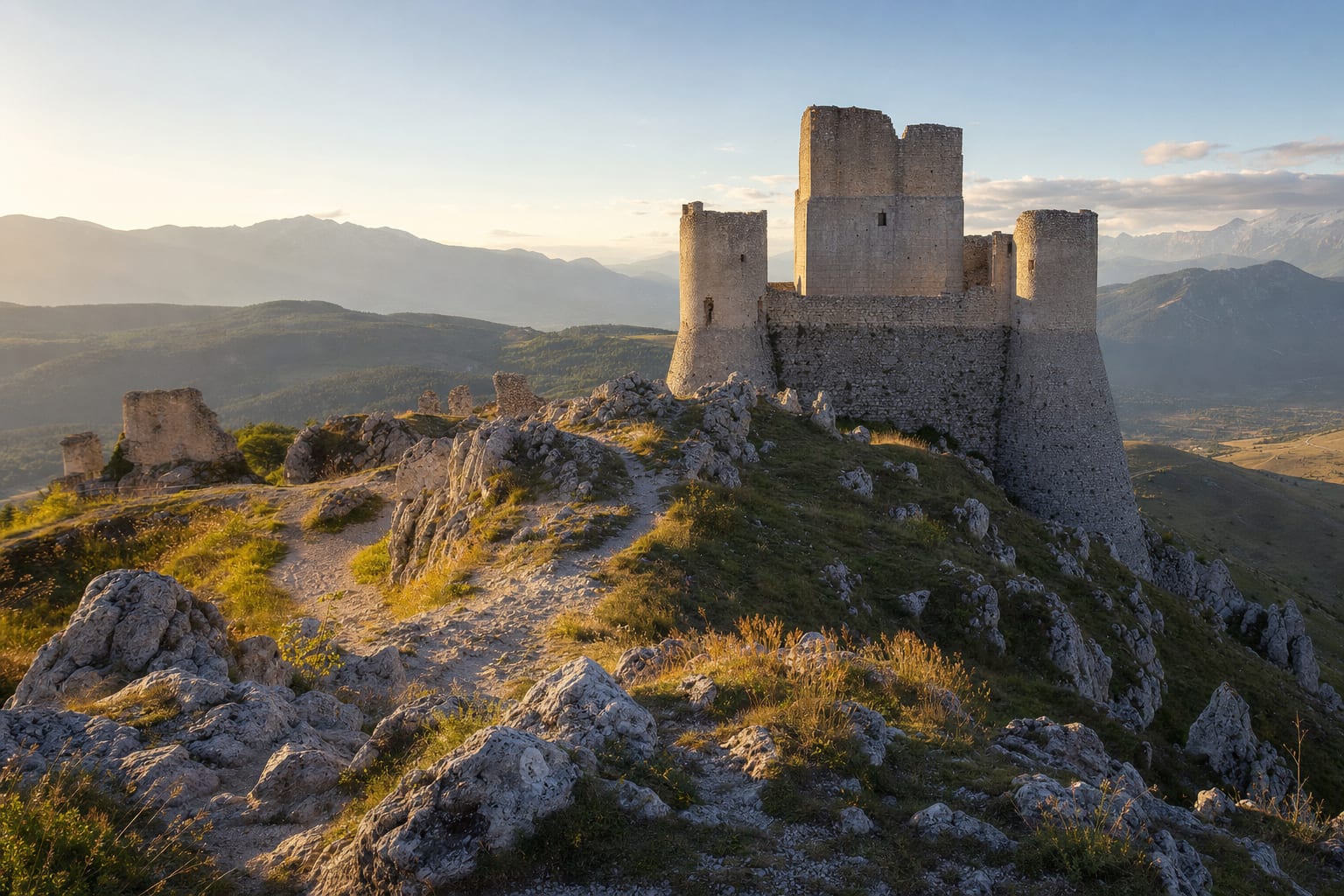 CalascioRocca CalascioApennine fortress at 1,460 meters, Gran Sasso views, film location (Ladyhawke), Santa Maria della Pietà chapelA single watchtower rose here in the 10th century, and by the 1200s it had grown into a walled fortress with four round corner towers ringing a taller keep, the highest stronghold in the Apennines at 1,460 meters. The 1461 earthquake that leveled much of nearby L'Aquila cracked Rocca Calascio too, and unlike the town below it was never rebuilt: the empty walls have watched over the sheep tracks beneath the Gran Sasso ever since. That emptiness is exactly what drew filmmakers, and the fortress has stood in for other centuries in Ladyhawke, The Name of the Rose and The American. A short walk downhill, the octagonal seventeenth-century church of Santa Maria della Pietà, with its own clear view of the ruin, is often the more peaceful stop.
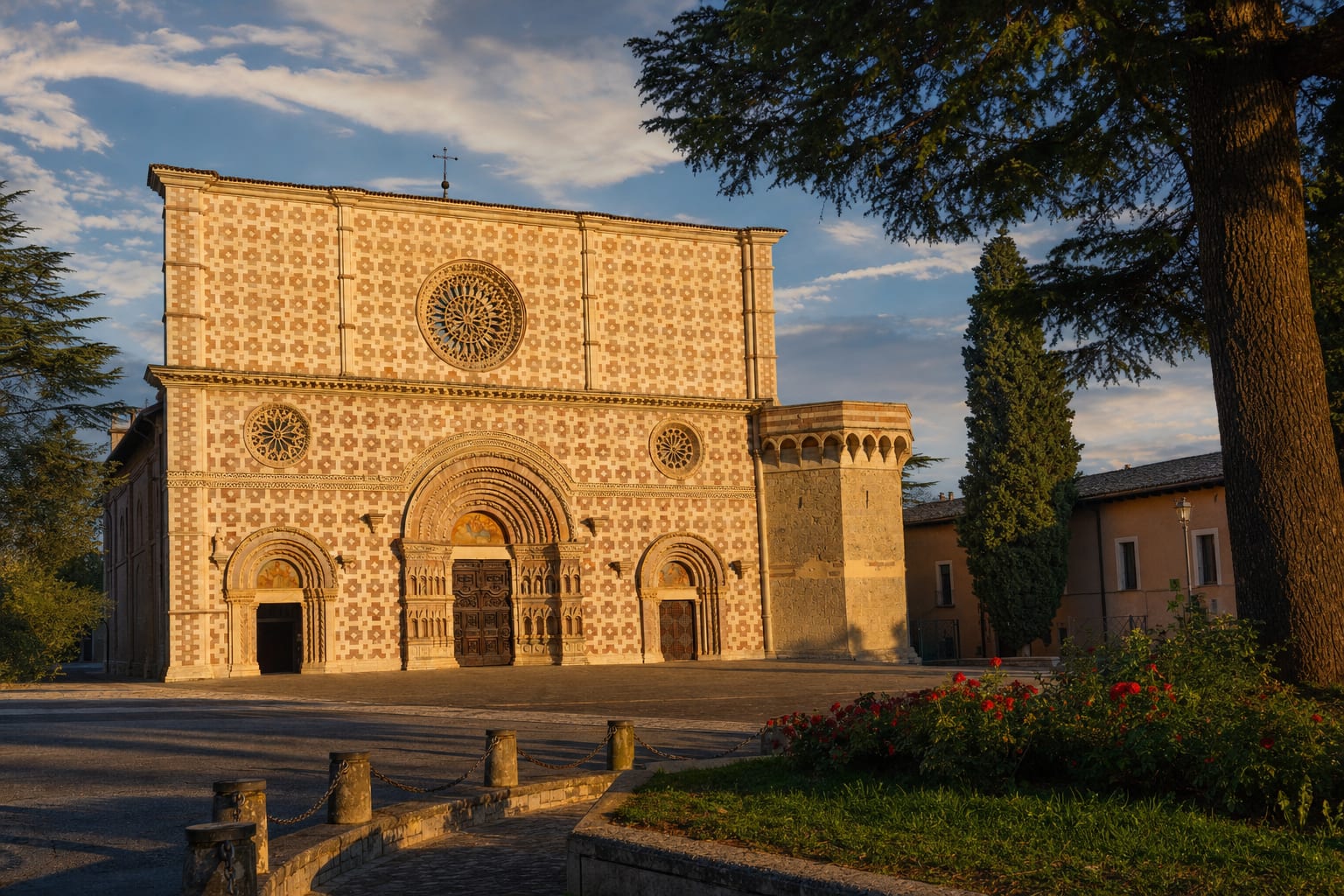 L'AquilaBasilica of CollemaggioPink and white façade, Celestine V's tomb, Holy Door and the PerdonanzaThe basilica of Santa Maria di Collemaggio was founded in 1288 by Pietro da Morrone, the hermit monk who was crowned pope here in 1294 as Celestine V and resigned a few months later. Its façade is the most recognizable in Abruzzo, a checkerboard of pink and white stone that glows in the evening light. Inside, three bare naves with octagonal pillars and pointed arches show what the church looked like once Baroque additions were removed. Celestine's tomb, carved by Girolamo da Vicenza in 1517, is in a side chapel. Each year on 28 and 29 August the Holy Door is opened for the Perdonanza, a pardon proclaimed by Celestine in 1294, six years before Rome's first Holy Year.
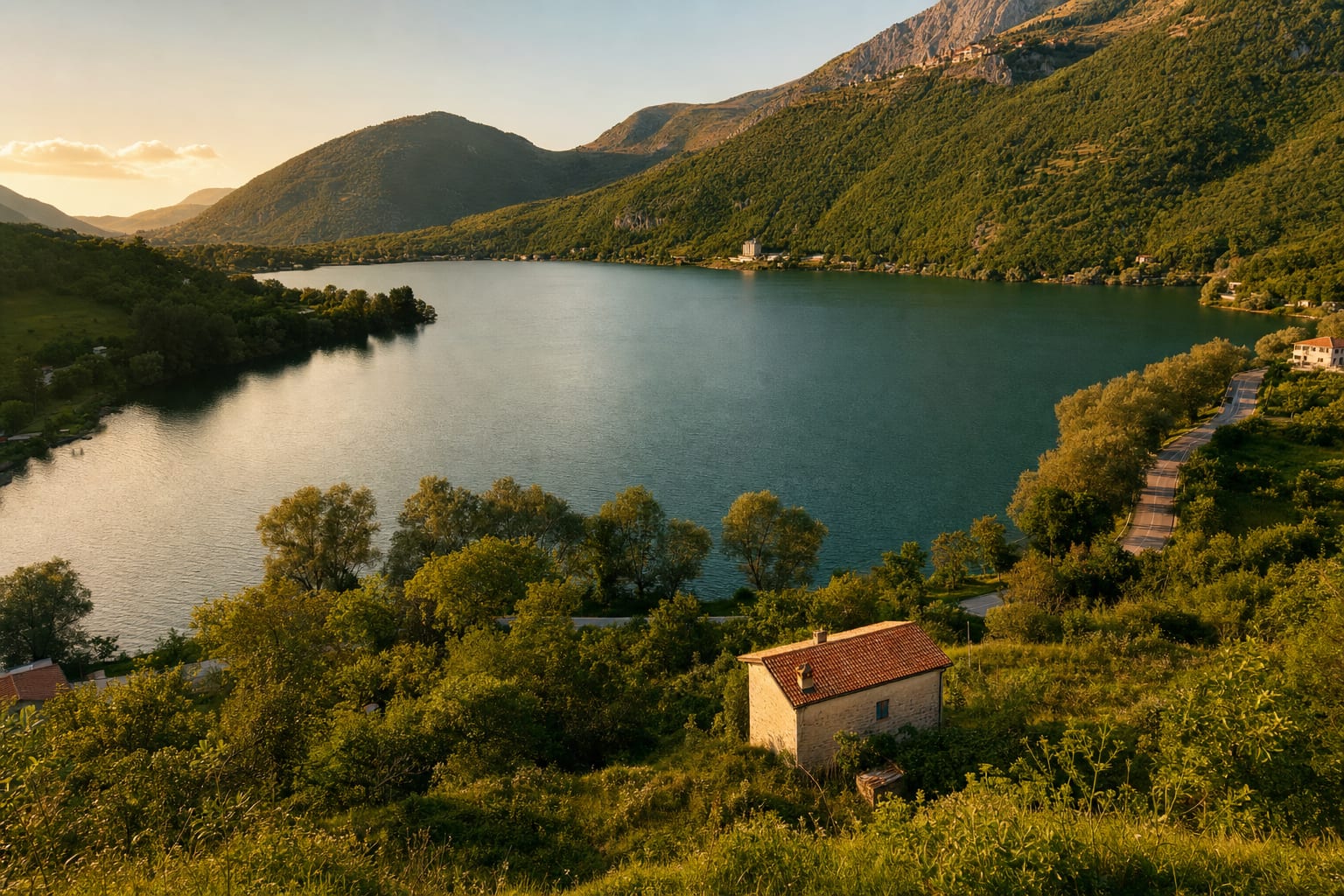 ScannoLake ScannoHeart-shaped lake, Sentiero del Cuore viewpoint, Sagittario gorges, Scanno's costume and goldsmith traditionA prehistoric landslide sealed off a stretch of the Sagittario river and left Abruzzo with a lake that photographs like nowhere else in the region: follow the Sentiero del Cuore to its lookout and the shoreline resolves into a near-perfect heart. The village of Scanno, on the slopes above, held onto its own traditions longer than most Abruzzo towns, including a distinctive women's costume and a goldsmith's tradition still known for filigree work and the presentosa pendant. That mix of landscape and living tradition drew M.C. Escher to sketch the town in the 1930s and Henri Cartier-Bresson to photograph its women in 1951, images among the most reproduced in Italian travel photography. The lake itself is a forested basin at the mouth of the Sagittario gorges, better suited to a slow walk than a checklist stop, and the heart shape only appears from the marked viewpoint, not from the shore.
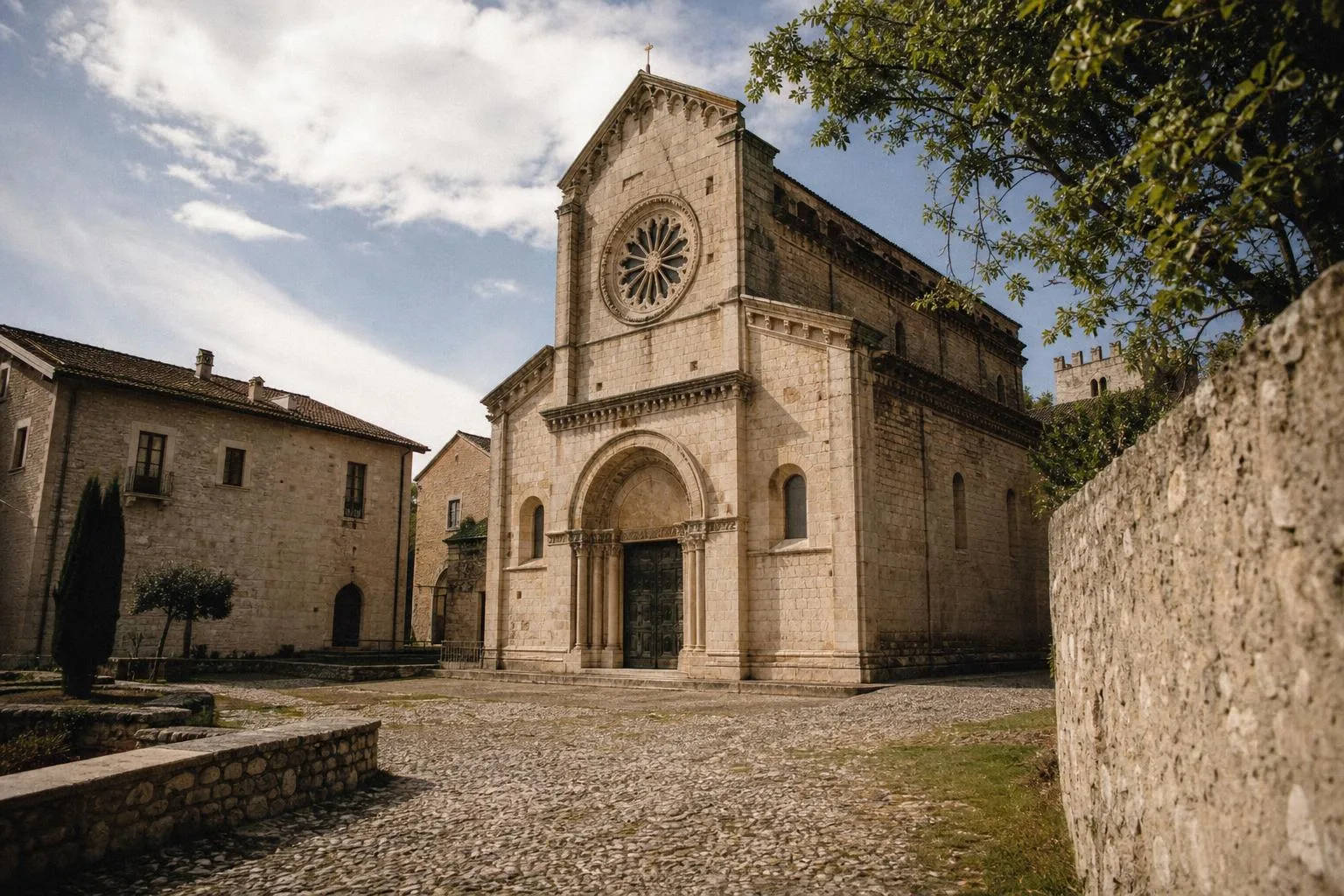 SulmonaHidden GemAbbey of San Clemente a Casauria1191 bronze doors, Romanesque facade, Benedictine foundation of 871, Antiquarium museumLouis II, a descendant of Charlemagne, founded this abbey in 871 after promising a church to Saint Clement while held captive in Benevento. Saracen raiders wrecked it in the tenth century and Norman armies again in the eleventh; the Benedictines rebuilt it between the 1105 reconsecration and abbot Leonate's late-twelfth-century campaign. The facade's bronze doors, cast in 1191, still carry 72 panels of crosses, abbots and the fourteen castles the abbey once controlled in the Pescara valley. Earthquakes struck again and again after that: in 1349, in 1456, and most recently in 2009, when the L'Aquila quake closed the church until a restoration reopened it in April 2011. Set alone in open countryside above the Pescara river, the abbey looks less like a tourist stop than a monument that simply keeps rebuilding itself.
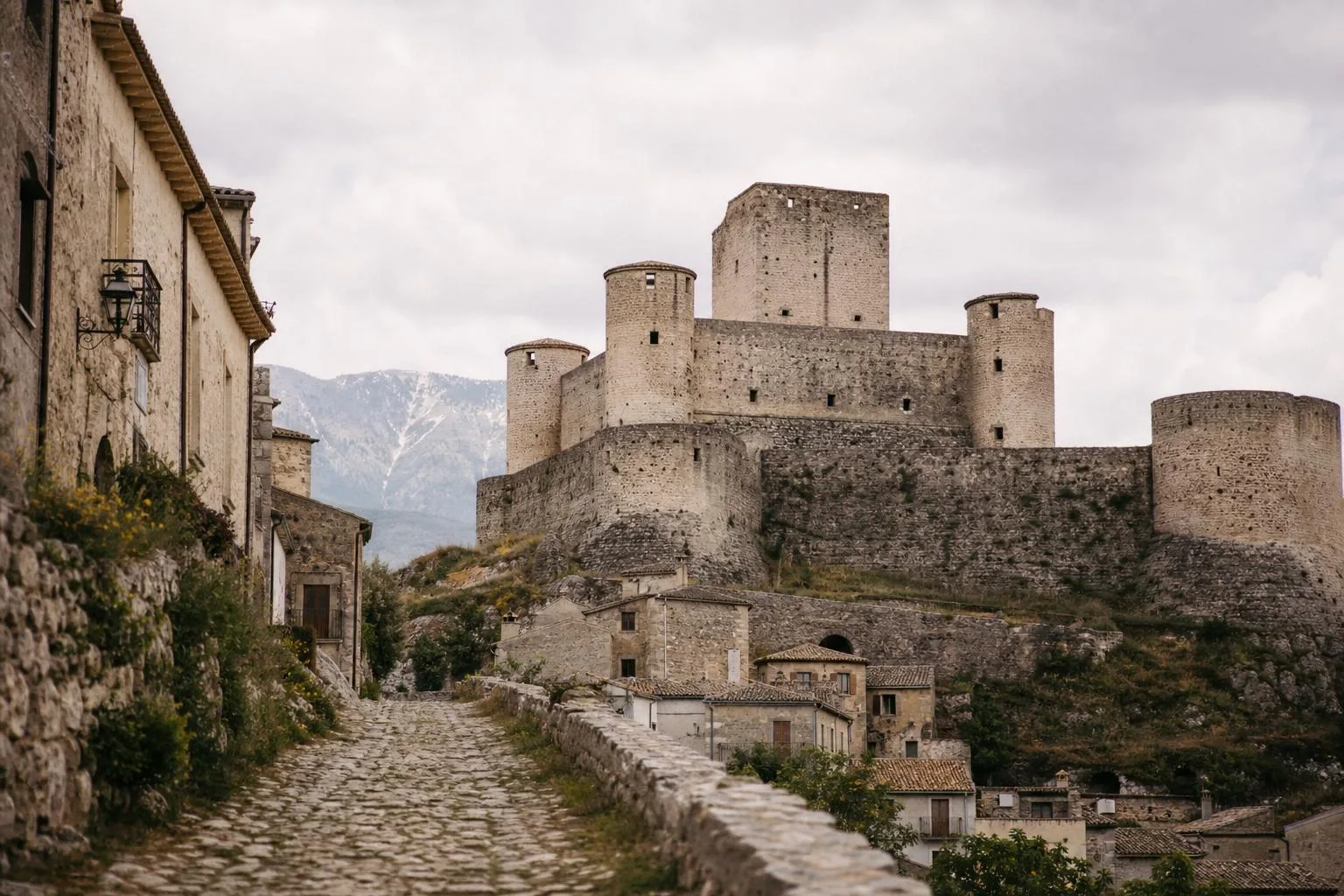 SulmonaHidden GemCastello CaldoraSquare and round towers, double walls, Torre del Re terrace, Majella viewsCastello Caldora watches over Pacentro from a hill above the Peligna valley, at the foot of Monte Morrone in the Majella foothills. Records mention it from the eleventh century, and it takes its name from the Caldora family, who held it in the 1300s, followed by the Cantelmo, Orsini, Colonna and Barberini. The Orsini added the round bastions in the second half of the 1400s, so the trapezoid fortress now has three tall square towers (the Torre del Re rises 25 meters) and three round ones, inside a double wall. The town has owned it since 1957. You can climb the Torre del Re to a terrace for a wide view of the Majella and the village roofs.
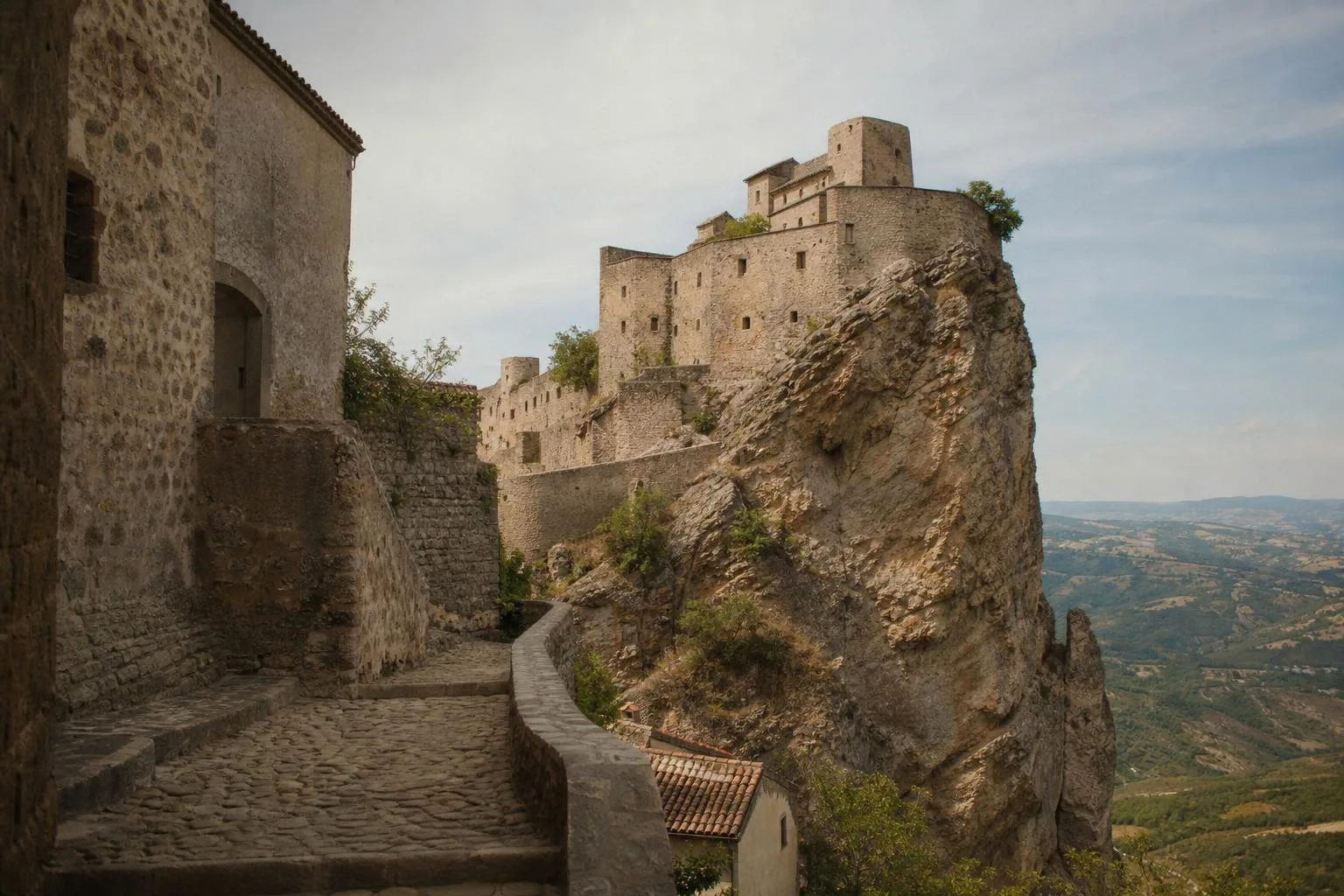 FossacesiaHidden GemCastello di RoccascalegnaCliffside silhouette, 12th-16th century fortress, feudal legend, Sangro valley viewsThe castle at Roccascalegna sits on top of a limestone spur so sheer that from the valley road it looks fused to the rock, an effect that has made it one of the most photographed silhouettes in Abruzzo. Built up in stages between the twelfth and sixteenth centuries, it was abandoned for much of the twentieth century before a long restoration reopened it to visitors. Local legend attaches a grim story to the site: a feudal lord who claimed the right to a bride's first night was killed by a groom disguised as his wife, and the tale is re-enacted each summer in the village below. Inside, narrow stone stairs lead past a chapel and a series of bare rooms to a terrace with views over the Sangro valley. Visits run on a timed schedule with a guide, since the approach and interior are too narrow for unrestricted crowds.
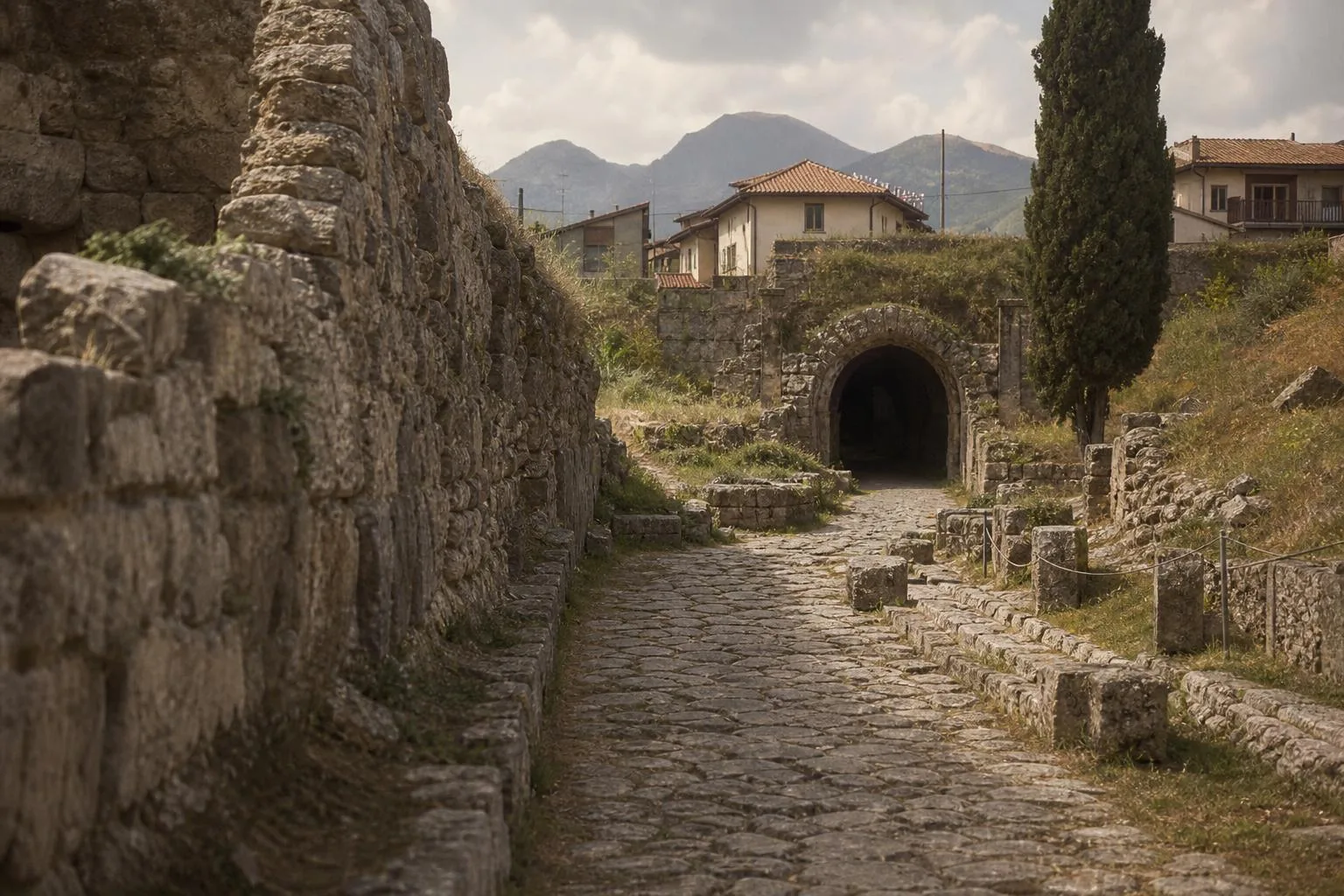 L'AquilaHidden GemTunnels of ClaudiusClaudius's six-kilometer emissary, Lake Fucino drainage, Monte Salviano shafts, guided underground walkThe Tunnels of Claudius are the emissary the emperor Claudius ordered to drain the Fucine Lake, a project run from about 41 to 52 AD by tens of thousands of workers. The main channel runs for more than six kilometers under Monte Salviano, linked to the surface by shafts and inclined service tunnels, and for centuries it was the longest tunnel in the world. Claudius's engineers were never fully successful, and the lake was finally drained in the nineteenth century under Alessandro Torlonia, who restored the Roman work. Today an archaeological park protects the site, and the visit is a guided walk into the Ferraro gallery and out along the drainage channel. Hard hats and non-slip shoes are required.
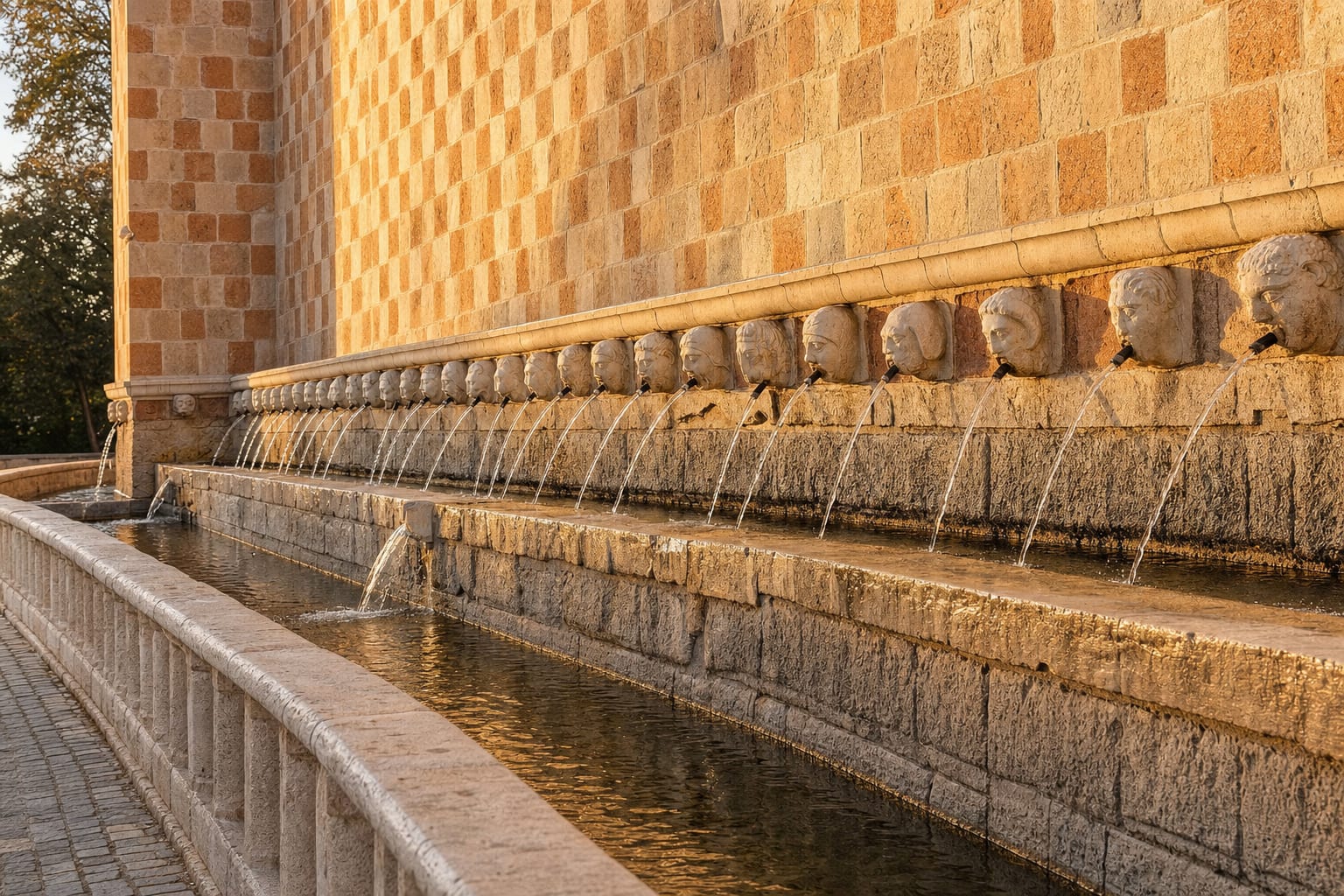 L'AquilaFountain of the 99 SpoutsNinety-nine carved masks, unknown spring source, 1272 founding legend, checkerboard stone wallsNinety-nine carved stone masks have poured water into this trapezoidal courtyard since 1272, one spout for each of the villages local tradition credits with founding L'Aquila under Frederick II's federation of Abruzzese communities. No one has ever traced the underground source that feeds them, a mystery the fountain has kept for more than seven centuries. The three retaining walls, faced in a checkerboard of white and pink stone, step down below street level, so the fountain reveals itself only as visitors descend toward it. The 1703 earthquake that killed over three thousand people in L'Aquila left the fountain largely unscathed, and it survived the 2009 earthquake as well, remaining the city's most visited monument through every disaster.
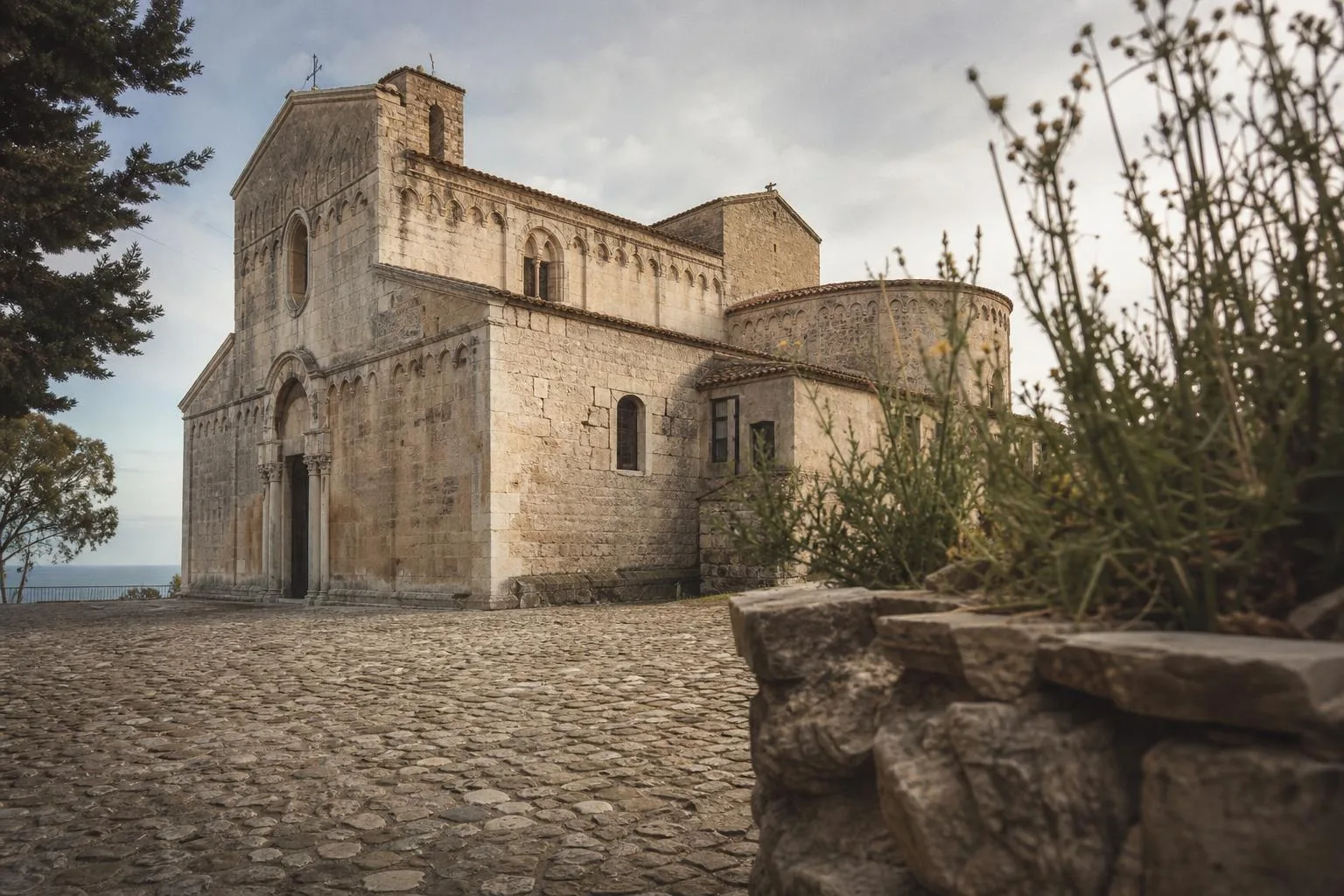 FossacesiaHidden GemSan Giovanni in Venere AbbeyAdriatic hilltop setting, Roman-column crypt, 13th-century apse frescoes, Passionist community since 1954Benedictine monks built this abbey on a hilltop above the Adriatic in the early 1200s, choosing a site that had already carried a sixth-century church and, before that, a temple to Venus, a lineage the abbey's name still commemorates. The Cistercian-style basilica, with its nave and two aisles, sits over a crypt supported by mismatched Roman columns salvaged from earlier buildings, and thirteenth-century frescoes line the apses above. Declared a national monument in 1881, the complex fell into disrepair before restoration began in the 1950s. A Passionist community has cared for the abbey since 1954, and Sunday Mass continues in the church, so tourist visits to the nave may pause around service times.
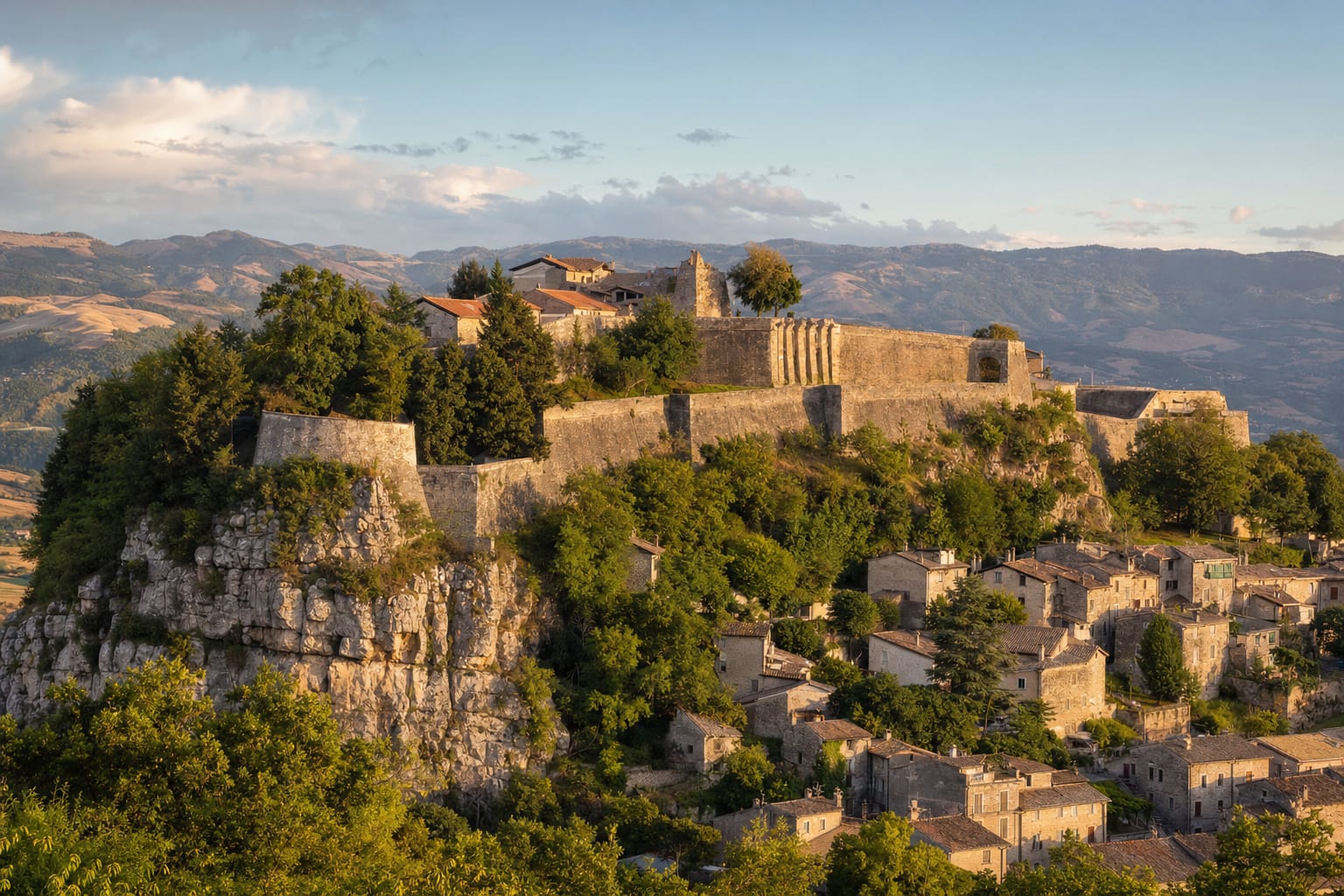 Civitella del TrontoFortress of Civitella del TrontoLast Bourbon stronghold, 1860-61 siege, half-kilometer ridge fortress, weapons and maps museumSpanish rulers built this fortress between 1564 and 1576, and by the time it fell it had become one of the largest in Europe, an elliptical stronghold of travertine stone stretching some five hundred meters along its ridge above the Teramo valley. Its final chapter made it famous: Bourbon troops held Civitella through a siege lasting from October 26, 1860, until March 20, 1861, three days after the Kingdom of Italy had already been proclaimed elsewhere, making this the last place the Bourbon flag flew anywhere in the peninsula. Restoration between 1975 and 1985 opened the fortress fully to visitors, and it now draws thirty to forty-five thousand people a year to a weapons and maps museum inside walls twinned since 1989 with Salzburg's Hohensalzburg fortress.
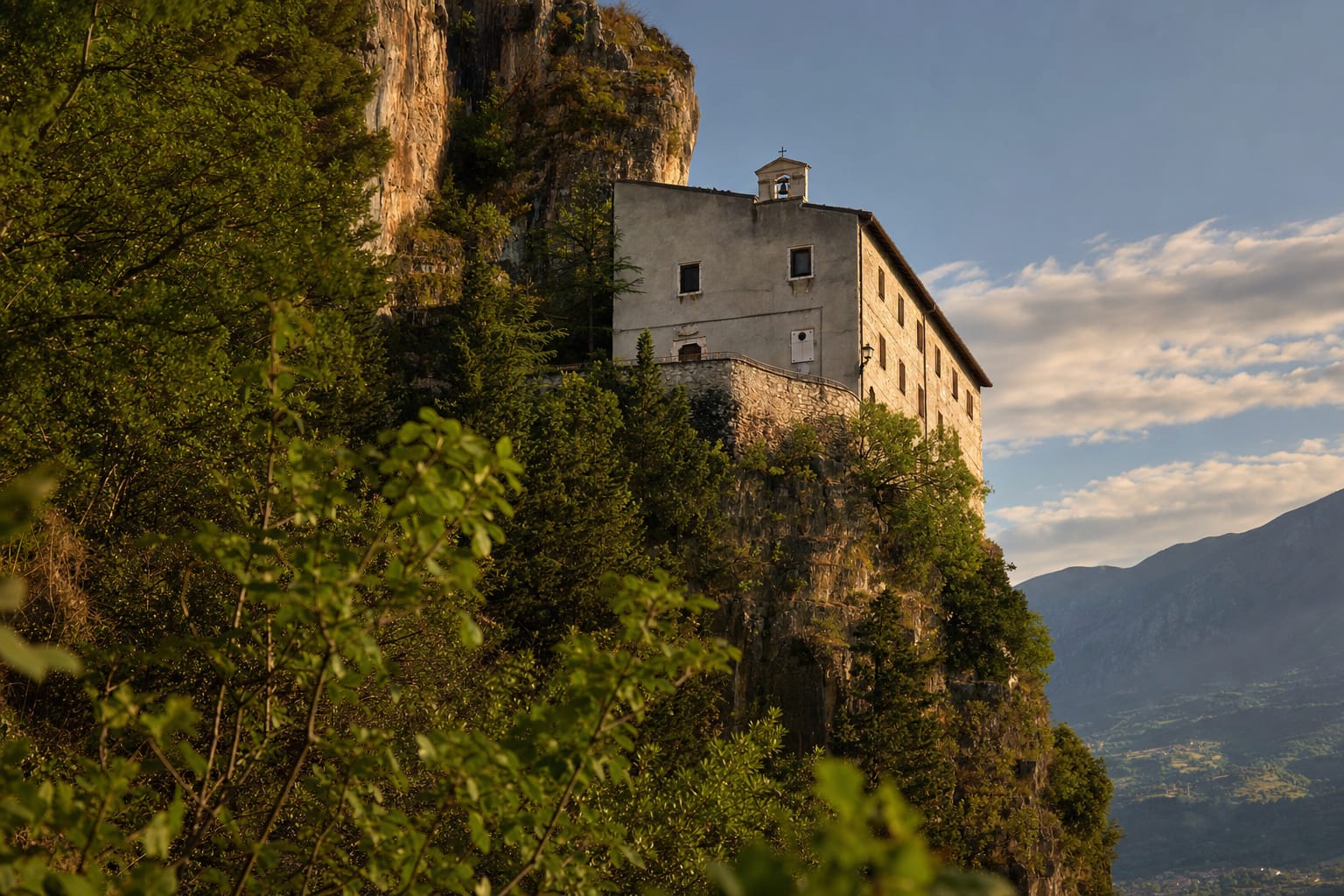 SulmonaHermitage of Sant'Onofrio al MorroneCelestine V's hermit years, 1294 papal announcement, cliffside Morrone setting, 15th-century frescoesPietro Angelerio, later Pope Celestine V, first settled on this cliff ledge above Sulmona around 1239, drawn to a hermit's life on Monte Morrone years before history caught up with him. It did, dramatically, in 1294, when King Charles II of Anjou climbed the mountain himself to tell the hermit he had just been elected pope, an episode still commemorated at the hermitage. Celestine's papacy lasted barely four months before he abdicated, the only pope in history to resign voluntarily in the medieval period, and he returned briefly to monastic life before his successor, Boniface VIII, had him imprisoned at Fumone, where he died in 1296. The hermitage that shaped him survives with fifteenth-century frescoes, an original wooden ceiling, and a barrel-vaulted church, reachable only by a steep path from the hamlet of Badia.
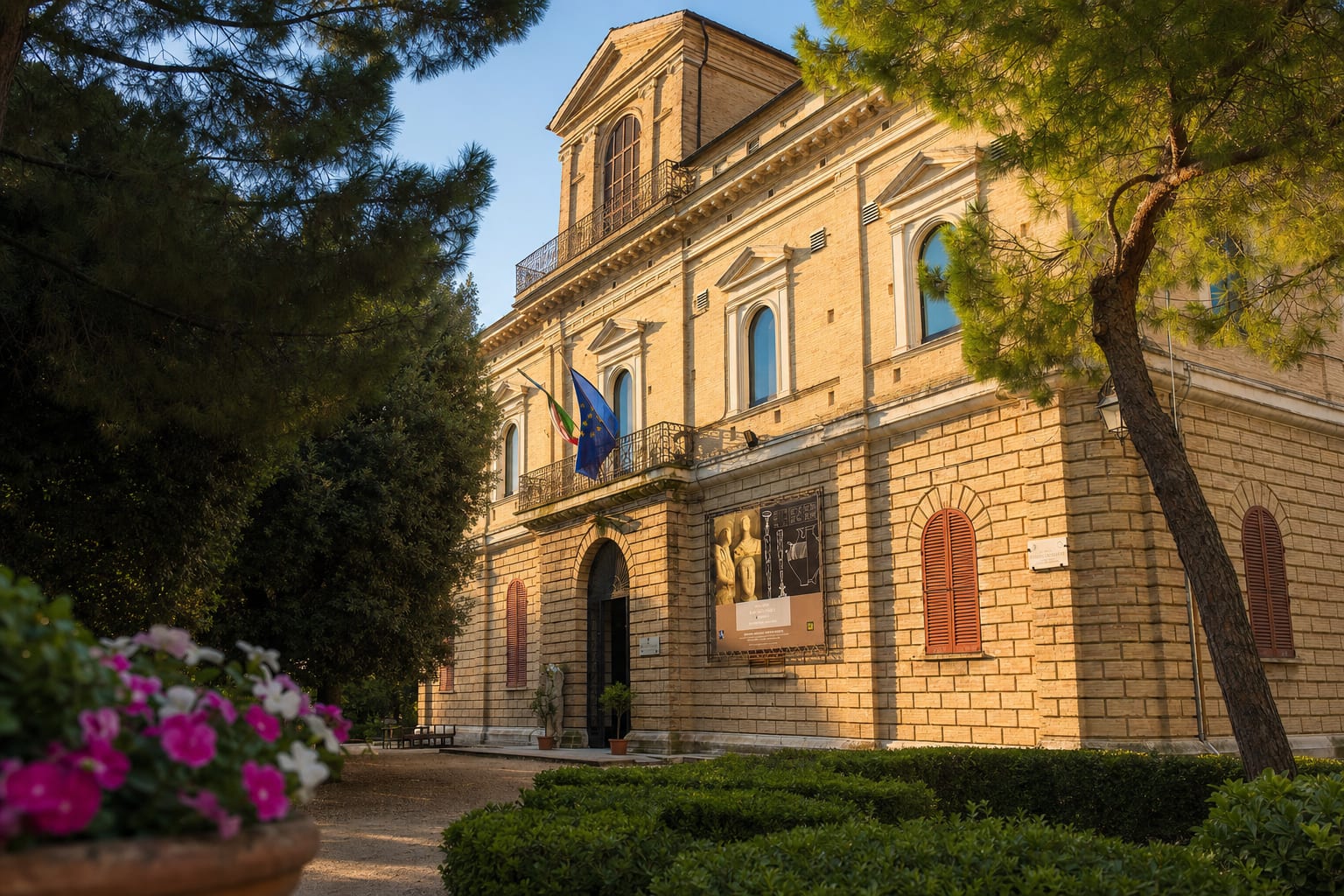 ChietiNational Archaeological Museum of AbruzzoWarrior of Capestrano statue, disk-shaped helmet, 1934 plow discovery, Villa Frigerj settingA farmer's plow struck Italy's strangest surviving ancient statue in 1934: a Picene funerary monument to a king named Nevio Pompuledio, carved around the sixth century BC in limestone, shown with arms crossed over his armor and crowned by an enormous disk-shaped hat found nowhere else in ancient Italian sculpture. Known as the Warrior of Capestrano for the necropolis where it was found, the statue anchors this museum's collection as the emblem of pre-Roman Abruzzo, housed since 1959 in Villa Frigerj, a neoclassical building from around 1830. Galleries beyond the Warrior span prehistory through the late Roman Empire, including the Pansa Collection and a numismatic collection of some fifteen thousand coins, and the museum now welcomes a modest but steady stream of visitors each year to a region far less touristed than Rome or Naples to its west and south.
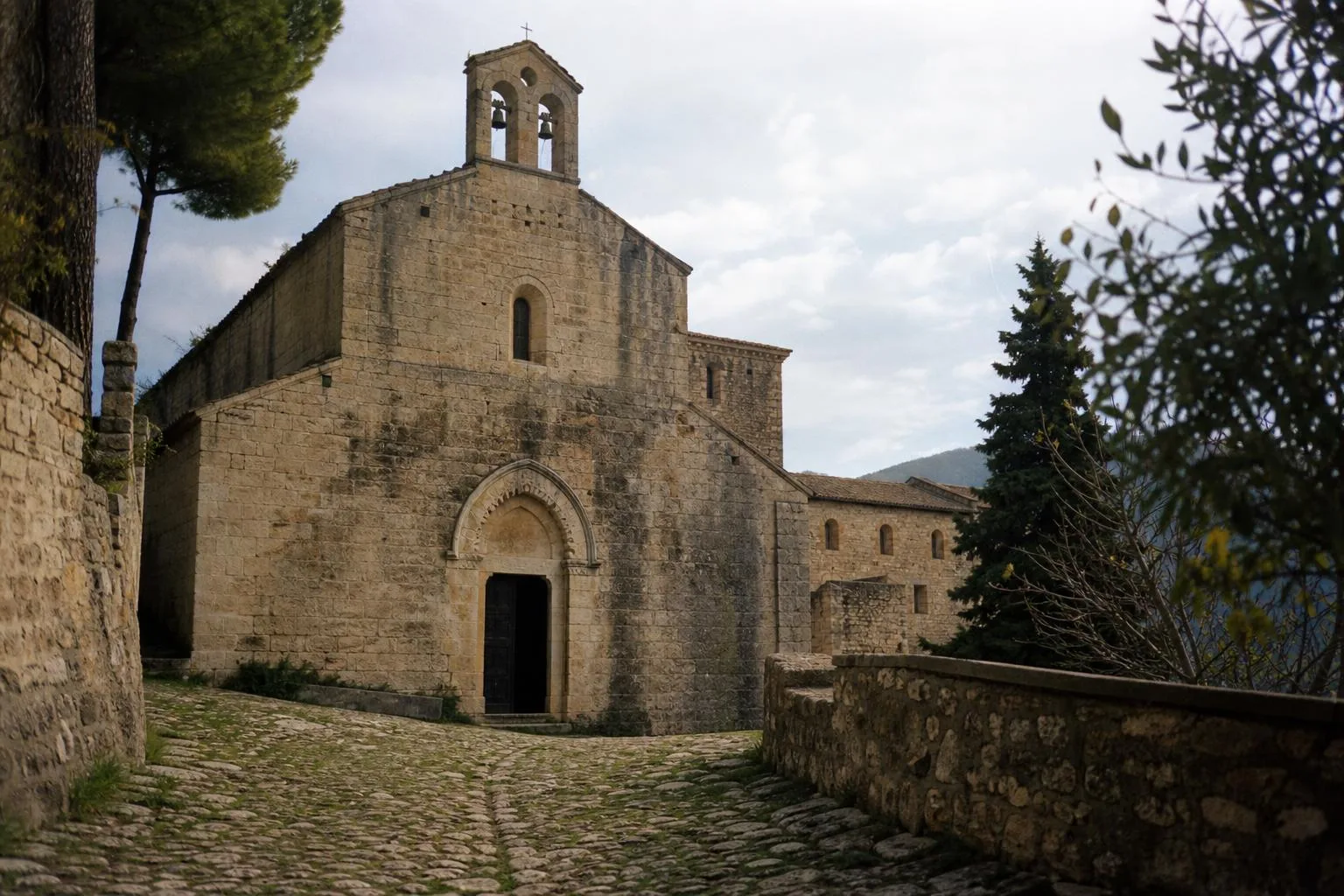 ChietiHidden GemSan Liberatore a MaiellaRomanesque abbey, geometric mosaic floor, Majella National Park, Desiderius of MontecassinoSan Liberatore stands in the Alento valley at the foot of the Majella, inside the national park. Legend links its foundation to Charlemagne, and a first rebuild is credited to the Benedictine monk Theobald around 1007. The church you see was rebuilt from 1080 under Desiderius of Montecassino, in Lombard-Romanesque style: a white façade, a square bell tower, and a basilica plan with a nave and two aisles divided by seven round arches. Inside, look for the geometric mosaic floor of about 1200 in the nave, the ambo with twelfth-century reliefs, and frescoes in the apse, among them a sixteenth-century portrait of Theobald. Restoration in 1967 to 1971 saved it after centuries of decay.
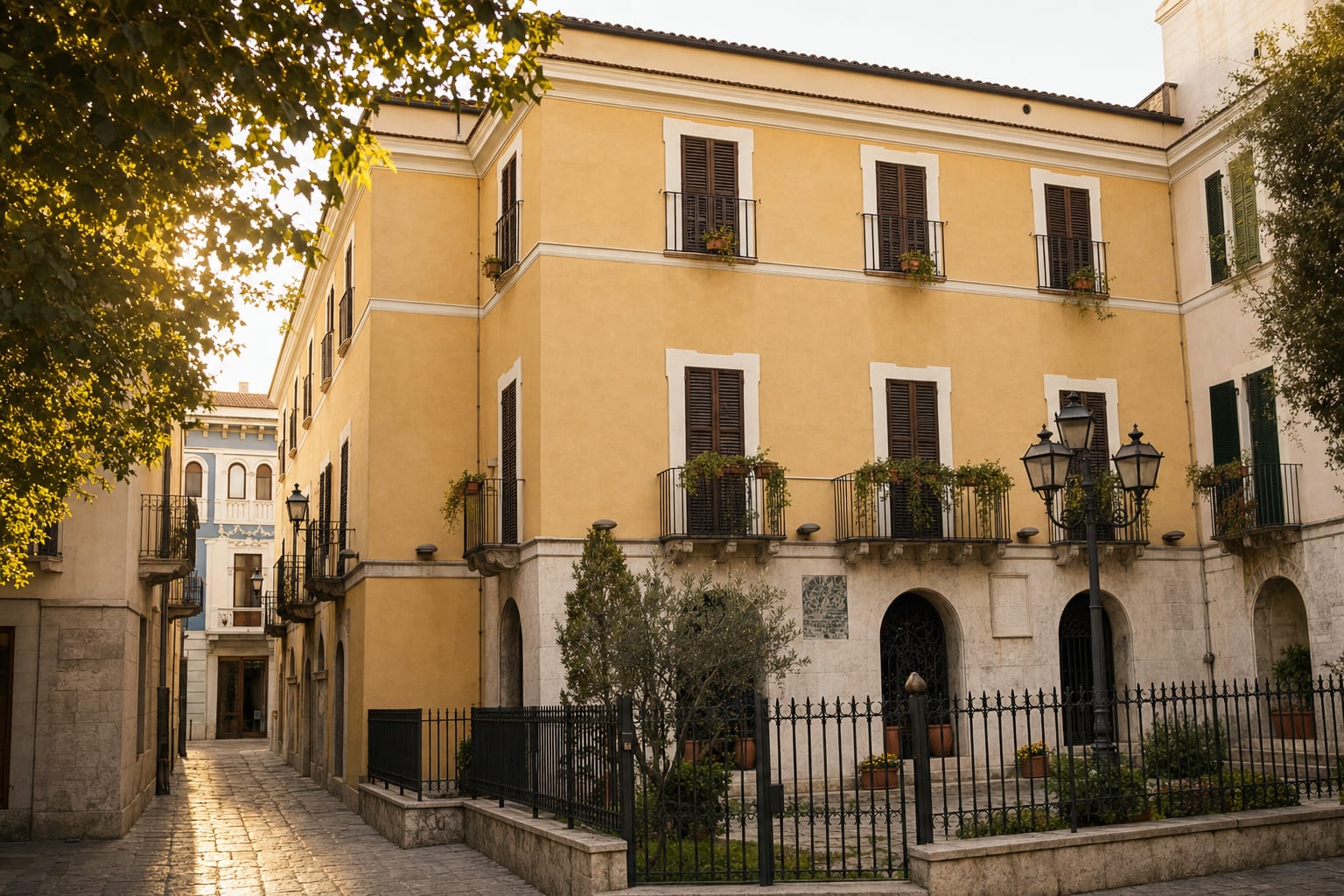 PescaraBirthplace of Gabriele d'AnnunzioPoet's 1863 birthplace, nine restored rooms, manuscripts and family relics, sole survivor of old Pescara's bombingThe poet of excess began, unpromisingly enough, in this sober bourgeois townhouse on Corso Manthone in old Pescara, born here in 1863. Nine rooms are arranged much as the d'Annunzio family left them, with the poet's own manuscripts, portraits and childhood furniture, plus the cradle he was rocked in. Mussolini's government declared the house a national monument in 1927, at d'Annunzio's own urging, which is how it survived the 1943 Allied bombing that flattened most of the surrounding quarter: the house stands today essentially alone in a rebuilt neighborhood, a single fossil of pre-war Pescara.